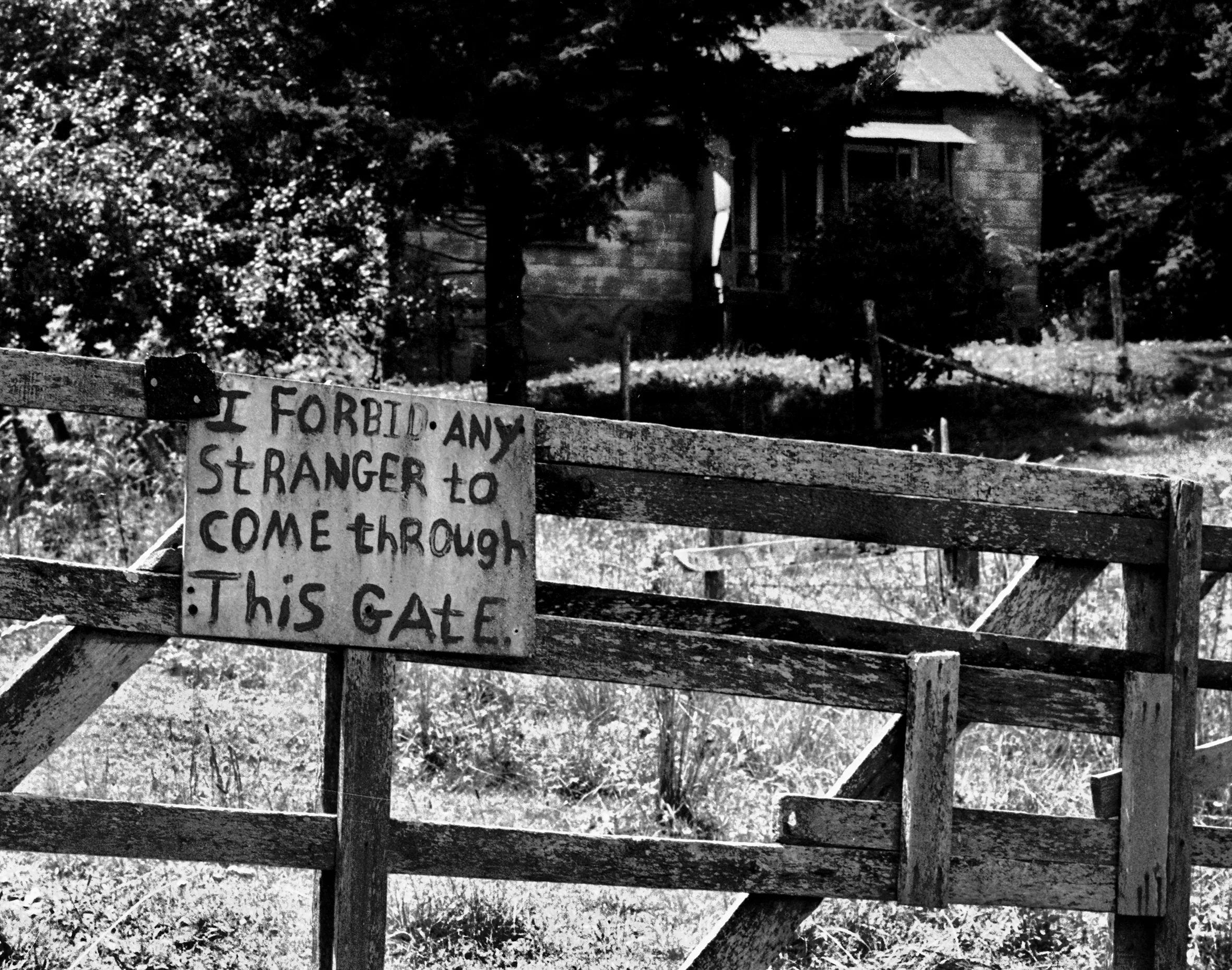
Six years after the end of World War II my family moved from the U.S. to Japan. Our new home had previously belonged to a Japanese nobleman’s daughter, who now lived with her family in what had been their servants’ quarters. Despite this odd turn of affairs, they treated us kindly and taught us their customs. Outside the house’s compound, however, people were not always so friendly.
At nine I was the oldest child, and I often took my three younger siblings on excursions into town. One day we had been to see bolts of silk drying in the fields about half a mile away when a group of Japanese children surrounded us. They yelled at us and then followed their taunts with good-sized stones. I gathered my sisters behind me and picked up my little brother, and we ran for the safety of the eight-foot-high concrete wall that surrounded our house. By the time we got inside, several stones had found their mark, and our parents bandaged our bruises and consoled us as best they could.
A few days later we were playing in the yard when we heard mocking voices. The children who had thrown stones at us were now sitting on top of our wall. Just as we were about to retreat into the house, our mother and father came out carrying hot chocolate and cookies. They spoke little Japanese, but they motioned for the children to come down and lifted the tray of cookies toward them. Slowly the children slipped off the wall and accepted the treats with smiles and quick bows of thanks.
By the time we left Japan a year later, my siblings and I were playing regularly with the neighborhood children, our past hostilities forgotten.
Susan Shumway
Corvallis, Oregon
As a Peace Corps volunteer I used to commute on horseback through tropical forests, in the shadow of a conical volcano, to the village of Las Pilas, Nicaragua, where I worked with rural women on health-education and community- development projects. Lydia — a small indigenous woman, sunbaked and wrinkled beyond her forty-seven years — taught me all about life in Las Pilas. I’d dismount at her home of gray wood planks and dried palm grass, and her children would take care of my horse while she brought me to meetings, introduced me to neighbors, and told me about the needs of the village. Lydia always wore a dress that was ragged but clean and freshly pressed with an iron heated over an open fire. Upon our return to her house, she’d serve me heaping portions of black beans, rice, tortillas, and fried plantains and a tall glass of coffee made from beans roasted in a clay pot.
The town had no source of potable water, so villagers walked several miles each day down steep, muddy trails to the shores of Lake Nicaragua, where they bathed, washed their clothes on lava rocks, and filled tins with water for cooking and drinking. The burden of hauling water fell to the women and their barefoot children, who stayed home from school to attend to the chore. The water could be made safe only by boiling, which required the added labor of gathering wood, something few had time to do. I knew without asking that Lydia had boiled the water for the coffee she served me.
One afternoon, when I brought my horse to a halt at Lydia’s door, I found her standing at the center of a crowd of men and women, looking uncharacteristically agitated. She explained to me, with barely suppressed rage, that the patrón who owned the land on both sides of the trail from Las Pilas to the lake had erected a wire fence across it, blocking the villagers’ path. To restore access to water, a young man from the village had cut the wires, and for this he had been arrested and taken to jail in the nearby town of Altagracia.
Lydia dug her sandaled feet into the dusty ground and turned to the crowd. “I may be poor and meant to be poor,” she said, her voice trembling, “but I am a human being, and I have my rights!” She waved her arm, and the crowd moved toward a dilapidated bus set to leave for Altagracia, where they would demand a hearing by the mayor.
By sundown the prisoner had been released, and access to water — such as it was — had been restored. Lydia showed me the power of even one small person taking a stand.
Jeanne Lemkau
Yellow Springs, Ohio
In the small Montana town where I grew up, there were only a handful of doctors. Ours was Dr. Gould, who had delivered my three siblings and me and tended to our childhood illnesses. He was gentle and funny and always winked at me.
One day, when I was riding in the car with my mom, she pointed out Dr. Gould’s house, which was three stories tall with a wide front porch and a long green lawn surrounded by a white picket fence.
“See that fence?” my mom said. “When you were born, we didn’t have much money, so Dr. Gould let your dad paint his fence as payment for the medical bill.”
I tried to picture my dad painting the hundreds of skinny white stakes. I couldn’t imagine how long it must have taken him. I felt sorry for him and a little guilty for having caused him so much work.
I still live in the same town, and Dr. Gould’s house still stands on its grand lot, but the Goulds don’t live there anymore. The wooden fence, which I always thought of as my dad’s fence, has been replaced with a vinyl one. Sometimes, when I drive by, I try to picture my seventeen- year-old dad facing the fence with a heavy paintbrush and a heavy heart. What did he think about as he was painting? Did he wonder how this unexpected pregnancy would change his life? Did he worry about leaving high school before getting his diploma? Did he think about my mom, his teenage bride? (They are still together fifty years later.) Or did he just hum to himself the latest rock-and-roll song that his band would play that Saturday night at the dance hall?
Parenthood would place so many constraints on his life. Painting a fence was only the beginning of the costs of being a father.
Carrie Thiel
Kalispell, Montana
New Hampshire’s North Country Facility is nestled in a picturesque mountain valley, and the rec yard is surrounded by a double chain-link fence strung with barbed wire, like thorny vines, at its base and top. Sometimes I wish the yard were surrounded by a wall that blocked the view and kept my fantasies in check. When I can see freedom just a few feet away, I can’t help but think that I ought to be able to obtain it.
I once observed a moose through the fence. He meandered slowly through the brush until he disappeared into the trees. Watching the moose, I felt neither love of nature nor admiration for this majestic animal, but only envy at the freedom he possessed. I made a mental note of the path he took into the woods, thinking that one day I might follow it.
That was several years ago, and I haven’t seen the moose for some time — not since construction began on a federal penitentiary adjacent to this one. My escape path into the wilderness is gone. The trees that seemed to stretch for miles have been clear-cut, and the lush green vegetation has given way to piles of brown dirt, out of which grow the steel and cement of yet another prison. The main buildings are nearly complete. Soon they will be installing the fences.
Steven B. Gordon
Berlin, New Hampshire
When my husband and I bought our first house, I was delighted by the fenced-in backyard, where our three small children could play securely. The fences on both sides were chain-link and totally obscured by lilacs and forsythia, but the fence bordering our neighbor’s yard in back was made of woven wood slats and was tall, green, and ugly. After my last child was old enough to play outside our yard, my husband announced he was taking down that green fence and planting a natural barrier of shrubbery and perennials to replace it. Our marriage had deteriorated by then, though, and no amount of landscaping would bring it back.
On a warm Saturday morning in May, my husband and his brother took the fence down board by board. When they were finished, the yard looked naked. I could see all the way into my neighbor’s backyard. Even after the installation of the new shrubs, there was no privacy between the properties.
The following Monday morning I was hanging my laundry on the line when I noticed my neighbor sitting at his picnic table, staring into space. I thought this odd but said nothing. I later learned from another neighbor that his wife had recently died of cancer. After several days of seeing him just sitting and staring, I waved and said hello.
Over the next few months we became friends and had many deep conversations. I began cooking meals and sending them over to him. One afternoon he crossed into my yard, and I looked into his blue eyes and realized I was falling in love.
Less than a year after the fence came down, I finalized my divorce, and my neighbor and I were married.
Gail P. Boyce
Manchester, New Hampshire
When I was seven, the retired couple who lived next door to us sold their home to a family with three kids. The day the new neighbors moved in, the kids played at our house while their parents unpacked. The oldest, Ray, was eight and bossy, and he chased me around. I was angry that I had to live next door to this bratty, obnoxious boy.
By the time I was ten, I had a huge crush on Ray. He was a good baseball player and a fast runner. Being a chubby girl, I was teased a lot by the neighborhood kids, but Ray never joined in with their teasing, even when I struck out or dropped a fly ball in a game.
I would spend hours on hot summer days reading on the front steps or picking weeds from our driveway, just in case Ray came outside. When he saw me, he’d yell to me and sometimes come over. After a while we developed a habit of meeting at the fence between our houses. I’d perch on the rickety rails, and we’d talk of subjects I’d never imagined boys even thought about, like whether time goes on forever and what heaven looks like.
As we got older Ray told me how he rolled up his pillow at night so he could pretend it was a girl, and he asked me for advice about his girlfriends. Listening to Ray talk about his crushes was painful, and I thought many times about ending our friendship. But I had no one else with whom I could talk so intimately. I always came back.
Denise Haver
Pittsburgh, Pennsylvania
Soon after my husband, Tony, and I moved into our new house, our next-door neighbor Eduardo began putting up a fence. We watched in disbelief as he erected it well on our side of the property line, claiming as part of his yard a group of trees under which we’d planned to put our picnic table and hammock.
I didn’t want to say anything. Eduardo had seemed unfriendly when he and I had met at the mailboxes two days before, and I had a feeling a confrontation would be unpleasant. But Tony insisted we talk to him.
Eduardo watched us coming, his hands on his hips and a scowl on his face. My husband politely told him that we thought his fence was on our property. Eduardo spat and wiped his mouth with the back of his hand. “Let’s see you prove it, Mister Newcomer. You can’t prove it, can you? You people come in here and think you can take over. Next you’ll be kicking us out of our jobs.”
“Well, I guess I can’t prove it. You’re right about that,” said my husband. “What do you say we get a surveyor out here to clear the matter up?”
“You get a surveyor,” Eduardo said. “I don’t need anybody to tell me where my property is. You can go to hell.” He threw his shovel down and stalked away.
I suggested we just let it go, but Tony said that would be wrong. He reminded me how we’d saved and sacrificed to buy this property, and if we caved in, who knew how else Eduardo might push us around?
We called a surveyor, who measured the property line. Sure enough, Eduardo’s fence was four feet over it. Tony took the papers over to show our neighbor. When he returned, he said Eduardo had merely looked at the documents and said nothing.
The following day my daughter and I were out in the yard digging my new garden when Eduardo stormed out of his house and kicked a pot of flowers off his front porch. We tried not to watch as he began tearing down his fence, throwing the boards behind him. Tony went over and offered to help remove the fence and rebuild it, but Eduardo roared, “No, no, no. Yo soy hombre. I am a man. I am a man.”
Our neighbor never forgave us, though we lived there seventeen years. And we never put a picnic table under those trees. In fact, we treated them as if they were not part of our property.
A.G.
Hillsboro, Oregon
When I was young, I frequently walked past a house where a dog lived. The house did not have a fence, and the dog would look up placidly and watch me walk by, never moving from his spot.
One day the owner erected a fence. After that, whenever I passed the house, the dog would come tearing across the yard and bark loudly at me.
Nancy Solkowski
Springfield, Virginia
The Israeli security fence, which passes not far from my house, is the same color as the dusty, rocky land that surrounds it. It supposedly keeps peace by division, separating the Palestinian-controlled West Bank from Israel.
Today a group of Arab men with stubbly beards slip through a gap in the fence down the road from where I live. Carrying small knapsacks, as if prepared for a long journey, they walk to the bus stop and attempt to board my regular bus to Tel Aviv. As they try to convince the driver to let them on, my heart goes out to them. Please let them on the bus, I think. All they want is to make money for their families.
But the suspicious part of me is not convinced. It thinks of others who have snuck into Israel covertly and wreaked havoc on innocent, unsuspecting people: children on their way to school, teenagers dancing at a club, families sitting down to the Passover meal, grandmothers buying food in the open market. These suicide bombers have sometimes posed as workers. I have visions of the bus exploding, shards of glass hurtling through the air, the bus-stop shelter nearly flattened by the force of the blast, blood everywhere, the survivors stunned and breathless, as I have seen in the aftermath of such bombings. I swallow the sour lump in my throat as I try to reconcile the humanity of the people who want to board the bus with the diabolical insanity of the suicide bombers.
After a heated exchange the driver denies the men a ride. I look down and take a deep breath of disappointment mixed with relief.
Chana Leah Dror
Modiin
Israel
Mom remarried just days after her divorce, and she and her new husband took my three siblings and me from Olympia, Washington, to a small town near Missoula, Montana, where they’d bought a house on five acres. She wanted to make our childhood more like her own on a Wisconsin dairy farm.
And so began our life on the “farm.” There was a chicken coop, a rabbit hutch, and a stake to which we tethered our single sheep, Wooly. None of us liked seeing Wooly tethered, so we’d have to build a fence. Mom decided we should fence the entire property. Was she crazy? Five acres seemed like five miles to me at age ten. But her husband, Bill, knew better than to argue, and my siblings and I stopped protesting once we realized that our complaints only encouraged her. We were building a fence.
Bill brought home a posthole digger, but what he and Mom didn’t realize is that our five acres sat on top of what’s known as “glacial till”: tightly compacted gravel. We learned that it’s nearly impossible to get a posthole digger — or any hand tool, really — through this type of soil.
Undaunted, Mom laid out her solution: Every day after school she would send my siblings and me outside armed with kitchen spoons and little green plastic teacups. We were each assigned a hole in which we loosened the compacted stones with our spoons, then used the cups to scoop up gravel. We each had to dig ten cupfuls before coming in for dinner. As our holes reached their full depth, we would lie on our bellies in the dirt to reach bottom. I can only imagine what our neighbors thought as they drove by and saw four kids, ages four to ten, lying facedown on the ground equal distances apart.
It seemed as if it would take a lifetime, but eventually we did finish. Mom and Bill placed all the posts and backfilled the holes, bickering throughout the operation. Then they strung galvanized “pig wire” around the perimeter of the property. Before nailing the wire to the fence posts, they attached one end to the station wagon and drove forward a few feet to pull out the slack. This worked well, and they were pleased with themselves. We untethered Wooly and bought three more sheep. My siblings and I were so happy to have that fence finished that none of us complained about having to feed the animals every morning and evening.
That spring both the levee and the dam failed on a nearby stretch of the Bitterroot River, and our five acres were covered in water, though the house, atop a gentle rise, was spared. The chickens and sheep escaped to higher ground. (The rabbits had previously been eaten by coyotes.) We had to transport our essentials out using a rowboat and camp on a hillside to wait for the floodwaters to subside. It was a great adventure for us kids, and the catastrophe seemed to draw Mom and Bill together, at least temporarily.
Two weeks later, after the floodwaters had receded, we returned to find a collapsed chicken coop, a fallen rabbit hutch, and a recontoured backyard. But the fence was still standing.
Mom and Bill divorced after I graduated from high school. When I drove through Montana twenty years later, that fence was just as straight and sturdy as the day we’d put it up.
Melany Vorass
Seattle, Washington
I got out of prison on June 12, 2003. During my sixteen years inside I had seen men return to prison for everything from a minor parole violation to robbing a liquor store. For the first few years after my release I wondered if I would go back. So far I haven’t, but I’m still on probation.
I could say those who went back are different from me: they have criminal mind-sets or drug or alcohol problems. But I think we are more alike than different. I know how strange it is to get out and face getting a job, paying bills and taxes, cooking your own meals, doing your own laundry, and feeling like an outsider everywhere you go. It could push anyone over the edge.
I have kept in touch with friends on the inside. They like hearing about my life as a free man: eating in a restaurant; walking outside at night; swimming in the ocean; getting my tooth fixed instead of pulled, as it might have been in prison. Some of them will never get out.
The other day I was bicycling the Pinellas County Trail, which passes by an old railroad loading dock. The dock is separated from the bike path by a fence. I dismounted and touched the links, thinking that, had I gotten that close to a perimeter fence in prison, a guard might have fired at me for attempting to escape. I thought of the friends I have made since getting out, several of whom have fallen prey to alcohol or drug addiction. Two have become homeless. One committed suicide, and three have attempted it. None of them have ever been in prison. In my letters to friends inside, I write, “There are fences out here too.”
David Wood
St. Petersburg, Florida
I signed a contract to buy a house, and the day I went to inspect it, I met my future neighbor Emily, an elderly woman who kept the plants in her garden meticulously trimmed. She told me how she had been weeding the garden on my new property since the previous owners had moved out. I worried she was going to come over to my yard all the time and make comments about my gardening style, which was more wild and carefree than hers.
She did come over, and I soon learned that, though we lived in a liberal part of town, she was a Republican. As a gay, left-wing college professor, I couldn’t imagine anything worse than a snoopy conservative neighbor, and I put up a tall fence between us, using my dog as the excuse. Emily wasn’t happy about the fence, which blocked her sunlight, but to my surprise she grew to like the privacy it provided. I was even more surprised when she said she didn’t support President Bush or the war in Iraq, though people at her Unitarian church always assumed she did. I realized I had assumed the same.
A few months later Emily told me she’d stopped going to church, because she felt her garden was her real church: “Why spend time inside a building?” I couldn’t have agreed more. She left homemade cards in my mailbox to celebrate the holiday seasons and brought me her extra vegetables.
The next spring, when we were both out in our yards, Emily got up on a chair to talk to me over the six-foot fence and said how much she loved my garden full of wild, untrimmed plants. “You’re filling this space with so much good energy,” she said. I smiled in disbelief, feeling a bit guilty for having built such a tall fence between us.
Nathan Long
Philadelphia, Pennsylvania
At the orphanage a chain-link fence separated the boys’ playing field from the girls’. A boy, I’d arrived there at age six with my three older sisters. During the first few months I spent a lot of time at that fence, staring at my sisters in the distance. One of them would discreetly leave her game and come over to join me. I was usually on the verge of tears, but there was nothing any of them could do.
The chain-link fence wasn’t the only division between the boys and girls. We lived in different wings of the building and had separate dining quarters. When we attended Mass, we sat on different sides of the chapel. Our classrooms were similarly divided up the middle: girls on one side, boys on the other. Though we even sang in the choir together, my sisters and I had no direct contact except for our brief encounters at the fence.
A large German shepherd named Rex guarded the girls’ playing field. As soon as Rex noticed a boy at the fence, he would charge over, growling, and hurl himself at the chain-link barrier. The first time his body hit the fence in front of me, the links expanded out and whacked me in the chest, sending me sprawling onto the blacktop. Though I was terrified of Rex, I still kept a quiet vigil at the fence, hoping for some fleeting contact with my siblings. Once in a while Rex would be sleeping, and my sisters and I would have the luxury of an extended conversation.
I spent four years hating that fence, but, looking back, I see it was the only place in the orphanage where I still felt that I belonged to a family.
Francis Collin Brown
Port Townsend, Washington
For most of his life my father worked a two-hundred-acre farm in Utah’s Cache Valley. The land had been passed down to him by his father, who’d inherited it from his father, who’d bought it from Brigham Young, the Mormon Moses himself.
When my father died in 1999, he left me sixty acres of pasture divided in half by the remnants of a fence. A couple of years ago I pulled the old fence down, tossing the wood into a huge, tangled pile in the middle of the meadow. The pile became a home for skunks, a perch for birds, and a scratching place for cattle, but it was also an eyesore. Last year I cleaned it up, sorting the wood into four categories: newer posts, which could be reused; rotted or split posts, which would make a great bonfire; old railroad ties, which would form the foundation of a new shed; and finally old cedar posts, rotted on the bottom but polished smooth by wind and weather along the rest of their length. They were too uneven for building materials, too fine for firewood.
As I stood there in the pasture, holding one of those cedar posts and wondering what to do with it, a shiver ran through me. Years ago my great-grandfather Jacob had probably stood there, holding this same post before putting it into the ground. At that moment, my hands touched his, and I knew I belonged here.
Sue Zollinger
Logan, Utah

When I was seven, we lived on the New Jersey shore, and at the edge of our yard was a bluff overlooking the sea. My father had erected a fence atop the bluff to keep people from falling to the beach below.
Next door lived a boy my age named Lonnie, who had a stubborn cowlick and a tiny birthmark on his left cheek. We played cowboys and Indians — he was Davy Crockett, and I was Pocahontas — assaulting each other with toy guns and tomahawks.
By that summer my parents had mostly stopped talking to each other. My mother would sit on the patio under a huge umbrella, smoking a Salem, her hair tied back under a scarf and her sunglasses on. My father would work in the garden, planting tomatoes with a tenderness he no longer showed my mother and me.
At night I dreamed that my parents were living in a paper house in the sky. I had to climb many steps to get there and knock down a cardboard fence in order to enter, but neither of them recognized me.
In late July my father moved out, and my mother started swimming in the ocean with a tall man named Ralph. She wore a tight bathing cap and a white bathing suit, and they looked at each other as if there were no other people in the world.
One day, while my mother and Ralph were treading water in the surf, I grabbed Lonnie’s hand, and he and I raced across the lawn to the bluff. The white fence barred our way, but Lonnie managed to climb over it. “Come on,” he said. My hands were sweaty, but my feet atop the pickets of the fence were sure. After I made it to the other side, Lonnie took my hand and jumped. Suddenly we were flying against the sky. The sand where we landed was soft, and we lay on our backs, letting the world spin around us.
“Are you alive?” Lonnie asked as he scrambled to his feet.
“Yes,” I said, but I didn’t get up. I stayed where I was, letting the sun dance on my legs and arms as if this were the only moment there was or ever could be.
Stephanie H.
New York, New York
This morning I went for a walk on the prison rec yard. The dew was still on the grass, the sky was clear, and the air was cool. I stopped and leaned against one of the basketball goals to appreciate the bright orange sun rising in the east. For a moment there was nothing else in the whole world except this sunrise and me watching it. Then I was struck by the fact that the sunlight was filtered through two chain-link fences topped with razor wire: beauty witnessed through something meant for confinement and intimidation. But the sun continued to warm my face and brighten the morning sky. The fences couldn’t stop that.
Ricky Jones
Lockhart, Texas
A split-rail fence separated our houses, cutting between the two yards and disappearing into the woods out back. I used to sit on the top rail and wait for him to come home from school. The sight of me perched there would bring him running from the bus, shedding his backpack and jacket as he went.
As we grew older and became aware of sex, I would dangle my long legs onto his side while we talked, hoping to achieve just the right angle so he would have wicked thoughts and forget that I was the girl with whom he’d once climbed trees.
One summer night when we were both home on break from our separate colleges, I was on my front porch talking on the phone, and he leaned against the fence and signaled for me to come over. After I had hung up, I held my breath and walked across the lawn. Without a word he pulled me into a kiss that would have been perfect had it not been for the thick piece of lumber pressing into my chest.
“Why did that take us so long?” he asked later, our clothes intermingled on my bedroom floor.
Years later he still reminds me of that night when he was finally brave enough to cross over to the other side.
Jennifer Kuzmic Siddens
Mountain View, California
Six months into my love affair with Joseph, I moved into his ancient, enormous, ill-kept house and started a mental list of things I intended to change. At the top was the tall fence surrounding his backyard. It leaned and sagged, and paint the color of clotted cream curled from its splintering planks. Its gates creaked open in the wind, freeing my dog to roam the neighborhood and letting the neighbors see Joseph as he lounged in his deck chair with a beer and a cigar.
But I hadn’t the resources to replace the fence, so instead I painted the kitchen yellow, the bathroom pink, and the upstairs bedroom raspberry. I tore up moldy carpeting, scraped paint from the mantelpiece, and scrubbed away gluey black dust from shelves and cupboards. Over the windows I hung lace curtains bought at thrift stores and yard sales. When the weather was fine, I planted flowers and pulled weeds, all the while eyeing the fence as it slipped further into decrepitude.
Joseph looked upon my home-beautification campaign with pleasure at first, admiring my industry and contrasting me with his former wife, who had not loved his house. Over time, however, his praise diminished, and his comments seemed to carry a hint of criticism. Joseph also began to have full-blown panic attacks, which he treated with whiskey for the next eight years.
The last project I undertook was the removal of the indoor-outdoor carpeting glued to the floorboards of the front porch. A twinge in my back brought the work to a halt. Several months later, when Joseph asked if I intended to complete the job, I realized that I did not.
We split up the day after Joseph struck me in the head and left me on the floor, too stunned to cry or call for help.
Because Joseph’s house is located near a main street into town, I still have occasion to drive past it several times a week. I used to avert my eyes, but now I let myself look. I note that the fence still stands. It’s been shored up in places and made taller with panels of latticework, and one gate dangles off its hinge. But the fence stands.
T.A.
Boise, Idaho
Because a six-foot-high fence separates our yards, my husband and I rarely see Gerty and her son, Sean, our neighbors to the south, who’ve lived there for six months. I ran into Gerty at the grocery store yesterday and didn’t recognize her right away. We laughed, then lamented our lack of contact. I regularly talk to my neighbors across the street and to the north, where no fences separate us.
Our previous south-side neighbors were a friendly young couple named Steve and Marie. When they moved in, there was no fence, and we greeted one another with waves when we were outside. Sometimes they’d mosey over for a chat. In summer our half-naked children would scamper into their yard.
Then their neighbors to the south put up a six-foot cedar fence. Steve and Marie didn’t like the new fence, but they built a matching fence between their yard and ours to make the property symmetrical and increase its value. “People want fences,” Steve reasoned.
During a recent remodel we temporarily removed a piece of the fence to get materials in and out of our backyard. We often shouted greetings to Gerty and Sean through the hole or invited Sean over to play. Since the fence piece was replaced, we’ve talked to them only once, at Halloween, when we brought our children to their house to trick-or-treat.
For a number of years I’ve thought about putting a fence between us and our northern neighbors, Harold and Tracy. Harold has a habit of running motorized tools — especially, it seems, when we’re sitting down to an outdoor meal, having a nap, or enjoying the sounds of the birds and the river. He and I are at odds when it comes to politics and religion. He thinks our wild yard is a disgrace, and I feel similarly about his “clear-cut.” But we also discuss gardening and Harold’s cancer treatment last year. He likes our cat and fixes the children’s bicycles.
I’ve decided against the north-side fence. It wouldn’t eliminate the noise and certainly wouldn’t change our differing worldviews. But, more important, it would hinder our chance to find common ground with our neighbors.
Jenny Y.S.
Roseburg, Oregon
My husband and I bought five acres in the country with the intention of living off the land. Soon after that we got a good deal on six cashmere goats. The plan was to shear them in the spring and spin their wool — something we knew almost nothing about. But we had a big, open field out back that was perfect for a herd of goats.
The field was only partially fenced off, so my husband put up some rusty chain-link in the gaps, and we let the goats out to graze during the day. Mostly the animals stayed where they belonged, but every so often they would butt and trample down the makeshift fence, and I’d look out the window to see a group of them sauntering down the street. Other times they’d get into our neighbor’s yard and devour her apples or graze her garden bare. She’d come ringing our bell, and I’d grab my two young boys and rush over to retrieve the goats, a process that involved much chasing and shouting with a stick in one hand and a toddler on my hip. When my husband came home, he’d curse the goats and patch the fence again.
One day I looked out and saw the goats in the neighbor’s yard again. I was anxious to get them back before our neighbor found out, but I had something cooking on the stove and a baby asleep in the bedroom. On a whim I stepped out onto the porch, put my fingers to my lips, and let out a shrill whistle. In an instant the goats stopped what they were doing, ran to the fence, and leaped back over it like trained circus animals.
Gabrielle Smith-Dluha
Olomouc
Czech Republic
I’ve always prided myself on my neighborhood: an all-American mix of gay and straight couples; whites, blacks, Latinos, and Asians; Jews, Christians, and Muslims; young and old; abled and disabled. Our backyards are bounded by six-foot-high wooden fences, but that never used to stop us from handing each other daisies in the spring, fragrant red tomatoes in the summer, velvety figs in the fall, and cookies during the winter holidays.
Then, last October, some of my neighbors began to display bright yellow signs on their front lawns that said, VOTE YES ON PROP. 8. Proposition 8 was a California ballot measure that, if approved, would take away the right of gays to marry. Soon after, predictably, bright blue VOTE NO ON PROP. 8 signs began to sprout. The battle lines had been drawn.
Did the Proposition 8 supporters forget it was their gay neighbors who made them noodle casseroles when they fell ill and who picked up their mail, mowed their lawns, and walked their dogs when they were out of town? Did they forget that when the NO folks did marry, the sky refused to fall, and no one’s way of life was threatened?
Did the gays and their supporters understand that the yellow signs were put there by devout, churchgoing, Bible-reading neighbors who honestly believed their YES vote would make the world a better, more sanctified place?
When the ballots were counted, it was close, but the YES votes won.
The signs have been plucked from the lawns, but a chasm of divisiveness and resentment remains. Sharing over fences and neighborly chats on warm evenings have been replaced by whispers, sideways glances, and quickened steps to avoid any possibility of interacting. Closed doors, shuttered windows, and uncaring attitudes about each other’s welfare are now the norm.
I wish our fences were only six feet tall again.
A. Peri
Foster City, California
They told me later that our dog, Tippy, was the reason I wandered out of the yard that day. She was a coffee-colored cocker spaniel, the first in a series of dogs we owned while I was growing up in Anchorage, Alaska. I don’t remember following her to the perimeter of our city for reasons only my five-year-old self could fathom. I do remember trying to jump a creek threading through the Alaska marshland and falling short, trailing a leg into the water.
I’d already managed to slide my way across a log that spanned another creek, though at one point I’d been blocked by a limb and had broken out in tears before finally wriggling past. My older brother knew his way around the marsh, where he often went fishing. At that moment I wished he were there to lead me back.
My brother and some Boy Scouts finally did track me down, or so my mom told me in later years.
Nearly four decades after I wandered off with Tippy, I drove my Alzheimer’s-afflicted father to the long-term-care center that would be his home for the rest of his days. My younger brother came along to help. We were doing this for Mom, who could not possibly have handled it in her emotional state. Caring for Dad at home had taken its toll on her. She felt guilty for relinquishing him to others and, of course, heartbroken without him.
I was reluctant to put my foot on the brake as I neared the care facility. I wanted to keep driving until I ran out of highway, to keep running from the lie my brother and I had to tell our dad about where we were taking him and when we would return to pick him up.
The first night after we admitted Dad to the care facility, we received a call: he had tried to climb over a fence and into the open field beyond. The orderlies had apprehended him and bound him in a chair. I saw him tied in that chair the next morning when my brother and I visited. That night I cried as if I were five again.
Brad Stracener
Seattle, Washington