On Friday afternoon, May 25, 1979, a McDonnell-Douglas aircraft crashed shortly after takeoff from O’Hare airport in Chicago. The crash, which killed 272 people, was the worst in the history of American commercial aviation. The plane burned for hours. Later, workers spent days collecting the parts of bodies strewn over the area. On its sudden arc of descent, the plane barely missed a trailer camp near the airfield. McDonnell-Douglas was implicated for gross neglect in maintenance of the DC-10.
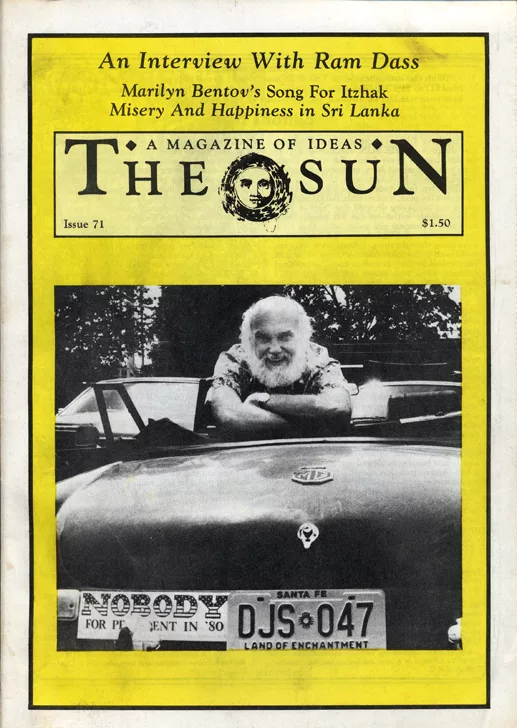
One of the persons killed was my former husband and closest friend, Itzhak Bentov. Most people called him “Ben,” a name he accepted so, as he said, they wouldn’t break their teeth when talking about him. Itzhak, a Hebrew name he adopted, means “he will laugh.” In 1940, as Imre Tobias, he was rescued from Czechoslovakia, where he was born, and sent to a children’s kibbutz in Palestine. His family, but for an older sister already in Palestine, was exterminated.
During his 25 years in the United States, Itzhak became a legend in the field of bio-medical invention. His hallmark was producing new methods and tools that were ridiculously simple when completed, and nearly impossible to believe in before undertaken. His imagination drove him to work on ten projects at once. Shortly after he started a job in Cambridge at a chemical company he was nicknamed “invention-a-minute Ben.” He had taken the job without knowing what the job description meant — “I didn’t have the foggiest notion what that kind of engineer was, but since I never did it, how did I know I couldn’t do it?” This was early in his career, after he became weary of baroquing poppet beads on machines he designed for a company in Leominster, Massachusetts that brought him to the U.S.
Itzhak was self-taught. He prided himself on following no one’s rules. Rules were blinders and binders. His independence included, not surprisingly, steel-hard stubbornness. When he was certain that he was onto a good idea, no authority could dissuade him from trying it out. That meant making something, not proving it. The only time I saw him take time to prove the validity of an idea was after he had invented a material that the head mathematician in his company insisted was illogical and impossible. Once the material was into production, Itzhak locked himself into his tiny study in our apartment for a week and laboriously worked out the mathematics, a task he despised. I think he’d been goaded by a sentence in a letter from the mathematician which alluded to his creativity as fanciful.
He achieved a far-flung reputation as a “miracle man” for his inventions. It wasn’t long before people called him “genius,” fascinated by the oblique and up-from-under or zooming-in-from-nowhere ways he had of approaching things. His later development as a healer (something he kept hidden), and as a seeker of spiritual self-realization — who would relate with the utmost joy his talks and experiences in other galaxies, with other creatures, as well as with angels and gods — prompted skeptical admirers, especially physicians, to say he was brilliant, all right, but crazy. Whatever people thought, or called him, Itzhak paid no attention unless he could pull some humor out of it. At the core of his insouciant independence was a hard-fisted defense against feeling, developed early and reinforced by the loss of his family. The other root of that independence was his belief that he was a channel for ideas. Itzhak was in fact an unusually modest person. His stubbornness, when he believed he was right, rarely arose from the wish to be right or famous or superior. Rather, the idea was right, and his satisfaction came from the “aha, now I see how wonderful an idea it is!” response to his work.
Itzhak frequently dreamed solutions to problems that he couldn’t reason through. He knew he could do this during sleep. Later in life, many of his solutions came in meditation. A lifelong interest in knowledge and the creative process eventually led him to a passionate commitment to the study of the frontiers of consciousness. Two years before his death, his first book, Stalking The Wild Pendulum: The Mechanics Of Consciousness, was published. The lucidity, imagination, and humor with which he set forth a hologramistic model of the universe and human existence caught the imagination of thousands of readers. He was invited to speak everywhere, giving workshops that always lasted hours beyond the contracted time. He taxed his strength to the limit in service to a view of existence which he saw as the path of human evolution.
Itzhak’s personality encouraged a following for whom he was a kind of guru. His seemingly unflappable optimism and his courage to name the absurd and laugh at it stirred people to admiration and attracted those who needed a strong back to lean on. After he was killed, admirers who remembered his limitless generosity generated and spread a rumor that Itzhak took the plane in order to help lighten the karma of those who were to die with him. It was said that he used his great powers to swerve the plane away from the trailer camp. His loss was accepted as his choice, made to help the world in more powerful ways than he could while still in his body.
These are not views that I hold or can ever accept. At the time of his death, I was not inclined towards theosophy or Eastern spiritual doctrines. It is true that events connected with his death, including pre-cognitive experiences I had at that time, tore apart my neat reality. The process of reintegration I undertook is, and will remain, a lifelong task. I cannot believe that Itzhak chose death; I can believe that he suspected he might not return from the trip he was taking to California. I will never know the truth, nor will anyone else in this dimension. But I will keep exploring what appear to be kaleidoscopic facets of the “so-called reality,” as he was fond of saying. For me, as for Itzhak, that is the real adventure. So that even in death, through death, he remains a beloved friend and teacher.
August 1981.
It was a year before our daughter could weep. We stood in the columbarium in Newton, Massachusetts where a small metal box behind the glass door held the ashes of a man who was over six feet tall. The box was a dumb fact. Carved on it was a kind of animated, cartoon-like stump with a small shoot growing from the side. I stared at the box, reaching for the finality of what I hadn’t witnessed: Itzhak dying. That his body could be reduced to that box, that it is true that “dust thou art,” filled me with fury. Holding our daughter, I resolved that I would not, after all, be cremated. Far better for survivors to see a stone, remember a living being, walk on grass, plant a flower.
On the side of the box, in Hebrew letters, it said: “Eternal life.” Sharona’s tears were bitter: “My father’s dead. There are his ashes that I can’t see, locked in a ridiculous box. If he’s alive, it’s because he’s in my heart where I talk to him. I don’t want to hear that he’s some big ball of light, invented by people who have to believe that the universe is accountable to them for pain, and that everything has to have a reason. They’re using him to feel spiritual and enlightened. He died because of a sloppy technician on a rotten airline.” It was on the second anniversary of this death, this year, that I got around to the airline. I swore for days, and imagined myself killing those responsible for the crack in the engine that fell off the plane.
So another year has passed. My first journey, tracing and retracing the people and events connected with the tragedy, is nearly complete. Now, in the framework of my tradition, I want to say a kadish for Itzhak. Kadish, which means sanctification and honors the dead, is a hymn of praise, a hallelujah. To praise, hallel, is also to make shine.
Last April, very early one cool morning, a pretty North Carolina morning when wisteria buds seemed actually to drop into flower, I stood with a small group of people on the damp grass behind the synagogue. We had gathered to celebrate the 28-year equinox of the sun. Jews do this, saying a special prayer for the sun’s renewal. The young rabbi, in an ankle length, white cotton Tallit, explained that the equinox is a time to renew our vision and stand in awe before creation which, like the sun, begins again. Indeed, he explains, each day of the sun’s passage — from world to world, from rising to rising and setting to setting, from the hidden (which is the same word as world) to reveal the world, and from the revealed world to return to its place, thereby hiding the world once more — each day is as if it were eternity (which is the same word as world and hidden), and each morning is the beginning of a new world.
In your book, your god is an inventor who explodes a seed, an egg, into space, and makes a hologram so infinitely faceted that the sun’s illumination of its parts creates, for our level of consciousness, the illusion of time.
I think my favorite picture of you is the one where the camera closed on your smile as you were saying: “Nature is so marvelous, so clever . . . look at this . . . I couldn’t have done it better myself.” In your book, your god is an inventor who explodes a seed, an egg, into space, and makes a hologram so infinitely faceted that the sun’s illumination of its parts creates, for our level of consciousness, the illusion of time. Thinking on this, I know you are here, still teaching that to be is a miracle.
In a few days it will be your birthday. You would have been 57. August 9. A Leo — and how! Tall and large-boned, loose and easy when you moved, your hard body felt, ten yards away, like it was made to protect and to lead. I was from a Jewish family so tall on one side that, before I met you, I thought we were the only tall Jews. “How did you get to be so tall?” I kidded you. “Well, we lived near the mountains in Czechoslovakia, and in order to talk to our neighbors on the other side, we had to stretch high on our tiptoes, and in a few generations we got stretched very tall.”
Your laugh was a wave that caught ambient anxiety, looped it on its crests and swooshed it away. “Ben’s laugh.” First and last, that’s how you’re remembered. Your voice was stippled with chuckles. And you mostly smiled, an impersonal smile. Strangers, seeing you smile, fell in love with you; that’s what they tell me. I’ve seen that smile on sculptures of early Cretan gods, whose faces express divine content.
You had your entropic moments, about 30 seconds, I’d say, infrequently, of Russian swears, shaded with Arabic, and ending in a hum of dinum, dinum, an-dinum that trailed back into your throat. Then, onward, with a shrug of your bony shoulders, a flick of the graceful, large inventor’s hands. Your grin would slide back with the inevitable, “Is good, is good.”
We never discussed your “choice” (as you would have insisted) of August 9 for a birthday. Birthdays were “bourgeois” in any case. You did make mention of the 50th — “HALF A CENTURY!” You were impressed. And the 55th, when your voice betrayed astonishment and dismay: “Imagine, I’m a what-you-call senior citizen. Now how do you like that!”
What would you have said this year? August 9 is Tisha B’Av, the day of the destruction of the two temples in Jerusalem. I suppose you would have been indifferent, or you would have made some remark to the effect that it was a good thing because it saved a lot of innocent animals from subsequent sacrifice. Of course, the Jews were expelled from Spain on that day. Well, you’d say, if you’re in relations with the God of Israel, it’s probably a good day to sit still. But that day is notorious in Western history, and the worst was the bombing of Hiroshima and Nagasaki. You look solemn: “Yaah? Oh, oh, poor day, such bad karma.” You’re right, Jeremiah was born on that day, and he prophesied the apocalypse; his picture of a devastated earth is too close to home in 1981. I know you don’t like negative comments like that: “Nu, nu,” you smile indulgently, stroking my wrist, “now you understand. You see, hundreds of years later you talk about this Jeremiah, and his thoughts are still making invisible munitions factories. A genuine 100% guaranteed-or-you-get-your-money-back negative type!”
Itzhak, Tisha B’Av is the birthday of the messiah to come. O.k., o.k., we both laugh. You’re an inventor, a designer of tools and systems and worlds. People who listen to you sail away high on your energy. Your head and hands are wires, bending in all directions, making countless diagrams. Sharona says that when you and she go to Brigham’s for a sinful, hot fudge sundae (“Daddy’s guilty as hell but he’s all smiles and mmm’s and ooh’s, and complaining about how fat he is, you know Mummy, that spot on his waist that he pinches.”) you run out of paper drawing her diagrams, and then you run out of paper napkins, and then you draw on her hands. A messiah? You didn’t have time!
Your laugh was a wave that caught ambient anxiety, looped it on its crests and swooshed it away. “Ben’s laugh.” First and last, that’s how you’re remembered.
But then, all the while, you were gradually shifting to a path parallel to your medical inventing, the path of the healer. You saw into people’s bodies. You worked with them, and their illness, even cancer, went away. You saw people’s demons; whatever you did, they lost them. “Ben healed me.” I heard that from a very large number of people whom I met after you died. You healed blindness, madness. You talked and joshed a catatonic out of his stupor and back into the world. You role-played Jesus on a date with a schizophrenic girl who wanted to be a nun: “What, you want to marry Him before you’ve even gone out on a date?” She got well. The sick began to stream to you and you took time when there was no time. The more that heavy wave leaned on you, the more frequently you took deep breaths, letting the wave increase.
On June 3, the mourners called and wired and came from everywhere. I didn’t know how many you had touched. Your closest friend, a psychic, transmitted the message he said he had from you that you are now “Ben and not-Ben,” that they can no longer lean, that they must heal themselves, that the healing is within them. Still, people said, you should have known better than to take that plane. Ordinary people might not know, but you surely knew. Then they decided that, knowing, you took it. One of the wires, from a psychic, states that you foresaw the crash while walking to the plane, said, “What the heck!” and boarded.
You did say that before taking a risk, I remember. But not before boarding the plane, I thought. You were planning to be back in order to celebrate after Sharona got her yellow belt in karate. The idea pleased you. “Good,” you told her, “you should become strong.”
I sat with our daughter at the memorial service. I sat and listened to recollections of someone I didn’t know, a kind of god in human form whose sculptured head sat high on a pedestal banked by flowers that flowed down onto the platform. The only you I recognized was in the Hebrew songs, maybe in Bikel’s Russian songs, a kibbutznik building pipelines to the Negev, dancing with friends the dance when life is young and burning with hope. I heard you in the quiet Sanskrit chant at the end; its order and simplicity was a sound picture of you. I knew you in Sharona’s recollection of boatings on the Concord River and was one with the mourners when her portrait evoked their gentle laughter. You showed her the umbilical cord you’d been saving in an envelope for nearly two decades. It was hers, and you decided it was probably time to discard it. Yes. There you stood by the kitchen counter as I finished bathing her. The cord fell off. You picked it up and examined it. “Look, look, oh, imagine, just look . . .” were the sounds you exclaimed over a shedding, somewhat like snakes, which you knew well, of this bio-degradable lifeline that had finished its purpose and, according to some ancient program, detached itself. That was the wonder for you, the reminder, which you found always, of the big question. So, staring at our infant in her small blanket, unwrapped, after her first journey from hospital to home, you laughed and, with a slow seriousness in your voice that was infrequent, said: “Nature is strange . . . to make such a perfect package — and no instruction for use!”
Sharona knew you best. The day after the crash, we saw a newspaper headline, “Local Genius Dies in Crash!” We were both being stoic, respecting your irritation with sadness, especially about death, which you didn’t believe in. So I said: “Can’t you see Daddy shaking his head and saying, ‘Oho, my my, genius, genius!” “No, Mummy,” she corrected me, “what Daddy would say is: ‘Well, well, I’m a local genius!’ ”
A Leo — and how! Tall and large-boned, loose and easy when you moved, your hard body felt, 10 yards away, like it was made to protect and to lead.
The news had flown that the Indian teacher, Muktananda, whom you saw that week of the crash, told you, before his swamis and initiates, to stay at the ashram that weekend, not to travel. Later I was told that he said it five times. (In the interview I read between you and him, I saw it only once, but it may have been transcribed only once.) Your refusal to heed his wish, plus the accuracy of his apparent prediction, stunned his followers. Then, on the afternoon before you left, you turned to a friend, and, in a transitory mood, so brief she barely caught it, you said: “I’m through with life in this body.”
I’ve checked these stories and opened myself to that part of your world. Doing so has connected our paths more firmly, but no more than the fact, which I live with daily, that I forgot to tell you, when I last saw you, that I had dreamed that you were killed in a plane crash. You were so tired and you told me so. Your eyes dominated a face that had become pale and hollow. When you said you were going away for a month, I felt funny and protested the endless touring, the long time away. “Call me as soon as you’re back,” I said. Why didn’t I remember? What kind of fog was I in?
So: if you weren’t intending to be the messiah, why did you choose such a “noisy” day to be born?
I’ve asked Sharona to bring you, for your birthday, the most liony, wild, sun-gold flower she can find.
Marilyn and Itzhak Bentov were married in 1955 and divorced in 1960. Their daughter, Sharona, a poet, lives in Cambridge, Massachusetts.
© Copyright 1981 Marilyn Bentov