Roots and Rhizomes
Read an Essay from an Upcoming Issue
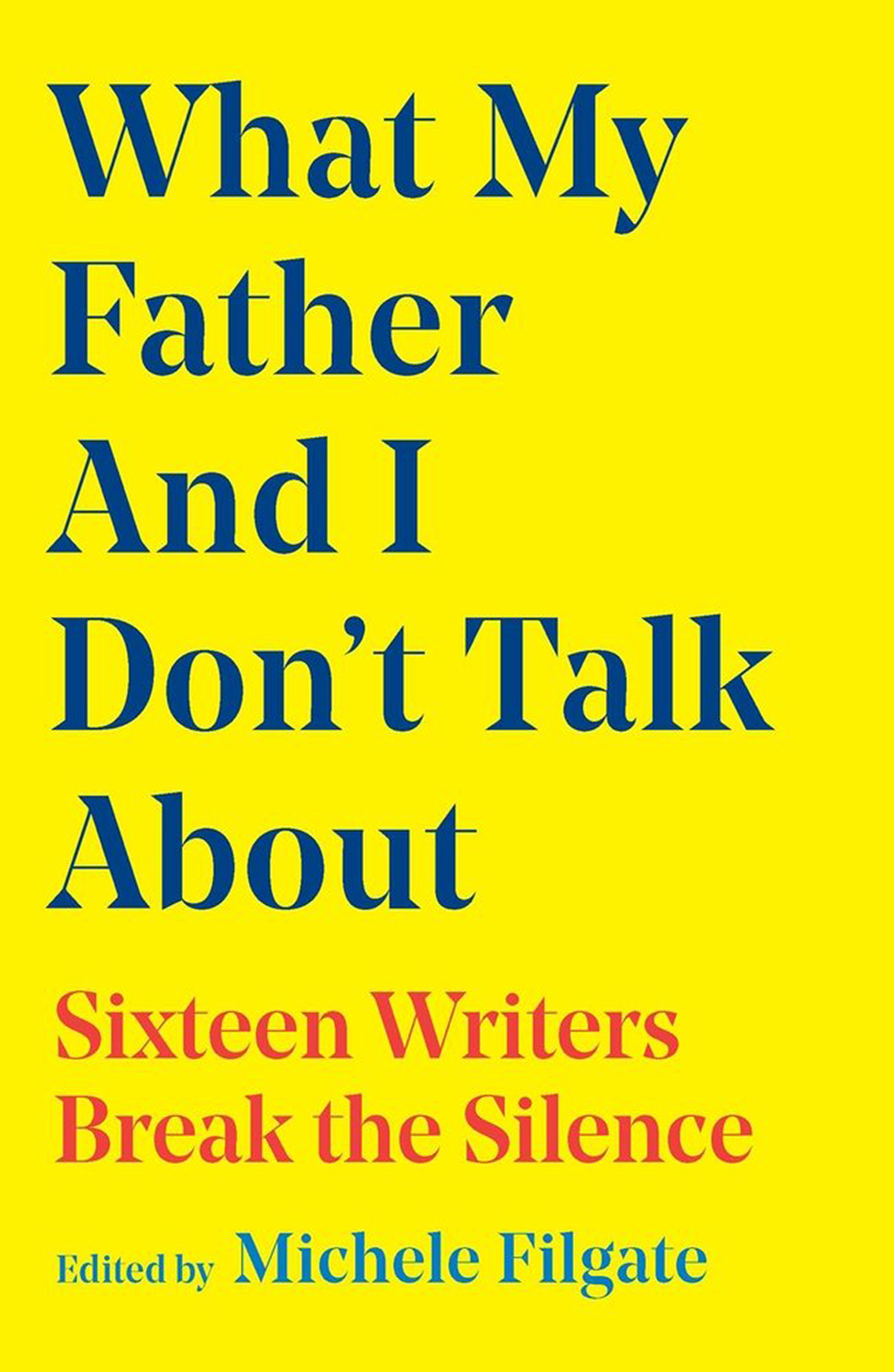
Many families have their own languages of love: ways to express feelings without saying them out loud. In my family those languages are making food, giving rides, and hosting get-togethers. For author Kelly McMasters and her father, they’re gardening and golf, two interests he began sharing with her during her childhood that have been part of their bond for decades. Her essay about their relationship, “Roots and Rhizomes,” will appear in the forthcoming anthology What My Father and I Don’t Talk About, editor Michele Filgate’s follow-up volume to What My Mother and I Don’t Talk About. We’re publishing Kelly’s essay on our website in anticipation of the book’s release on May 6; it’ll also appear in the July issue of The Sun. And keep an eye out for the anthology: In addition to Kelly’s piece, it features writing from Sun contributors Jaquira Díaz and Heather Sellers.
Take care and read well,
Nancy Holochwost, Associate Editor
My father hates grass. He can rail for an hour about how American lawns are a ridiculous pissing contest among elites. There is not a single blade of that grass that is indigenous to this country, he likes to say. That’s why the perfectly manicured lawns that connote success in suburbia require so much pesticide and upkeep. They don’t belong here. Europeans brought over the green grasses we now devote so much time and money to shaving down like military brush cuts.
I hate grass too, of course. Like father, like daughter. It makes no sense to me to pour poison on the entrance to our homes, on the space where our children and pets roll around, just to make sure each yard looks the same as the next. It’s strange, then, that grass dominates my favorite memories of my father.
I grew up on golf courses. I don’t mean this the way it might sound, as if I hung around in polo shirts and had a regular tee time or brunches at the club. I mean I lived there. My father worked as a golf pro for the first ten years of my life, so my parents and I were often set up in apartments above the pro shops or in drafty staff housing on the outskirts of the properties. Each day, while my father managed the course and gave lessons in his collared shirt and pressed khakis, my mother and I would do our best to remain invisible, part of an unseen root system of the service economy that kept the place alive.
As a kid I did not understand that the resorts we lived on were not ours. I loved taking walks with my father when the courses were empty, ambling through miles of gorgeous greens or brambly underbrush. He’d taken some landscaping courses and would pitch in with the maintenance crews for extra cash. While we walked, he pointed out the different types of trees and flowers, explained why the grasses were cut at different heights, and let me play in the sand traps so long as I raked them out afterward.
My mother hated golf. I thought she just didn’t like being outside; she seemed happiest when curled up on the couch, legs tucked under a blanket, book in one hand and tea in the other. I was the one who got to join my father on expeditions to the grease-stained lawnmower barns and the shed with all the buckets of broken balls stinking of rubber. Sometimes we’d zip around on a golf cart, and, once out of my mother’s sight, he’d prop me on his lap and let me drive. But more often we’d walk. We’d search for balls in the cattails, name the birds calling to each other in the trees, identify clouds by how quickly they moved. He’d carry me on his shoulders, and I’d feel taller than everyone in the world.
My father speaks in plant. It’s his love language, his private lexicon. We’ve probably spoken more about plants than any other topic during the nearly fifty years we’ve shared this planet. When I was small, he taught me the difference between annuals and perennials, the utility of companion planting, the benefit of cover crops to enrich the soil. We’d walk along a trail, and he’d identify honeysuckle vines and inedible berries, show me how to recognize a tree by the veins in its leaves and the curl of its bark.
He’s fascinated by the idea of growing potatoes in an old tire. He saw this once—someone had cut up a potato with lots of eyes, packed the pieces inside the hollow ring, and covered them with dirt. A season later the person lifted up the tire and shook free a pile of new potatoes. My father never tried it, to my knowledge, but reliably brings it up at least once a year as something I might like to attempt. I’ve never taken him up on it, so he’s started suggesting it to my sons. I think he likes the junkyardiness of it: turning scraps into something new.
I have always been less interested in the result of gardening—the fruit of the labor, as it were—than in the labor itself. As a kid I listened raptly as he talked about grafting and pruning, or bonemeal, which reminded me of the giant in my bedtime book who liked to grind bones to make his bread. One of my first chores was deadheading the snapdragons we kept in hanging pots on our back porch. It pained me at first, ripping off the purple blooms at the first sign of wilt. But there was something satisfying in the sharp snapping of each flower’s fleshy neck, the way the stem continued to ooze moisture, so fragile and exposed. It soon became my favorite job.
When I started my own garden as an adult, he counseled me about mulch and loam, nitrogen and phosphorous and potassium. He suggested soaking cotton balls with coyote urine to keep the deer away; tucking the baby-soft curls left over from cutting my sons’ hair into the garlic beds to dissuade the groundhogs from digging. When I was in the process of leaving my husband, he helped me split hostas, split rhubarb, split daylilies. See how easy they come apart? he asked. You have to do it at the right time, but you get so much more growth.
The other day my father called to tell me about a conversation he wanted to have with my teenage son. He was planning to tell him that he was proud of him: of the way he is moving through the world, of the decisions he is making. He’s finally got his own brain, he said, then laughed and added, I won’t tell him that part. I listened, understanding that my father had spent hours, likely while gardening or hitting golf balls, thinking about his grandson, about the changes he’s seen in him during the difficult years after my divorce. I understood he’d spent this time carefully planning out his words to me and then to my son.
Is that OK? he asked. I wanted to cry. Is it OK that you’ve watched my child, whom I love more than life, with such care and attention that you are noticing him begin to bloom in a new way? I didn’t cry; I didn’t say anything for a moment. Finally I managed, That’s OK. I think he’d like that. Then I asked him about the new tree he’d recently planted in his yard. Were the roots taking?
Once, when I was a teenager, my father’s parents visited our house. My grandparents, my parents, and I sat at our small oak table, having dinner. We didn’t see each other very often, so I was catching them up on my life, which at that time was consumed by grades and clubs and other achievements that are so attractive to striving, blue-collar kids. I boasted about some school award, shining the way the only grandchild in a family can shine. Everyone politely acted impressed, and my grandfather, sitting at the head of the table, said, without humor, Well, this actually makes a lot of sense. Brains do skip a generation.
That dinner was probably thirty-five years ago, and my grandfather has been dead for two decades, but I can hear his voice as clearly as I do the bird outside my window. He never really had a father, my mother said recently, when I mentioned this memory to her. She could have been speaking about either man: My grandfather’s father left him at a cousin’s house when he was two and never came back. When my grandfather started his own family, he lived in the same house as my father, but that doesn’t mean he was a parent to him.
It always mattered so much to him, being a father to you, she said of my dad. He knew what it felt like not to have one, and he wanted you to know he was always there, even if he had to figure it out from scratch.
My father often tells a story about sleeping in the woods as a teenager. He talks about walking out into the dark and finding a tree for cover. He would scoop out an indent in the ground beneath the tree’s branches and fill it with pine needles. Then he would lie down on this improvised mattress and sleep under the night sky.
I loved this story, and he seemed to love telling it. I never asked him why he felt the need to sleep out in the woods as a teenager. I still haven’t asked him.
My father’s favorite gardening topic is rhizomes. My new partner and I moved in together last year, and it has become a joke between us.
I spoke to my dad yesterday, I’ll say while pouring the morning coffee.
Let me guess, he’ll respond. About rhizomes? It’s funny because the answer is usually yes.
In his old age my father has found deep clarity in the division between the rhizomatous and the nonrhizomatous world. If you have ever tugged on one tiny sprout while weeding and found yourself yanking up a root system that seems to reach across the whole garden, you’ve got a rhizome. They are usually considered invasive because they spread uncontrollably. Iris, my favorite flower, has rhizomatous types. This feels like a gift: If you plant one iris in your garden, next year you’ll have two. But many rhizomatous plants, like horsetail and creeping Charlie, bamboo and poison ivy, will crush the life out of any other plant nearby and proliferate with abandon. They are deeply difficult to kill. Tilling will just breed more; if you break the root, a new bud will grow right where you severed it, like a starfish’s arm.
When my partner saw the glossy-leafed sprout in the middle of the garden bed this summer, he figured a bird had dropped a seed from our Japanese maple. He held the plant between his fingers, moving it one way and then another to get a good photo for our plant identification app. Dicots, it reported. This is the app’s standard response when it can’t identify something, which is often. He tried again. Dicots. Dicots. He tilted the leaves a little more to the left. Poison ivy. Shit.
I didn’t trust the app—the plant didn’t look like poison ivy to me—but it was strange how this one stray sprig had taken root in the middle of our boxed bed. While my partner ran inside to soap up his hand, I took a photo with my phone and sent it to the best poison ivy expert I know: my dad. He shot back a response: Sure looks like it.
He came out to visit a few days later. The two of us looked at the empty spot where the poison ivy had been and talked about rhizomes and nodes. (Of course.) Poison ivy grows horizontally underground, and its roots can stretch for up to twenty feet. That’s why it was able to pop up in the middle of our bed between the Swiss chard and rosemary, my father posited.
He’s had poison ivy more often than anyone else I know. Even though it’s been forty years since he’s lived on a golf course, he works part-time as a teaching assistant at two local courses near the townhouse he shares with my mother, and he still enjoys rooting around in the long grasses for lost balls. In the summer, especially, the backs of his hands and his forearms will be scaly with poison ivy and caked with pink calamine lotion. My mother will shake her head, but at this point she knows better than to suggest he stop.
He’s learned to live with the pain of the rash. The satisfaction of finding what others have missed must be worth it: the thrill of parting the grass with his putter, spying the electric yellow or toothy white of a ball someone gave up for lost. He may not live on those acres of green any longer, but their secrets are still available to him, because only he knows where to look. Of course, that’s where the poison ivy likes to hide too.
I know now that you aren’t born a parent. But you are born with inherited traits and proclivities that you end up either nurturing or starving out. Life, in my experience, requires a lot of deadheading. I’m glad my father taught me how to do it at such a young age.
When my grandfather died, we buried him on a peaceful hill in Vermont. Next to him is his daughter, who died first, who loved the view from that graveyard, whose funeral had been so large that it extended into the street. My grandmother is on the other side of him. Last year my father’s brother died, so he’s there now too. There was no funeral for either of my grandparents. They didn’t really have any friends. It was just my father, my mother, and me at their graves, standing in the gravel, the yellow backhoe at a respectable distance.
My sons and I are the only ones who continue to visit the graveyard. We try to go every year or so; the cemetery is about a five-hour drive from our home. We line their headstones with sparkly rocks and wildflowers picked from a nearby field. Last year we left bouquets of goldenrod and blue vervain, Queen Anne’s lace and side oats, propped against the once-shiny black granite. My grandparents’ headstones are pitted and ashy now. I can see the last name—my father’s last name, my last name—clearly across the top, but the other letters are effaced, delicate grasses and lichen nesting in the carved-out spots.
During one visit I walked a few rows away to find Leslie, my cousin who is also buried there. When I returned, the boys had laid rocks in the outline of hearts in front of the headstones. The three of us stood at the graves, and I had a topsy-turvy moment in which I imagined my grandparents and aunt and uncle and cousin all curled together underground, bodies connected like rhizomes beneath the hill, the headstones their blooms. The hair raised on my arms, and I took my children by their hands and led them back to the car.
My oldest son likes lawns and cement, thinks we should pave over the raised beds and make space for a patio or a pool. My younger son likes the natural world and watches the birds in the trees with me. Sometimes, when we’re gardening together and I have my plant app out, he’ll jump in front of me. Take my photo! he’ll say. What does it say I am? Each time, the app flashes the same response: Homo sapiens. It classifies him in the mammal category, along with the eastern gray squirrel, Sciurus carolinensis.
My father always defied classification. When I was a teenager, he stopped working on golf courses and became a traveling salesman, selling golf equipment so we wouldn’t have to move at the end of every season and I wouldn’t have to constantly change schools. He bought a big hunter-green van—half The A-Team, half homemade showroom on wheels—and ripped out the back seats to make room for the golf bags and clubs. He’d sometimes take me with him on short trips, and I would lie in the back of the van, staring up at the clouds through the bubble skylights and rubbing my cheek on the scratchy Astroturf he’d laid down until it left red marks on my skin. My father was always working, even if he was just working a deal: When I needed braces for my buck teeth, he paid my orthodontist in golf lessons; one Thanksgiving, as we were driving to my grandparents’ house, he stopped at an auto-body shop in Queens, New York, where he plucked a frozen turkey out of the trunk of a car—a gift from one of his golf students.
When I was a teenager, my father set me up with a summer job in a pro shop at a resort called Deer Park. It had a small nine-hole golf course but made most of its money on mini golf and the driving range. People came into the shop to set up lessons and look at the giant bubble-headed Callaway clubs they’d seen on television. Sometimes I passed the time hitting balls on the range or reading a book while perched on a stool behind the cash register.
If I tell someone that my father is a PGA professional, they’ll usually assume I am a fantastic golfer, but he and I mostly used the courses as nature trails. When we did play, we never kept score. My father would drop a ball wherever he liked and have me hit it. If the hit wasn’t good, he’d drop another and let me swing again. Unlike gardening, golf for him was about the process, not the result.
The summer I worked at Deer Park, my father would stop by some afternoons, since the shop was one of his accounts. After he loaded or unloaded boxes of clubs, if the shop wasn’t too busy, we would line up on the range and hit balls together. Sometimes he’d give me advice on how to fix my stance or when to drop my shoulder, but more often we’d hit in silence, meditatively scooping balls out of a bucket. (We were purists and never used the automated pop-up range). I liked just being next to him more than I liked to hit. The solid thwack of his club was a comfort. He swung with uncanny precision—he could hit not just a distance marker, but a particular number on the sign. Once, when one of the stoner boys who worked maintenance came out in the caged cart that hoovered up the loose balls on the range, my father pelted the cart mercilessly until the boy climbed out and stomped back to the shed.
Watching my father swing a golf club is one of the most beautiful things I’ve seen in my life. This is not hyperbole. Once, at Deer Park, I stood back for a while, just observing him hitting, until I realized I was surrounded by a ring of people who were similarly transfixed. Aside from being in nature, there are few times that I’ve witnessed something as perfect as this man quietly swinging his body through the air.
When I think about those years growing up on golf courses, it occurs to me that there were never other children around. At the time this made me feel special—the staff would sneak me paper cups of hot cocoa with extra marshmallows, save me fancy cookies from lunch service. Now it strikes me as a little lonely.
My clearest childhood memory is standing for hours in our yard, arms outstretched, waiting for birds to pluck seed from my hands. This is at my favorite house, the little yellow one at the end of a dirt road, with a potbellied stove propped up on bricks that leaks curls of smoke along with the heat. I can sense my mother inside near the window, but not exactly watching; she’s probably reading a book. On the other side of the property my father is teaching, swinging, cutting grass, all while running a side hustle of selling cans of soda to club members on the tennis court. Eventually his boss stopped him because he felt it was unbecoming for the golf pro to be scampering around the tennis courts with change jangling in his pockets.
Years later my mother mailed me a photo of this home because she knew how much I loved it. When I tore open the envelope, I thought she was mistaken. The picture was of a rundown single-wide on cinder blocks. But she assured me this was, in fact, the house with the potbellied stove, the house I stood next to with my arms outstretched until they ached. The birds never took the seeds from my hands.
I wonder what my children will remember. We’ve hatched butterflies, grown seeds in egg cartons on our windowsill. They know the names of the stars, how to tell a bird from a bat in the dark. They’ve lived most of their lives without a father in our home, though I’ve tried to take up as much of that empty space as I could, as has my dad. But is it enough?
Recently my father started teaching my oldest how to golf. My dad’s hips and back are giving him trouble now; though he says the disability tag hanging from his rearview mirror just gets him premium parking, I know it is more than that. I’m sad my children don’t get to walk the course with my dad the way I did. At the golf range my son prefers the automated tees, the big bubble-headed drivers. His skinny arms are almost as thin as the club shaft. I worry that my father won’t know what to do with him, this child who favors lawns and pavement. But when they return home, they are smiling, and later, while I’m putting him to bed, my son whispers to me, so his brother can’t hear, that Grandpa let him drive the golf cart all by himself.
My father told me last year that he doesn’t want to be buried on that hill in Vermont. This struck me as strange at first. None of our family is buried anywhere else. Turns out he wants to be cremated, which was a surprise. I didn’t expect someone who loves the land as much as he does not to want to return to it. But he sees cemeteries as wasteful, a tradition that has become outdated now that the planet is overpopulated. Meaningless fashion, like the American obsession with grass. My mother wants to be buried, though, so he’s consented to having some of his ashes interred with her, wherever she ends up. He wants us to release a portion into the ocean and the rest onto a golf course. He doesn’t really care which one. Any course will do.
I do know where on the course I’ll put him. Perhaps my sons can drive me down the back nine on a cart, or we can go during the offseason and walk. I’ll find a tricky hole, maybe a dogleg. I’ll hunt for a cluster of trees with some brambly undergrowth that’s sure to be chock-full of balls golfers have given up for lost. I’ll tuck him under there, out of the way, in a place most people won’t go tramping through. Maybe we’ll make a heart out of stones.
This essay will appear in What My Father and I Don’t Talk About, edited by Michele Filgate. Copyright © 2025 by Michele Filgate. Reprinted by permission of Simon & Schuster, NY.
 PREVIOUS
We’ll mail you a free copy of this month’s issue. Plus you’ll get full online access—including more than 50 years of archives.
Request a Free Issue