My father spent most of my childhood with a camcorder in his hand, recording my mother, my brother, and me. My mother was always uncomfortable in the spotlight. As Seth and I got older, we began to resent Dad’s camcorder as well, sighing and rolling our eyes when we heard the beep of the record button.
This past Christmas, when Seth and I were home for the holiday, our dad told us he had a surprise. We gathered in Seth’s old room, where Dad had hooked up an ancient VHS player to the TV. Then he emptied a box of cassette tapes on the floor and told us each to pick one to watch.
I read the handwritten labels: “November 2001—Sea World, Lego Land, Finger Painting, Thanksgiving.” “Winter 2003—Hannah Show, Seth ‘Here Comes the Sun’ Dance, Patty Cake, Seth Birthday.” “Summer 2005—4th of July Michigan, Tomato Worm, Seth Splash Pool.” All these simple moments, many of which I no longer remembered.
Later that evening my dad told me that he had found some even older tapes, ones his father had made. They were narrations of everyday activities: Here is the backyard. Would you look at that—the tree I planted last year is a little taller now. There goes a black squirrel. It’s a beautiful day.
My dad retired his camcorder long ago. As much as his constant recording irked me when I was young, I now see the gift he was creating each time he pressed that button. Years from now, when my parents are gone, I can return to the VHS cassettes, where my dad’s voice will await me: Hi, Hannah! What are you doing right now? Can you show me again for the camera?
Hannah Gage
Indianapolis, Indiana
In 1969 I was attending college, but instead of going to class, I played the drums in a variety of bands. When I wasn’t playing music, I was listening to it. A daily visitor at the only record store in town, I developed a relationship with the owners. I’d suggest music for them to play over the store’s speakers and albums to fill gaps in their jazz section. One day the owners asked if I’d be interested in a job. They couldn’t pay much, but every week they’d let me take some records from their warehouse for free.
“Hell yes,” I said. I knew that among the dust and cobwebs were many hard-to-find gems. I still remember the thrill of uncovering a rare album by Miles or Monk, Charles or Chick, Bird or Byrd, Coltrane or Cannonball.
For the three years I worked at the store, I was the envy of every longhair in town. My record collection grew to over a thousand albums. There was no better feeling than when my buddies would drop by my place and ask what I was listening to. I’d coolly show them the album cover, and they’d say, “I didn’t even know this existed.”
Eventually I managed to graduate, and I got a job to finance my record-collecting obsession. One night I came home from work to find my front door was open. My dog yelped from my bedroom, where she’d been locked in. The thieves hadn’t taken much, but what they did take cut my heart out: my entire record collection, along with my stereo.
For about a year I tried to rebuild my collection, but it was too painful. I’d thumb through albums in record stores and think, I had that. And that. And that, and I’d get angry all over again. Finally I quit torturing myself and gave up. I have a number of friends who have extensive collections. Whenever I visit, I tell them, “You have some amazing records!” but I can’t help thinking, Yeah, so did I.
Steve Pantell
Oakland, California
Working in customer service at a DNA-testing company, I received many calls from people whose lives had just unraveled.
“I just got the results,” they’d say. “It says my dad isn’t my dad. That has to be a mistake.”
I could hear the shock in their voices. I tried to be as gentle as possible as I explained our testing process was 99.99 percent accurate, but they weren’t ready to accept it. “There has to be an error. Can I retake the test? Maybe the lab mixed it up.”
I’d tell them the results had been triple-checked, and the probability of error was extraordinarily low.
“But this doesn’t make sense,” they’d say. Before I could respond, they’d often hang up.
Calls like this haunted me. Every month I spoke to hundreds of confused and angry people grappling with life-altering revelations: unexpected siblings, hidden health risks, or long-held family secrets, all uncovered by science. As much as I tried to empathize, I couldn’t do much more than repeat the results I saw on my screen. The truth doesn’t bend to our desires, no matter how hard we push against it.
Name Withheld
My mother always bought my Christmas and birthday presents and signed the tags, “Love, Mom and Dad,” but for some reason, on my fifteenth birthday, my father decided he wanted to pick out a present for me. He went to the local record store and asked the young man behind the counter to recommend something.
As soon as I unwrapped the triple live album Woodstock, I jumped up and put it on the stereo. In my hurry, I dropped the needle on side 2 instead of side 1, and Country Joe McDonald’s voice came blasting into the living room: “Gimme an F! Gimme a U! Gimme a C! Gimme a K! What’s that spell?”
My father was not pleased. I was ecstatic.
Pam Crow
Portland, Oregon
A few years after graduating from college, my boyfriend and I pulled a stupid stunt: We broke into a condemned dorm to smoke pot on the roof. We’d done it before and had fun, but this time we were caught by campus security, who handed us over to the police.
At the station, I found out we were being charged with first-degree breaking and entering, a felony. Before being placed in the holding cell, I used my phone privilege to call my dad, who was a criminal-defense attorney. He didn’t love having his daughter call him from jail, but he immediately went into lawyer mode and told me he’d be there soon.
In the meantime I talked to the other women in the holding cell: several sex workers covered with bruises; someone who’d been arrested for stealing electricity for her camper from a public utility hookup; and a woman who had false teeth because her pimp had knocked out her real ones. When my father arrived, the others told me how lucky I was to have a lawyer for a dad. Some of them even knew who he was and assured me he’d have no trouble getting my case thrown out.
I was lucky. My dad was friends with the district attorney and hammered out a plea bargain. The charge was reduced to a misdemeanor, and once I completed my community service, it would be expunged from my record.
I came out of this experience wanting to make a change in the world. The women in that cell weren’t bad people, just people in bad situations. I decided to take the LSAT and apply to law school.
I wish I had an inspirational story about becoming an attorney who helps the downtrodden, but my LSAT score was mediocre, and my prospects for law school were slim. I accepted a job offer that led to a different career. But I never forgot those women. I hope they found someone to fight on their behalf.
Deborah Arrington
El Sobrante, California
I entered the crowded courtroom with my head down, feeling like I was going to a public execution. My lawyer waved me to a seat, and the judge asked, “You are filing for Chapter 7 bankruptcy due to medical reasons, correct?”
“Yes, ma’am,” I said. “I had a series of strokes and am unable to work.”
Tears filled my eyes as I remembered the hopelessness of insurance delays and denials for tests and specialists. In the four months it had taken to get a diagnosis, hundreds of strokes had permanently blocked blood flow to my brain. I was never given the cost of the procedures in advance and had no control over what happened.
The judge’s assistant handed her a folder bulging with bills: three MRIs at $16,000 each, an $80,000 surgery that failed, seven nights in the hospital that cost $78,000, and even a $150 line item for gauze. All together it totaled a quarter of a million dollars, a sum I could not repay.
The judge took the folder into evidence, stamped a paper, and said, “Approved!” Shaking, I signed with my nonparalyzed hand. The enormity of my medical debt had disappeared, and all I’d had to sacrifice was my credit for ten years and my good name.
That night I read online that more than half of all US bankruptcies the previous year, 2007, were a result of medical debts. Seventy-five percent of those medical bankruptcies were for people like me, who had health insurance. Insurance should be protection. The paper I signed was evidence of a systemic failure, not a personal one.
Emily Dixon
Mill Valley, California
Though gays and lesbians couldn’t legally wed in 1986, my partner and I held a ceremony among the redwood trees in a park outside Oakland, California. Our parents refused to attend, but our siblings and other loved ones came, and the mood was joyful and profound as I committed to my beloved in front of a supportive audience of family and friends.
In 1999 the California legislature approved Assembly Bill 26, allowing same-sex domestic partnerships. Our union now had a legal name. We were “DPs,” which gave us hospital-visitation rights and made health insurance slightly more attainable. We celebrated with friends at a Thai restaurant.
The next iteration of our partnership was a civil union performed in 2003 in Vermont. Though California didn’t allow same-sex civil unions, it recognized those obtained in other states where they were legal. When I invited my mother, she said, “Yes, I’m coming. I try not to make the same mistake twice.” This broke my heart open.
Over the next decade the status of same-sex marriage in California was as convoluted as an M.C. Escher stairway. For one month in 2004, before the state supreme court ordered a halt, San Francisco issued marriage licenses to same-sex couples, and we were one of the approximately four thousand couples who were wed. The simple ceremony at city hall was electric, and the officiants and clerks were as thrilled as we were. To the cheers of strangers, we descended the staircase as a—temporarily—married couple.
Between 2004 and 2013 our marriage was in a state of abeyance, as both political sides passed legislation and issued court challenges. In 2013 gay marriage became legal in California, and two years later the Supreme Court’s ruling in Obergefell v. Hodges made it legal in all fifty states. Cue another big celebration. By our count we’ve had four weddings—and one Thai dinner—in our attempt to obtain a legal record of our love.
Meg Newman
Lebanon, New Hampshire
I was browsing through my parents’ record collection—back when my musical tastes were still evolving and I judged an album by its cover—and a photo of a handsome man with cool hair caught my eye: Neil Diamond’s His 12 Greatest Hits.
This probably rocks, I thought.
That’s how my musical relationship with my father began. Neil Diamond was one of the few artists we both liked. As I began to buy my own records, Dad would sit in my room while I spun my latest acquisitions. He may not have cared for Styx and Foreigner, but the music didn’t matter as much as the time we spent together.
In 1980, when I was twelve, I won tickets to see the Eagles: my first concert. Dad took me. Driving home that night, I looked over at Dad. His eyes met mine, and we nodded at each other. Then we turned our attention back to the highway, riding in silence for miles. The Eagles joined Neil Diamond as another favorite artist we shared, and we often looked back on that concert with a sense of reverence.
Dad passed away in 2024. I gave his eulogy, and the only time I lost my composure was when I told the story of the Eagles concert. For Christmas that year, my son—an avid music fan himself who introduces me to new artists—gave me a pristine vinyl copy of Eagles Live, a double album partially recorded on the tour Dad and I saw. Sometimes the music does the talking for us.
Michael Popke
Sun Prairie, Wisconsin
In the summer of 1968, before my sophomore year of college, some friends and I got pulled over while riding our motorcycles through Rehoboth Beach, Delaware. The police made it clear that our long hair and 160cc Hondas weren’t in keeping with local values. As a souvenir each of us received a citation. Mine was for a cracked rearview mirror. We were told we could appear in court the following week or mail in a three-dollar fine. We left town, and I forgot to send the three bucks.
A few years later I was in Kodiak, Alaska, working in the canneries when I received a notice, forwarded by my parents, demanding I send a money order for twelve dollars to cover the unpaid fine, as well as late fees and interest, or I’d face arrest. I decided it was pretty unlikely that police from Delaware would track me down on an island 3,500 miles away, but the notice made a nice conversation piece among the other cannery workers squatting with me.
In December of 1995 I was married and living in Maine, with two kids in elementary school, a mortgage, and only occasional employment. When I tried to renew my driver’s license, the DMV said my name was on a suspension list and gave me a number to call. The woman who answered told me I had an unresolved citation for defective motorcycle equipment in Delaware.
I said I thought there was a statute of limitations on such things. Although I didn’t wish to downplay the seriousness of having a cracked mirror, punishing me at this late date seemed excessive. I asked how much I owed, figuring it must be fifty or seventy-five bucks by now. The damages were $750—twice what I’d paid for my motorcycle in the sixties. I scraped the money together, but it was a lean Christmas that year. I guess you can run, but you can’t hide.
Larry Reynolds
Searsport, Maine
After several years of living in a cinder-block dormitory with grimy showers, I moved into an 1890s brick walk-up with a bathtub. My roommate, Daniel, and I bought old furniture and cookware from Goodwill. We also had Daniel’s high-end turntable and several crates of records pilfered from our parents.
In the deep Vermont winter I would take a long bath two or three times a week, always with the lights off and candles surrounding the tub. To complete the atmosphere, I lowered the needle onto Marvin Gaye’s What’s Going On. Like most of our collection, this record had endured thirty years of damage from clumsy or drunk handlers. Its crackles, reminiscent of a wood fire, brought warmth to the barely heated apartment.
On the third track the needle would always skip and repeat the line “flying high in the friendly sky.” I had to force myself to leave the heat of the bath, cross the cold apartment naked and dripping wet, and tap the edge of the turntable. The needle would escape the groove, Marvin would sing, “. . . without ever leaving the ground,” and I would settle back into the tub.
Martin Box
Silverton, Oregon
Those who say, “Only God can judge me,” have never tried to adopt a child. The adoption system is powered by judgment. Which is totally fine! We’re big fans of adoption agencies in our house! The point is, for my husband and me, the past several years have been a constant (but gleeful—we’re totally cool with it!) process of sharing personal information in the hope of becoming parents.
Worried that a social-media app is trying to steal your personal information? Right now an eighty-two-page document containing my deepest secrets is circulating the globe. When we pictured having a family, I don’t think either of us imagined it would involve disclosing how many times a month we have sex (what’s the right answer?), or how often we argue (enough to show we’re invested in each other, but not so much it’s problematic), or what we fight about (time, money, the fall of Constantinople). We knew we’d have to turn in a lot of paperwork, but we didn’t anticipate how much. Local police records, sure. Out of state? OK. But remember that year we studied abroad? We’d better be able to prove we don’t have criminal records in the UK.
Medical records seemed more straightforward, until we realized the standard for “healthy” differs from country to country. If we try to adopt from certain nations, a BMI over a particular level can disqualify us. In some countries potential parents can be ruled out for going to therapy or taking medication for mental illness. (You mean we’re supposed to go through all of this without a therapist?)
Honestly, though, we’re lucky. We know ourselves so much better now. And if the situation were reversed, we’d want whoever was hoping to parent our child to be put through the same steps. Let the record show we have never expressed impatience or frustration with this process! And our BMIs have never been lower.
Lauren MacKinlay
Toronto, Ontario
Canada
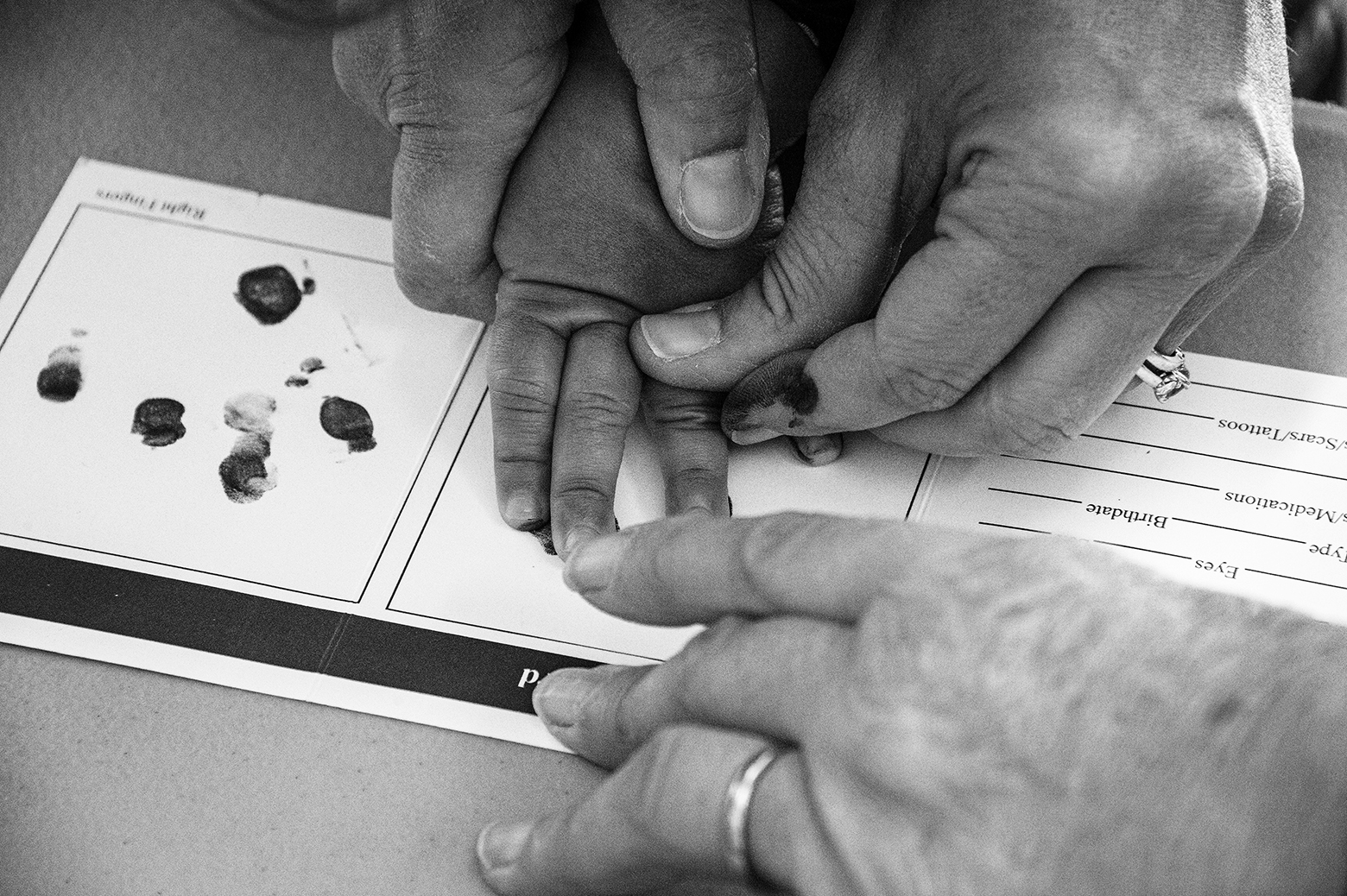
It was my third time running this hundred-kilometer ultramarathon. My training had gone well, and I was in good condition, but ten days earlier my dog, Miss Bean, had died of old age. For years she’d accompanied me during my training runs, sharing the experience.
In ultra running, one experiences a series of highs and lows. The valleys can be dark and exhausting. A common expression is “Beware of the chair,” meaning if you sit down, you may not get back up. During the race, when I sank into one of those valleys, I called out, “Come on, Miss Bean, let’s go!” I slogged on toward the finish.
At the ninety-kilometer point I knew I would make it to the end. A wave of emotion rolled over me, and the tears came. When I crossed the finish line, I looked at the clock: a personal record.
Joe Jacobs
Kobe, Japan
I was fifty-nine years old when it arrived in the mail: the bachelor’s degree I had recently earned, after feeling the sting of being told I was unqualified for a job one too many times. I’d worked full-time while getting it, and I defiantly hung the diploma in my cubicle.
My dad didn’t live long enough to see my accomplishment. He would have been proud of me, the first in our family to finish a four-year degree. He’d left college early to marry my mom, and though he never said he regretted it, I often wonder if he did.
That diploma on the wall represents hours of struggle and hard work. Yet there are so many ways to work hard without official recognition. I think of my grandfather, who toiled in lumber mills even after his arches had fallen and he had to crawl up the stairs at home. I think of my grandmother, who worked in a factory in a dress and heels (the required attire at the time). As a child she’d been a hired helper for wealthy families. What kind of diploma could we give them?
Mimi Whittaker
Lakeport, California
I find it in my building’s free-giveaway pile: a big silver stereo unit that incorporates a cassette player, a CD player, a radio, and a record player. I was too young to take part in the vinyl renaissance, but I think my boyfriend, who’s older and is a musician, will like the record player.
I bring it with me when I move into his apartment. He looks it over, pleased. The record player is broken, but he thinks he can fix it. He talks about the ways he can use it in making his music, mentions a store a few blocks away where we could pick up some old cassettes and records.
We make space on the bookshelf for the stereo, but we never go to the music store, and my boyfriend never repairs the record player. In fact, he seems annoyed by its presence, and he grows even more annoyed when I ask if he’s tried to fix it, or if he’s worked on any music lately, or if he’s going to work that day, or if he’s already started drinking. I give him money again, and he orders another guitar pedal—his ninth or twelfth or fifteenth—because it mimics the sound of a cassette, while the cassette player gathers dust. The guitar pedal gathers dust too.
I stop pretending things will get better and just end the relationship. Moving out of his apartment is a nightmare, and I leave many belongings behind, including a rug, my spice collection, my yellow velvet couch, and that record player. I wonder if it ever made a sound.
Talia Gragg
Portland, Oregon
Though it’s been more than a decade since I’ve intentionally cut or burned myself, the scars I have will last a lifetime. The most visible are a line running the length of my left arm and the word no carved in inch-tall letters on the underside of my forearm. I wear long sleeves most of the time.
Several years ago I went to a plastic surgeon whose website advertised “scar revision.” I wanted to free myself of the reminders of my darkest days. Though I explained the origin of the scars to the nurse, the information evidently was not passed on to the surgeon. When I showed him my arm, he recoiled and exclaimed, “Holy smackers! What is that?” He told me there was nothing he could do to reduce the visibility of the scars. I left feeling like I’d paid a hundred dollars for the expert opinion that I’m a freak.
For years I’ve felt imprisoned by my scars. Lately, though, I’m starting to see them not as a tally of misery and misdeeds, but as a map to wounded parts of myself that have yet to receive the love and attention they deserve. I’m developing the courage to follow that map, and when I find those parts, I’ll say to them, “I see your pain. It matters to me.”
Name Withheld
I’m lying on my belly, looking through the albums in my mother’s record cabinet, when I find a small record with a handwritten label. Mom tells me it’s a recording of my father, who died when I was almost two. She thinks it’s a souvenir from a fair, where, as a teenager, my father paid to have his voice immortalized on vinyl.
The handwriting—his?—has faded to illegibility. I put the record on the player, place the needle in the groove, and wait to hear my father’s voice.
There’s some hissing and popping, and through the fog of sound I hear a high, sweet voice singing a song I don’t know. I want this moment to be meaningful, but the adolescent warbling makes me feel nothing but disappointment. The recording is not of a father but of a boy who can’t imagine the life he’ll someday lead with my mother, my two brothers, and me. I take it off the turntable and return it to its paper sleeve, still no closer to knowing my father.
Brett Summers
Providence, Rhode Island
My first day of kindergarten was canceled as Hurricane Donna roared across New York City in 1960. After that, I never missed a day of school. I won attendance prizes every year—my mother proudly kept the certificates.
“These are part of your permanent record,” she said to me.
I wasn’t sure what that was, but I understood it must be carefully guarded. I wondered what else it might contain. Character flaws? Screwups? The time my best friend and I stole lipsticks from the five-and-ten?
In the 1980s, as a young career woman with a stressful job, I became depressed and went to a therapist, paying out of pocket rather than using my insurance. At that time mental health wasn’t openly discussed, and I didn’t want these visits to be a blemish on my permanent record.
I’ll be retiring soon. Recently, my partner encouraged me to take a mental health day off from work. I told him I didn’t want to mar my near-perfect work attendance. It was part of my permanent record.
“I’ve never heard of that,” he said. “Your mother must have made it up.”
I’ll turn seventy next year, and I’m starting to realize that the record I want to leave behind is one of kindness, wisdom, and love.
Tina Lincer
Loudonville, New York
When I was young, everyone in India was crazy for Tata Sky satellite TV. Its iconic jingle, “Isko laga dala toh life jingalala,” translates to “If you install this, your life will be ooh la la.” The day we got ours, we beamed with pride at the antenna jutting majestically into the air. “Just like NASA,” Baba said.
Three months later a brand-new model called Tata Sky+ was released. It was exactly the same, except you could now record shows. Imagine this: You’ve been waiting for that Salman Khan film to air, and it’s finally here, but your wife’s mother is dying at the hospital. No worries. Tata Sky+ will record the movie while you visit her. Ooh la la indeed. Baba asked if he should try to exchange our model, but Ma refused.
On the night India faced Pakistan in a major cricket match a few years later, my family huddled before the TV with Kurkure and Coke, the gods having been appeased with incense and sweets. As the Men in Blue walked in, we cheered. Then my father’s phone rang. Baba cursed, but when he answered it, his anger quickly melted into concern. It was my uncle, telling him my grandfather had had a stroke. My parents left immediately.
If only we’d had Tata Sky+, I thought, I could’ve recorded the match for my parents.
Suddenly I had an idea: I ran to my father’s wardrobe, found his old video camera, and aimed it at the TV.
About forty minutes into the match my arms began shaking from the effort of holding the camera steady. I was about to give up when Sachin Tendulkar, who was like a god to his fans, took the first bat for India and scored a three. Another three. Four. Two. One. And finally the ball went flying into oblivion. The crowd was on its feet, screaming. It was a six! The camera beeped and went black as its battery died.
My parents came home ten hours later and said my grandfather’s condition was stable. I switched on the recharged video camera and sat between my parents so we could all see the small screen. As the recording began, Baba’s eyes went wide. We hunched over the camera when Sachin was at bat. Three. Three. Four. Two. One. And then: the six! Baba jumped up and hugged me. Ma started crying. On the tiny screen, the great god laughed.
Rajeshwaree Das
Siliguri, India
I was listening to the radio in 1977 when they played a song by the local folk duo Beth and Cinde. I knew of the band because they’d bought my parents’ former home, and I liked the song, so I purchased their album. Over the years, as I traded records and bought new ones, I lost track of it.
In 2010 my wife and I took a trip to my hometown. I had contacted the band’s surviving member, Beth, who still lived in my parents’ old house, and she invited us to visit. I related the story of how I’d purchased and lost the album, and she said that when the local record store had closed, the owner had given her all of the band’s unsold records. She grabbed a copy from a crate and handed it to me. While I was admiring the cover, my wife asked, “Why does it have your name written on it?”
It was my old copy. I must have bartered it at the store for something else. That was an eerie moment, standing in the home of my late parents and holding the very album I’d once owned.
Beth and I bonded that day, and we’ve been like family ever since.
Jim Imholte
Phoenix, Arizona
The summer I was seventeen, my friend Holly and I were driving home from a trip when she spotted a carload of guys about our age on the highway. She made a handwritten sign that read, “U Guys R Cute,” and as I pulled beside their car, she held it up to her window. I gave them time to read the sign before punching the gas and speeding away. It wasn’t long before the boys drove up alongside us with their own sign: “So R U. What R Your Names?”
We traded a few more messages, then Holly and I stopped at a McDonald’s. The guys did too. Inside the restaurant we saw that they were even cuter than we’d thought—and older, in their twenties. We were too shy to talk to them, but we stole glances and gave them coy smiles instead. They ate and left.
When we got to my car, there was a record album on the windshield with a note: “Holly and Mary: Come to our show Saturday night. We’ll put you on the guest list.”
I spent the week listening obsessively to the album. My favorite song was a ballad titled “Marie.” The singer wanted to run away with her. I imagined him spotting me in the audience and asking me to become his new Marie.
When Holly and I arrived on Saturday, we were not on the guest list. Desperate, I pointed to another name, insisting it was mine, and the bouncer finally let us in. He took us to the front row and gave us a warning: “Don’t cause any trouble, and no drinking!”
The show was great, but no one from the band noticed us. Between the stage lights and their big rock-star hair, I couldn’t even tell if they were the guys from the car. I left disappointed.
Thirty-six years later I still listen to the album sometimes—mostly because I love the memory of those beautiful, fun girls with so many possibilities before them. I’m grateful the bouncer didn’t let them drink and that the band didn’t pay them any attention. I’m glad they made it home safely that night, and all the nights after that one, until they were old enough to realize just how young they’d been.
Mary Christine Kane
St. Paul, Minnesota
When my family moved into a drafty house on Cape Cod, my climate-ecologist father set himself a challenge: to power the house with renewable energy. It was 1975, five years before he would testify to the US Senate that burning fossil fuels was causing the Earth to warm.
First he plugged the drafts, stuffing insulation into the walls and installing storm windows. Then he built a three-story solar hot-water system. A few years later he covered the roof with photovoltaic panels. We were warm (mostly), we had hot water (usually), and my father had data, which he meticulously recorded in two journals for nearly fifty years.
My father put sensors in the systems he built, and every morning and evening he recorded the temperature and pH of the water in various pipes and tanks. In the kitchen a small monitor issued a running record of our energy use. When this number veered outside of the normal range, he’d track down the appliance that was drawing excess power.
He worked with childlike enthusiasm. “This is incredible,” he would say, walking into the kitchen with a pencil behind his ear and a grin on his face. “We’re proving that it’s possible to move away from fossil fuels!”
Long after I had moved out, I helped my father report his solar-energy production to the electric company. He’d read a meter in the basement, and I’d record the number in an online form. Then my parents would receive a bill for $0. They liked to laugh at how they had beaten the utility company at its own game.
My father died last June at the age of ninety-five. I felt like the Earth would turn suddenly dark and cold without him, but the sun poured down on the roof panels, and the meters in the house hummed along.
Caroline Woodwell
Spokane, Washington
In 1960 my parents bought a six-foot-long Magnavox stereo cabinet that came with five records. My mom wanted to throw away one of them—Ruby Braff Goes “Girl Crazy”—but I listened to it and fell in love. From that moment on, I was hooked on jazz.
I started buying jazz records and subscribed to Downbeat magazine. To prove how hip I was, I’d carry albums around with me at school. I bought a Heathkit amplifier that I hooked up to a turntable and speaker in my bedroom. My first jazz concert was Dave Brubeck playing to a packed auditorium at his brother’s school. In 1963 I went to the Monterey Jazz Festival and even walked next to Charles Mingus.
By the time I got married in 1967, I had a few hundred records. We bought a house, and I built shelves to hold my collection, with room for even more.
Recently I realized that I mostly listen to music on streaming services, and I started selling off my collection, but there was one album I still wanted to acquire: Ruby Braff Goes “Girl Crazy.” I had lost my copy somewhere along the way. I mentioned my desire to a dealer, and a month later he showed up at my house with a mint copy. For fifteen dollars it was mine again, the first jazz album I ever owned.
John Nichols
Santa Paula, California
I adopted my two daughters from China as infants in 1998 and 2001. At the time, adoptive parents were told that, due to China’s one-child policy, many girl babies were “left to be found” and ended up in orphanages. When adopted by parents from abroad, the children came with a scant backstory: the date and location they’d been found and their estimated birthday.
In 2024 my daughters participated in a project attempting to link Chinese adoptees to their birth families. They submitted current and baby photos along with the information from their adoption documents. The director of the project contacted us, saying that she had rarely seen adoption records as detailed as those of my older daughter, R. In addition to a more specific location than was typical, they contained the name of the man who’d found her: a sixty-eight-year-old farmer.
The director sent a volunteer to try to locate the farmer. He had passed away, but the volunteer found a relative whose wife had had a baby on R.’s birthday. The couple were ecstatic to receive news about their daughter and agreed to take a DNA test, which confirmed that they were R.’s birth parents. She also has an older brother, a much younger sister born after the easing of the one-child policy, a grandfather, and a large extended family.
I’m astonished that the minimal paperwork I received in 1998 led to my daughter’s family. Tucked among the official records was the key: a handwritten note, signed by a local family-planning officer, that contains the extra information, including the finder’s name.
It turns out the family-planning officer did spin the story, though. R.’s parents are adamant they did not abandon her. The family member who “found” her was actually trying to adopt her, but he didn’t meet the strict requirements. The next day family-planning officers showed up at his house and took R. away.
Heidi Holman
San Francisco, California
My father was a principal, and my mother was a teacher at his school. When he retired in 1991, my dad brought home from his office dozens of boxes that remained untouched until shortly after his death in 2017, when my mother and I cleared out the attic. I found old letters, test scores, and decades of teacher evaluations he had written.
As I sifted through them, I recognized the names of former teachers and family friends. I couldn’t bring myself to read them; as a teacher myself, I feared some imaginary administrative police would reprimand me for a breach of privacy. Instead my mother and I fed the papers into a shredder, watching as years of hard work were transformed into confetti.
My mom kept one document, an evaluation my dad had written about her when she worked for him. It contained a single comment: “Cooperates well with administration.” In the midst of our grief, she and I had a good laugh at Dad’s wit and discretion.
Name Withheld
The recipes, creased and stained with olive oil, are records of the Lebanese heritage I’m trying to hold on to. I brought them with me when I moved to Montana for graduate school. Handwritten by my mom, they all end with “Sahtein,” the Arabic equivalent of “Bon appétit.” The translation is “Double your health,” to which the appropriate response to her is “Ala albik,” or “Onto your heart.”
Each recipe triggers a memory, such as my family sitting around a table at Thanksgiving, rolling grape leaves like cigars and peeking at each other’s to make sure they aren’t too thick or too thin. When I read my mother’s “Sahtein,” I whisper back in my mind, Ala albik.
That’s where the recipes feel like they land, here in the middle of Montana, far from my family and my homeland: onto my heart.
Stevie Chedíd
Missoula, Montana