Masculinity and Gender in Transformation
Selections from the Archive
Richard Reeves opens his interview in this month’s issue with a stark, surprising observation: boys and men have been falling behind girls and women for about fifty years. As his conversation with Daniel McDermon unfolds, it becomes evident that the challenges facing men today resist simple solutions like revisiting the rigid gender roles of the past or reinforcing traditional masculine scripts. What’s needed, Reeves suggests, is a shift from deconstructing masculinity to reconstructing it—developing positive narratives and roles for boys and men that align with gender equality and acknowledge masculinity’s continued significance.
The interview brought to mind several pieces from The Sun’s archives that invite an expansive exploration of gender. The selections below examine the intricate ways gender shapes our lives. An interview with Jaclyn Siegel by Sam Risak—who also contributed an essay to this month’s issue—further explores masculinity through the lens of male body image. An essay by a nonbinary athlete navigating basketball courts and a short story about a girl discovering her identity through playground games reveal gender as both a bridge and a barrier, a source of strength and of vulnerability. A poem by John Struloeff traces the transmission of violence between generations of men and boys. Our readers share their own experiences of finding belonging—or choosing difference—across boundaries of race, class, sexuality, and ability.
Together these pieces illuminate distinct facets of gender’s role in society, from childhood through adulthood, offering nuanced perspectives on what masculinity means and might become.
Take care and read well,
David Mahaffey, Editorial Director

The Strong, Silent Type: Jaclyn A. Siegel On Masculinity And Male Body Image
March 2023Siegel, a social psychologist, examines the complex relationship between masculine ideals and body image disorders in men—conditions frequently overlooked due to their perception as “feminine” concerns. Her conversation with Sam Risak reveals how traditional masculinity’s emphasis on stoic self-reliance creates barriers to seeking help, while societal pressures toward achieving an idealized physique foster destructive behaviors. Through investigating these dynamics across diverse sexual orientations and gender identities, Siegel demonstrates that “patriarchy is the problem, not men.”
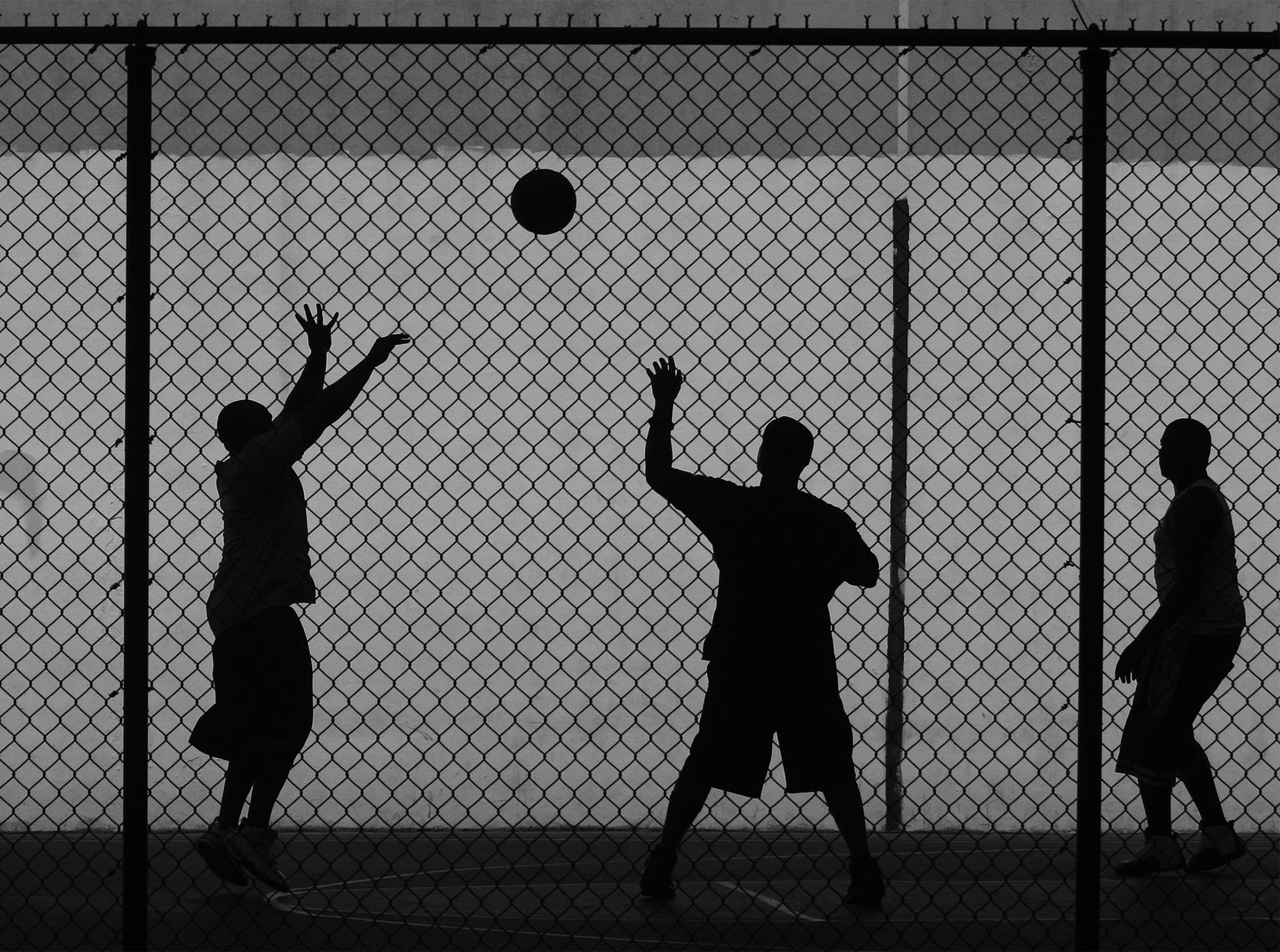
Loving a Sport That Doesn’t Always Love Me Back
March 2024In this nuanced reflection, Crane, a nonbinary former–Division 1 basketball player, navigates the gendered terrain of pickup games where acceptance demands constant negotiation. Their essay reveals masculinity’s role as social currency on the court—something that can be strategically performed (“I put a bit more swagger in my walk. I deepen my voice”) while simultaneously excluding those who challenge its rigid definitions. Crane’s enduring passion for basketball, despite its implicit rejections, becomes a powerful metaphor for existing in a binary world as someone who transcends conventional categories.

Sticks And Stones
August 2022Almond’s story of Catholic-school girlhood examines how children enforce gender boundaries through subtle and overt forms of exclusion. When the narrator’s equestrian interests and nonconforming behavior mark her as different, she encounters hostility from boys who label her “Mrs. Ed” and girls who weaponize her distinctiveness. The story’s pivotal moment illustrates how others sometimes recognize aspects of our identity before we do, exposing the underlying tensions within childhood social dynamics.”

Fighting Back
March 2021Struloeff’s resonant poem acknowledges the transmission of violence between father and son as both shield and burden. The speaker acquires fighting skills not from inclination but from paternal anxiety: “He said to / squeeze their upper lips / until their eyes watered.” Even as he masters this instruction—becoming so adept that “men stopped to watch me”—he recognizes its tragic perpetuation, concluding with a paradoxical lesson to his own son.
Fitting In
September 2004These personal stories explore the intersection of gender with race, class, disability, and other aspects of identity, revealing multifaceted experiences of belonging and alienation. From a Black woman “passing” as Italian and avoiding discrimination to a boy sent to camp so he wouldn’t “grow up to be a homosexual,” these narratives illuminate the personal costs of conformity. Yet they also suggest possibilities beyond conventional categories—exemplified by the homeschooling parent who asserts “We don’t fit in. We will never fit in” as an affirmation rather than a resignation.
 PREVIOUS
We’ll mail you a free copy of this month’s issue. Plus you’ll get full online access—including more than 50 years of archives.
Request a Free Issue