Starting Over
Selections from the Archive
This month’s selections from The Sun’s archive explore what it means to be forced to leave home and start over someplace else. We begin with a short story from Ron Currie in which a far-from-all-powerful God appears in Sudan in the guise of a woman fleeing civil war.
From there we visit a New York City harbor in the late 1940s, where a young photographer named Clemens Kalischer captured images of displaced Europeans arriving in the US in the aftermath of World War II.
In Diane Lefer’s interview “Land of the Free?” Tram Nguyen, whose family was among those who escaped Vietnam in fishing boats in the 1970s, discusses hostile attitudes toward immigrants following 9/11.
Poet Mark Smith-Soto, who came to the US as a child, writes about learning to speak like an American in “Accent.”
And finally our readers share stories of seeking, finding, and offering refuge.
We hope these works inspire compassion and understanding for refugees everywhere.
Take care and read well,
Andrew Snee
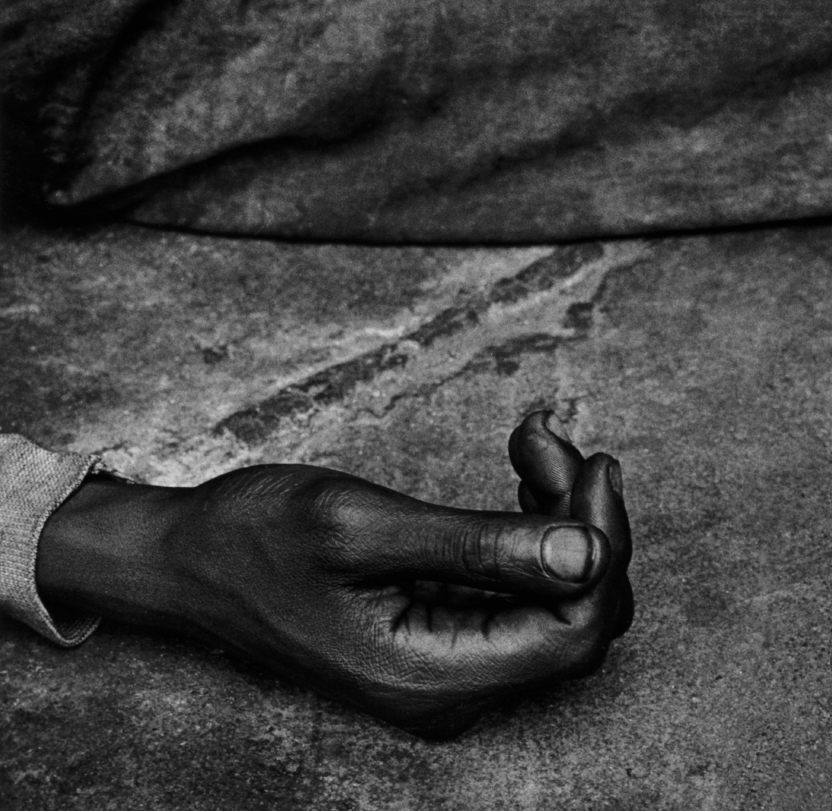
God is Dead
December 2005“There was nothing unusual, in this place of wholesale murder, about Thomas’s sorry fate. In fact, it was the very commonness of his plight — thousands of Dinka had, like him, seen their families slaughtered and been sold into slavery — that made him the perfect symbol of his people’s suffering and the ideal recipient of God’s repentance. In his relative powerlessness God had come to believe in the importance of small kindnesses and symbolic gestures, and while he could not save the Dinka, could not restore their families or their farms to them, he could find Thomas and, upon finding him, throw himself down and beg forgiveness.”
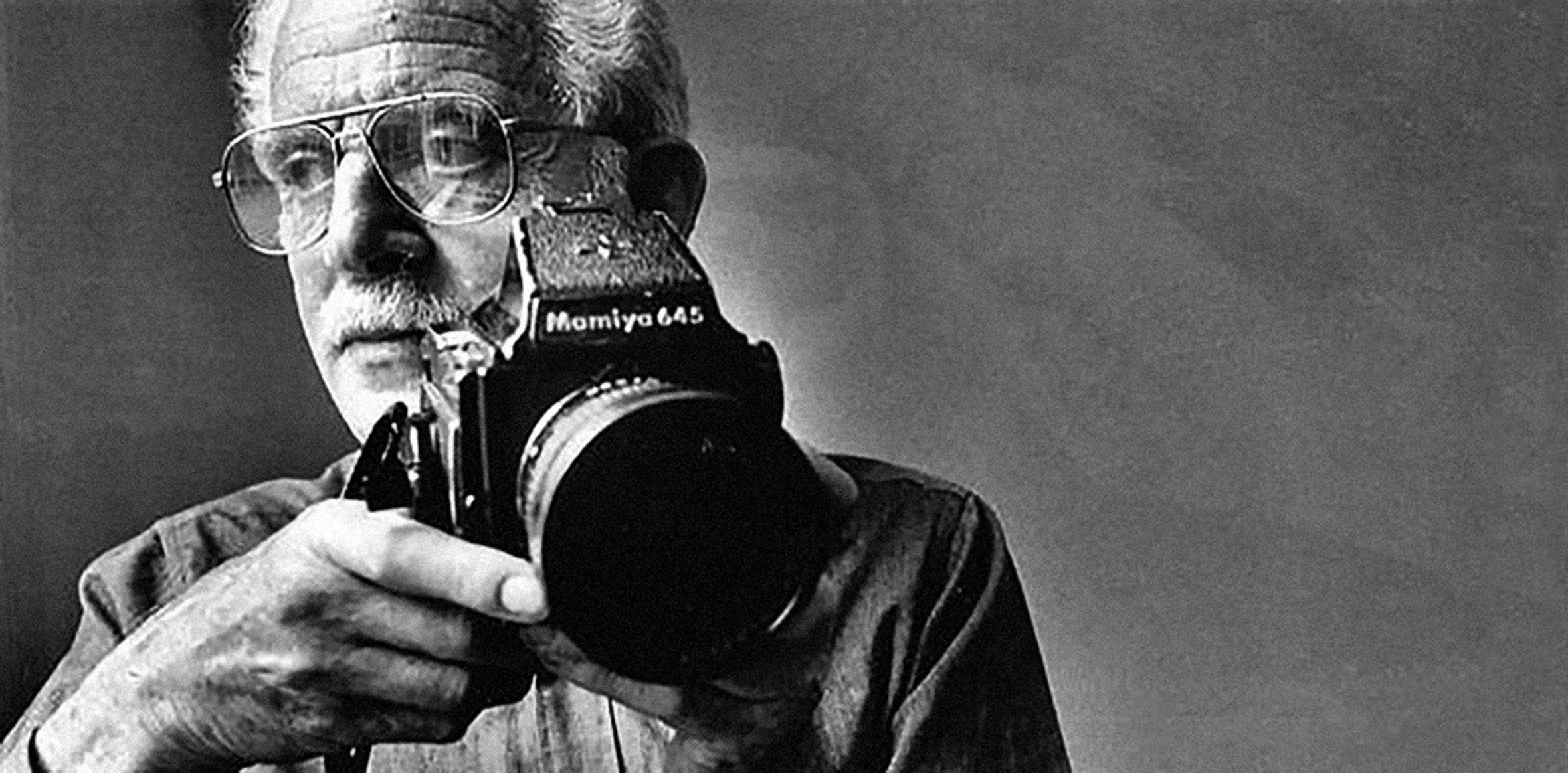
Displaced Persons
October 2018“After World War II Congress voted to allow thousands of European war refugees into the U.S. Whenever a ship carrying these “displaced persons,” as they were called, came into New York City, Kalischer would go to the harbor to take pictures of the new arrivals. He had come here as a refugee himself not long before, at the age of twenty-one, and he recognized the fear and expectation in the faces of the men, women, and children. Because he’d had the same experience, he said, he was able to move among the refugees and photograph them without troubling them.”
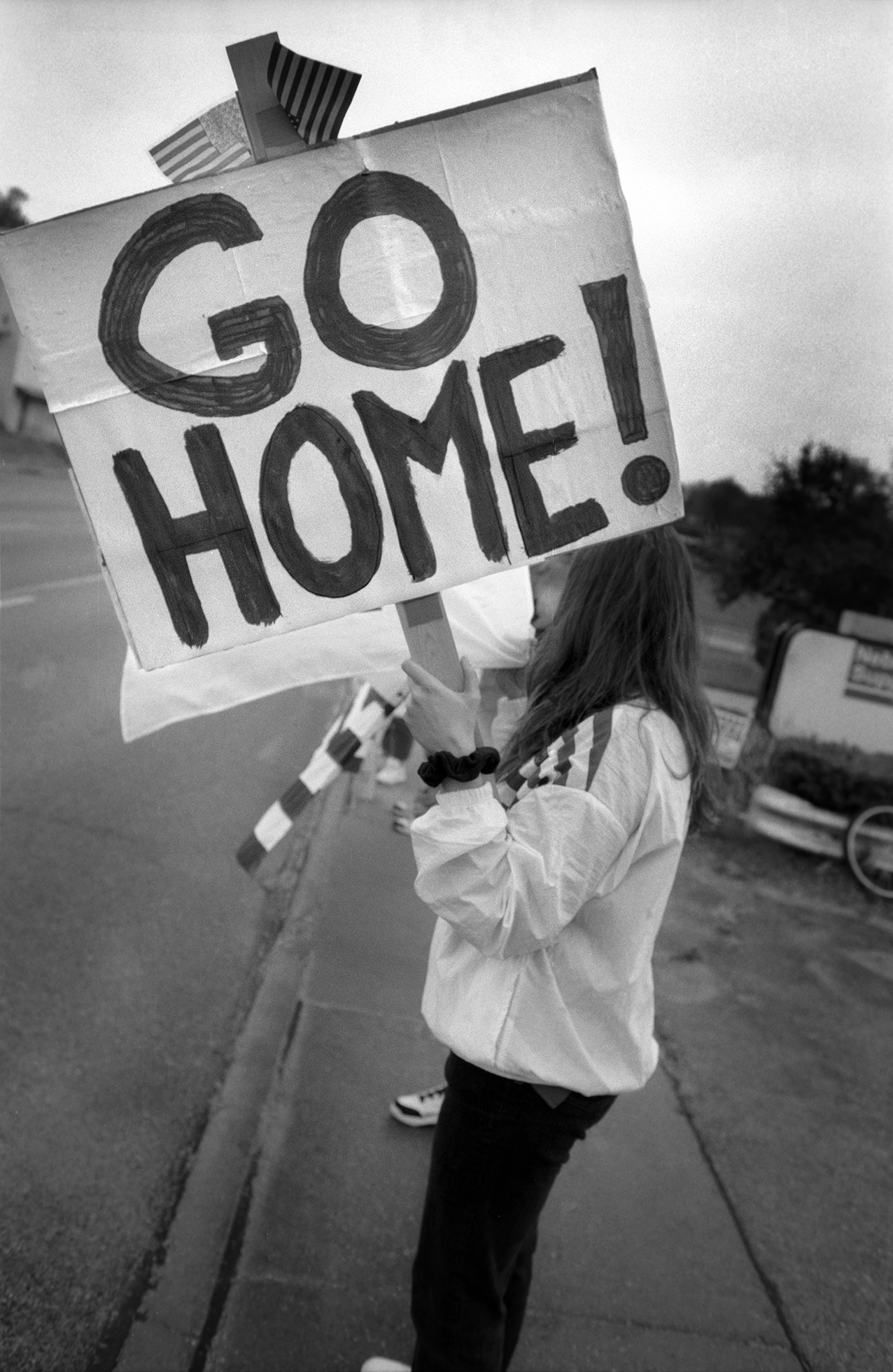
Land Of The Free?
July 2007“Really, unless you’re from one of the targeted immigrant communities, you have no idea what’s going on there. Streets are empty. Stores and businesses are closed because people have been detained or deported, or their customers have disappeared, or residents are just afraid to go out. These used to be bustling, vibrant neighborhoods, but if you don’t live there or have reason to visit, you would never know the impact homeland-security policies have had. In the two months following September 11, more than twelve hundred Muslim, Arab, and South Asian men were rounded up for indefinite detention. Then, starting in September 2002, there was ‘special registration,’ where noncitizen males from Islamic countries were required to register with the INS.”
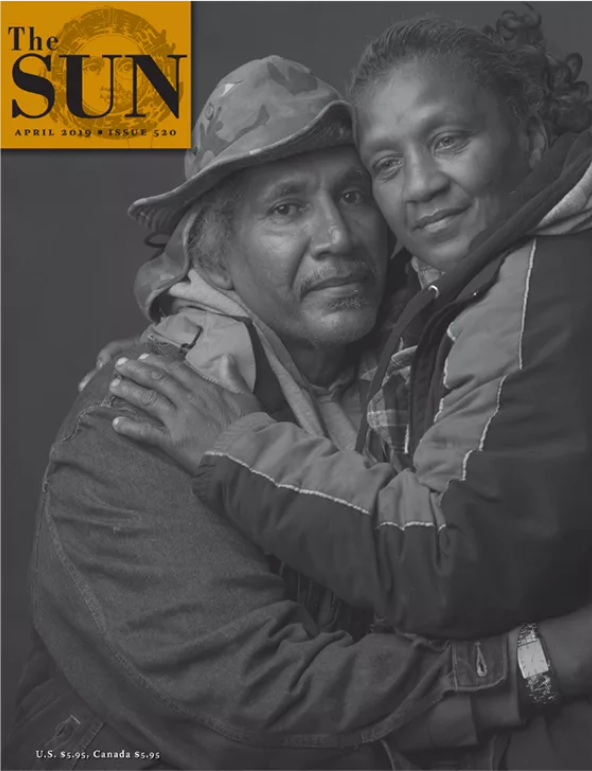
Accent
April 2019“From then on, I obsessed over my pronunciation, / labored to distinguish beach from bitch / and bum from bomb, so no one would wonder / where I learned my English.”
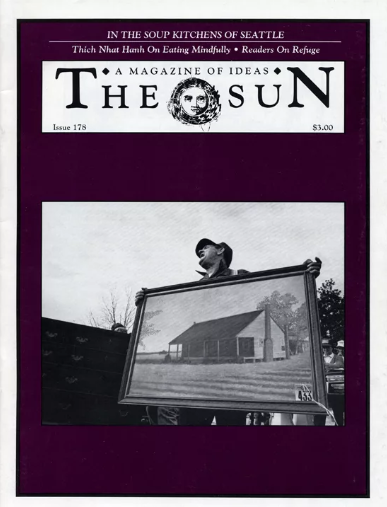
Refuge
September 1990“The best part of our work came in living and working with the refugees themselves. We rushed a malarial boy to the hospital, gave English classes, played basketball, celebrated birthdays. I translated for the refugees as they spoke to church, school, and political groups, telling stories of the suffering of their people. Best of all was sitting in the church kitchen for hours, preparing and eating tortillas and sharing struggles, dreams, and laughter.”
 PREVIOUS
We’ll mail you a free copy of this month’s issue. Plus you’ll get full online access—including more than 50 years of archives.
Request a Free Issue