By a stroke of good luck I inhabit a remarkable place, a wooded bench above the upper McKenzie, a white-water river in western Oregon. It is country for which gentrification is still a long way off. On the other side of the river, the mountains carry old-growth forest steeply up to the sky. It is untenanted land, never farmed, logged, mined, or homesteaded. Black bear, Roosevelt elk, black-tailed deer, and coyote are common in the woods. Occasionally, out walking, I see a mountain lion or bobcat.
Some years ago I began paying closer attention to the arrival of salmon in front of my house. They spawn each year on gravel bars along this stretch of the river, a hundred crow-fly miles from the Pacific Ocean. These particular, big, anadromous, determined animals are called chinook salmon (Oncorhynchus tshawytscha), the species name an approximation of the word used by Koryak people, the traditional occupants of Kamchatka in eastern Siberia. The fish I watch are more properly called spring chinook, or “springers,” because they cross the bar at the mouth of the Columbia River in the spring, months before they arrive on these spawning grounds, their natal waters. The seasonal adjective distinguishes them from other stocks of the same species that cross the bar in the summer or fall (and which, as it happens, do not migrate to the upper McKenzie). Chinook are also called king salmon, or “kings,” because they’re the largest of the five species of North American salmon.
Spring chinook salmon commonly exceed twenty-seven inches and fifteen pounds on the McKenzie, and might approach forty-five inches and forty pounds in other watersheds. Their flesh is Saturn red. An oil painter, one a stickler for this sort of detail, might mix scarlet vermilion with cadmium orange and a little white to get the right color.
All salmon, but especially the chinook, shaped the spiritual belief and practice, the mythology and art of dozens of native tribes that matured in the Pacific Northwest during the Holocene Epoch — the Kwakiutl, Tlingit, and Chinook among them. The fish’s cultural sway over the past ten thousand years, from eastern Russia to central California, is beyond my ability either to grasp or to appreciate. I have to guess it’s fully known to no one. But the breadth of the chinook’s impact on human societies, its late-twentieth-century rise to prominence as an icon among non-Indian people in the Pacific Northwest, the infinite complexity of its biology and ecology — all of these combine to compel feelings of reverence, for some, when eating it.
In front of my house, the McKenzie is about 350 feet across and four feet deep, shallowing to cobble flats near the banks, and limpid enough to reveal a stony bottom on the south side to someone standing on the north bank. When female chinook arrive on gravel bars here, they roll onto their sides and begin excavating pits with rapid, vigorous, whole-body undulations. In building their “redds,” the females use the river’s strong current to carry away the previous year’s accumulation of silt and the organic debris they churn up. A clean and unimpeded flow of water through the now banked and porous gravels ensures that the fertilized roe will be well oxygenated. A micro-current, generated by the half-bowl shape of the nest, pins the eggs gently within the pit, and allows the blue-gray cloud of milt bursting from a male salmon to descend and penetrate the eggs before it diffuses in the quick current.
The adults die a couple of weeks after they spawn in mid-September. Their bodies, which have brought the ocean’s food web inland hundreds of river miles, are scavenged by bears, foxes, coyotes, otters, eagles, mink, and other carnivorous members of the salmon’s community. Where the stranded fish rot untouched in the sun, they enrich the soil banks of the river, a related community of trees, orchids, wild berry vines and bushes, tubers, and other plant life that depends on them. Finally, the adult carcasses reinforce the productivity of the river, providing nutrients to the species their own fry will feed on when they hatch.
Over the decades I’ve lived here and watched these fish spawn, I’ve witnessed three major changes in the woods around me. The populations of some species of birds — Swainson’s thrush and MacGillivray’s warbler, for example — have dwindled, and the range and intensity of bird song have declined. The probable cause is the elimination of these species’ homes in the Neotropics, where they overwinter. Fewer now survive to return north.
A second change, more obvious to those for whom news of the loss of birds brings only a philosophical shrug, is that our winters are now milder. Thirty years ago, winters here were marked by four or five snowstorms, a couple of which might have made the forty-mile drive to town too risky to chance. I can’t recall the last time we had a snowfall that accumulated, that amounted to more than a snow shower, or the last time the temperature dipped into the teens Fahrenheit. The probable cause is global warming, a recurrent and natural event but likely accelerated this time by the hand of man, a phenomenon now so widely reported and documented it makes America’s official stance of equivocation look deliberately, cabalistically ignorant. How global warming will affect the fate of chinook salmon, and all that’s tied to them, is one of the many Gordian knots in natural history blithely dismissed by Americans still trying to pull Charles Darwin’s pants down. Meanwhile the problems — the wholly unanticipated secondary effects of mega-engineering projects, for example — continue to arrive like horsemen on the dawn horizon.
The third change has been confounding — a seeming reversal of the popular assertion that, across the board, the natural world is falling apart. Here’s what, confoundingly, happened: after years of decline, the number of salmon spawning on the McKenzie suddenly increased. The year I moved here, 1970, I counted sixteen adult chinook salmon on the gravel flats in September. During the thirty-two years following, that number fell, slowly but steadily. In 2002 only three turned up. Then, in September 2003, thirteen appeared. That fall, scientists later told me, four times as many spring chinook arrived on the upper McKenzie as had come — on average — in any of the previous fifteen years. Since the mideighties the total number of returning natives (so called to set them apart from hatchery fish) had hovered around a thousand. In 2003, 5,784 reached the upper river. A further speculation, at the time, was that these elevated numbers of returning salmon might be just as high in 2004 (they nearly were — 4,789 came in), and they might well be again in 2005.
Biologists at Oregon’s Department of Fish and Wildlife, and other concerned historians of the natives’ fate, speculated that increased upwelling in the eastern Pacific Ocean (the North American side) caused a sudden improvement in feeding conditions at sea, which accounted for an increase in the rate of survival for three-, four-, and five-year-old springers. A greater-than-usual number, then, would have survived the familiar gauntlet — commercial fishing, industrial jetsam, toxic leaks and spills, dams, gravel-mining operations — to spawn.
Fisheries’ biologists, staring at these numbers, have at least two important questions still to address. With feeding conditions at sea suddenly improved, would freshwater conditions show a similar improvement? And how many smolts born of these larger adult populations would return to spawn?
In the 1920s the entire run of spring chinook in the Willamette River watershed — the Willamette is a tributary of the Columbia, the McKenzie a tributary of the Willamette — was about two hundred thousand fish. In the 1940s it was still close to seventy-five thousand. By 1990 it had fallen to fewer than fourteen hundred. While the sudden recovery of 2003 and 2004 is, then, statistically striking, it remains insignificant as a sign of overall health in the ecosystem of which the fish is a part. Biologists did not see “improvement” in 2003 and 2004. They saw an anomaly, a not-quite-comprehensible “perturbation.”
How global warming will affect the fate of chinook salmon, and all that’s tied to them, is one of the many Gordian knots in natural history blithely dismissed by Americans still trying to pull Charles Darwin’s pants down.
I phoned my younger brother in coastal Maine when I learned of the high count of returning salmon in 2003. He told me it had been another bumper year, there, for lobster; but the explanation for Maine’s recent record harvests, he told me, was nothing good. Biologists, I learned, attribute them to “dysfunction” in the near-shore ecosystem. A partial explanation they offer is that stocks of wild fish that feed regularly on lobster larvae, such as coastal cod and rock bass, have declined sharply. In other words, there are more lobster because the predatory-fish population has collapsed.
This more-complex story — in which global warming again is suspected of playing a definite but unspecified role — has a depth that fits it poorly to popular news reporting, especially television news, with its penchant for summary accounts. Such natural events — if they’re even reported — are normally rounded out into breezy, upbeat bulletins, suggesting, in this particular instance, the irrepressible economic strength of the lobster industry. The good times, many people in Maine were encouraged to believe, have returned. Difficult times are too hard to explain.
The real problem with presenting a fuller picture of Maine’s huge lobster harvests is that the story is ungraspably complex. In a fundamental way it’s a biological phenomenon with no solution. It’s an unstable process without an endpoint. Knowing, however, that its myriad components — warming water, species depletion, biochemical fluctuations — have some bearing on the biology and ecology of Homo sapiens, it is hard to characterize the upbeat news reports as anything but irresponsible. News reporting, though, is a commercial endeavor. It has no budget for deliberation. It is economically untenable for mainstream news to be too deeply reflective.
To get some better sense of what’s behind Maine’s huge lobster harvests, you must search out, for example, Ecosystems, a technical journal — specifically, the issue that went online April 27, 2004 — and read “Accelerating Trophic-level Dysfunction in Kelp Forest Ecosystems of the Western North Atlantic.” This is news of a different sort. It is deeply researched and carefully wrought, it makes references to supporting and dissenting opinions, and it shows some elegance in its logic and conclusions.
Politicians, the men and women who decide domestic and foreign policy where lobster harvesting is concerned, do not read Ecosystems. Television news is the common ground for reliable reporting that they share with their constituents. Scientists, like the ones writing for Ecosystems, are treated on television (and by many politicians) with a measure of amusement. Offering their vetted reports on dysfunctional ecosystems and global warming, scientists tend to claim, justifiably, an expertise superior to that of politicians and newscasters. The politicians, however, bring out their own experts, especially to refute any report that threatens some sector of the vaunted economy. These “experts” — a talk-show celebrity, or a clergyman, say — might have no scientific training at all; they possess “credentials” (or motives) of some other sort, which, in the eyes of those who have yet to turn the program off, convincingly serve to contradict the expertise of the scientists.
This warfare between experts — which began in earnest in America with the simultaneous emergence of computer modeling and a general awareness of the economic threat posed by environmental problems — is as much a menace to human survival as the natural catastrophes that ignite their arguments. Traditionally, the focus of expertise in the face of catastrophe is finding a solution. It may be, however, that within the grand cycles of the planet Earth, its warming and cooling periods and its magnetic-field reversals, within the disjointed sequence of its hypermillennial events, such as the bolide impact near the Yucatán Peninsula 65 million years ago, which helped wipe out 75 percent of Cretaceous life — it may be that, on the rough seas of these long-term events, there are no solutions. A lifeboat, instead, may be required.
Expertise with no measure of humility is of no use to us today. No one knows why there are suddenly more salmon in front of my house, but their coming and going is more than incidental scenery. It’s a sentence in a story about human fate.
During several years of exposure to different societies of traditional people — remnant Ainu on the Japanese island of Hokkaido, Inupiaq Eskimo in Alaska, Pitjantjatjara Aborigines in the Northern Territory of Australia — I’ve encountered individual men and women who possessed what seemed to be a staggering expertise in natural history: a knowledge of the ecology of fire or of the signs of coming weather; an ability to predict when a particular creature might be found at a particular place; an understanding of esoteric links in the local dynamic that joins plants and insects to humidity and temperature; an ability to decipher the very recent past, which might be revealed in faint scribes on the surface of snow or sand.
What I learned from this welter of examples were two things. First, to endure as a people you have to pay attention. Second, no individual exclusively possesses this expertise. It’s the community’s collective creation. The long-term stability of the community depends on the regular and uncalculated sharing of empirical information by close observers. The individuals most impressive in their local knowledge to an outsider (like me) are often merely the most adept practitioners of the community’s knowledge. The response among such people to changing or dire conditions is not to call on “experts,” as that term is commonly used in the cultural West, but to gather the best minds, those that not only observe but listen, that see something else at stake in life besides a professional reputation.
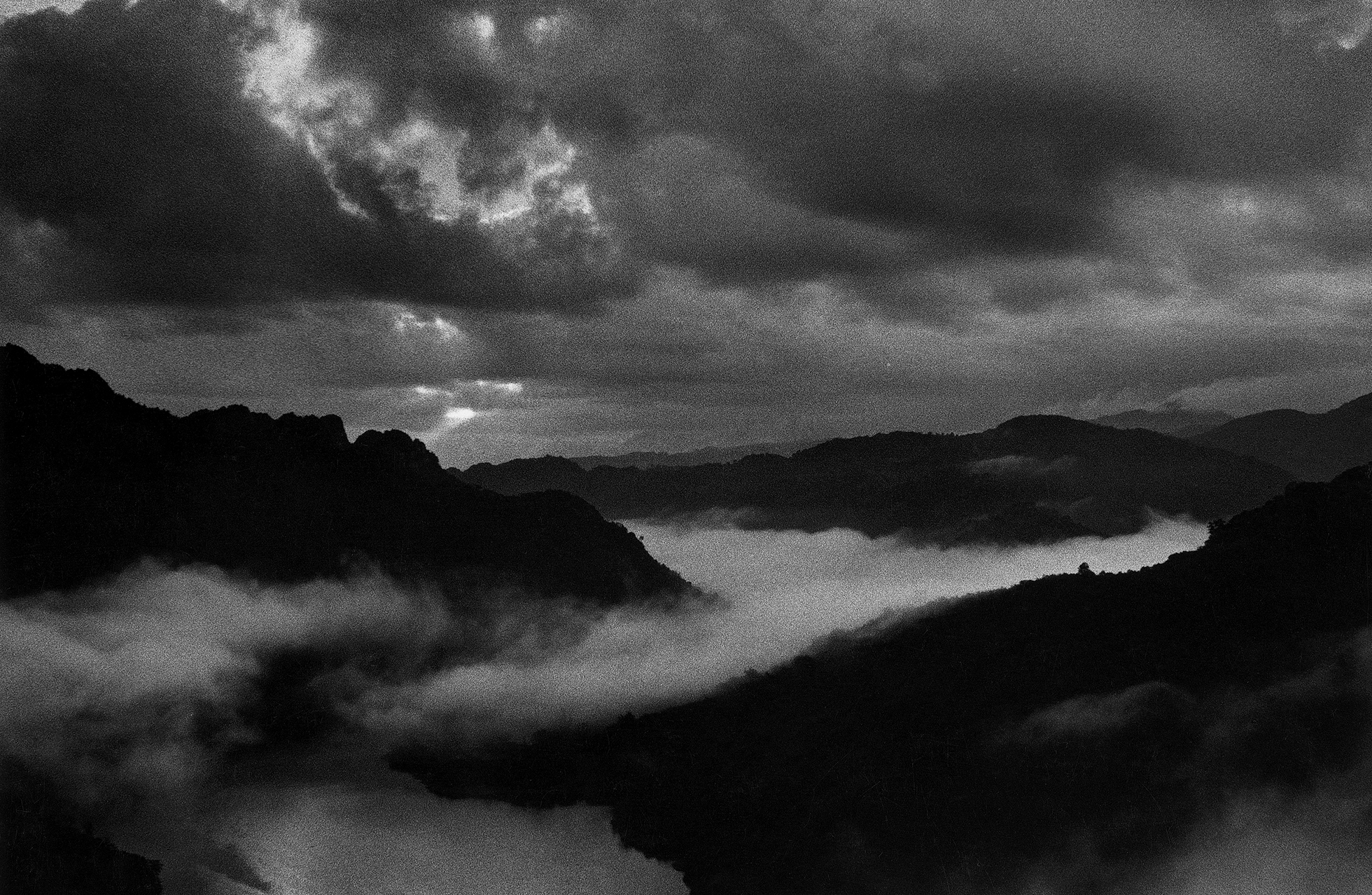
If you were to visit my home in September, I’d be happy to introduce you to the fish. We’d walk down a few hundred feet from my gray story-and-a-half house in the trees to stand on the north bank of the McKenzie. Depending on the angle of the sun, we might see them spawning a foot or so beneath the surface of the water, as clearly as if we were watching them through glass. I’d ask you only to stay back a little so as not to make them anxious, and after a few minutes that we be on our way.
If you would ask me about chinook spawning throughout the watershed here, I’d have to send you to a few neighbors, to the more credible scientific papers and books, to ichthyologists and bioregionalists. Beyond the bounds of my own few acres, I don’t really know.
I don’t talk about salmon much with my neighbors. We often consider, instead, the beauty of the river, its wild and lambent surface, or the many ospreys that fly over it in summer, hunting for trout. To speak of salmon might lead to contention. Logging, and the road-building that goes with it, which fills feeder streams with silt and which historically has been no friend to salmon, has long been the linchpin of our local economy. I don’t want to create the breach an argument about the fate of salmon could bring. I want to work with my neighbors.
Of all the tenets of fundamentalism that have recently emerged in American politics and that are embarrassing to cite — foreign-policy decisions congruent with the urgings of Revelation, a contempt for empirical science — the one that seems most starkly dangerous to me is fundamentalism’s contentious stance with regard to biological imperatives. No matter which political affiliation you choose, no matter whether you own three houses or must work three jobs, no matter your religion or your national allegiance, you must eventually come to grips with the implications of your own biology — your need for water, unadulterated food, and protection from solar radiation. In Darfur, Sudan, while many in the West laboriously pondered the political consequences of employing the word genocide, a storm of male violence continued to rage over control of water and grazing land. The patrons of this war over natural resources were not distracted by this legal argument. Food and water were what was on their minds.
A purely biological view of humanity — sans politics, sans religion — is something we are unaccustomed to. We tend to think of humanity as exempt from nature by virtue of its technologies, its impressive eschatologies. To practice our political and religious beliefs, however, we must be free to act — a freedom already compromised by our aversion to questions about our biological fate. Scientists — considered Cassandras here, again — would inform us that we are organisms no more separate from nature than we are exempt from the consequences of the cultural design we have tried to impose on nature.
To speak frankly and unemotionally of large-scale changes in the natural world that might be traced to human activity, however, remains anathema to people still furious with Darwin for suggesting that “nature” included man. In this way some religious convictions in America directly oppose democratic process.
Imagine a disinterested primate mammalogist or psychiatric pathologist dispassionately observing a random, urban population of Homo sapiens in North America. He or she would be justified in writing this diagnosis: Increasingly dependent on prescription drugs to elevate or suppress its emotions; living in intense, intersecting fields of electromagnetic energy; drawing its water from aquifers laced with manufactured chemical wastes, including hormones and antibiotics whose synergistic toxicity is unknown and ignored. He or she would note that the diseases making striking inroads in this population include various forms of dementia (attention-deficit disorder and Alzheimer’s), asthma, hypertension, depression, distraction disorders, and many types of cancer. He or she would point out that while the primary cause of such diseases is often genetic predisposition, it is likely that these particular diseases are also culturally driven or stress-related to some appreciable degree. Relying solely on traditional explanations of the etiology of these impairments, the researcher would be compelled to note, would be to ignore the role of industry practice and government policy and to overlook the unwitting human disturbance of viral ecologies in recent years that has produced HIV, Ebola, Lassa fever, Marburg virus, and other unprecedented problems.
The world, we too often forget, has no investment or interest in the triumph of Homo sapiens, an idea that many Christian fundamentalists, with their Albigensian hatred of the earth, want stricken from the record of human thought.
In a mature nation, where terrorists might be understood as part of a worldwide awakening to the specter of finite resources, and to the strategic and tactical planning required to secure ownership to fresh water, petroleum, and grain fields, it would be possible in political discussion to raise the subject of the fate of Homo sapiens. But in no country does this seem possible. As for America, its mainstream politics is uninformed by, even hostile to, biology. Further, a major segment of the American electorate apparently believes that any concern about where water and food will come from is a superstitious holdover from the time of “primitive” people. Man’s destiny, his true home, they assert, is in a heaven, alongside their one-and-only God, who gave humans the earth to use for whatever it might provide in the way of comfort and material wealth, and for however it might serve their plan to convert all benighted peoples to a belief in Him. That done, the earth would be abandoned. A rapturous departure, an empty warehouse.
The world, we too often forget, has no investment or interest in the triumph of Homo sapiens, an idea that many Christian fundamentalists, with their Albigensian hatred of the earth, want stricken from the record of human thought.
I ’m glad the salmon have returned in force this year. Their indefatigable determination always lifts me. Last year, I took my infant grandson for the first time to watch them spawn in front of the house. We walked down through the woods to the edge of the river with his grandmother and mother. He sat speechless and intent on my lap while I told him what I knew, though my talk must have seemed only a kind of desultory bird song. I took him again this year to the same spot, again with his grandmother and mother. We watched the female fish, some the length of my leg and nearly the girth, churn up gravel and shape their nests, while the males streaked furiously across the flats toward other males, warning them away, their dorsal and caudal fins slitting the surface of the water.
I want to bring him here every year. I reach out in an indecipherable language, I know, but last fall I explained the idea of “dedication” to him anyway: that even though many of the fish are wounded, missing chunks of pale flesh along their spines and missing membrane from their abraded tails, even though their heads are cratered with spots of decay, the chinook are laying and fertilizing their eggs.
The boy, a few days shy of fifteen months, lay still as a nesting bird in the crook of my arm. We watched the fish, our faces dappled by sunlight glinting on the river. The limbs of maple, ash, and cottonwood stirred in a half breeze. My grandson then reached for the portable phone in my shirt pocket, placed there so I’d be sure not to miss a call from his father. He held it without looking at it, and then flung it into the river.
This essay previously appeared in Granta 90: Country Life. It is reprinted here by permission of the author. © 2005 by Barry Lopez.
— Ed.