For more than twenty years, psychologist Ira Progoff has been teaching a unique method of self-exploration called intensive journal writing. Radically different from a conventional diary, an intensive journal focuses on the hidden symbols of a life — the dreams and inspirations and images that, once recognized, can guide us deeper into ourselves.
Progoff’s most recent book, The Dynamics of Hope, is a collection of essays that explain the thinking behind his approach. In such stories as “The Anxious Wrestler,” reprinted in this issue, he shows the healing power of an image drawn from the depths of the psyche. He also explains why anxiety is a natural and essential component of the creative process. The movement from hope to anxiety and back again is part of the important cycle of opposites; anxiety must be honored, he says, not treated as a neurotic symptom.
— Ed.
There is a story told in Zen Buddhism of a wrestler, Great Waves by name. He was a man of tremendous physical strength and he was also of great competence in the art of wrestling. He was able to defeat anyone as long as the bout was private and informal. But if it was a formal match before an audience, the weakest wrestler could defeat him. Great Waves became anxious, his great competence left him, and all his years of practice seemed to have been in vain.
The setting of this story is medieval Japan, but it represents a psychological situation that is quite common in our culture as well. We have all heard of attorneys, for example, who are brilliant in law school but who fade when they must face a judge and jury in a crowded courtroom, or who lose command of their knowledge when they are called upon to use it in disputes or negotiations. Their capacities are excellent, but they become weak when the time for testing comes. In our psychological era, people would be quick to point out to such an attorney that he is suffering from a psychological disability. He would be given a descriptive diagnosis, and referred to a psychotherapist for treatment.
The wrestler also realized that he had a problem that required the assistance of another person. In the concept of his culture, he went to a Zen master and received a quality of help that is of great significance for modern psychology.
The master first asked Great Waves to tell him his name. Then, he advised him to enter the temple and remain there in meditation throughout the night. He instructed Great Waves to wait until he became quiet within, and then to call upon an image by which his name would be represented. He was to hold this image firmly, to encourage it and draw it forth to the fullness of its own nature. He was to let the great waves come and increase, and he was to enter into the waves and become one with them. When he and the waves were one, his problem would be solved.
The wrestler followed the master’s advice. He entered the temple and found a private place where he could be silent and meditate. He sat in silence and tried to quiet his mind, but thoughts of many kinds came to him — thoughts of his wrestling and his friends and his problems and his fears — and he could not be quiet. He remained in silence, however, until eventually, in a condition of psychic fatigue, his thoughts subsided and he did become still.
Nothing remained in the temple — except the mighty ocean rising and falling, and surging onward in its cycles. This was the sole reality. The temple itself disappeared. There was only the ocean, and the wrestler himself was the ocean.
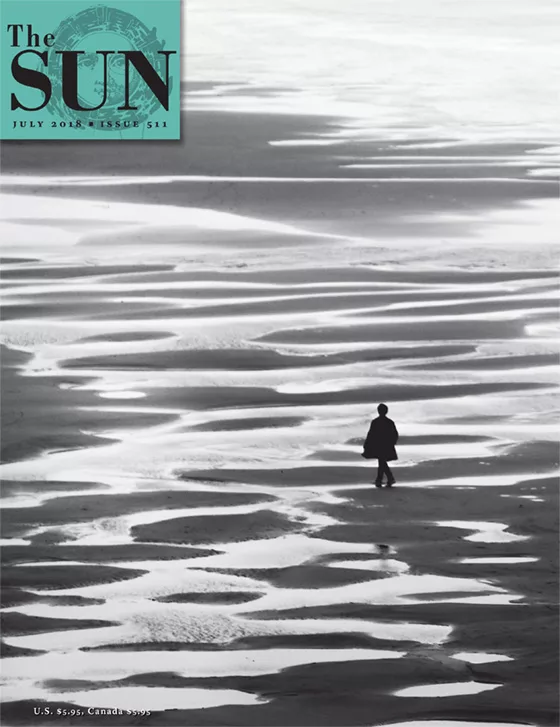
When he became quiet inwardly he was able to think about his name and, with it, the present situation of his life. As he thought of it, the image representing it came before his mind’s eye. Now he saw waves rising and falling in the sea, great waves reaching tremendous new heights, breaking with great strength and dissipating in the sea. He remained in meditation and encouraged the waves to roll on, to rise and fall, to enlarge themselves, to break and disappear, to follow the impulse of their nature with perfect freedom. As they did so, they absorbed an even larger part of his consciousness. The waves rising and falling became the sea, and as the night progressed a mighty ocean was moving back and forth around him.
As the wrestler concentrated upon the image of the ocean, and as he permitted it to move according to its own nature, it grew larger and larger. It became the reality of the temple in which he was sitting. The waves moved on and on. They swelled and rose and fell again. They washed away the decorations in the temple. The flower vases disappeared in the flood of the sea. The holy statues were inundated and washed away. Even the figure of Buddha was engulfed by the waves and disappeared. Nothing remained in the temple — except the mighty ocean rising and falling, and surging onward in its cycles. This was the sole reality. The temple itself disappeared. There was only the ocean, and the wrestler himself was the ocean. He was no longer the person who called himself by the name of Great Waves. The ocean was all, and there were individual waves rising and falling upon that ocean.
In the morning the Zen Master returned to the temple. He observed Great Waves for a moment and then patted him on the shoulder. “Nothing can disturb you now,” he told him. “You are the waves. Go forth then and wash all that is before you.”
The end of the story is a happy one. It is a story of success. The anxious wrestler, the story concludes, did go forth and was no longer fearful. He became the greatest wrestler in all Japan.
How did the Zen master approach it? He did not attempt to identify the so-called causes of the anxiety. He did not inquire into the problems of childhood.
There have been several attempts in recent years to present Zen Buddhism to the West as a new kind of religious philosophy. This story, however, indicates its specific psychological implications. The Zen master was here facing the problem of an anxiety great enough to bring about failure, even though the talents and capacities for success were very large. In our time we see that as a psychological problem to be analyzed and diagnosed. But how did the Zen master approach it? He did not attempt to identify the so-called causes of the anxiety. He did not inquire into the problems of childhood, nor did he make a diagnosis that would link the person and the problems.
The master did not ask him how the problem had come into being. He did not ask him about resentments toward his mother or his father; nor did he ask him to meditate on his rivalries with his brothers and sisters. In fact, he drew the focus of attention away from the outer conditions of life and also away from the terms in which Great Waves was perceiving his problem. He drew the attention away from the wrestler’s consciousness of his difficulty and redirected it toward another level of the psyche.
At this other place in the psyche — a deeper place in the sense that it was below or more basic than the surface of the wrestler’s self-consciousness — the pressures of the problem were not felt. A totally different quality of experience now entered the situation. A new atmosphere was established within the person, encompassing the situation as a whole and setting a new tone for it. This was accomplished by shifting the attention to a different level, enabling the person to reach a different place in the psyche. At this depth in psychic space, the situation of the wrestler’s life could be seen in a new light, with a new quality of consciousness. The nature of the problem was thus redefined in the eyes of the wrestler himself.
Once the attention had been shifted to the depth level of the psyche, the redefinition of the problem took place spontaneously, without any words being spoken. The reason it could happen without verbal interpretation is that a change of place and perspective was being brought about. The change in consciousness was not a matter of intellectual concepts but of experience. The change in awareness was actually happening. It was being brought about by the wrestler even though the Zen master did not specifically speak of it. The wrestler was merely given something specific to do — to conceive the present situation of his life, first in thought, and in the form of images. As the images enlarged themselves and became symbols, the wrestler continued with them, letting the symbols serve as vehicles to take him further. By means of the symbols, he reached a new perspective, a new quality of awareness with which to see the world and his life within it. This new state of consciousness came about naturally, not by self-conscious direction. Specifically, it came about through the activities in which the wrestler was engaged on the level of symbolism in his work of meditation.
By means of the symbols, he reached a new perspective, a new quality of awareness with which to see the world and his life within it. This new state of consciousness came about naturally, not by self-conscious direction.
The essence of the change taking place was a new perspective experienced by the wrestler by means of symbols, as he struggled with the question of his life. This perspective was possible, in part, because the shift in the focus of attention placed him psychologically at a distance from the environmental sphere of his trouble. He was experiencing his problem of self-consciousness on the surface level of his psyche, where the personality touches the outer world. The shifting inward of his attention drew him out of the vortex of the external storm and enabled him to look at it from a vantage point in the inward space of the psyche.
This was one aspect of it, but the new perspective he achieved involved more than a movement in psychic space. It began with the fact that as Great Waves became aware of his capabilities as a wrestler, he envisioned great successes for himself in that field. A large hopefulness built within him, but it was not a fundamental hope affirming life as a whole. It was hope that had already become specific in the form of a desire for success in the field of wrestling. And hope that has become specific as a particular desire leads to the fear of failure. That is the dialectic within human life by which hope becomes anxiety. Great Waves took his problem to the Zen master only at the point where the dialectic had become an anxiety that blocked the further movement of his life. He could no longer function to fulfill his main desire. The response of the Zen Master was not to seek to break the dialectic by entering it. There was too great a chance that while seeking to change it he would be caught by it and be at the mercy of the movement of opposites. Instead he called the wrestler’s attention to the dimension of experience where symbols connect human beings to the underlying unity of life. The problem that Great Waves faced was subjective to him. By contrast, the image of the surging waters in the ocean of life possessed an objectivity that transcended persons. The image carried a quality of timelessness; it suggested a transpersonal power encompassing the cycles of life and capable of overcoming them. As his experience of the ocean became increasingly real to him, Great Waves felt the energy of the universe moving through him, and he identified with it. We might say that he found himself unconsciously participating in the sea of life and that it progressively absorbed him until it became the main factor in his life. The Zen Master perceived this unity of being and thus he assured Great Waves that his inward wrestling had been carried to the point where he was ready now for outward wrestling once again.
The Dynamics of Hope and a list of other books and tapes by Progoff are available from the Dialogue House Library, 80 East 11 Street, Room 305, New York, NY 10003.
Copyright © 1985 by Ira Progoff. Reprinted by permission of Dialogue House Library.