Jimmy Santiago Baca was born in New Mexico, the youngest child of teenage parents: a Mexican boy and a fair-skinned girl of Spanish descent. Jimmy’s father soon ruined the marriage with his drinking, sporadic violence, and womanizing, and Jimmy’s mother ran away with an affluent white businessman. She bleached her hair, changed her Spanish name, and left her three children with their paternal grandparents in the tiny town of Estancia, New Mexico.
For a few years, Jimmy was happy living in his grandparents’ village, roaming in the woods, milking cows with his uncle, and playing innocent games. But after the sudden death of his grandfather, he and his brother were sent to an orphanage in Albuquerque. (Their sister stayed to help their grandmother.) Six turbulent years later, Jimmy’s penchant for running away landed him in a detention center for boys. By the age of fifteen, he was living on his own, working odd jobs, and drifting in a haze of alcohol and drugs.
In his early twenties, Baca began dealing heroin for Mexican smugglers and was indirectly involved in a sale to an undercover officer. During the subsequent bust, a fellow drug dealer shot and wounded an FBI agent, and in 1973 Baca was sentenced to five years without parole at a maximum-security prison in Arizona.
This is where this type of story usually ends, or, more likely, becomes the prelude to an even sadder story. But Baca, under inhumane and terrifying conditions, discovered gifts that he could previously only have imagined.
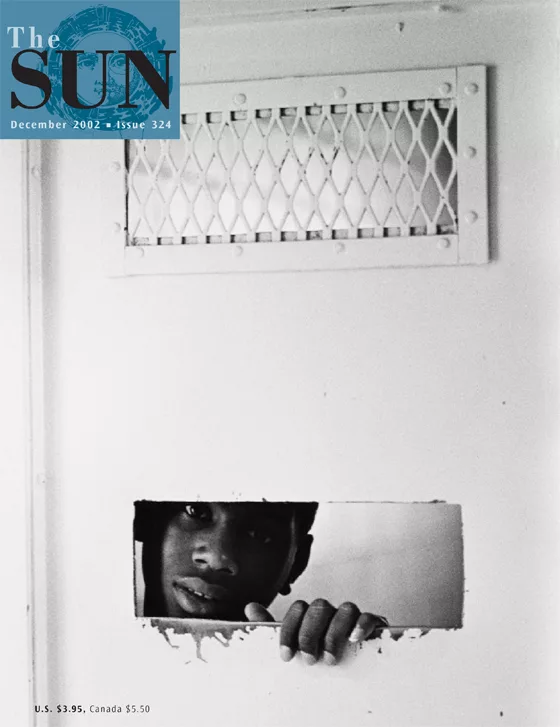
During his six years in prison, four of them spent in isolation, he held on to sanity by taking mental trips through his past, mostly to his grandparents’ village: the red harvest moon in the sky, the smell of smoke from the chimneys, the Spanish Mass on the radio in the parlor. By chance one Christmas, Baca received a letter from a Christian missionary. It was the first letter he’d ever gotten. He could barely read or write, so it took him hours to read it and fashion a short reply. Then, though it required tremendous effort, Baca began to send his correspondent daily outpourings of self and soul. The missionary sent him a dictionary and, recognizing a spark of creativity in Baca’s urgent voice, arranged for him to correspond with the poet Virginia Love Long. With her guidance and the encouragement of other prisoners, Baca began to compose and eventually publish poems, which appeared in numerous small literary magazines, including The Sun.
Today Baca is the author of seven books and a recipient of the American Book Award. He tours the country giving free readings in schools, reservations, and housing projects. His most recent books are Healing Earthquakes, a collection of poetry, and A Place to Stand, a memoir of his childhood and time in prison, both from Grove Press. In the following excerpt from A Place to Stand, Baca describes how he earned the respect of the other prisoners, but then lost it again when he protested the administration’s decision to deny him an education.
— Colleen Donfield
ON NOVEMBER 16, 1973, I changed my original plea of innocent to a plea bargain of guilty of possession of heroin with intent to distribute. When I’d first balked at pleading guilty, my public defender hadn’t even pretended an interest in my innocence. “Plead guilty,” he had said, “and stop wasting everyone’s time.” Nor was he bothered by the fact that I couldn’t read the papers I had signed. I was a negligible nuisance to him. He was in a hurry for me to agree so he could leave right away. By the chummy way he laughed and talked with the prosecutor, it was obvious they were good buddies and the least of their concerns was a twenty-one-year-old illiterate Chicano kid. When the judge entered, I recognized him as the guy who owned the Texaco station where I used to fill up the truck once a week. He usually had on oily overalls and a greasy cap instead of a black robe, with a socket wrench instead of a gavel in his hand. He gave no indication that he’d ever seen me. After I pled guilty, he set a sentencing date, and I was led back to jail.
To keep my mind from worrying about what my sentence might be, I kept busy scouring the drunk tanks, slapping lice from rancid mattresses with a broom, scrubbing spit and blood off grime-caked walls, and carrying blankets stiff with urine and vomit to the laundry room. In the afternoon, I’d mop tiers, cart meals to cons on lockdown, hand out toiletries, and run notes, or “kites,” from one con to another.
I’d been flirting with this blond-haired girl, Tara, a clerk at the booking desk who worked the graveyard shift. She’d mentioned that she was going to college, and I thought she was pretty cool until one night when I was dusting the filing cabinets. Two detectives came in, roughly shoving a drunk Chicano to the booking desk. I didn’t like being around the detectives, so I started to leave, but Tara asked me to put away the wax bottles and roll the cord up on the big buffing machine. Meanwhile, they’d stripped the drunk down, but he resisted their efforts to take off the talisman pouch around his neck. I knew it was considered magic, to protect his soul and ward off evil. He howled in terror, but they laughed as they ripped it off. Tara joined in their fun, chuckling over the drunk’s superstitions. After locking the drunk up, the detectives went into the bathroom to wash their hands. When Tara returned to get the Chicano’s file from the record cabinets, I reached through the bars, swiped one of her college textbooks, and hid it under my jail overalls. After putting the mop and buffer away, I told the duty guard that I was done for the evening, and he escorted me to my cell.
Sitting on my cot, I smoked a cigarette, opened the big hardcover book, and leafed through it. Parts of the text were highlighted with yellow, and on page margins she’d scribbled notes in red ink. I set my cigarette down on the concrete floor and murmured the words, sounding out the letters deliberately to see if I could understand them. I had trouble. It seemed each letter was fighting me. While sounding them out, I had to remember what they meant when combined. It was a lot harder than I’d expected. As I struggled, time, jail noise, cells, and walls all vanished. I was engrossed in the simple story of a man and his pond. How he spent his days there. How he loved to watch the birds. How he sat on its bank and meditated. How he compared the water’s sensuous currents to making love with a woman.
Each letter had its own voice, and as I put the sounds together to make words, they told a story. The more I read, the more I thought about the pond in Estancia. I put my finger under each word, sounding them out all the way to the bottom of the page. It was confusing, but I gathered it was about a man named Wordsworth and another named Coleridge. Words-worth and Cool-ridge. Word cool, cool word. Wool. Coolo. I smiled because coolo in slang meant “stingy chump.” Farther down, breaking off from the rest of the long-lined text, were shorter lines called a poem. I spent a long time figuring it out, until I was interrupted by my neighbor Enrique. He asked me to brew some coffee, and I took out the red Folger’s coffee can I’d found in one of the vacated cells and filled it with water. I tore some pages out of the book and lit them to heat the water. I crouched on my haunches and watched the words burn on the page, the balled-up paper unwrinkling into dark ash.
I WAS five years old the first time I ever set foot in prison. A policeman came to the door one night and told Mom she was needed at the jail. She took me with her. When we arrived at the booking desk, the captain asked, “You married to Damacio Baca?”
“Yes.”
“He was arrested for drunk driving. His bail’s a hundred. Sign here and make sure he appears for court.”
“What are they?”
“His release papers.”
The captain studied her hesitation.
“He stays till his appearance then.” The captain shrugged, surprised at her, and led us past the holding cells to the drunk tank.
It smelled like urine and whiskey vomit. I held tightly to Mother’s hand. The corridors were dark and gloomy, and the slightest sound echoed ominously in the hall. We stopped in front of a cell where men sat and stared at the wall in front of them. Some were crumpled on the floor where they had passed out.
“Oye, Damacio, despierta!” the captain cried, and banged the bars with his baton.
The inmates glanced at us with hung-over disinterest, and one shook my father awake. He rose in a groggy stupor. Cautiously stepping over bodies, losing and regaining his footing, he approached the bars. He rubbed his face and blinked his red eyes.
“Did you have to bring him?” he asked accusingly. Then he added, clearly hurt that I was there, “I don’t want him seeing me like this. Get me out of here.”
“No,” Mom said.
He stared at her, shaking with rage. “Listen, you, don’t —” He looked at me and made an effort to control himself.
We stood in silence for a few seconds. Then Mom cried, “Stay away from us!”
He reached his hand through the bars to me, but Mom yanked me away, her hand painfully gripping mine. I wanted to tell her not to leave Father in there. I feared he might get hurt or be swallowed up by the darkness, and we would never see him again. The green-painted bars, the guards with guns and keys and surly attitudes, the caked grime on the walls and floor, the unshaven men with no teeth and swollen red eyes and scratched faces — these filled me with terror. I tried to free my hand from Mother’s to go back to him, but she squeezed harder and dragged me along.
“Get back here!” My father’s voice was strained by both aggression and self-pity, but Mom opened the door and we left. I wanted to tell him I was sorry. I didn’t want to leave him in jail. Only when he was drinking did he wreck the car, threaten to beat Mom up, lose his paycheck gambling, and sometimes not show up for days. He was not drinking now. We should have let him come home with us. When he would stagger in drunk, Mieyo and Martina would hide under the bed or in the closet, but I wasn’t afraid of him. I would hold his hand and guide him to his chair, and he’d put me on his lap and moan drunkenly about how sorry he was for drinking and not being a better father. Even as scared as I was by the jail, I wanted to sit on the floor outside the cell bars and hold his hand because he needed me.
In time I would become all too familiar with such places, not only with those very same cells down on Garcia Street, but with a long string of others as well, on different if equally dusty streets, with different but similar jailers, different but similar men. That initial encounter, however, never left me. It remained a fixed, haunting reference point to which I would return time and again. Whether I was approaching it or seeking escape from it, jail always defined in some way the measure of my life.
THE JUDGE sentenced me to a mandatory no-parole five to ten years, with five years flat, day for day, in a maximum-security state prison at Florence. They were giving me six months’ time served — the three I had put in at Albuquerque awaiting extradition, and the three at the Yuma jail. I was twenty-one, and I figured I’d be out when I was twenty-six. It was no surprise that the judge had given me the harshest sentence allowed by law. The nuns had always said I was a bad boy, and here was the judge making the same condemnation. I was sure I was convicted mostly because of who I was, expunged from a society that didn’t want people like me in it. I sat back in my wooden chair as they signed the paperwork and I stared down at the armrests, studying the various layers of paint, the chips and cracks. How many hands had gripped them? I wondered. What lives were attached to those hands, what dreams were shattered, what sorrows were they trying to squeeze out of their souls?
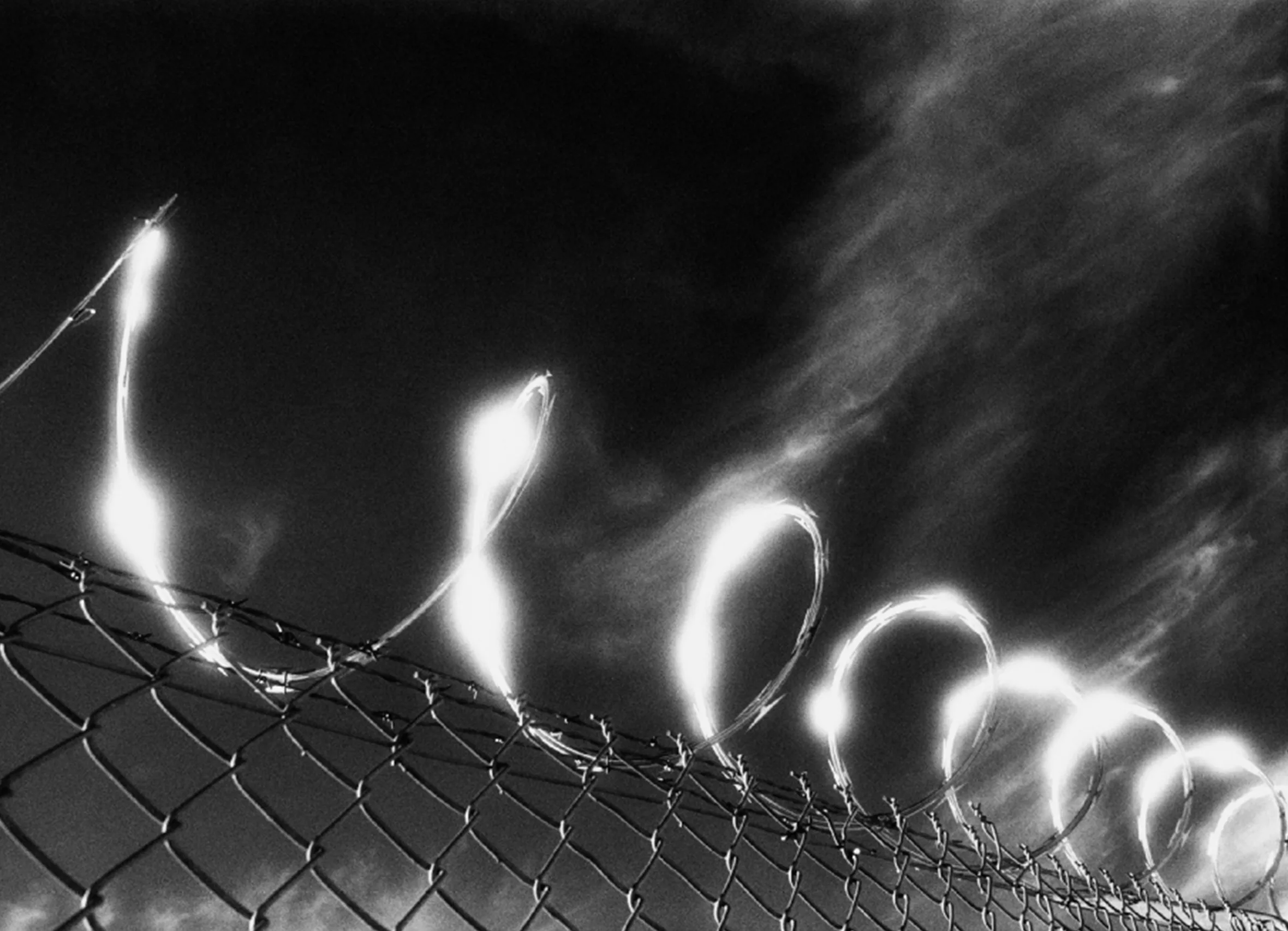
I HAD made up my mind to blend in at Florence State Prison, attract no attention, do my time, and get out alive. It’s true, as convicts know, that you seldom make real friends in prison, just acquaintances, allied by mutual need. All of us had lived in projects, reservations, and barrios, as addicts, hustlers, or nothing at all, existing in aimless desperation. And though we didn’t want to admit it, many of us were begrudgingly relieved to have three meals a day, a bed, and a roof over our heads. The key was to survive prison, not to let it kill your spirit, crush your heart, or have you wheeled out with your toe tagged.
Florence is in the desert, so, like almost everyone else, I wore boxer shorts, dressing in prison blues and brogans only for family visits, counselor interviews, chow time, or trips to the infirmary. Diagnostic Center, the block I was temporarily placed in, housed all new arrivals. Even if you had been to prison ten times, you started here — the newest, most high-tech cellblock in the yard, four tiers high, thirty cells to a tier, facing one another across a broad landing. There were three cellblocks in the main yard, all with various security levels, and every block had one or two tiers reserved for special cases: Nut Run for the mentally disturbed; lockdown cells for suspected gang members; the Dungeon for dangerous psychos; isolation cells with varying degrees of deprivation; and the maximum-security and protective-custody cells. For various reasons, I would eventually visit all of them.
Every day, I anxiously waited for my number to be called for a counselor interview. Once on the yard, I made twelve cents an hour working and I could buy street cigarettes, toiletries, and candy at the canteen; learn a trade or get my GED; even go to college if I could get smart enough. In the general prison population, you were allowed to have a TV and a radio and to go to the exercise field, the movies, and the library. To break up the boring hours, I’d gotten into doing push-ups and sit-ups, standing at the bars watching the other cons, then exercising some more. The only thing that broke up the monotony was rapping to Macaron, the con in the next cell.
My harmonica had been confiscated in Albuquerque, but it had made its way here, and I was jamming a Leadbelly blues one day when Macaron asked to borrow it. I expected him to blow a few notes, but he didn’t. Later he handed it back to me through the bars in three pieces, the main body and two side plates, charred inside where he had cooked heroin. I didn’t know how to respond. I knew from my past street life that if you let a guy get over on you, the rest of the wolves will follow. I paced up and down, thinking. Should I tell him he had to buy me a new one? This would lead to a fight, and I didn’t want trouble. There was a thin line between fear and respect. He might be testing me, and I knew if I didn’t say anything he might think I was a punk. I heard him stirring next door, rousing out of his heroin doze. I was trying to decide what to do when he tapped my bars and his hand shot around with two packs of Camels. That showed respect. I put my harmonica back together and ultimately found that the heat had seasoned the reeds and allowed them to bend more easily when I blew into it. I was later glad that I didn’t jump to any conclusions, because Macaron invited me to sit at his table in the dining room. This was a big deal — it meant I was being accepted.
THERE WERE times, usually as we came out for meals, when Macaron signaled me with a nod to tell me to hold back; minutes later, a fight would break out in line or in the landing below. I was thankful to him for taking me under his wing. He advised me not to give the future or the past much thought. “It’ll drive you crazy,” he said. “Keep your mind on the present, forget about the streets and freedom, and things will work out.” Yet when we crossed and recrossed the yard, I sometimes experienced powerful yearnings for freedom. Regret at allowing life to pass me by pressed so hard against my heart that I felt it might never end. Nights were sometimes worse, especially when cons talked aloud in the dark about girlfriends, the small towns they had come from, things they remembered doing. My brain would start boiling forth so many memories that I had to put toilet paper in my ears to block out the voices. Other times, however, nothing helped, and I would wake up sweating and frightened, feeling I had no chance of ever having a decent life.
When the counselor interviewed me, he told me that if I behaved well and obeyed the institutional rules, I’d be permitted to go to school. I’d have to do my time behind the wall because of the aggravating circumstances of my crime (an FBI agent’s getting shot), but he assured me that after I worked sixty days in the kitchen without a disciplinary report, the Reclassification Committee would let me attend school to get my GED.
Things were going well until one day after work, about three months into my sentence, I stopped in the foyer for the guards to scan me before entering the block; then I went past them onto the landing and toward the wrought-iron stairwell up to my cell. I noticed this huge, burly black porter watching me. For a few days in a row, he stood by the guard booth, leaning on his broom, throwing me a smile. I didn’t know how to handle a man looking at me like that, and with an embarrassed silence I averted my eyes. I hoped that if I ignored him, he’d go away. Instead he took my indifference to mean I was frightened and accessible, and he began to rub his crotch and grin more boldly. One evening, after mail call, I came out of the shower, and he came over to my cell offering cigarettes and coffee. I shook my head no, adding a lingering glare to back him off, but he mad-dogged me back. For the moment it was a standoff, but I knew it wasn’t the end. I could see in his hard dark eyes that he felt he could break me, and the thought of him thinking of me as a woman filled me with anger. Guys thinking they could beat me up wasn’t new to me; I could handle that. But a guy wanting to rape me got under my skin in the worst way. I was too humiliated to talk about it until a few days later, when Macaron and I had just finished playing handball. Sweating and exhausted, we sat on the grass, and Macaron asked if something was bothering me. I told him about my problem.
“Take him down; you don’t wanna get turned out,” he said matter-of-factly. “You can’t pretend it’s not happening.”
“Take him down?” I asked. I wanted to shift the conversation to something else.
“Show him he’s messing with the wrong guy.”
“I can do it with these,” I said, clenching my fists, hoping Macaron would agree.
“He’s a four-time loser. You can fight with your fists, but you’ll have to use a shank, too. He’ll have one. What you knew on the streets is over — this is a crazier world. When we come out tomorrow, strap down and ride. We’ll watch your back.” He glanced at the homeboys with slicked black hair and black shades, chilling on the bleachers in starched jeans and white T-shirts.
“What if I kill him?” The thought of spending the rest of my life in prison scared me.
“It depends how far he takes it, and you never know until you’re in it. Don’t stick him around the heart; you don’t have to kill him. Teach him a lesson; earn your rep as a vato not to mess with; attack first and show no mercy. Word’ll get out that you’re a stand-up dude, and you got no more problems. On the streets, you lose a fight, you go home; that’s it. Here, you get fucked, you get sold, punked out; cons don’t respect you. Cons who went to ’Nam say it’s worse than jungle warfare. You live with your enemies here. There ain’t no going home. You live hour to hour with your enemy standing next to you, eating next to you, walking next to you. The only thing that keeps him from killing you is respect. Do what you gotta do, and do it now.” Macaron got up and went to the bleachers. I wanted to keep talking, but there was nothing more to say.
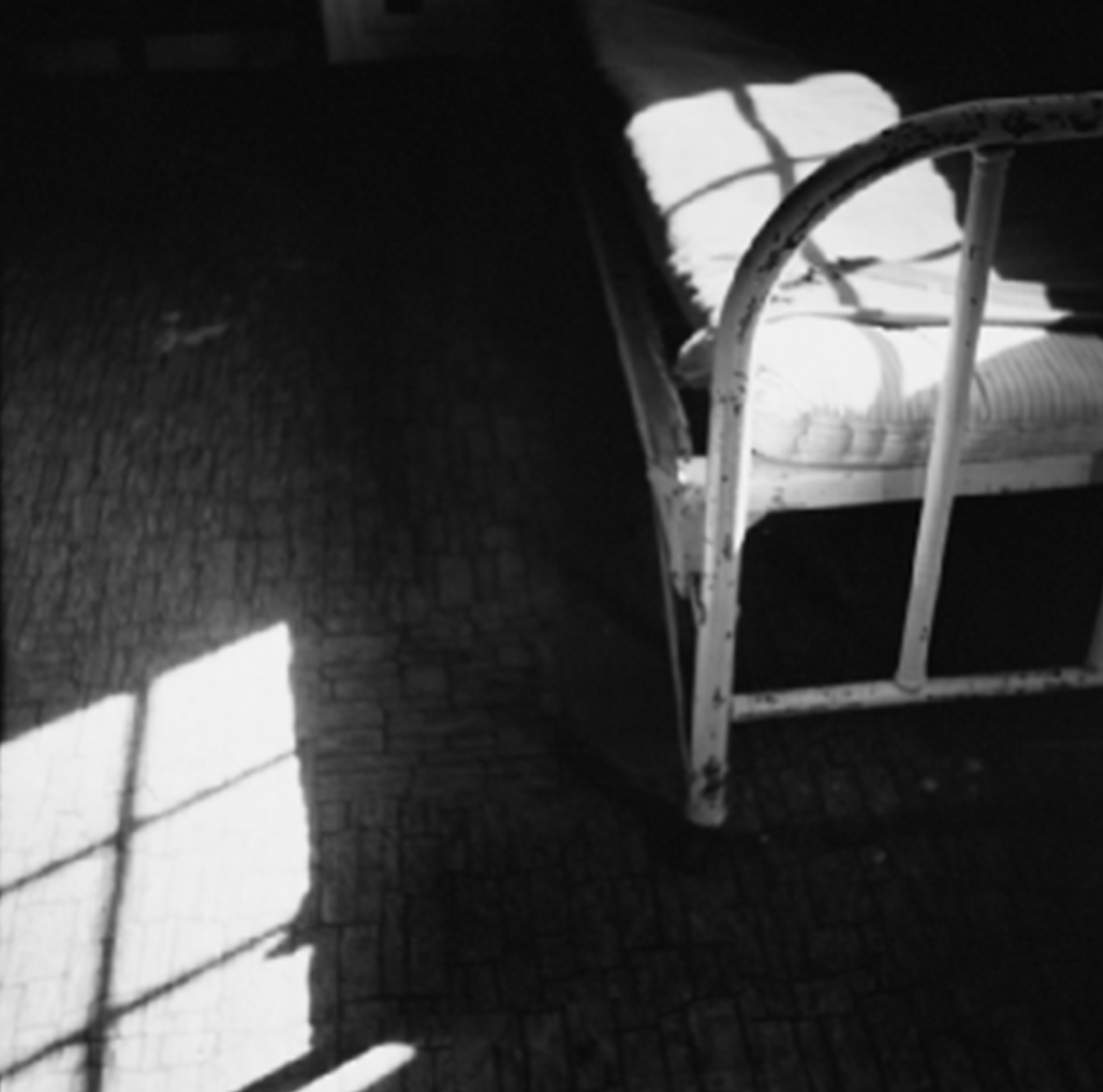
That evening, when I was on my way back to my cell after showering, Macaron called me to the bars and handed me a washcloth, warning, “Remember, wipe your prints off and toss it after you use it.” I unfolded the cloth to find a piece of sharpened plastic about six inches long. Shanks were weapons made from anything you could get your hands on: melted-down plastic molded into a blade, sharpened wood, filed steel, glass, stone, tin, whatever. I slid the shank under my mattress, hoping I wouldn’t have to use it. I couldn’t sleep. I tossed and turned, unable to put the confrontation out of my mind. What if I missed a punch and he stabbed me first? What if he moved just as I was going to stab him, and I caught him by accident in the heart? But the more I imagined what I would do to him, the more confident I became. I’d grown up fighting, dealing with this kind of shit all my life. I was faster. I’d keep the shank tucked away in my sock, and if he pulled his, I’d pull mine. I had to set my mind on the job and do it without hesitation. I had to prove to everyone I was not going to be messed with. My mind reeled with anger over the fact that he was fucking with me when I hadn’t done anything to him. My plans for school would have to be delayed. The thoughts kept coming — how to get an advantage, what I’d counter with if he made certain moves — and after hours of rehearsing it, I finally dozed off. But before I fell asleep, I had decided that, until it was over, nothing was important to me except beating down this thug.
THE NEXT morning, the yard was swept clean and hard. A line formed behind the checkpoint at the west end of the main yard, and another one at the gate where you entered the barracks area and then the field. I could see the distant gun towers at each corner of the field and the top ledge of the handball-court walls. As I neared the checkpoint leading to the gate to the field, I saw him on my left in the open-air welding sheds across from the school barracks. He was supposed to be in the field, not in the welding shop. Panic raced through me. I went numb with the familiar sensation of anger. My mouth was dry. A gravel road for delivery trucks ran north to south between the barracks and the welding shed. My brain boiled over with red mist, making me dizzy and weak. The hot sun and heat were choking me. Then something snapped, igniting a fire in my heart, and I took off sprinting from the line.
The air was opaque, as if I were observing things through milky quartz, and in this dim consciousness, I heard whistles. Everything blurred around me. Fences, gravel road, guards, and cons merged — the only thing I saw was the black dude bending over, wearing welding goggles and smoothing the end of a leg length of cot pipe at a grinding wheel. He was glistening with sweat in the torch flame of the con welding next to him. Before he knew it, I was beside him. Startled by the sight of me, he dropped the pipe he was shaving on the grinder. He crouched to pick it up, but I quickly picked a piece of angle iron from the trash can between us and hit him on the head. Stunned, he staggered back and turned his face right into the whirring grinding wheel. The wheel ripped his goggles in half and cut into his cheek and eye. Blood squirted across the air in thick sprays, and he cried out. A part of his eye and a chunk of cut cheek flesh dangled as he tripped back, covering his face. I hit him again and he fell to his knees, his muscled arms, broad shoulders, and thick legs squirming to escape. I planted my feet firmly apart and hit him until he lay sprawled on the concrete floor. A voice inside my head kept yelling the whole time I was hitting him that I was doing this for my first girlfriend, Theresa, whose father had raped her, and for my brother, who’d been raped by two white guys.
Guards in riot gear rushed in, knocking me to the floor, beating me down with boots and clubs from every direction. It was the one they called Mad Dog Madril, smashing my face in with his boot heel, and another called Five Hundred, clubbing my torso. I lay still, looking at the black dude groaning in a pool of blood a few feet from me. Two big goons lifted me and led me up the gravel road. For a few minutes, I was blinded by bright sunlight flashing in my eyes. I squinted and focused on the line of prisoners waiting to go into the field. I saw Macaron, who nodded his approval. I was proud and relieved it was over.
I COUNTED the months until my reclassification hearing finally came. It was a wonderful spring day, and here and there, in the hard-packed dirt of the yard, sprouted little blossoms. I was feeling strong and hopeful and optimistic because everything had been going well for me. I went into Diagnostic Center through the scanners and handed my slip to the bull in the guard station. He motioned me to sit with some others on a bench in front of the hearing room. The guys were talking about court appeals, writing to chicks, or getting drugs from girlfriends on visiting day. The block speakers thundered out numbers, making my first weeks in prison come back to me. I wondered how Macaron was doing. I’d heard he was a minimum-security trusty, outside the walls. They got a lot of privileges — nice white khakis instead of blues, conjugal time with their girlfriends, better food, and more visits, and they got to walk around freely. If I could persuade the committee to let me go to school, it would be a start toward making my way out of there. Cons were going in and coming out pretty quickly, getting reclassified to a lesser-security status and better jobs.
My number was called, and I went in.
The room was small and painted all white, bright enough to blind me momentarily and make my eyes water. Five committee members sat behind a long folding table with a tape recorder on it, serious as a high-crimes tribunal. Under the overhead fluorescent tubing, their starched beige uniforms, brass badges, rank stripes on their sleeves, and name tags gave them a forbidding formality: Captain (Mad Dog) Madril, Captain (Five Hundred) Smith, Lieutenant (Big Foot) Naya, a black sergeant, and the counselor, the last wearing casual sportswear. They opened my prison folder.
Mad Dog Madril punched the black portable recorder button and started, “Three-two-five-eight-one?”
“Yes, sir,” I replied.
“Says you want to attend school,” Five Hundred mumbled to himself, looking down, reading. He was a big blond guard. His son, Smitty, was in prison on the same block I was in. It was weird seeing Five Hundred lock his son up. Smitty was a tough guy who was always fighting cons who ridiculed him because of his father.
“You’ve had problems adjusting,” the counselor said.
“I’m adjusting,” I said, searching his face for a hint of alliance. Now and then, over the past few months, he’d stopped at my cell to tell me how well I was doing.
Captain Five Hundred said, “You been in . . . sixteen months.”
“Commendable job performance,” the black sergeant added.
“I haven’t missed a day, sir,” I said proudly.
“You in a gang?” Mad Dog Madril asked.
“No, sir, never. Gang members have to get tattoos to be in, and I don’t have any.” I was wearing my T-shirt, and they could see for themselves.
“You think it’s time you took responsibility for your actions?” The counselor’s voice was accusatory.
“Yes, sir, when it’s mine —”
Before I could go on, the black sergeant pitched in. “You’re in for a violent crime. You’re a menace to society. An FBI agent was shot; you escaped. Don’t tell me your record isn’t bad.”
“That you don’t have a long rap sheet only means you’ve gotten away with a lot of things,” the counselor said.
I was confused. What could I say or do to convince them I was earnestly trying to do as they wanted, when every time I tried, they put me back two steps? Why were they doing this? Had someone told them something? Had they made up their minds before I walked in? Was it because an FBI agent had been shot during the drug bust? Had the warden given orders? I wanted to scream that I just wanted to get on with my time, but I sat there, stunned.
Mad Dog Madril glanced at the others. “Anything else?”
“Probationary period, six months,” Big Foot said, and wrote it down in my file.
Mad Dog Madril lowered his mouth to the recorder for closing comments.
“This committee cannot in good faith recommend school at the present time. Prisoner is assigned field duty for six months. Request for schooling will be considered at that point.” He shut the recorder off.
I was on the verge of begging them to reconsider. Feeling a great emptiness overwhelm me, I raised my eyes to the counselor and blurted, “You promised — you stood in front of my cell telling me how great I was doing!” I felt my whole body swell with rage.
He leaned forward. “It’s a fucking prison and don’t you forget it. You’re here to be punished.”
“But the fights: I had to do what I did. You know what’s going on. I was defending myself!”
Mad Dog Madril snarled, “Three-two-five-eight-one, you’re dismissed.”
I couldn’t move. I wanted to start the whole proceeding over and ask them what I had done wrong. I would have apologized and even admitted I was guilty of whatever they wanted me to be guilty of, but in each committee member’s face there was only contempt and hostile disinterest. My despair and pain were mounting rapidly toward eruption, and I was afraid I was going to black out. I was trying to control myself, but my hands and legs had no feeling in them. An overwhelming sadness swept through me, an all-consuming sense of helplessness that ate through my face and hands and legs, burning me down to nothing, to the end of my life in this room, my whole aching soul and heart hating them.
“Dismissed!” Mad Dog Madril commanded.
I don’t know where it came from, my sudden inability to move. It wasn’t courage or defiance. I just sat there until Mad Dog Madril and Five Hundred came around the table and grabbed me and stood me up.
I can still see myself. I’ve gone over and over it. I remember hearing myself yell, “I know what I was, but I’m trying to change! I’m just asking for a fucking chance!” But the simple truth was, from the warden on down to the guards, they had the power of life and death over me. And I truly thought they were going to keep me in prison forever.
I TRIED not to think about what had happened in the hearing room. But after a while, with nothing to occupy my thoughts, I had to. I wasn’t the same after my hearing, and the next day I stayed in my cell, snacking on sweet rolls and candy bars. I didn’t shower. I didn’t speak. I just lay on my back and stared at the underside of the top bunk, deciphering the graffiti and trying to explain my behavior, to look at it from different angles, hoping to understand why I had just sat there. When the intercom crackled out my number at dawn for work, the cell door opened, but I didn’t fall out. I felt removed from everything. I had already blown my opportunity to go to school, and I didn’t even have a clue as to why. I had always been able to endure anything, take it in stride, and move on. What was wrong? I had no answers then, but looking back today, I know what happened: I knew in my soul that if I had gone along with their classifying me as they wished, simply ignoring my request to attend school, I would still be in prison today.
Flaco and Chacho yelled up from the landing, but I told them I wasn’t going and motioned them on. They understood I was doing what I had to do. I’d already gotten two disciplinary write-ups for not going to work, and the situation was becoming a standoff. But going into the second week, they began to worry. I felt guilty when I saw my homeboys worrying about me. I saw them murmuring among themselves, and then their voices shot up.
“Come on, carnal, let’s go,” Icy urged.
“What’s up, homeboy?” Choo-Choo asked.
“Let’s kick it, vato,” Zero said.
“No andas chafiando!” Gamboa growled. Don’t be kidding like this.
To this day I still feel bad when I remember looking at them through my cell bars. I knew what really counted with them was respect and loyalty. We were solid partners; they watched my back and I theirs. I also remember they were willing to give their lives for me and how it hurt me in my soul not to be with them as I usually was, laughing and horsing around. Most of my acquaintances knew I wanted to do good; we’d talked about going to GED classes together when we walked around the field. They hadn’t seen this side of me. How could I tell them I hadn’t expected it either? I didn’t know why I didn’t get up out of the chair. Coming from the very depths of my soul, it was beyond my control. Sure, I’d had enough of the hole, but my defiance went beyond casual noncompliance to serious opposition.
OVER THE next week I quit making my bunk and cleaning my cell. As usual, every time the bull came down the tier, he placed a write-up on the bars for breaking institutional rules. When I looked at the pile of pink slips, I had the feeling I was fucking everything up. I also knew that by simply refusing to take them off the bars, I was deflating the importance of what they represented. For the next few days, when the tier guard stood in front of my cell with his clipboard at count time and barked out my number, I’d turn my back to him like he wasn’t there, and he’d place another write-up on the bars and move on. The cons wondered when I might get up and stand for count time, but I never did.
To this day, it still amazes me how taking myself out of the system and refusing to work had everybody in an upheaval, from my friends to the guards. The more I did nothing, the more aggravated everyone became. It was the first time I felt I was accomplishing something, even though I couldn’t understand why. Regardless of what little my life meant in the larger scheme of things, at least for the moment it was mine. It didn’t belong to the state, the judge, the guards, or the cons, either. They’d told me all my life what to do, and I had obeyed. But I couldn’t take it anymore.
Before my reclass hearing, I’d been getting it together. I had friends and respect. I was starting to believe I was going to make it. Who knew that not working would take me out of my life as I lived it into a whole new chaotic and unrecognizable reality?
It started with my homies. At first they extended their hands and hearts to help me with whatever might be disturbing me. They would stop at my cell and exchange a few words. Now they avoided me. They avoided my eyes or, if they did look, it was a quick side glance that meant they now suspected me of being a coward, of betraying their trust, of letting them down. I could sense the peer pressure boiling over, the secret accusations in their blood, the hard-core, stone-cold glares, until finally I heard the words I dreaded.
“Maybe he’s a snitch.”
“He’s a punk.”
“He’s afraid.”
“Es puto, no vale verga, no tiene corazón, chale con aquel vato.” He’s a sissy, he ain’t worth it, doesn’t have heart, forget that dude.
Guards on every shift routinely came to my cell and, raking a baton across the bars, called my number. When I just stared back, they checked my number off on a clipboard and placed another write-up slip on top of the others.
The counselor came up on the third week. “What the hell are you trying to pull?” He stood away from the bars.
“Fuck you, liar,” I said, and turned my back on him and faced the sink. I spooned coffee into my plastic cup and filled it with hot water from the tap and stirred it. I turned and stared at him. Behind him other cons across the way were watching. I drank the coffee and felt it warm and bitter in my stomach. The whole time I was glaring at him, I was thinking how he had set me up. My look must have frightened him, because he left without saying anything.
Later, when everyone had come in from work and was showering and getting ready for supper, five guards stormed through the front of the block onto the landing with riot-gear helmets, shields, and batons. In the lead, Mad Dog Madril yelled at the tier guard to rack my cell as the goons clomped up the shaking stairwell.
“Shake it down!” Mad Dog was seething. He pushed me out on the tier in my boxers, without shirt or shoes or pants. Cons stuck their mirrors out through the bars, and I could see their confused faces, questioning eyes. The goons ripped the mattress apart, squeezed out the toothpaste tube, emptied my tobacco bag, searching my cell for a shank or drugs. They found a small packet of sugar from the kitchen.
“Add contraband to the charges!” Mad Dog commanded. Five Hundred jabbed me with his stick and marched me down onto the landing in the middle of the block. Cons stood at the bars as one voice and then another and another cursed in a deafening roar. They shook the bars, yelping and snarling like hyenas over fresh kill. Their eyes were hard and glassy. I tried to tell myself they were cursing the guards, but it was me they were condemning.
I remember the humiliation of seeing them grip the bars and push their angry faces forward as they screamed. They had revealed their secrets to me and now believed I had turned on them, making me no different from all the perpetrators who had killed their spirits. I was the friend they had embraced and who then had stabbed them in the back.
I was facing the tiers toward my cell when a cup of scalding water hit me in the shoulder from behind. I turned, and someone else threw urine, and then someone else a Styrofoam cup of feces. It was as if I were standing outside myself and watching this. I told myself it had nothing to do with me. I wiped my face with my hands. The yelling caught on, and the whole block was cursing me from both sides. A link in the chain had snapped, and for that their repugnance stormed down on me, shaking tiers and trembling concrete. I stood quietly, taking it all in, pretending to myself that someone else was standing there.
Mad Dog Madril came down and chained me around the waist, hands, and wrists. Then he and his goons marched me out of the block.
Outside, going across the yard, I knew that, by standing up for myself, I had done something completely new. I might have lost the respect of my peers, but I was feeling a sense of my own worth that I had never felt before. I knew I was no longer a twenty-two-year-old illiterate brown man, not just another con with a number who was going to submit to degradation. Something had changed in me. I felt tremendous pride in having taken this one little step. I now knew I had wanted to take it for a long time.
“A Place to Stand” is reprinted from A Place to Stand. © 2001 by Jimmy Santiago Baca. It appears here by permission of Grove Press.