The fact that we humans are indeed omnivorous is deeply inscribed in our bodies, which natural selection has equipped to handle a remarkably wide-ranging diet. Our teeth are omnicompetent — designed for tearing animal flesh as well as grinding plants. So are our jaws, which we can move in the manner of a carnivore, a rodent, or an herbivore, depending on the dish. Our stomachs produce an enzyme specifically designed to break down elastin, a type of protein found in meat and nowhere else. Our metabolism requires specific chemical compounds that, in nature, can be gotten only from plants (like vitamin C) and others that can be gotten only from animals (like vitamin B-12). More than just the spice of human life, variety for us appears to be a biological necessity.
By comparison, nature’s specialists can get everything they need from a small number of foods and, very often, a highly specialized digestive system, freeing them from the need to devote a lot of brainpower to the challenges of omnivorousness. The ruminant, for example, specializes in eating grass, even though the grasses by themselves don’t supply all the nutrients the animal needs. What they do supply is food for the microbes living in the animal’s rumen, which in turn supply the other nutrients the animal needs to survive. The ruminant’s genius for keeping itself well-fed resides in its gut rather than its brain.
There does seem to be an evolutionary trade-off between big brains and big guts — two very different strategies for dealing with the question of food selection. The case of the koala, one of nature’s pickiest eaters, exemplifies the small-brain strategy. You don’t need a lot of brain circuitry to figure out what’s for dinner when all you ever eat is eucalyptus leaves. As it happens, the koala’s brain is so small it doesn’t even begin to fill up its skull. Zoologists theorize that the koala once ate a more varied and mentally taxing diet than it does now, and that, as it evolved toward its present, highly circumscribed concept of lunch, the animal’s underemployed brain actually shrank. (Food faddists, take note.) More important to the koala than brains is a gut big enough to break down all those fibrous leaves. By the same token, the digestive tract of primates like us has grown progressively shorter as we’ve evolved to eat a more varied, higher-quality diet.
Eating might be simpler as a thimble-brained koala, but it’s also a lot more precarious, which partly explains why there are so many more rats and humans in the world than koalas. Should a disease or drought strike the eucalyptus trees, that’s it for the koala. But the rat and the human can live just about anywhere on earth, and when their familiar foods are in short supply, there’s always another they can try. Indeed, there is probably not a nutrient source on earth that is not eaten by some human somewhere: bugs; worms; dirt; fungi; lichens; seaweed; rotten fish; the roots, shoots, stems, bark, buds, flowers, seeds, and fruits of plants; every imaginable part of every imaginable animal — not to mention haggis, granola, and chicken McNuggets. (The deeper mystery is why any given human group will eat so few of the numberless nutrients available to it.)
The price of this dietary flexibility is much more complex and metabolically expensive brain circuitry. For the omnivore a tremendous amount of mental wiring must be devoted to sensory and cognitive tools for figuring out which of all these questionable nutrients it is safe to eat. There’s just too much information involved in food selection to encode every potential food and poison in the genes. So instead of genes to write our menus, omnivores evolved a complicated set of sensory and mental tools to help us sort everything out. Some of these tools are fairly straightforward, and we share them with many other mammals; others represent impressive feats of adaptation by primates; still others straddle the blurry line between natural selection and cultural invention.
Historically, national cuisines have been remarkably stable and resistant to change, which is why the immigrant’s refrigerator is the very last place to look for signs of assimilation.
The first tool is of course our sense of taste, which performs some of the basic work of screening foods for value and safety. Or, as Jean Brillat-Savarin put it in his 1825 Physiology of Taste, taste “helps us to choose, from the various substances offered us by nature, those which are proper to be consumed.” Taste in humans gets complicated, but it starts with two powerful instinctual biases: one positive, the other negative. The first bias predisposes us toward sweetness, a taste that signals a particularly rich source of carbohydrate energy in nature. Indeed, even when we’re otherwise sated, our appetite for sweet things persists, which is probably why dessert shows up in the meal when it does. A sweet tooth represents an excellent adaptation for an omnivore whose big brain demands a tremendous amount of glucose (the only type of energy the brain can use), or at least it once did, when sources of sugar were few and far between. (The adult human brain accounts for 2 percent of our body weight but consumes 18 percent of our energy, all of which must come from a carbohydrate. Food faddists, take note two.)
Our sense of taste’s second big bias predisposes us against bitter flavors, which is how many of the defensive toxins produced by plants happen to taste. Pregnant women are particularly sensitive to bitter tastes, probably an adaptation to protect the developing fetus against even the mild plant toxins found in foods like broccoli. A bitter flavor on the tongue is a warning to exercise caution lest a poison pass what Brillat-Savarin called the sense of taste’s “faithful sentries.”
Disgust turns out to be another valuable tool for negotiating the omnivore’s dilemma. Though the emotion has long since attached itself to a great many objects having nothing to do with food, food is where and why it began, as the etymology of the word indicates. (It comes from the Middle French verb desgouster, “to taste.”) Psychologist Paul Rozin, who has written or coauthored several fascinating articles about disgust, defines it as the fear of incorporating offending substances into one’s body. Much of what people deem disgusting is culturally determined, but there are certain things that apparently disgust us all, and all these substances, Rozin notes, come from animals: bodily fluids and secretions, corpses, decaying flesh, feces. (Curiously, the one bodily fluid of other people that doesn’t disgust us is the one produced by the human alone: tears. Consider the sole type of used tissue you’d be willing to share.) Disgust is an extremely useful adaptation, since it prevents omnivores from ingesting hazardous bits of animal matter: rotten meat that might carry bacterial toxins or infected bodily fluids. In the words of Harvard psychologist Steven Pinker, “Disgust is intuitive microbiology.”
Yet, helpful as it is, our sense of taste is not a completely adequate guide to what we can and cannot eat. In the case of plants, for instance, it turns out that some of the bitterest ones contain valuable nutrients, even useful medicines. Long before the domestication of plants (a process in which we generally selected for nonbitterness), early humans developed various other tools to unlock the usefulness of these foods, either by overcoming their defenses or overcoming our own aversion to how they taste.
That’s precisely what people must have done in the case of the sap in the opium poppy or the bark of the willow, both of which taste extremely bitter — and both of which contain powerful medicines. Once humans discovered the curative properties of salicylic acid in willows (the active ingredient in aspirin) and the relief from pain offered by the poppy’s opiates, our instinctive aversion to these plants’ bitterness gave way to an even more convincing cultural belief that the plants were worth ingesting even so; basically, our powers of recognition, memory, and communication overcame the plants’ defenses.
Humans also learned to overcome plant defenses by cooking or otherwise processing foods to remove their bitter toxins. Native Americans, for example, figured out that if they ground, soaked, and roasted acorns they could unlock the rich source of nutrients in the bitter nuts. Humans also discovered that the roots of the cassava, which effectively defends itself against most eaters by producing cyanide, could be made edible by cooking. By learning to cook cassava, humans unlocked a fabulously rich source of carbohydrate energy — one that, just as important, they had all to themselves, since locusts, pigs, porcupines, and all the other potential cassava eaters haven’t yet figured out how to overcome the plant’s defense.
Cooking, one of the human omnivore’s cleverest tools, opened up whole new vistas of edibility. Indeed, in doing so it probably made us who we are. By making these foods more digestible, cooking plants and animal flesh vastly increased the amount of energy available to early humans, and some anthropologists believe this boon accounts for the dramatic increase in the size of the hominid brain about 1.9 million years ago. (Around the same time, our ancestors’ teeth, jaws, and gut slimmed down to their present proportions, since they were no longer needed to process large quantities of raw food.) By improving digestibility, cooking also cut down on the time we had to spend foraging for plants and simply chewing raw meat, freeing that time and energy for other pursuits.
Last but not least, cooking abruptly changed the terms of the evolutionary arms race between omnivores and the species they would eat by allowing us to overcome their defenses. Apart from fruits, which have a declared interest in becoming another species’s lunch (this being their strategy for spreading their seeds), and grasses, which welcome grazing as a strategy to keep their habitat free of shady competitors, most wild foods are parts of plants or animals that have no interest in being eaten; they evolved defenses to keep themselves whole. But evolution doesn’t stand still, and eaters are constantly evolving counteradaptations to overcome the defenses of nutrient sources: a new digestive enzyme to detoxify a plant or fungal poison, say, or a new perceptual skill to overcome an edible creature’s camouflage. In response, the plants, animals, and fungi evolved new defenses to make themselves more difficult either to catch or to digest. This arms race between the eaters and the potentially eaten unfolded at a stately pace until early humans came on the scene. For a countermeasure such as cooking bitter plants completely changed the rules of the game. All at once a species’s painstakingly developed defense against being eaten had been breached, and, assuming it can erect a new defense, that is going to take time — evolutionary time.
Cooking is often cited (along with tool-making and a handful of other protohuman tricks) as evidence that the human omnivore entered a new kind of ecological niche in nature, one that some anthropologists have labeled “the cognitive niche.” The term seems calculated to smudge the line between biology and culture, which is precisely the point. To these anthropologists the various tools humans have developed to overcome the defenses of other species — not only food-processing techniques, but a whole gamut of hunting and gathering tools and talents — represent biocultural adaptations, so-called because they constitute evolutionary developments rather than cultural inventions that somehow stand apart from natural selection.
In this sense learning to cook cassava roots or to disseminate the hard-won knowledge of safe mushrooms is not all that different from recruiting rumenal bacteria to nourish oneself. The cow depends on the ingenious adaptation of the rumen to turn an exclusive diet of grasses into a balanced meal; we depend instead on the prodigious powers of recognition, memory, and communication that allow us to cook cassava or identify an edible mushroom and share that precious information. The same process of natural selection came up with both strategies; one just happens to rely on cognition, the other goes with the gut.
Some nutrient that Americans have been happily chomping for decades is suddenly found to be lethal; another nutrient is elevated to the status of health food; the industry throws its weight behind it; and the American diet undergoes yet another revolution.
Being an omnivore occupying a cognitive niche in nature is both a boon and a challenge, a source of tremendous power as well as anxiety. Omnivorousness is what allowed humans to adapt to a great many environments all over the planet, and to survive in them even after our favored foods were driven to extinction, whether by accident or because of our own too-great success in overcoming other species’ defenses. After the mastodon there would be the bison and then the cow; after the sturgeon, the salmon, and then, perhaps, some novel meat substitute like Quorn.
Being a generalist offers us deep satisfactions, too, enjoyments that flow equally from the omnivore’s innate neophilia (the pleasure of variety) and neophobia (the comfort of the familiar). What began as a set of simple sensory responses to food — sweet, bitter, disgusting — we’ve elaborated into more-complicated canons of taste that afford us aesthetic pleasures undreamed of by the koala or cow. Since “everything that is edible is at the mercy of his vast appetite,” Brillat-Savarin writes, “the machinery of taste attains a rare perfection in man,” making “man the only gourmand in the whole of nature.” Taste in this more cultivated sense brings people together, not only in small groups at the table but as communities. For a community’s food preferences — the strikingly short list of foods and preparations it regards as good to eat and drink — represent one of the strongest social glues we have. Historically, national cuisines have been remarkably stable and resistant to change, which is why the immigrant’s refrigerator is the very last place to look for signs of assimilation.
Yet the surfeit of choice that confronts the omnivore brings stresses and anxieties also undreamed of by the cow or the koala, for whom the distinction between the Good Things to Eat and the Bad is second nature. And while our senses can help us draw the first rough distinctions between good and bad foods, we humans have to rely on culture to remember and keep it all straight. So we codify the rules of wise eating in an elaborate structure of taboos, rituals, manners, and culinary traditions, covering everything from the proper size of portions, to the order in which foods should be consumed, to the kinds of animals it is and is not OK to eat. Anthropologists argue over whether all these rules make biological sense: some, like the kosher rules, are probably designed more to enforce group identity than to protect health. But certainly a great many of our food rules do make biological sense, and they keep us from having to confront the omnivore’s dilemma every time we visit the supermarket or sit down to eat.
That set of rules for preparing food we call a cuisine, for example, specifies combinations of foods and flavors that on examination do a great deal to mediate the omnivore’s dilemma. The dangers of eating raw fish, for example, are minimized by consuming it with wasabi, a potent antimicrobial. Similarly, the strong spices characteristic of many cuisines in the tropics, where food is quick to spoil, have antibacterial properties. The Mesoamerican practice of cooking corn with lime and serving it with beans, like the Asian practice of fermenting soy and serving it with rice, turns out to render these plant species much more nutritious than they otherwise would be. When not fermented, soy contains an antitrypsin factor that blocks the absorption of protein, rendering the bean indigestible; unless corn is cooked with an alkali like lime, its niacin is unavailable, leading to the nutritional deficiency called pellagra. Corn and beans each lack an essential amino acid (lysine and methionine, respectively); eat them together, and the proper balance is restored. Similarly, a dish that combines fermented soy with rice is nutritionally balanced. As Rozin writes, “Cuisines embody some of a culture’s accumulated wisdom about food.” Often when people in one culture have imported another’s food species without importing the associated cuisine, and its embodied wisdom, they’ve made themselves sick.
Rozin suggests that cuisines also help negotiate the tension between the omnivore’s neophilia and neophobia. By preparing a novel kind of food using a familiar complex of flavors — by cooking it with traditional spices, say, or sauces — the new is rendered familiar, “reducing the tension of ingestion.”
Anthropologists marvel at just how much cultural energy goes into managing the food problem. But as students of human nature have long suspected, the food problem is closely tied to . . . well, to several other big existential problems. Leon Kass, the ethicist, wrote a fascinating book called The Hungry Soul: Eating and the Perfection of Our Nature, in which he teases out the many philosophical implications of human eating. In a chapter on omnivorousness, Kass quotes at length from philosopher Jean-Jacques Rousseau, who in his Second Discourse draws a connection between our freedom from instinct in eating and the larger problem of free will. Rousseau is after somewhat bigger game in this passage, but along the way he offers as good a statement of the omnivore’s dilemma as you’re likely to find:
. . . nature does everything in the operations of a beast, whereas man contributes to his operations by being a free agent. The former chooses or rejects by instinct and the latter by an act of freedom, so that a beast cannot deviate from the rule that is prescribed to it even when it would be advantageous to do so, and a man deviates from it often to his detriment. Thus a pigeon would die of hunger near a basin filled with the best meats, and a cat upon heaps of fruits or grain, although each could very well nourish itself on the food it disdains if it made up its mind to try some. Thus dissolute men abandon themselves to the excesses which cause them fever and death, because the mind depraves the senses and because the will still speaks when nature is silent.
Guided by no natural instinct, the prodigious and open-ended human appetite is liable to get us into all sorts of trouble, well beyond the stomachache. For if nature is silent, what’s to stop the human omnivore from eating anything — including, most alarmingly, other human omnivores? A potential for savagery lurks in a creature capable of eating anything. If nature won’t draw a line around human appetite, then human culture must step in, as indeed it has done, bringing the omnivore’s eating habits under the government of all the various taboos (foremost, the one against cannibalism), customs, rituals, table manners, and culinary conventions found in every culture. There is a short and direct path from the omnivore’s dilemma to the astounding number of ethical rules with which people have sought to regulate eating for as long as they have been living in groups.
“Without virtue” to govern his appetites, Aristotle wrote, man of all the animals “is most unholy and savage, and worst in regard to sex and eating.” Paul Rozin has suggested, only partly in jest, that Freud would have done well to build his psychology around our appetite for food rather than our appetite for sex. Both are fundamental biological drives necessary to our survival as a species, and both must be carefully channeled and socialized for the good of society. (“You can’t just grab any tasty-looking morsel,” he points out.) But food is more important than sex, Rozin contends. Sex we can live without (at least as individuals), and it occurs with far less frequency than eating. Since we also do rather more of our eating in public, there has been “a more elaborate cultural transformation of our relationship to food than there is to sex.”
Rozin doesn’t say as much, but all the customs and rules culture has devised to mediate the clash of human appetite and society probably bring greater comfort to us as eaters than as sexual beings. Freud and others lay the blame for many of our sexual neuroses at the door of an overly repressive culture, but that doesn’t appear to be the principal culprit in our neurotic eating. To the contrary, it seems as though our eating tends to grow more tortured as our culture’s power to manage our relationship to food weakens.
This seems to me precisely the predicament we find ourselves in today as eaters, particularly in America. America has never had a stable national cuisine; each immigrant population has brought its own foodways to the American table, but none has ever been powerful enough to hold the national diet very steady. We seem bent on reinventing the American way of eating every generation, in great paroxysms of neophilia and neophobia. That might explain why Americans have been such easy marks for food fads and diets of every description.
This is the country, after all, where at the turn of the last century Dr. John Harvey Kellogg persuaded great numbers of the nation’s most affluent and best-educated to pay good money to sign themselves into his legendarily nutty sanitarium in Battle Creek, Michigan, where they submitted to a regime that included all-grape diets and almost hourly enemas. Around the same time millions of Americans succumbed to the vogue for “Fletcherizing” — chewing each bite of food as many as one hundred times — introduced by Horace Fletcher, also known as the “Great Masticator.”
This period marked the first golden age of American food faddism, though of course its exponents spoke not in terms of fashion but of “scientific eating,” much as we do now. Back then the best nutritional science maintained that carnivorousness promoted the growth of toxic bacteria in the colon; to battle these evildoers Kellogg vilified meat and mounted a two-fronted assault on his patients’ alimentary canals, introducing quantities of Bulgarian yogurt at both ends. It’s easy to make fun of people who would succumb to such fads, but it’s not at all clear that we’re any less gullible. It remains to be seen whether the current Atkins-school theory of ketosis — the process by which the body resorts to burning its own fat when starved of carbohydrates — will someday seem as quaintly quackish as Kellogg’s theory of colonic autointoxication.
What is striking is just how little it takes to set off one of these apple-cart-toppling nutritional swings in America; a scientific study, a new government guideline, or a lone crackpot with a medical degree can alter this nation’s diet overnight. One article in the New York Times Magazine in 2002 almost single-handedly set off the recent spasm of carbophobia in America. But the basic pattern was fixed decades earlier, and suggests just how vulnerable the lack of stable culinary traditions leaves us to the omnivore’s anxiety and the companies and quacks who would prey on it. So every few decades some new scientific research comes along to challenge the prevailing nutritional orthodoxy; some nutrient that Americans have been happily chomping for decades is suddenly found to be lethal; another nutrient is elevated to the status of health food; the industry throws its weight behind it; and the American diet undergoes yet another revolution.
We Americans are amazed to learn that some of the cultures that set their culinary course by the lights of habit and pleasure, rather than nutritional science and marketing, are actually healthier than we are.
Harvey Levenstein, a Canadian historian who has written two fascinating social histories of American foodways, neatly sums up the beliefs that have guided the American way of eating since the heyday of John Harvey Kellogg: “that taste is not a true guide to what should be eaten; that one should not simply eat what one enjoys; that the important components of food cannot be seen or tasted, but are discernible only in scientific laboratories; and that experimental science has produced rules of nutrition that will prevent illness and encourage longevity.” The power of any orthodoxy resides in its ability not to seem like one, and, at least to a 1906-or 2006-genus American, these beliefs don’t seem the least bit strange or controversial.
It’s easy, especially for Americans, to forget just how novel this nutritional orthodoxy is, or that there are still cultures that have been eating more or less the same way for generations, relying on such archaic criteria as taste and tradition to guide them in their food selection. We Americans are amazed to learn that some of the cultures that set their culinary course by the lights of habit and pleasure, rather than nutritional science and marketing, are actually healthier than we are — that is, suffer a lower incidence of diet-related health troubles.
The “French paradox” is the most famous such case, though as Paul Rozin points out, the French don’t regard the matter as paradoxical at all. We Americans resort to that term because the French experience — a population of wine-swilling cheese-eaters with low rates of heart disease and obesity — confounds our orthodoxy about food. That orthodoxy regards certain tasty foods as poisons (carbs now, fats then), failing to appreciate that how we eat, and even how we feel about eating, may in the end be just as important as what we eat. The French eat all sorts of supposedly unhealthy foods, but they do it according to a strict and stable set of rules: they eat small portions and don’t go back for seconds; they don’t snack; they seldom eat alone; and communal meals are long, leisurely affairs. In other words, the French culture of food successfully negotiates the omnivore’s dilemma, allowing the French to enjoy their meals without ruining their health.
Perhaps because we have no such culture of food in America, almost every question about eating is up for grabs: Fats or carbs? Three squares or continuous grazing? Raw or cooked? Organic or industrial? Vegetarian or vegan? Meat or mock meat? Foods of astounding novelty fill the shelves of our supermarkets, and the line between a food and a “nutritional supplement” has fogged to the point where people make meals of protein bars and shakes. Is it any wonder Americans suffer from so many eating disorders? In the absence of any lasting consensus about what and how and where and when to eat, the omnivore’s dilemma has returned to America with an almost atavistic force.
This situation suits the food industry just fine, of course. The more anxious we are about eating, the more vulnerable we are to the seductions of the marketer and the expert’s advice. Food marketing in particular thrives on dietary instability and so tends to exacerbate it. Since it’s difficult to sell more food to such a well-fed population (though not, as we’re discovering, impossible), food companies put their efforts into grabbing market share by introducing new kinds of highly processed foods, which have the virtue of being both highly profitable and infinitely adaptable. Sold under the banner of “convenience,” these processed foods are frequently designed to create whole new eating occasions, such as in the bus on the way to school (the protein bar or Pop-Tart) or in the car on the way to work (Campbell’s recently introduced a one-handed, microwaveable, microchunked soup in a container designed to fit a car’s cup holder).
The success of food marketers in exploiting shifting eating patterns and nutritional fashions has a steep cost. Getting us to change how we eat over and over again tends to undermine the various social structures that surround and steady our eating, institutions like the family dinner, for example, or taboos on snacking between meals and eating alone. In their relentless pursuit of new markets, food companies (with some crucial help from the microwave oven, which made “cooking” something even small children could do) have broken Mom’s hold over the American menu by marketing to every conceivable demographic — and especially to children.
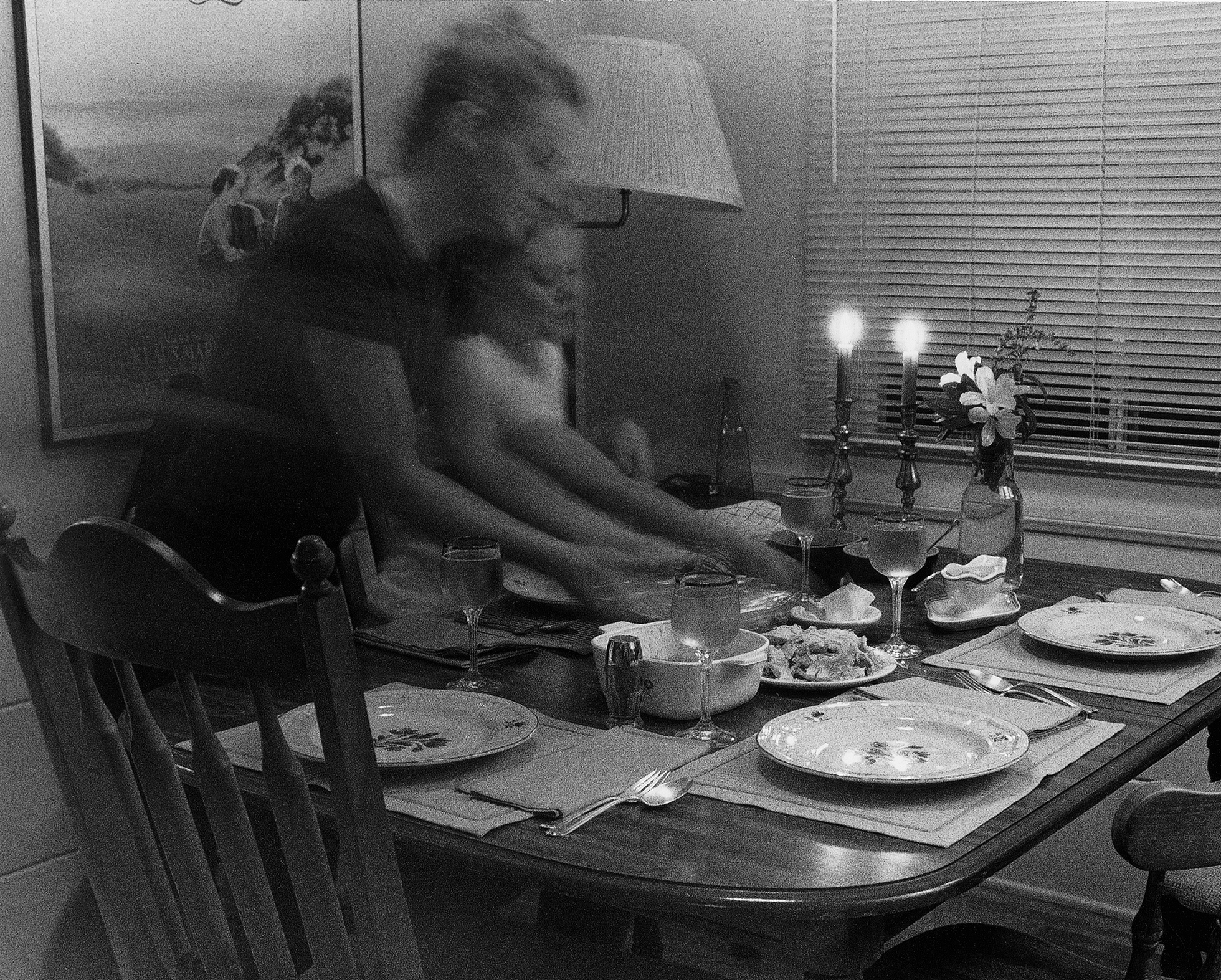
A vice-president of marketing at General Mills once painted for me a picture of the state of the American family dinner, courtesy of video cameras that the company’s consulting anthropologists paid families to let them install in the ceilings above the kitchen and dining-room tables: Mom, perhaps feeling sentimental about the dinners of her childhood, still prepares a dish and a salad that she usually winds up eating by herself. Meanwhile, the kids, and Dad, too, if he’s around, each fix something different for themselves, because Dad’s on a low-carb diet, the teenager’s become a vegetarian, and the eight-year-old is on a strict ration of pizza that the shrink says it’s best to indulge (lest she develop eating disorders later in life). So over the course of a half-hour or so, each family member roams into the kitchen, removes a single-portion entree from the freezer, and zaps it in the microwave. (Many of these entrees have been helpfully designed to be safely “cooked” by an eight-year-old.) After the sound of the beep, each diner brings his or her microwaveable dish to the dining-room table, where he or she may or may not cross paths with another family member for a few minutes. Families who eat this way are among the 47 percent of Americans who report to pollsters that they still sit down to a family meal every night.
Several years ago, in a book called The Cultural Contradictions of Capitalism, sociologist Daniel Bell called attention to the tendency of capitalism, in its single-minded pursuit of profit, to erode the various cultural underpinnings that steady a society but often impede the march of commercialization. The family dinner, and more generally a cultural consensus on the subject of eating, appears to be the latest such casualty of capitalism. These rules and rituals stood in the way of the food industry’s need to sell a well-fed population more food, through ingenious new ways of processing, packaging, and marketing it. Whether a stronger set of traditions would have stood up better to this relentless economic imperative is hard to say; today America’s fast-food habits are increasingly gaining traction even in places like France.
So we find ourselves as a species almost back where we started: anxious omnivores struggling once again to figure out what it’s wise to eat. Instead of relying on the accumulated wisdom of a cuisine, or even on the wisdom of our senses, we rely on expert opinion, advertising, government food pyramids, and diet books, and we place our faith in science to sort out for us what culture once did with rather more success. Such has been the genius of capitalism, to re-create something akin to a state of nature in the modern supermarket or fast-food outlet, throwing us back on a perplexing, nutritionally perilous landscape deeply shadowed by the omnivore’s dilemma.
“The Anxiety of Eating” is excerpted from The Omnivore’s Dilemma, by Michael Pollan. © 2006 by Michael Pollan. It appears here by permission of Penguin Group.