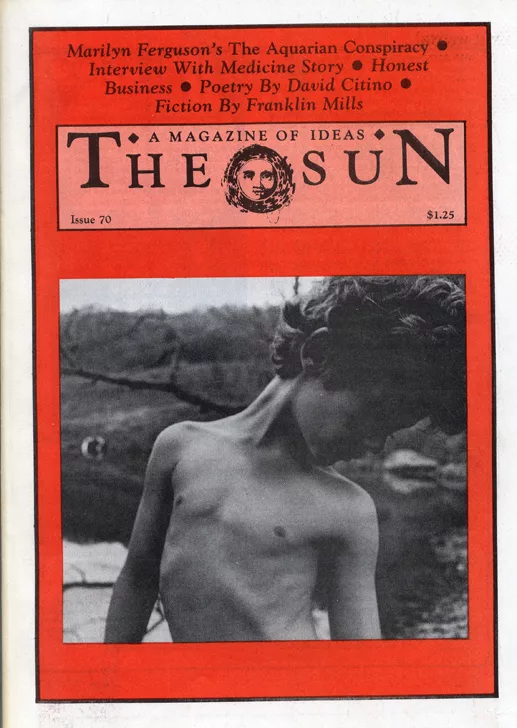
When I agonized last year over whether or not to buy a friend’s typesetting business, I could have used Michael Phillips’ and Salli Rasberry’s new book Honest Business. I would have known my answer in a couple of hours rather than dragging out indecision for months if I’d read the chapter on “tradeskill.” I would have learned the significance of my family’s lack of background in business. (“She’ll make a mess of it. They’re all schoolteachers in her family,” my husband’s grandmother said, which of course made me more determined to go ahead.) And I found myself never wanting to look at the ledgers. “If you are ready to overcome the taboo of books, then read on; if not, then do not go into business!” is Phillips’ and Rasberry’s advice. As much as I loved typesetting, running a business was not for me.
The book contains much old wisdom and sound advice for those considering starting a small business (and for those trying to keep one going). The authors’ refreshing philosophy challenges the more repellent images associated with business, and some common and pervasive practices as well. Drawing examples from businesses they know, they demonstrate that not only is cheating customers self-defeating, but so is keeping salary information and the books a secret.
The more widely information is shared, the more valuable it becomes, they suggest. An atmosphere of openness generates more openness. Customers who can see for themselves why you charge a certain price may identify with your efforts, and offer information, advice and feedback. An employee who knows in detail a business’ finances may not demand a higher wage and may be loyal through tight times. Another benefit of open books is in dealing with debts. They write about a man who’d suffered a $15,000 loss. Eight months later, though he’d been paying off the bills, he was still being hounded by creditors. He had kept detailed records of his debts and how much he’d paid on each, and Phillips and his colleagues advised him to send a copy to each creditor. Because his books showed his fairness and persistence in repayment, every one of them took the pressure off.
Phillips and Rasberry make a good case for openness in business, and their experience is impressive. Phillips, a vice president of the Bank of America at 30 and an innovator in banking practices, was president of the Point Foundation, which distributed $1.25 million in grants from the profits from The Last Whole Earth Catalog. He founded the Briarpatch Network, a group of 450 businesses in the San Francisco area. Salli Rasberry, a sheep rancher, spinner and weaver as well as community organizer, coauthored Rasberry Exercises: How To Start Your Own School and Make Your Own Book.
Honest Business is the third book on which Phillips and Rasberry have collaborated. The first was The Seven Laws of Money (1974). They edited and wrote the introduction to The Briarpatch Book (1978), a rough-hewn work consisting of reprints of eight issues of the Briarpatch Network Newsletter, which reports on how member businesses cope with various situations and difficulties, and prints columns on bookkeeping, discerning and meeting customer needs, philosophical aspects of business, and so on.
Many of the ideas and the descriptions of businesses in Honest Business are recognizable from The Briarpatch Book, but the new book is more usable. While not elegantly written, it is clear and well thought out. But even though slim, it could probably have been compressed more.
Perhaps the most interesting statement in the book is that lack of capital is not in itself a handicap when starting a business, and that abundant capital can hurt. “When you start and run a business with the primary goal of serving people, you will be more effective by starting with minimum capital. Minimizing your capital requires maximizing other business components such as quick response to the market, attention to details, and innovation. . . . Undercapitalization is the prevailing excuse for insensitivity to the real needs of the market.” Having enough money to be comfortable, they say, allows you to do just that, rather than being forced to pay attention to the important little things. Those who have started with minimal capital will generally act immediately on suggestions for small changes, while those with plenty of capital more frequently will delay, even when they understand and agree with the suggestions. “Too much capital is like too much food, it makes people lethargic.”
Phillips and Rasberry explain that a small business with limited capital depends on good customer relations, and is likely to pay extremely close attention to the way the customer reacts to the store, and is treated by employees. Small capital also spurs innovation, encourages strong ties with the business’s community, and attracts the sort of devoted, passionate employee that can’t be bought with comfort and money. And, the lower the initial investment, the lower the long-term overhead and the lost interest on the capital, and the less business that has to be done to survive.
In their chapter on “tradeskill” — those personal attributes necessary for running a business successfully — they list four indispensables: “persistence; the ability to face facts; knowing how to minimize risks; and being a hands-on learner.” By facing the facts, they mean the flexibility to change one’s behavior on the basis of experience, and in the light of new information, not on the basis of new ideas or arguments. In a word, they are describing pragmatism, the ability to let go of cherished ideas or grand schemes if they are proven inapplicable by experience. So, the kind of openness they advocate includes not just honesty about business practices, but open-mindedness, “a willingness to let go of belief systems that is found only at very high levels of functioning.” Starting out with limited capital would certainly encourage development of this trait, if one didn’t have it before.
There cannot be many books on how to start your own business that include a whole chapter on why making a lot of money is not important in life, but Honest Business includes the essay, “The Four Illusions of Money,” which originally appeared in CoEvolution Quarterly. Phillips and Rasberry are not advocating going into small business for the ordinary reasons. Their aim is to encourage simple living, fun, and service, with business as a means to these ends. And they practice the openness they preach — the book ends with a detailed description of the financial arrangements behind the book, including their partnership agreement.
Excerpts From Honest Business
There are many reasons why people are in small businesses. If their main reason is to serve other people, the business and the founder have many advantages.
Being involved in business can be one of the most exciting and rewarding parts of our lives, whether we deal with a big business or a small, privately held company, corporation or partnership, or a company that is nonprofit. The reason that business has such a potential for being rewarding is that it is a very special way that people can serve each other.
“Service” is the conscious act of offering our talents, resources and support to other people. For us, service is one of the most important criteria we have in choosing what we do with our lives. Most of us who find service to be so important do so from a very deep inner sense. In those rare moments when our ego and our daily concerns are stripped away, we find in that calm, gentle core a generous fountain freely offering its abundance to others.
Business offers a variety of opportunities to serve for all kinds of people with many different values. This differs from the common religious forms of service, which are usually limited to cloisters, monastic living, teaching, welfare aid, medical assistance, missionaries and shelters for the aged. Business may include many of these, but it also extends to others, allowing a unique form of service for many people who have nonsectarian values. In business we can serve people quietly without the subtly implied “I am helping you” quality that often surrounds religious “service.” To us, that is truly extraordinary.
The master carpenter serves people by fully and thoroughly doing the job. When each nail is carefully driven, when each corner is perfectly fitted, then all of us benefit. Similarly, the builder who hires the carpenter to build structures that are aesthetically and socially valuable, and who fully utilizes the talents of the carpenter, is also serving. So is the financier who aids the process by openly counseling the builder on ways to operate that include the needs of the community in which they all function.
Our friends Bob Gnaizda, of Public Advocates, and Gary Near use their law practices to bring public interest cases before the courts. They choose their cases from among the social issues they believe will enable them to best serve the community. Both of them frequently ask themselves, “What am I doing right now in my practice to serve my community?” When approached by a new client, they ask, “How will my time spent on this case be of service to many people?” Many lawyers probably do this.
Businesses with employees and management who frequently ask such questions discover that new ways of doing business often evolve and that the fundamental personal values people wish to have in their work are more likely to be satisfied. . . .
“Hey, wait a minute,” some readers may say. “There are business people who don’t have service as a priority in their work and still do all right.”
Of course, how else could we explain the large number of businesses that have unpleasant employees, dirty environments, long lines and repulsive advertising? These businesses thrive for a while even though the owners are not at all interested in service. Aspects such as convenience, warranties and monopoly outlets can help outweigh negative considerations.
A business that provides goods and services with goals unrelated to the business itself or without desire to serve has a very good chance of failing. More than eighty out of one hundred don’t even last three years.
Wonderfully, many businesses do operate on the principles we describe in this book, and they succeed. This is certainly the case in the small-business network that we have worked with, where the failure rate is about five out of one hundred.
Business should be fun. Without fun people are left wearing emotional raincoats most of their working lives. Building fun into business is vital; it brings life into our daily being. Fun is a powerful motive for most of our activities and should be a direct part of our livelihood. We should not relegate it to something we buy after work with money we earn.
There is very little tradition in business about fun. The common association of fun in business is the visit from a salesperson who notoriously brings a regular supply of jokes along with the merchandise.
Our close friends Bahauddin Alpine and Sherman Chickering have built fun into their business, Common Ground Directory, their quarterly, forty-page publication that lists individuals, businesses and institutions that offer growth, spiritual and healing services. The businesses that are listed pay $20 to $40 for the basic listing in the paper, in hopes of getting customers, clients or students for their classes. This paper has been copied in Chicago, Minneapolis, Los Angeles and several other areas with Bahauddin’s encouragement.
The success of the publication depends upon effective, wide-scale distribution of the quarterly; in the San Francisco Bay Area, 50,000 copies are distributed. Bahauddin and Sherman found that the best distribution system is to have all advertisers take their share of papers and distribute them in places near their businesses and in other places they frequent. To help the advertisers do this, Common Ground throws a party the night the papers arrive from the printer and invites all the advertisers to pick up their share of the papers. These gatherings are such fun that few people miss them. There are also side benefits to this process, one being that advertisers in talking to each other are sometimes able to improve their ads. Another is that they get to know what is happening among their peers.
Gary Warne ran a used paperback bookstore (Circus of the Soul). He loves books, and it was the right business for him. He built fun into his work in many ways. The most noticeable was his offer to customers: “A free book if you wear a costume into the store.” It made business a surprise for Gary and for the customers. The store became a unique place in the neighborhood.
Gary told us some other short stories about the Circus: “Another sign on the door said, ‘WARNING: Every book in this store has been rejected by its previous owner as either irrelevant or boring,’ and if customers thought a price was too high, I had a battery-operated fighter plane that hung from the ceiling. I started it up and, as it flew around the room they had three chances to hit it with a dart gun. A hit won them half off my price.
“I remember one guy who wanted to go for double or nothing (no one EVER hit the plane in two and a half years). He lost and paid twice what he would have for Madame Bovary. I also had a window sign that offered ‘half-off sale on paperbacks.’ Inside was a box of paperbacks cut in half.”
Oz’s roommate referral service shared a space with Gary when they were both getting started. People looking for a place came to Oz’s and paid $6 to look through his listings of apartments and houses to find roommates. The people doing the listing were not charged. This rapidly became a boring business for Oz because the people searching for a new home were usually in a state of emotional turmoil associated with the anxiety of moving, and they took life very seriously. They would come in, pay their $6, and hastily sit down to intently pore through the files.
In response, Oz became a practical joker. He bought exploding firecrackers that went off when he closed his desk drawer, got a device that made loud sounds when his chair moved, installed a toy airplane that buzzed across the ceiling and arranged for a rubber chicken to fall, unexpectedly, from the ceiling, making a wild noise. Oz found that people who couldn’t respond joyfully to this bizarre world didn’t make very good roommates. On “Circus Day” Oz offered free roommate referral service if people wore one of the costumes from Gary’s collection while they were looking through listings. The surprising thing was that, even to save the $6, many people would NOT put on a costume! To be fair to the customer Oz also had a rule: no fee if the customer made him laugh. We loved to visit Oz’s storefront business.
Nearly every business situation can provide a way to bring fun into the lives of employees and customers, yet the hardest thing to overcome is the awesome prevailing taboo against it.
The CoEvolution Quarterly has maintained a tradition of having fun since the days of the Whole Earth Catalog ten years ago. Every noon there is a volleyball game. Visitors participate, other neighborhood groups join in and people often bring their friends along for the luncheon game.
Carole brings constant fun into her weaving studio by renting space to a wide variety of interesting people. At various times she has had in her studio a one-man band who practiced there, spinners, stained-glass makers, dyers, graphic artists and a juggler. The constant flow of unusual people and their friends creates a fun-filled environment.
Bess Bair, the tap dance teacher, takes her best students out to perform, free, on the streets of San Francisco. They are known in the streets as Rosie Radiator and the Push Rods. When you become a good enough student to be chosen as a Push Rod, you get a chance to perform with the group at free shows around the city. It is good for Bess’s business and fun for all.
Jim has a factory store in Santa Rosa, California, that manufactures portable massage tables. Every Monday afternoon, he has a masseuse come in to do his back and the back of any employee that wants it. A unique employment benefit.
If these examples don’t stimulate ideas in your mind because the businesses seem too bizarre, or because business and fun seem antithetical, examine some of your own feelings and resistances. If you find yourself in a business that is no longer satisfying, no amount of clowning around and no number of interesting people passing through your office is going to change that. Having fun in business is not meant to mask dissatisfaction but to enhance your enjoyment of life. Going out of business should always be an option.
There is room for fun in every business and circumstance, even in giant corporations. For example, one of our favorite managers at the Bank of America in Sacramento had what he called “Mickey Mouse Day.” On that day the staff would close the branch at exactly five minutes after three and go off for a party. Of course the books didn’t get closed that day, and not all deposits were processed, but those were all promptly handled the next morning. The fun of Mickey Mouse Day was that no one ever knew when it was going to happen. The employees knew it when they arrived in the morning and saw a Mickey Mouse doll on the manager’s desk. The doll seemed to appear whenever it was most needed.
The opportunities for fun in business are endless. They are the natural consequence of running an honest business. Fun is a spontaneous part of any business when the owners and managers love what they are doing and the books are open. Fun is natural where friends and relatives participate, and where the business understands its role in the community it serves.
We’re grateful to Michael Phillips and Salli Rasberry for permission to print the excerpts from Honest Business.
— Ed.
© Copyright 1981 by Michael Phillips and Salli Rasberry. Published by Random House.