Years ago I spent a weekend at the Esalen Institute in Big Sur, California, to take part in a writing retreat hosted by The Sun. Esalen has for decades been central to the countercultural, New Age, and human-potential movements, hosting or employing such thinkers as Aldous Huxley, Stanislav Grof, and Joseph Campbell. The institute’s bookstore was well stocked on these authors, but I was looking for a book on the history of the place itself. The woman working there suggested Esalen: America and the Religion of No Religion, by Jeffrey J. Kripal. They could barely keep it on the shelves, she said. It was the book to read, if I was curious.
I quickly devoured its nearly six hundred pages, learning a lot about the institute’s history and the intellectual schools of thought that flourished there. But I was especially interested in Esalen’s philosophy as described by Kripal: All belief systems are explored, but none takes precedence. No one captures the flag. The religion of no religion.
Impressed by Kripal’s scholarly rigor and buoyant prose, I continued to read his work: Authors of the Impossible: The Paranormal and the Sacred; The Flip: Epiphanies of Mind and the Future of Knowledge; and, most recently, How to Think Impossibly: About Souls, UFOs, Time, Belief, and Everything Else. His definition of the “impossible” includes things that don’t conform to a strict materialist view of reality: precognition, telepathy, UFO encounters, and other things Special Agent Fox Mulder might have a folder on in The X-Files. I was interested in these ideas when I was young but put them aside as I grew older, afraid of looking naive or unserious. Kripal’s account of how these impossibilities were connected to various countercultural movements was eye-opening. After The New York Times published an article titled “Glowing Auras and ‘Black Money’: The Pentagon’s Mysterious U.F.O. Program,” including some Department of Defense footage of oddly shaped aircraft behaving, well, impossibly, I decided I had to talk to him.
We met in his cozy, low-lit office at Rice University in Houston, Texas, where he holds a chair in the Department of Religion and has helped establish both the Archives of the Impossible and the department’s GEM certificate, for students of gnosticism, esotericism, and mysticism. Kripal’s office walls—and floor—were fully covered with books, a testament to his voracious appetite for information. But he had a lightness and approachability that immediately put me at ease. (The nameplate outside his office door read, “Spider-Man.” “It’s Spider-Man’s office,” he’d emailed me before I arrived. “I just use it.”) We talked at length, took a quick lunch break, and talked some more, laughing frequently while grappling with challenging questions. I continued to think about his ideas for weeks after, encouraging myself to be more comfortable in unknowing and ambiguity, a mindset I wasn’t particularly used to.
Not long after I returned from Houston, I suffered an enormous personal loss: My dad died unexpectedly. Before that, I wouldn’t have been able to tell you why I’d become so interested in these questions of being and nonbeing or the puzzling nature of reality. Had I chosen that line of questioning, or had it found me? In the months following my dad’s death, I’ve been grateful that I began to open myself to these inquiries before he died. Kripal’s comfort in saying, “I don’t know,” over and over seemed like a good lesson. Uncertainty became a balm. Where is my dad now? Will I see him again? Is he somehow watching over my son, his grandson? It doesn’t seem impossible.
Not all conversations are as linear and succinct as they appear. This interview has been condensed and edited for clarity.—Ed.
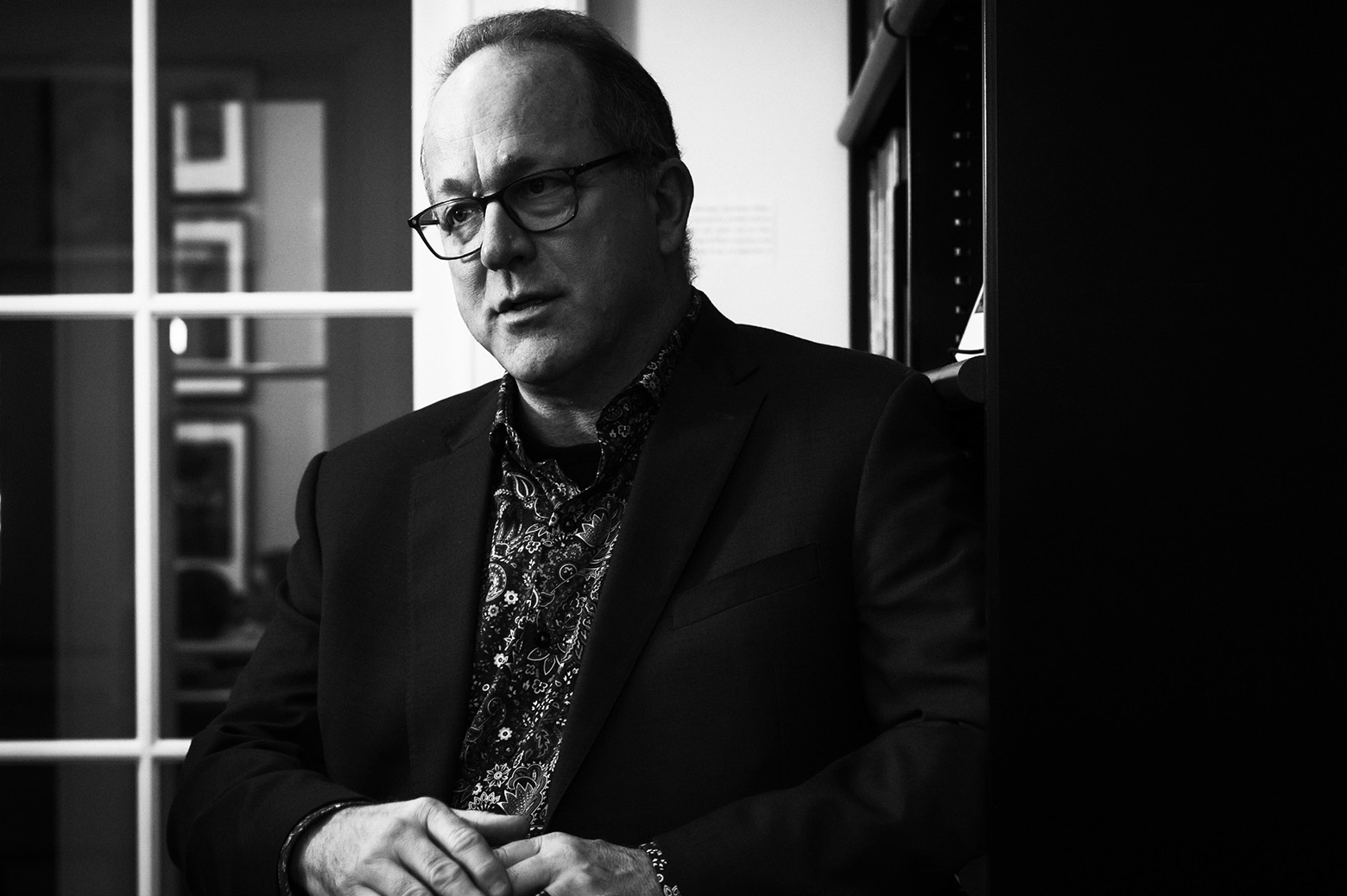
Jeffrey J. Kripal
© Jeff Fitlow
Askey: What are the Archives of the Impossible?
Kripal: It’s eighteen collections here in Woodson Research Center. It started in about 2014 with a man named Jacques Vallee, who approached me in Berkeley, California, and asked me to help place his papers and files at a university archive. I was not thinking about my own university when I was in Berkeley, but I immediately did when I got back. I just wanted to help.
Jacques is probably the world’s most famous writer on UFOs. [He was the model for Claude Lacombe, the French government scientist in Steven Spielberg’s film Close Encounters of the Third Kind.—Ed.] His papers and files could have fetched a pretty penny on the antiquarian book market, but he knew if he sold them, that information would all scatter. Jacques is very suspicious of all of the theoretical models offered for UFOs, and he thinks long-term research is really the most adequate response to the subject—and that can only be done in a university.
Once his files started to come in, I began to approach other older people with large collections of papers on unexplained phenomena, like author Whitley Strieber, and Ed May of the Stargate program [the US military’s now-declassified investigation into psychic phenomena like remote viewing—Ed.]. It turns out that most people in their seventies and eighties very much want to give their papers to a university archive, because they’re thinking about their legacy.
Askey: Is this archive the only one of its kind?
Kripal: There’s a fairly large archive at the University of West Georgia. They also have a big parapsychology collection there. There’s a big collection at Duke University because of J.B. Rhine [the originator of modern parapsychology—Ed.]. The largest archive in the world on this material is the Archives for the Unexplained in Sweden. Some of what’s in our archive is very sensitive due to its medical nature. So we can’t just scan everything and put it online, as people have asked us to do.
Askey: Those examples aside, it’s still relatively rare for academic institutions to pay attention to these subjects. Do you think it’s professionally poisonous for most professors to be interested in the unexplained?
Kripal: I think it was poisonous maybe thirty years ago. One of our collections is from John Mack, a professor of psychiatry whom Harvard tried to fire for his interest in alien-abduction stories.
I think it helps, frankly, that I’m a professor of religion. In the academic pecking order the sciences are up here, then the social sciences, then the humanities, and the study of religion is so far down. [Laughs.] If you’re already at the bottom, you can pretty much study anything, right? It gives you a kind of freedom. But the truth is, people love this topic. It’s extremely popular. When we hold a conference, we often have hundreds of thousands of people watching the videos of it online, whereas a typical university lecture might get five hundred views. If you attend one of these conferences, this isn’t what I call “men in basements.” It’s not undisciplined internet research. This is people thinking very thoughtfully about the phenomena and developing models that can be used by others in the sciences, social sciences, and humanities.
But I didn’t curate the archive out of any intention or plan. I curated it to help Jacques Vallee, and it just blew up. I call it a black hole that just sucked in all manner of other things. When Whitley Strieber wrote Communion [in which he describes his alien-abduction experience—Ed.], he put his address in the back of the book, thinking a dozen people might want to write him. He got around two hundred thousand letters. His wife, Anne, read through everything and kept the crème de la crème, and those are what sit in our archives: thirty-four hundred letters from people all over, many writing because they recognized the entity on the book’s cover [an illustration of a slender, large-eyed alien—Ed.]. They weren’t looking for fame or wealth or anything. They just wanted to reach out to another human being who had been through a similar experience.
Askey: You just mentioned some models that others in the academic world are developing. What are some examples?
Kripal: On the science side, it’s a kind of nuts-and-bolts explanation of the seemingly impossible: mostly from astronomy and physics, but also genetics. There’s a lot of discussion of energy and radiation.
From the social sciences, it’s mostly anthropologists looking at concepts and experiences of reality that are very different across cultures and time periods. It’s the idea that people actually have different experiences of reality. Models from anthropology in particular, especially the shamanistic and the Indigenous cosmologies, are really useful because they throw a lot of light on the topics of people leaving their bodies, contact with what we call “the dead”—who may not be dead at all—and entity encounters.
From the humanities side, there’s the historical context, particularly with UFOs: the Cold War, mid-to-late-twentieth-century American context. Literary theory can also help us appreciate what we naively call “the imagination”—by which I mean it’s naive to separate experience and interpretation. Interpretation is woven into human experience, and human experience is already a type of translation.
Askey: You mentioned genetics. I presume you’re referring to epigenetics [changes to gene expression caused by sources outside of the DNA—Ed.] and inherited memory.
Kripal: Yes. Even geneticists still say that we don’t really understand how genetics works. [Laughs.] There are not single sources for certain traits. Culture and history and language have evolutionary impacts; they change human behavior and maybe even the human physical form over many millennia. With new discoveries, genetics doesn’t look random anymore. It looks more and more intentional in some strange way that we can’t quite put our finger on.
Askey: Recently I came across a quote on the “High Strangeness” subreddit—which I’m somewhat ashamed to admit I read—that said, “If I hadn’t believed it, I wouldn’t have seen it.” This seems to dovetail with your line of reasoning in How to Think Impossibly. What do you make of it?
Kripal: It sounds idealist to me. I don’t think it’s always true. People do see things they don’t believe. But I think belief sets some people up to see things that are unbelievable to other people. I had a professor in graduate school who said, “Every belief is unbelievable.” What he meant was that every belief is unbelievable to someone outside the belief system that supports it.
The shamanistic and the Indigenous cosmologies . . . throw a lot of light on the topics of people leaving their bodies, contact with what we call “the dead”—who may not be dead at all—and entity encounters.
Askey: I was describing this idea of beliefs governing experiences to a friend, and she said, “Sure, a superstitious guy who sees something out of the corner of his vision thinks he sees a ghost. An optometrist is convinced he has glaucoma.”
Kripal: Your friend is presuming that the secular, scientific answer is complete. I think people see ghosts all the time, but what is a ghost? To think impossibly is to question our assumptions about the world. The experience of seeing something impossible can be interpreted in different ways, but denying the experience and reducing it to glaucoma or a “hallucination” or an “unscientific anecdote”—none of that helps, because these experiences will just keep happening. When people who have these experiences talk to me, they’re not proposing a belief system; they’re struggling with something that doesn’t fit into whatever cultural system they’re in, a system that is often silencing them. They’re suffering because they aren’t fitting into the culture.
Askey: People do experience things that contradict their worldview. The Sun’s founder, a Jew, described a vision he had of Jesus one night, the two of them standing together in the kitchen. Jim Tucker, whom I spoke with last year, has talked to Christian parents whose children report memories of past lives. What’s happening when someone’s experiences fall outside of their beliefs?
Kripal: We don’t know. All I say is “It happens. Let’s talk about it.” But if you’re saying you know what it is, to me that means either you don’t know what you’re talking about or you’re lying. Because I’ve heard way too many people’s impossible experiences to think they are all making the stories up. They are telling me what happened.
I’m not even interested in the skeptical answer to these phenomena—that they don’t happen, or they’re misperceptions, or they’re glaucoma, or they’re hallucinations. The real question for me is: What does the universe have to look like to make these things happen? And answers like “Oh, this is some kind of physics or biology or culture or angel or demon or whatever”—they take the conversation backward.
Askey: What does talking about impossible phenomena look like if it precludes explanation? Would you suggest the only honest interpretation is I don’t know?
Kripal: No, of course not. My point is that if you take a paranormal experience or account seriously—by which I mean you believe such things happen, which I do—you have to take all these experiences or accounts seriously. So when someone says, This is what’s going on, I’m like, OK, that’s your experience. I get that. But these other people say something else, so let’s listen to them as well. It’s not just a matter of saying we don’t know. It’s a matter of putting it all on the table and then having a conversation about everything that’s on the table. Will that lead to certainty or some singular answer? Probably not, but it will lead to a much better conversation about what’s actually going on. I think we will develop theories of what’s going on, but they’ll become more and more complex. They won’t be simple or singular.
Askey: So the person experiencing an alien entity and the person experiencing Christ in the kitchen are sort of at odds with each other, but you’re saying we can’t really understand either of them unless we take both into account?
Kripal: Yes. One of the things I often hear from proponents of the disclosure model of UFOs is that we have no idea what these entities want or are trying to tell us. And the people who’ve experienced alien encounters respond, “Yes, we do. We receive these messages all the time. Just listen to us.” And I say: Let’s listen. Let’s not just say we don’t know. Let’s accept these accounts as actually having happened, but let’s also be savvy about it and not separate experience and interpretation, to go back to my earlier point
Askey: Can you explain the disclosure model, which you also refer to in your writing as the “Cold War invasion mythology”?
Kripal: The disclosure model is basically that the government—specifically the military and intelligence communities—has some secret knowledge of the UFO phenomenon, and it’s time for them to disclose that information. It tends toward a more material interpretation: that these are aviation technologies and military threats.
As a historian of religions, I don’t interpret UFO phenomena literally. I can’t help but see the moral anxiety and end-of-the-world panic expressed by them. But that doesn’t mean I think these encounters don’t happen. It just means I think it’s more complicated than a materialist explanation. We think in these binary terms: the material world, which is real, versus the spiritual or mental world or visionary world, which is not real but somehow hallucinatory or fake.
I don’t interpret UFO phenomena literally. I can’t help but see the moral anxiety and end-of-the-world panic expressed by them. But that doesn’t mean I think these encounters don’t happen.
Askey: And you reject that separation between the two?
Kripal: Personally I don’t find it helpful. I think the imagination often functions as a way in: as a kind of translator of this other, greater reality. Yes, it’s imagined. Yes, there’s this historically constructed component to it, but constructed out of what? There’s something coming through, as well as something being created.
Askey: It sounds like you’re saying these phenomena are irreducibly mysterious. You’ve quoted comedian Mitch Hedberg, who jokes that it’s impossible to get a good photo of Bigfoot because he’s just blurry. If the picture’s always going to be blurry, what do we gain by studying accounts of anomalies like UFO encounters or precognitive states?
Kripal: I had a colleague who, every time I saw him at a conference, would joke, “The Mothman cometh.” [Popularized in a 1975 book and a 2002 film, the Mothman is a winged cryptid that several people in West Virginia claimed to have seen in 1966 and 1967.—Ed.] He would press me with questions like “What does the Mothman have to do with making us better people?”
The reason we should be talking about things like Mothman sightings is that they happen to human beings, who are suffering because what they claim to have seen doesn’t fit into any mainstream cultural narrative. So if any type of authority, be it a professor or a scientist or a journalist or a poet, starts to talk about these phenomena, a kind of healing can take place. It doesn’t mean these authorities can explain it.
Askey: Anne Strieber, whom you quote in Impossibly, has said, “Mankind is too young to have beliefs. What we need are good questions.” How do beliefs hamper our ability to understand ourselves?
Kripal: Our belief systems take things off the table. The more we keep on the table, the messier that table gets. Sometimes it starts to look absurd, but if we take something off the table, we cannot know any more about it or what it might teach us about ourselves. People will say, “Oh, that’s a hallucination” or “So-and-so didn’t have that near-death experience.” They just keep taking things off the table until they can explain everything on it.
Askey: What makes you suspicious of certainty?
Kripal: We’ve been certain many times in the past and turned out to be completely wrong. People who are certain scare me. People who are uncertain are often very funny and playful. To me that’s what a true intellectual is: someone who doesn’t take their own beliefs or thoughts too seriously.
Askey: I would describe someone who is comfortable with uncertainty as enlightened.
Kripal: Well, not in the eighteenth-century European sense of the term. I’d say that person is “reflexive,” because they can recursively question their own beliefs and ideas. That, to me, is what we should be doing.
Askey: Surveys indicate that the two groups least likely to report a paranormal experience are adamant atheists and intensely religious people.
Kripal: Right. They’re both too certain! [Laughs.]
Askey: So what sort of paranormal experiences interest you the most?
Kripal: There are two. Precognition, because it’s just so darn common and easy to show. The stories are mind-boggling. There’s a book that came out a few years ago by Sam Knight called The Premonitions Bureau. It’s about a mass precognition of a mining-related accident in Great Britain in the 1960s. There’s also a recent book by Kristina Amelong called What My Brother Knew, about a thirteen-year-old boy who predicted the details of his own death. His prediction eventually came true when he was hit by a car while riding his bike.
I just don’t see how we deny those experiences. We can say they didn’t happen or they were coincidences. But to me that’s outrageous. What does the universe have to look like to make this impossible thing possible?
I also love UFO stories. The UFO—now the UAP [unidentified anomalous phenomenon—Ed.]—has gotten so much attention in the political and scientific realms. It combines media and film and science fiction with people’s actual experiences. One of the most overwhelming examples is the encounter at the Ariel School in Ruwa, Zimbabwe, in 1994, in which about sixty schoolchildren basically saw the same unexplained phenomenon during morning recess. There’s a film about it called Ariel Phenomenon. John Mack, who I mentioned earlier, investigated it. Many of the children drew pictures and were interviewed by John. They said they received from the entities a kind of profound ecological concern or anxiety related to technology.
Askey: You suggest that these entities and phenomena, whatever they may be, interact with us through our imaginations, though you don’t think these phenomena are imaginary. How do you define imagination in this context, and how do you square that with scientific measurements of the seemingly impossible: infrared cameras recording a gravity-defying UAP near the USS Nimitz in the early 2000s, for instance?
Kripal: It is always possible a video like that is of secret military hardware. On a deeper level and with other cases, I do not square it. I understand the imagination in these circumstances as a mediator. We tend to think of the imagination as a spinner of fantasies, but I think, at least in these impossible moments, that it’s mediating between some kind of presence in the environment and the person perceiving it. Say somebody sees an eight-foot praying mantis or a ball of light. That is their perception, and I think that’s the correct perception, because whatever the phenomenon is, it’s manipulating their perceptual system. The imagination is mediating between whatever we are and whatever that is.
I once invited all these really smart people to Esalen with a request that they bring a crazy-ass story and a theory of the imagination that makes the story plausible. Everybody came with a story, but no one came with a theory, because there isn’t one—at least, not in our present American culture. So that’s what I’m seeking: a theory of the imagination that doesn’t just see such phenomena as imaginary. There’s plenty of human deception, of course, in many of these phenomena, but, then, the phenomena themselves are deceptive. People want me to talk about fraud and charlatans and fake videos on YouTube. All of that goes on, no question. But the phenomenon itself is not what it looks like. When there’s a séance and the dead person starts to talk to the medium, I’m very suspicious that it’s the dead person. When an evangelical Christian talks about a vision of Christ, or a Catholic talks about seeing the Virgin Mary, or a Muslim talks about communing with a Sufi saint, that is their perception. That is their experience. But we need some bigger comparative model that can take in Fátima and the Sufi shrine and seeing Christ in the kitchen. I’m certain we don’t have that model.
Askey: And we probably never will?
Kripal: I wouldn’t say that. I think we could, but that model will be replaced again. It won’t be perfect. We’re caught up in our stories and our assumptions, and we could tell a different story, but that doesn’t mean that story is going to be sufficient either. I think you just keep finding new stories.
Askey: That’s sort of what it is to be human, right? That revising of belief? Why should it stop?
Kripal: I often say to my family members, “Your great-grandparents weren’t Catholic the same way you are. Your great-grandkids aren’t going to be Catholic in the same way, either.” That’s natural. All these religions had a charismatic figure at their beginning, but a different movement sprouted out of that for political and social reasons that we only halfway understand.
Religion itself is a complicated social institution that’s constantly changing. People don’t always realize that, because our lives are so short. We’re like ants at the bottom of an oak tree. We think the oak tree’s always been there, but it hasn’t. It was once a seed, then a sapling, and then a young tree, and then an old tree, and one day it will die and rot, and other trees will come up.
Askey: Many people who take psychedelics say they don’t induce hallucinations but instead provide a glimpse of reality that is more accurate than our day-to-day perception. Why is it only ever a glimpse, and why do those glimpses evade logical interpretation?
Kripal: One quick answer is that if we were given more, it would destroy us. To exist as an embodied social ego, we can’t be fully exposed to that reality. I don’t think of the body and the brain as producing consciousness; they mediate it. So what I look for are moments in that brain-body connection where there’s some kind of gap or tear. I call it the “traumatic secret.” Psychedelics can provide that very reliably, but so can emotional trauma, sexual trauma, war, erotic experiences, or ritual meditation. There are a lot of ways that human beings can alter their state, which is how to get access to those glimpses.
Askey: Is that to say you see our perceptual systems as reducing what is really there so that we might exist day to day? What might be the reason for that? Why shouldn’t we be able to perceive things as they truly are?
Kripal: To me this is the biggest question of all. As human beings we presume we can know reality as it is. I don’t think we can. But I think some human beings sometimes experience reality as it is, and those experiences tend to be supersensory and nonrational. They tend to take the person into an entirely different realm that can’t be understood by reason and can’t be sensed and can’t be thought about. This is why I think mystical literature is so important: because it’s evidence that human beings do have these experiences. But that doesn’t mean they’re sense-based or based in culture.
And the idea that consciousness is not produced by the brain but is somehow extended into the universe—that keeps a lot of things on the table, including precognition. Whereas the idea that the brain produces consciousness takes a lot of things off the table and makes them impossible by definition. We need models that allow us to consider more things. Regarding precognition, the idea that the future has already happened is common in physics. It allows for the possibility that people do have these precognitive moments. But it’s an objectionable model in a lot of religion and philosophy, which understands precognition more as prophecy. Our ancestors had religious models to help them think about these things. We now have scientific models that I think we should also be using—without dismissing the experiences of our ancestors, but recognizing that their explanations are bound by their culture. As are ours, but we clearly know stuff that our ancestors didn’t.
Askey: Going back to psychedelics for a moment: Some people who ingest DMT [a psychoactive compound found in ayahuasca and other plants—Ed.] describe the realm that the drug takes them to as being familiar. They’ll say it’s “home” and will describe the beings they encounter there as entities with whom they’ve had a previous relationship. Some even describe these entities as “family.” Do you think these entities are just another part of the self that’s hidden from our conscious self?
Kripal: I do. When people have UFO experiences or DMT experiences or near-death experiences, to me it’s always ambiguous whether it’s a separate entity or the otherworld or the afterlife they encounter, or whether it’s some aspect of themselves. I suspect it’s the latter: that some part of us is tapped into this much greater reality that we’re not able to explain. Our ancestors expressed it religiously through their belief systems. We probably express it differently today, but whether it’s us or it’s not us is a real question. And I don’t mean that reductively, as I think the furthest part of “us” is really a kind of cosmic presence.
A few months ago an ABC News crew came to the Archives of the Impossible. Now, UFOs are usually talked about through the extraterrestrial hypothesis: They’re coming from far, far away. But I asked the ABC anchorman, “What if you switched from a spatial model to a temporal one? What if they’re not coming from somewhere else? What if they’re coming from somewhen else? What if they’re humans from the future?” He said he’d never thought about that. And I said that if they’re from the future, there would be two things these future humans would be really concerned about: One is nuclear energy, and the other is the environment, because those things will affect the future. To them, we’re like monkeys juggling live chain saws, as my friend and colleague the physical anthropologist Michael Masters puts it. [Laughs.] That makes a lot of sense to me—that it’s us messing with us. This notion raises a lot of moral questions and keeps ideas on the table. I’m personally very suspicious of the extraterrestrial hypothesis.
Askey: You said that traumatic events, like a car crash or being struck by lightning, can cause our consciousness to see the world differently.
Kripal: Yes, they open it up. They impair cognitive functioning, the social ego, and reasoning, all of which can get in the way of a full experience of consciousness or greater reality.
Askey: The psychoanalyst might describe these impossible experiences as a coping mechanism.
Kripal: It might very well be a coping mechanism, but that doesn’t mean it didn’t happen. A lot of psychoanalysts have looked at these events the way I do. They don’t all reduce it to whatever Freud or a psychoanalytic thinker happened to think. Freud and the psychoanalytic tradition are complicated, rich, and nuanced here.
There’s always this move to reduce these phenomena to whatever model we assume to be true. Sometimes that’s a religious belief system. Christians might say UFOs are demons. They are at least acknowledging the reality of the phenomenon, though they reduce it to their own Christian theology, which I think is problematic. I would say the same thing about any theology or belief system. I don’t think it helps.
Askey: What about mass experiences, like the UFO event in Michigan in 1994 [in which multiple people saw lights or cylindrical objects moving erratically in the sky—Ed.]? How do you see mass experience versus individual experience? Do they contradict one another?
Kripal: I recently wrote a piece about how a UFO sometimes functions as a soul but also sometimes shows up on radar. It’s a radar readout, and it’s a revelation. It’s not one or the other. I don’t think those things need to be exclusive or contradictory. Maybe there is a ship or a craft of some kind that is seen by many people. And maybe when that craft interacts with an individual, it produces the type of visions cited in certain abduction experiences.
There’s this wonderful scene in the National Geographic show UFOs: Investigating the Unknown, in which they interview a skeptic who complains that there’s never any physical evidence for these abduction accounts. Then they switch to this abduction account where there’s a freaking hole burned into the lawn for months! [Laughs.] So there is this physical evidence, but it’s often correlated with these personal experiences that don’t have empirical evidence or a shared experience behind them. So what do you do with that? I don’t know. But can we keep both on our table—the radar and the revelation? Of course some of that radar will have prosaic explanations: Oh, that’s military hardware, or that’s a secret piece of military technology, or that’s a drone. But we don’t know that until we do the research.
Askey: I’d like to quote someone I suspect you might disagree with, the astrophysicist Neil deGrasse Tyson: “Does it mean, if you don’t understand something, and the community of physicists don’t understand it, that means God did it? . . . If that’s how you want to invoke your evidence for God, then God is an ever-receding pocket of scientific ignorance that’s getting smaller and smaller and smaller as time moves on.” Do you foresee an end point in which scientific knowledge eliminates Tyson’s so-called ever-receding pocket?
Kripal: No, I don’t think that at all. I don’t know Tyson personally, but a lot of scientists seem to have a very naive view of God. They think people believe in God as some kind of person in the sky. It’s the God-of-the-gaps argument that he’s referring to: God is whatever scientists can’t explain, and that gap is getting smaller and smaller. But it’s getting larger and larger now, with dark matter and dark energy. We went from knowing almost everything to knowing almost nothing within a few decades.
It might not be God. It might be us. I don’t know if Tyson has really read or pondered people who have thoughtfully written about this, but I think he’s dealing with stereotypes.
Askey: What is God?
Kripal: I’ve been very informed by comparative mystical literature, in particular a medieval mystic named Meister Eckhart. I think that what most people think of as God is created through worship and ritual and belief in scripture. It’s my belief that God is much more nondual, and not some other. That subject-object division just collapses. It doesn’t even make sense anymore to talk about divinity and humanity. It’s all one. Or, at least, it’s not two—however you want to talk about it.
The joke is that mystics and nihilists both talk about nothing; one of them just capitalizes it. I capitalize it, because I think Nothingness is also a kind of presence, one that is extremely positive and powerful and not at all nihilistic. The tragedy of a lot of modern thought is that it has essentially deconstructed, correctly, our belief systems, but then it’s literally left us with nothing, lowercase n.
Askey: Do you think it’s better to have a society that is spiritual but not religious?
Kripal: I do think it’s better. That’s the ideal of American democracy, going back almost 250 years. But that’s not where we’re at right now. The “spiritual but not religious” demographic is popular among young people, many of whom have disaffiliated from organized religion. But when people get older, they tend to desire community and tradition, and they return to whatever their inherited traditions are. Will that be the same in the future? I don’t know. Maybe it’s going to get way worse. Maybe people are going to be more religious and believe everything their religion tells them about themselves, which I think is the cause of violence and death and cultural conflict.
The kind of weird phenomena that we’re talking about disconnect us from institutional religion, but they connect us on a spiritual level to the broader world or the universe.
Askey: You write, “Traditional religion or conventional science will never get us to a solution or resolution of impossible phenomena. . . . The problem is that we think we can ‘believe’ or ‘think’ the truth at all.” I’m interested in your two qualifiers: traditional and conventional. Do you see religion and science ever evolving to the point that they could help us arrive at the truth?
Kripal: I hope so. We need to learn from both but not be bound to either. It’s up to us what we do with these traditions. I don’t say that naively. I’m just a guy from Nebraska who grew up asking questions about his cultural and social surroundings and not getting any answers. From adolescence on, I never felt a part of the culture I was in, and I expressed that alienation through religion. I was really pious as a teenager, but I used Catholicism and the New Testament to distance myself from the culture. I was also anorexic. So I was suffering psychosomatically, spiritually—in every sense—and I became deeply religious as a way to try and cope.
My conversion to intellectual life came through psychoanalysis and the realization that there was something called the unconscious. That was mind-blowing: Human beings are driven by something they’re not even aware of? But it made so much sense and opened up my world in a powerful way. So I backed into the academy and the study of religion because I wanted to ask questions, and I happened to get rewarded for that there. There’s a part of academic culture that values deep questioning, but there’s another aspect that resists it. I sit in that paradox every day when I come to work. Higher education is not valued by the broader American public, but it is valued internationally; people from all over the world come here. So it’s a powerful part of American culture that has a lot of benefits, but it’s certainly deconstructive to local communities and local cultures.
Askey: How so?
Kripal: I joke that the greatest conspiracy theory of all time is the humanities. If you want to be suspicious of everything for the rest of your life, just study the humanities. [Laughs.] You will never believe anything again. And I say that with affection. I think local communities and cultures are deeply mistaken about the absoluteness or the universalism of their beliefs. Pushing back against those beliefs is the power of the academy, but it’s also why intellectuals are rejected.
If you look at authoritarian regimes through history, among the first people they go after are intellectuals, because the authoritarians know they are the ones standing in the way of absolute authority and power. The intellectuals just don’t buy it. The problem with the academy is that it’s too often only deconstructive. It doesn’t recognize that local communities and culture also are mediums, or ways that affirm this sort of vertical dimension, which has been framed as “transcendent” or “transcendental.” I think the academy is very good at discussing the horizontal dimension—explanations that are social, political, historical, biological, and so on—but it’s very bad at discussing the vertical dimension.
If you want to be suspicious of everything for the rest of your life, just study the humanities. [Laughs.] You will never believe anything again.
Askey: You mentioned that the Archives conferences are not a bunch of dudes in basements. What do you make of these people whose occupation is to speculate and to share those speculations with followers online? Do you feel that’s an important part of the ecosystem, or is it a distraction?
Kripal: What I was thinking of when I referred to “men in basements” are people who rely entirely on the internet, and that’s a very dangerous game, because so much can be faked, and you don’t know what you’re looking at. I shouldn’t make fun of people like that, but I do think what we’re doing here at Rice University is different from the pop-culture researchers you’re talking about. And it leads to different models. We’re very suspicious here of the disclosure model I mentioned, which is assumed by much of the public. It’s certainly what’s assumed in the halls of Congress. I don’t want to dismiss that offhand, but I do want to question it, because a lot of data about the UFO phenomenon don’t fit into that model. That narrative took over Hollywood for almost three-quarters of a century now, but it also took a lot of things off the table that I want to keep on it.
Askey: So you’re suspicious of this shadowy conspiracy theory that Pentagon people are keeping the truth from us?
Kripal: It’s not that there aren’t classified programs, or that there isn’t military interest in this. I’m just saying that’s not actually how research is done in the academic world. Research is done publicly and in the full light of day, and you have to actually share your sources with anyone. And this notion of classifying everything and keeping it secret—that’s just the opposite of academic research. That’s not how to produce knowledge. That’s how to produce disinformation.
Askey: You said that we’re not asking enough questions, or maybe not the right questions. What’s a question you want people to grapple with?
Kripal: Kimberly Engels, a philosopher at Molloy University, talks about the ethics of contact: how contact with nonhuman entities can transform our ethical beliefs. That’s a good example. And I think agency is a big issue. I don’t think there is any agency in a lot of alien-abduction experiences, and that’s either embarrassing or problematic to people. These experiences aren’t consensual. That doesn’t mean they’re negative. They might start out scary and terrifying but then morph into something really positive and transformative. I don’t think of those as mutually exclusive.
But in our religions and in our culture, we split those. We think the divine is all good, and the demonic is all bad. But what if they are the same thing? In a lot of these experiences, you see something that is deconstructive, but you also see something incredibly cosmic and redeeming in some way. How can we imagine those two things together and not apart? I think a lot of our moralizing around these impossible experiences is misplaced.
I don’t think we’ve asked these questions enough. By that I mean we don’t have departments of the impossible or schools of the superhumanities. We academics do everything on a kind of banal or depressing level, and then we wonder: Why are we being ignored? We’re being ignored because we’re boring! [Laughs.] But human beings aren’t boring. They’re really interesting. They’re fantastic. It’s just that we turn them into boring social egos and identities, and then we argue about that.
I don’t want to call it a mystery, but the culture produces us too. Yes, it produces these religious beliefs and these scientific certainties, but it also produces this questioning. So I don’t feel separate from the culture. And I don’t think the academy is either. I think impossible phenomena can be part of the culture laughing at itself. And there is a kind of transcendence to this kind of laughing. You can’t laugh at something unless you’re outside of it.
Askey: That calls to mind the idea that we are the universe observing itself.
Kripal: We are the universe observing itself, but the universe is really big, and it’s not limited to our particular cultures or religions. I mean, we need to have those, but they are just one expression of this much bigger cosmos.