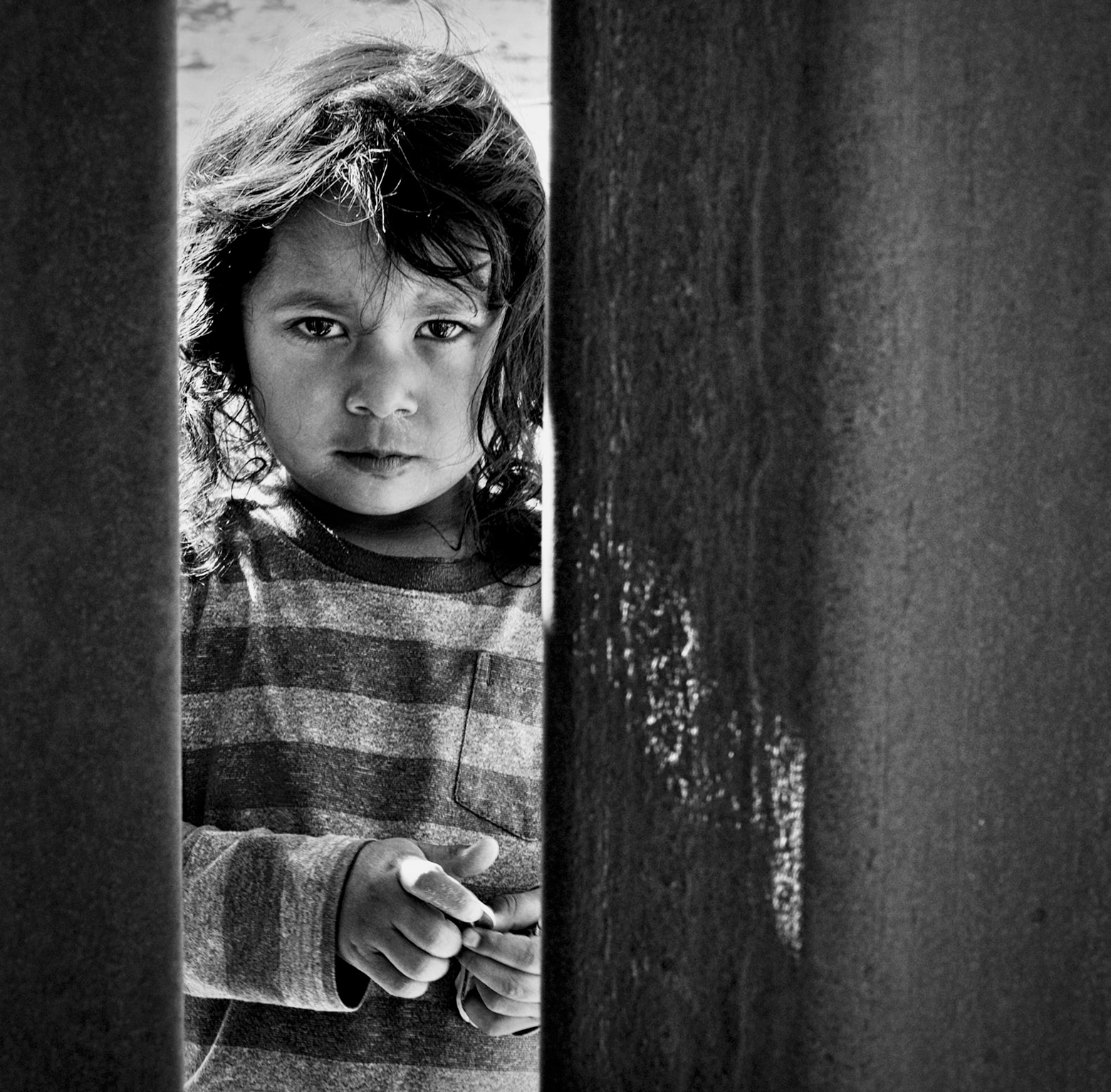
President Trump’s increased militarization of the US border with Mexico is certainly a step beyond those taken by the past few administrations—and in line with the family-separation policies the first Trump White House deployed. But the detainment of people fleeing violence, poverty, and persecution is not unique to this moment. The photos by Laurie Smith on the following pages put in stark relief the anguish and uncertainty many migrants face at our border wall.
Smith grew up in the borderlands of El Paso, Texas, and Ciudad Juárez, in the Mexican state of Chihuahua, and she has photographed the intersection of those states since 2016. Her intent is to provide viewers an honest look at what many families and individuals face when they arrive here: long lines, razor wire, unrelenting sun, armed officers. Children and parents alike find themselves navigating river crossings and tent cities, with no guarantee of finding the life they hope for on the other side. Still, they are willing to bear the costs of trying.
—Ed.
A Central American woman, traveling with her husband and young daughter, awaits an opportunity to legally request asylum at the border wall, El Paso, Texas, 2023
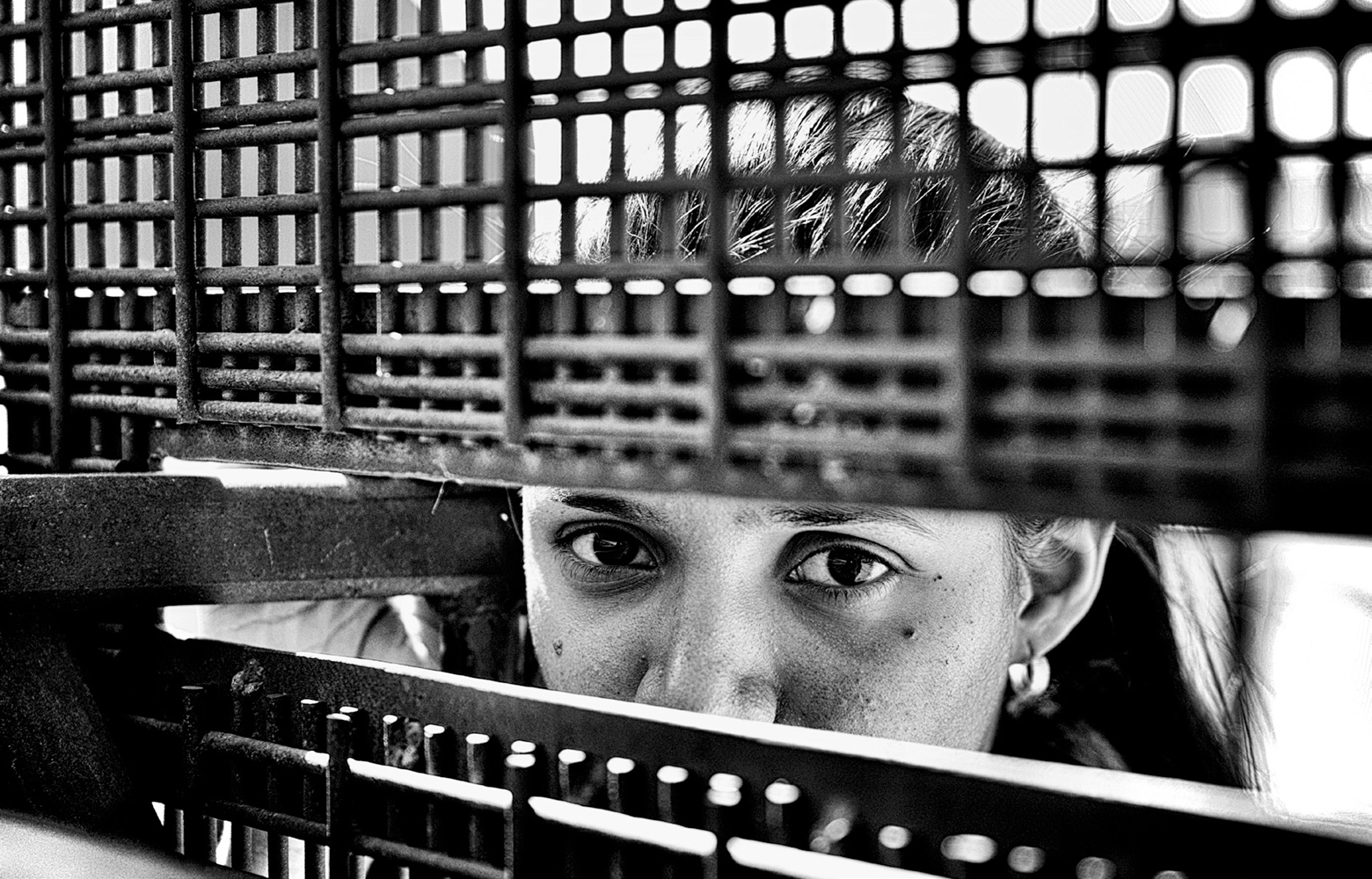
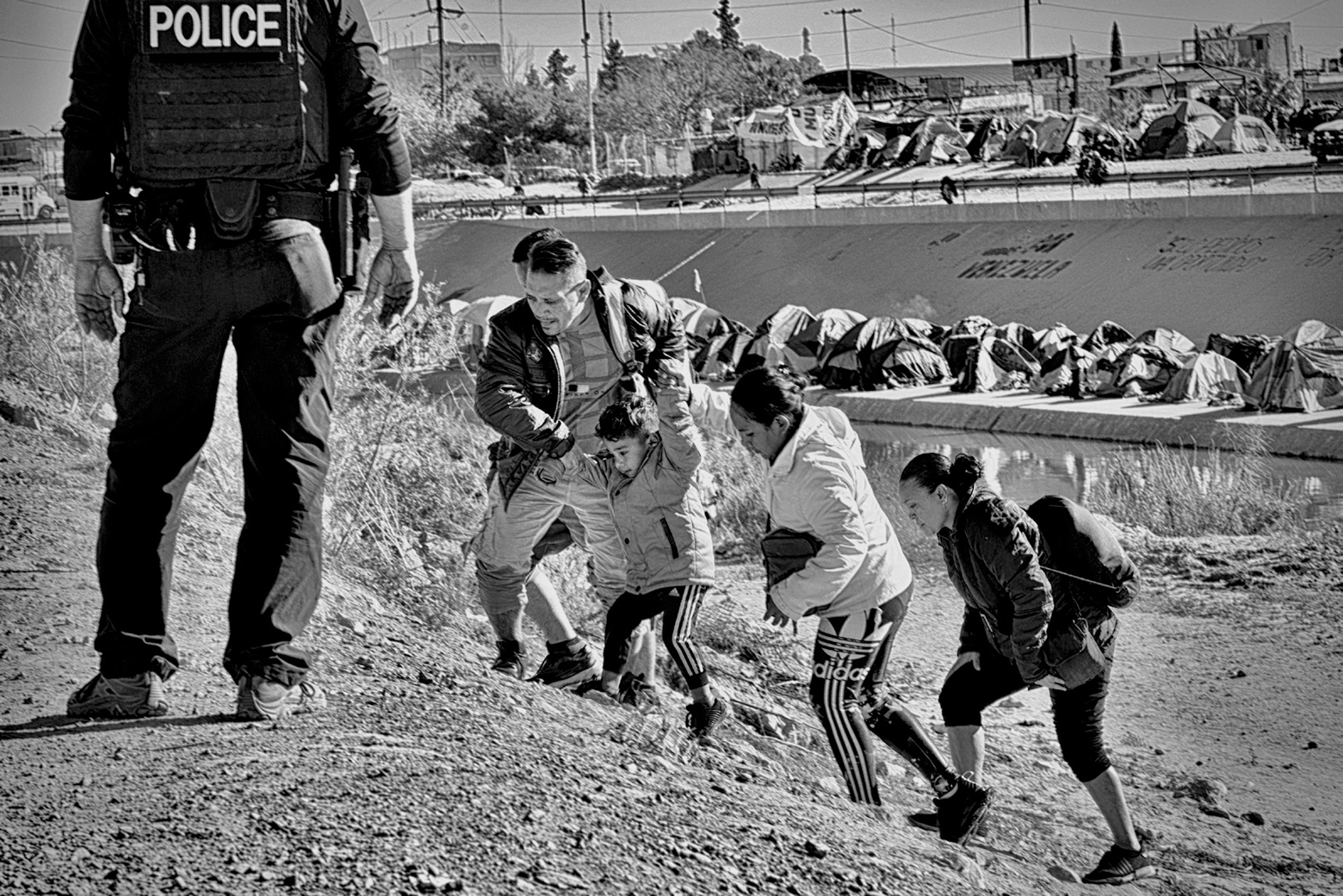
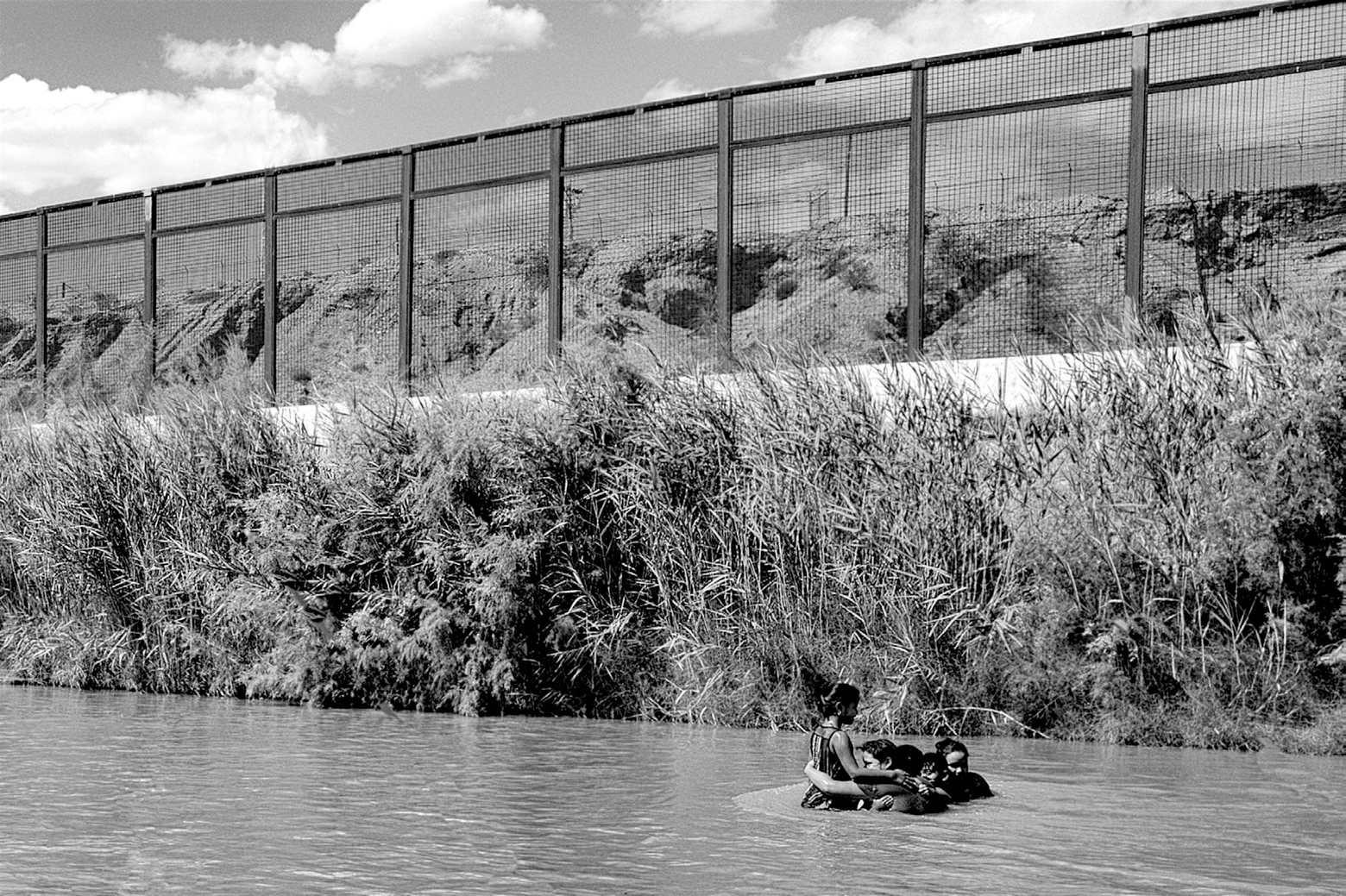
Crossing the Rio Grande with coyotes watching, Juárez, Mexico, 2022
As migrants near the end of their costly journey to the border, smugglers—like trolls at a bridge—demand additional payment at the Rio Grande before allowing them to cross and request asylum.
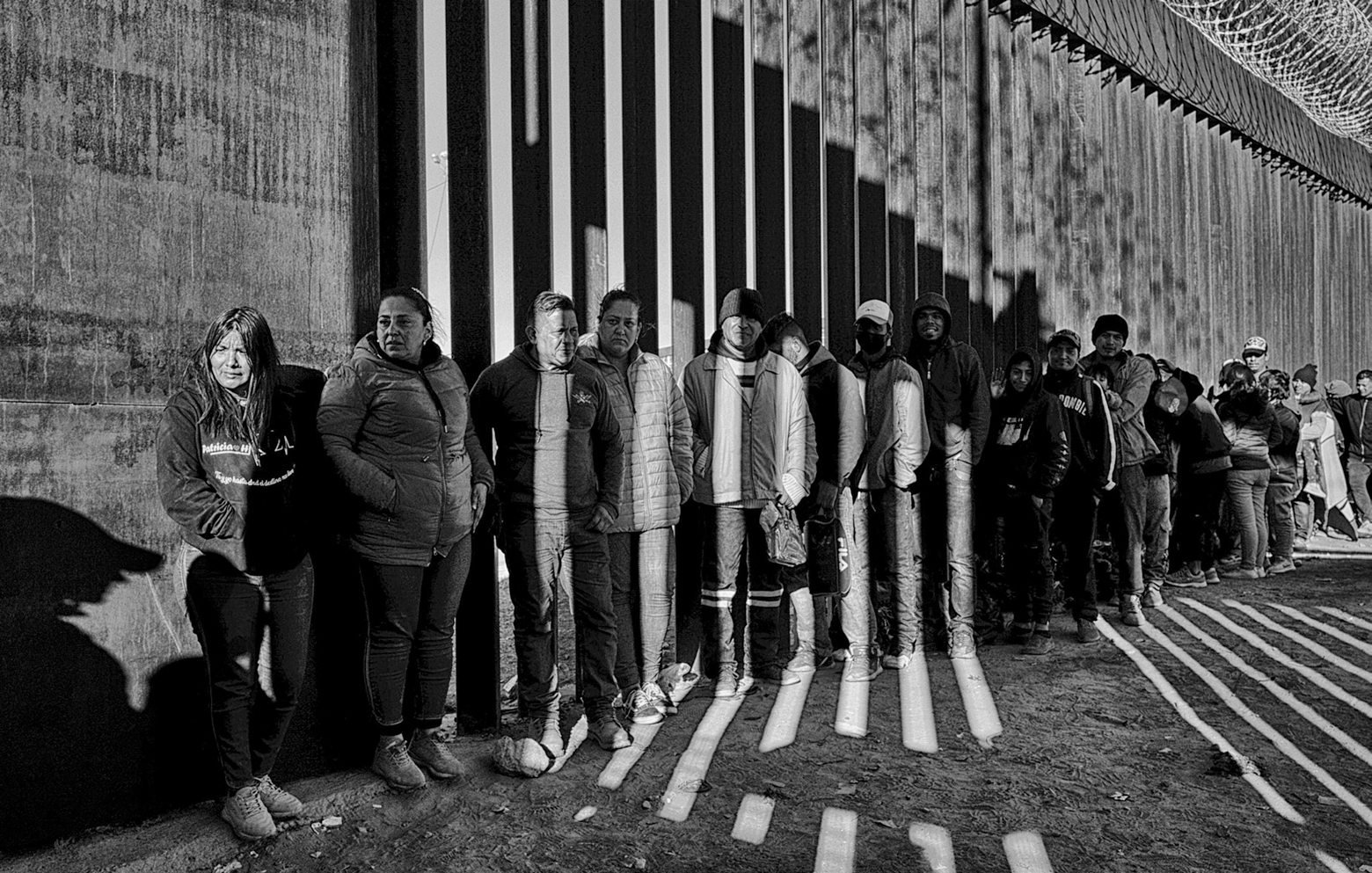
Migrants requesting asylum from Border Patrol at the wall, El Paso, Texas, 2022
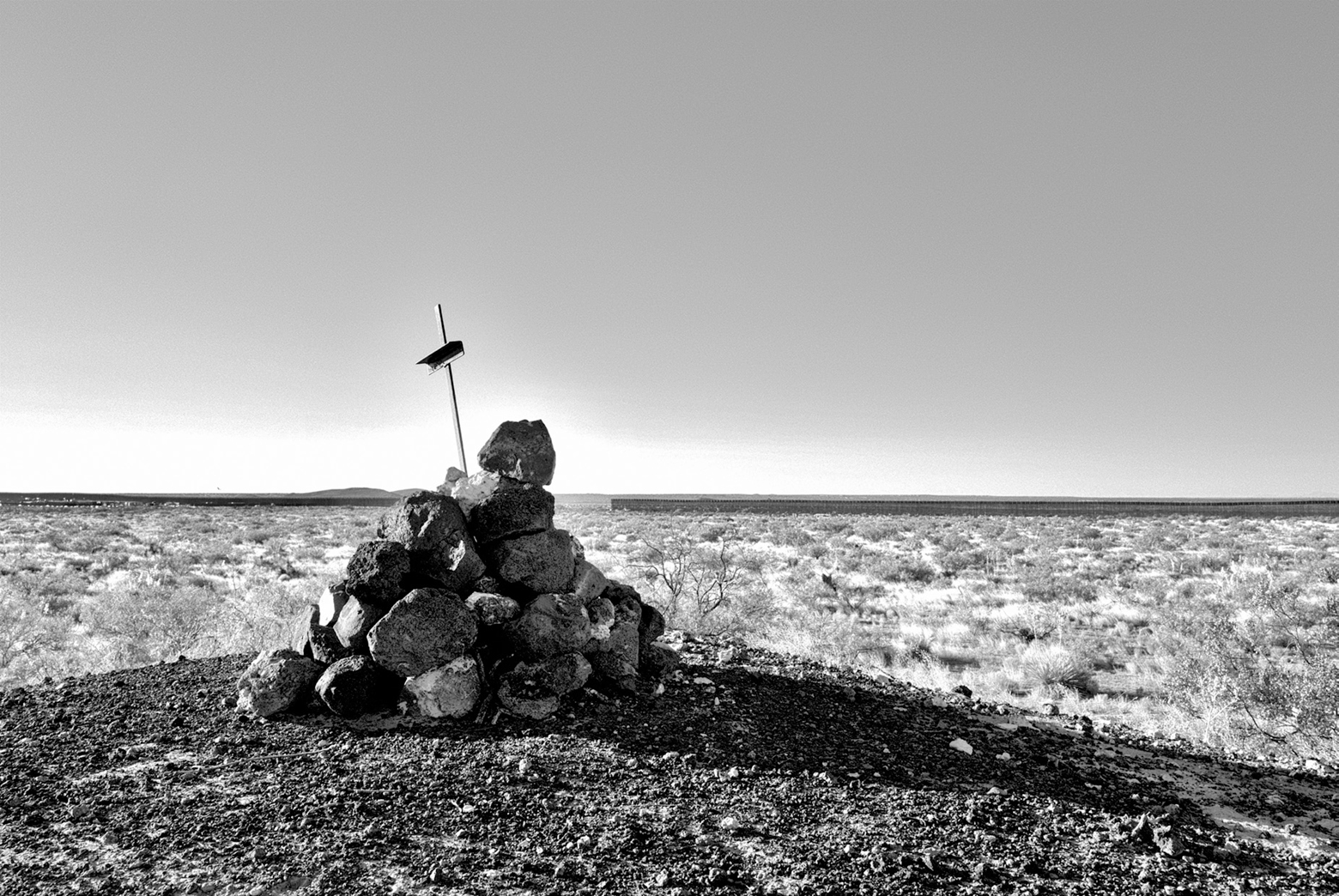
Death at the wall, Columbus, New Mexico, 2020
The wall doesn’t prevent migrant crossings; it merely delays them, allowing Border Patrol more time to apprehend them. The wall is intended to push migrants farther into the desert, where many have died from thirty-foot falls, extreme heat, dehydration, and rattlesnake bites. Criminal organizations frequently abandon migrants in the desert, leaving many to perish.
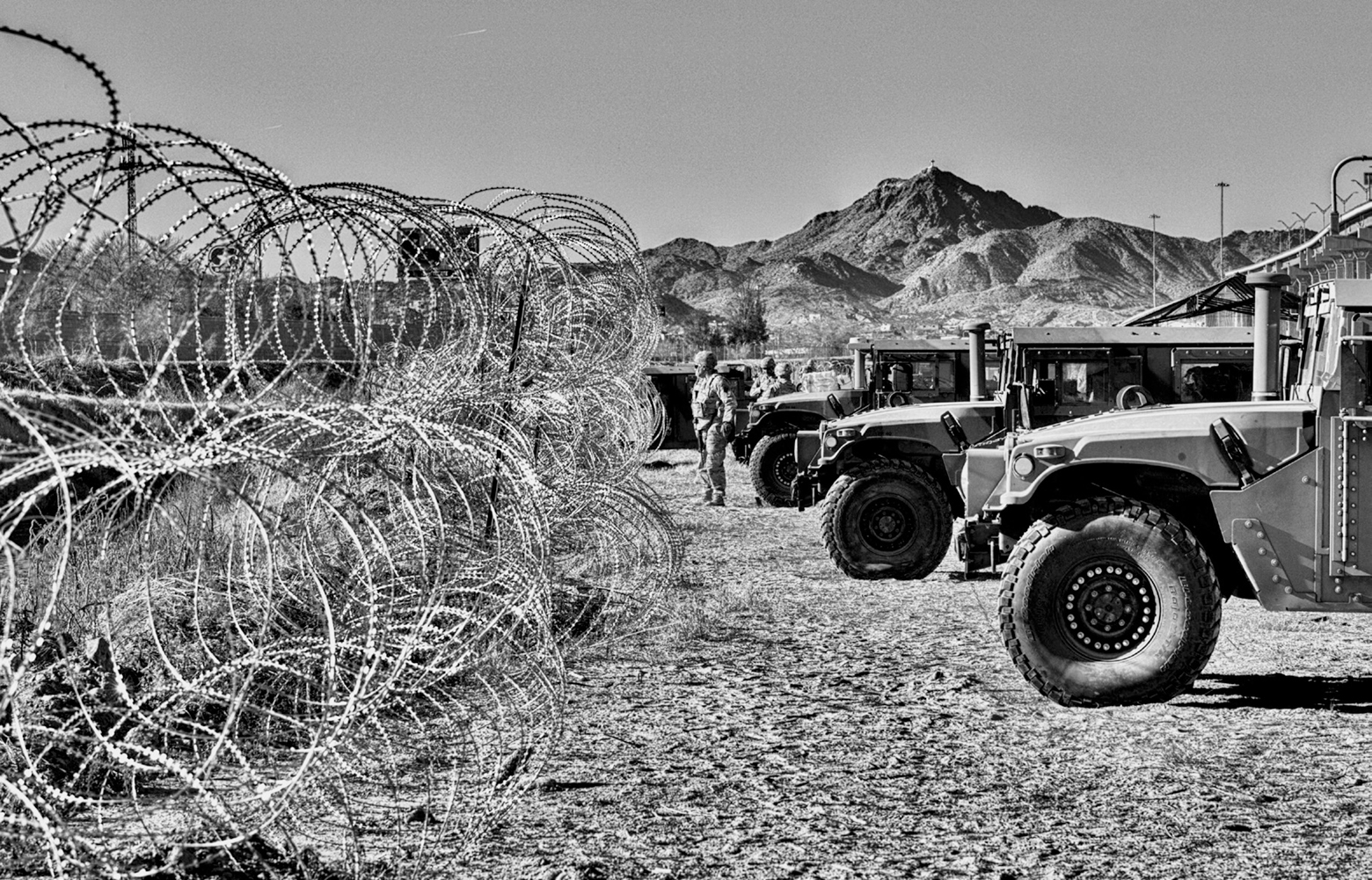
Optics of a war zone, El Paso, Texas, 2023
The border region of El Paso and Ciudad Juárez is being described as a war zone, supported by unsubstantiated assertions of an “invasion,” even though migrant numbers have significantly declined. It’s political optics at the expense of US taxpayers and human lives.
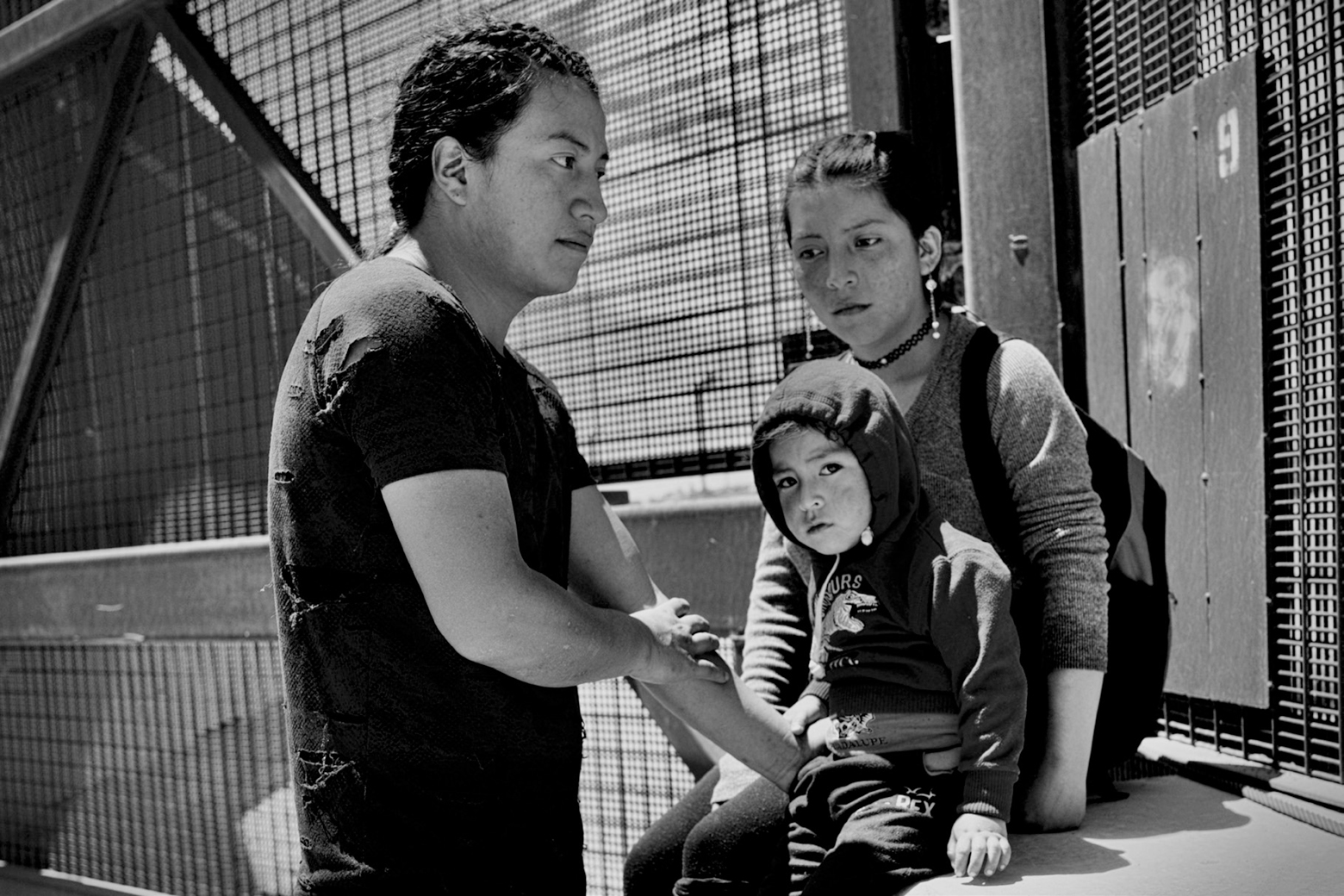
Ecuadorian family seeking asylum at the wall, El Paso, Texas, 2022
Venezuelan family seeking asylum, El Paso, Texas, 2022
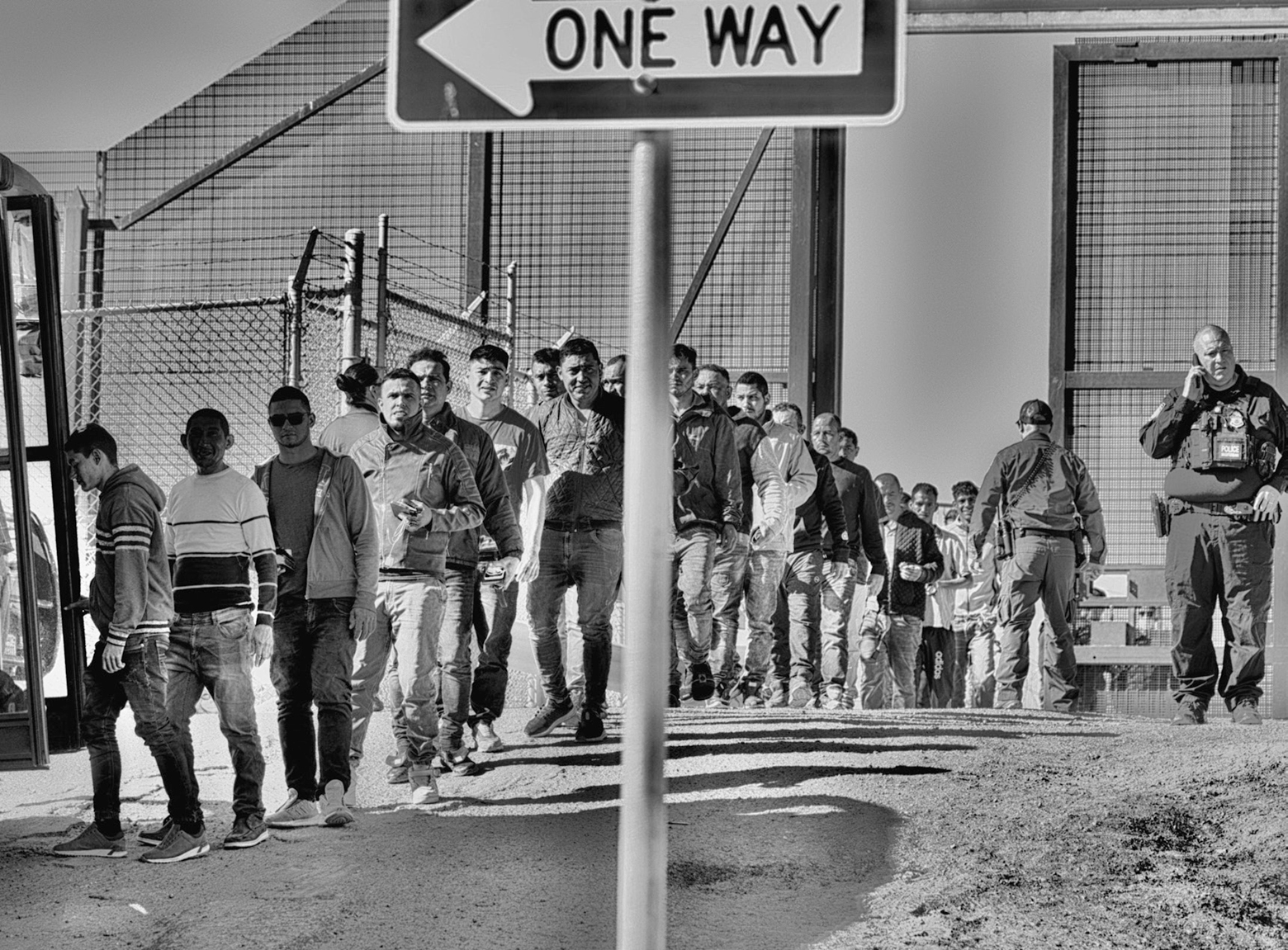
Men loading onto a Border Patrol bus, El Paso, Texas, 2023
In May 2023 migrant men, women, and families were able to enter the US to legally request asylum after waiting months in Ciudad Juárez for the pandemic-era restrictions to be lifted.
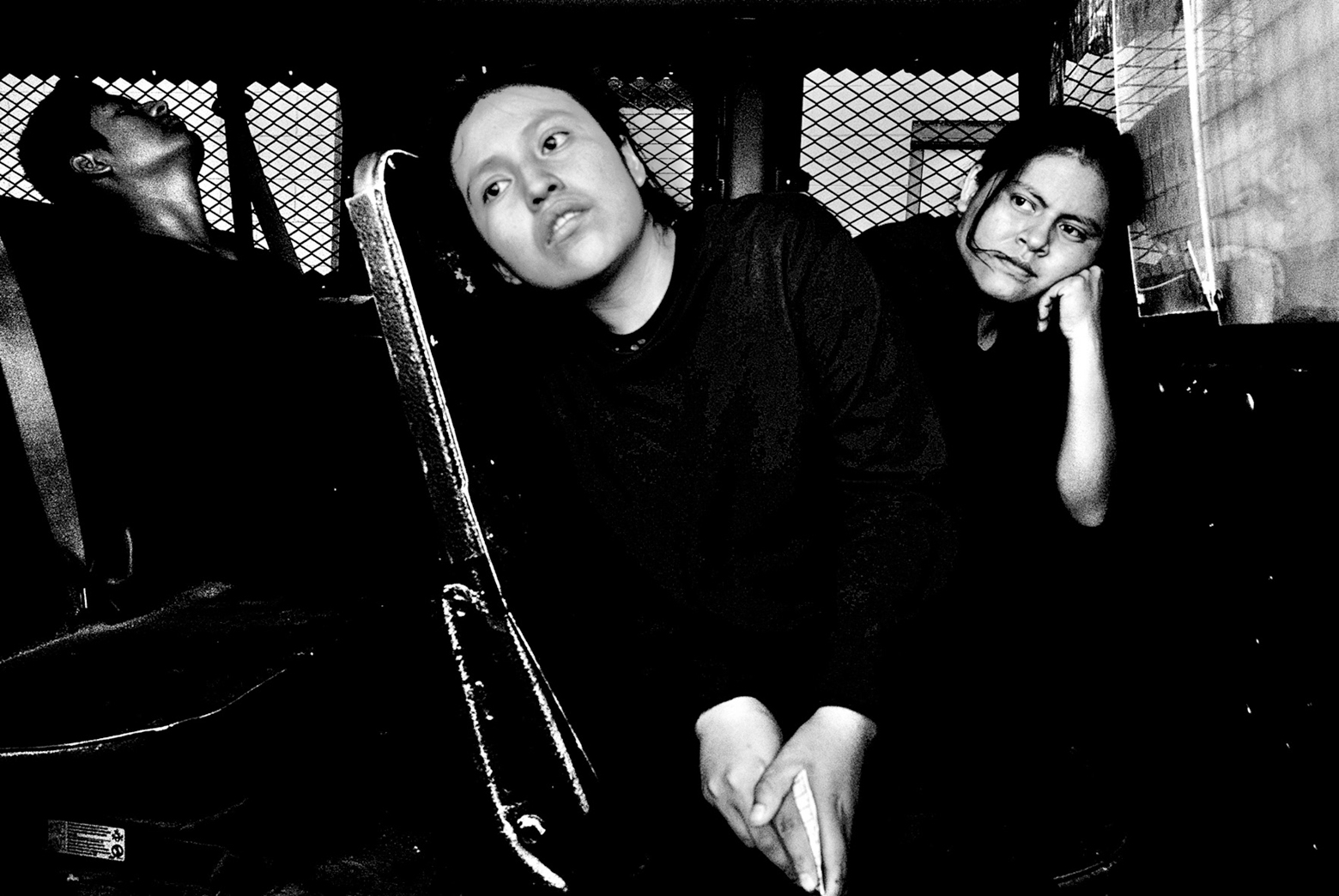
Mexicans detained by Border Patrol at the wall, Anapra, New Mexico, 2024
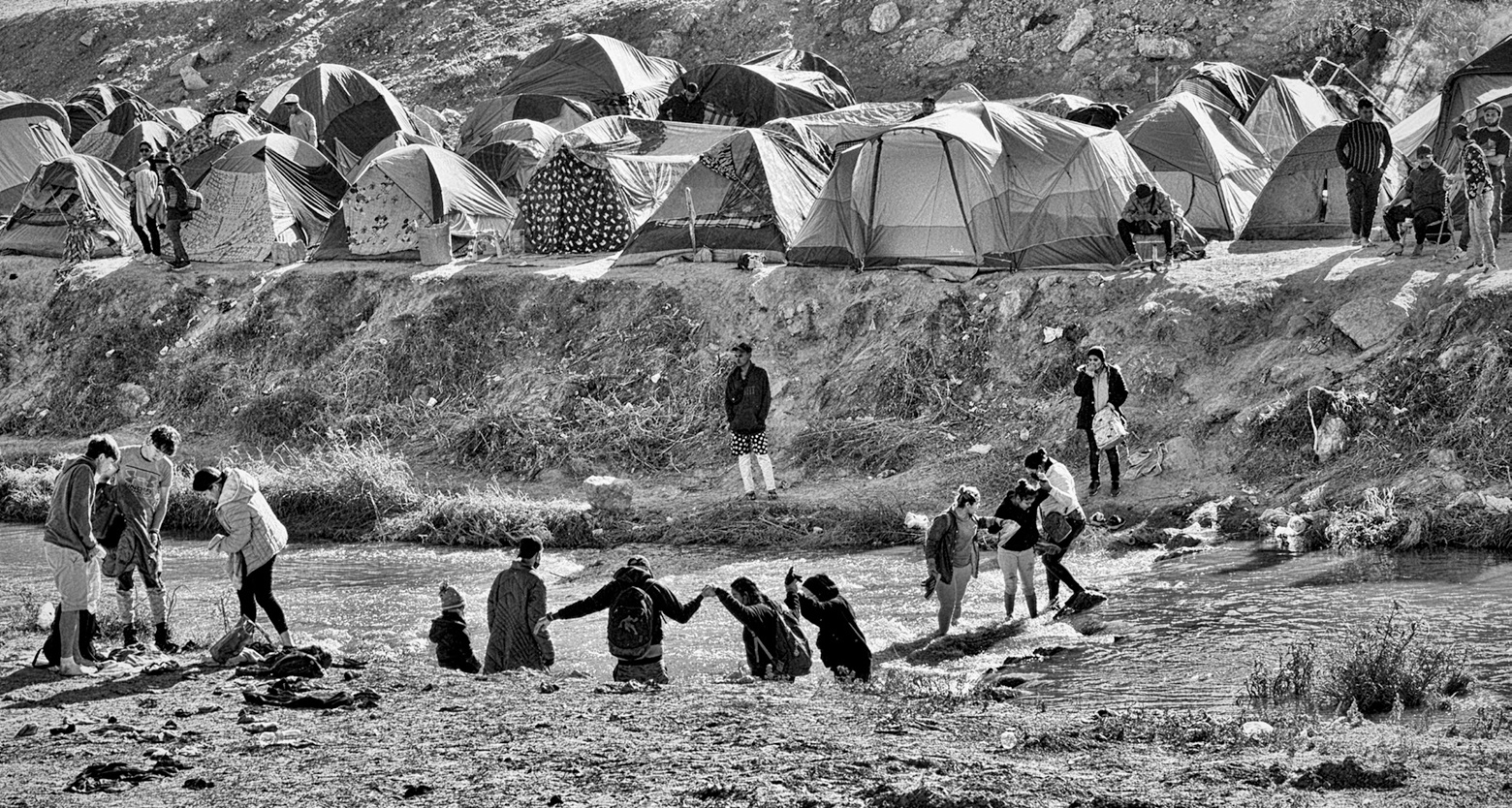
Mexican children crossing the Rio Grande, Juárez, Mexico, 2019
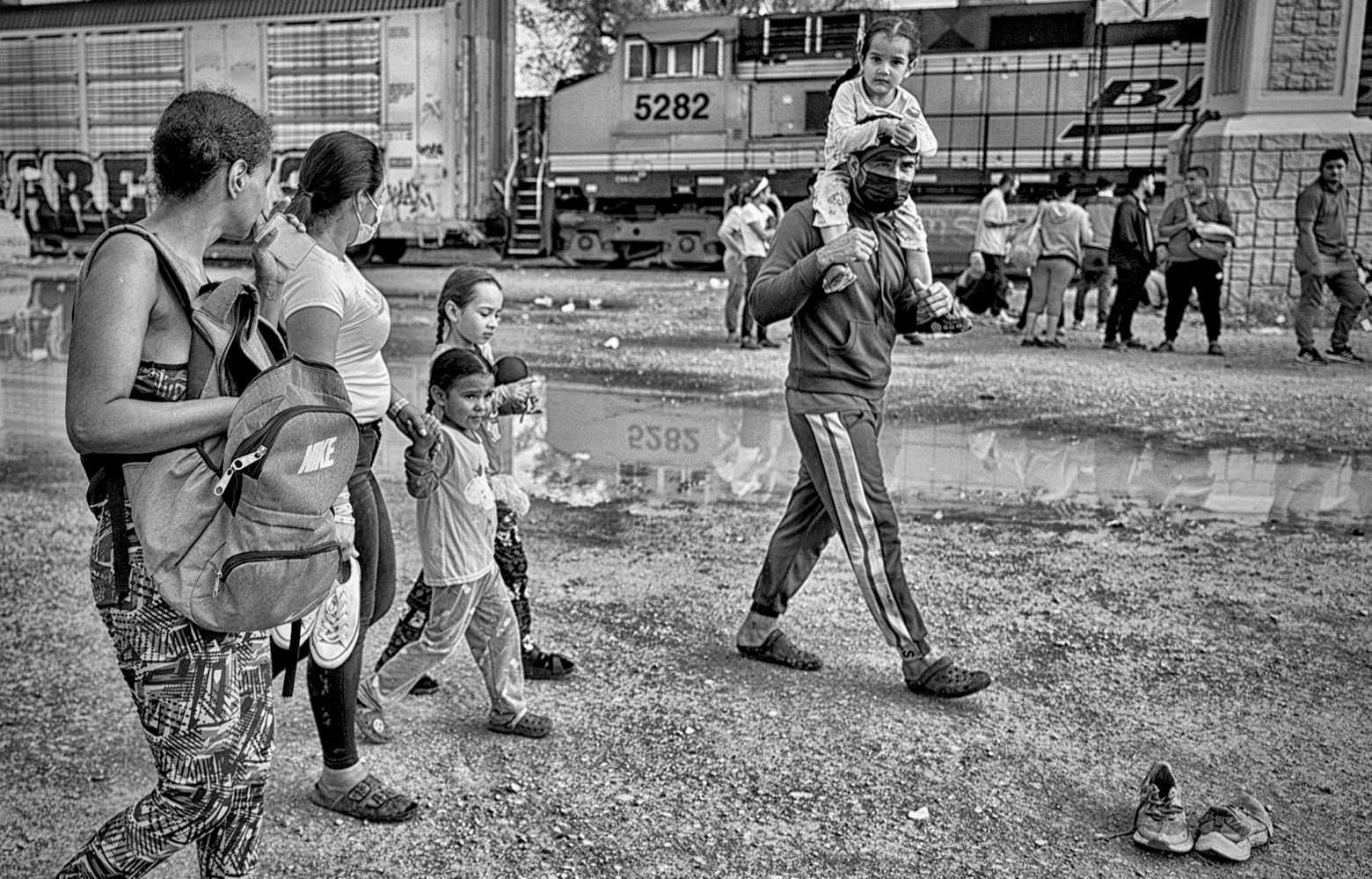
Venezuelan family arriving in the US, El Paso, Texas 2022
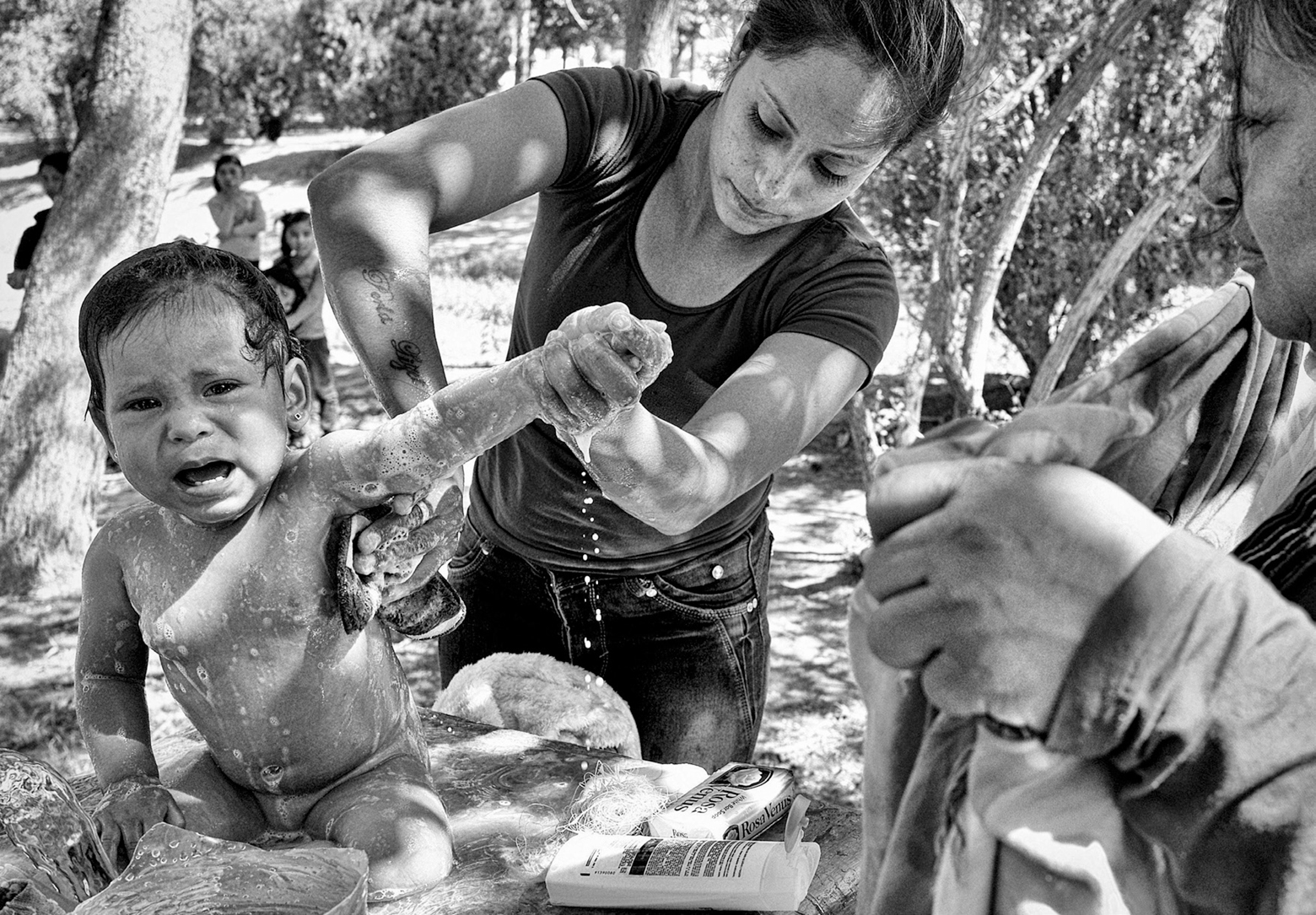
Migrant mother bathing child in the park, Juárez, Mexico, 2019
Migrant families travel to the border from unsafe places all over the world to seek refuge. From 2018 to 2022 they camped in Juárez on streets, in parks, and along the banks of the Rio Grande, waiting weeks and sometimes months for an opportunity to legally request asylum in the US.
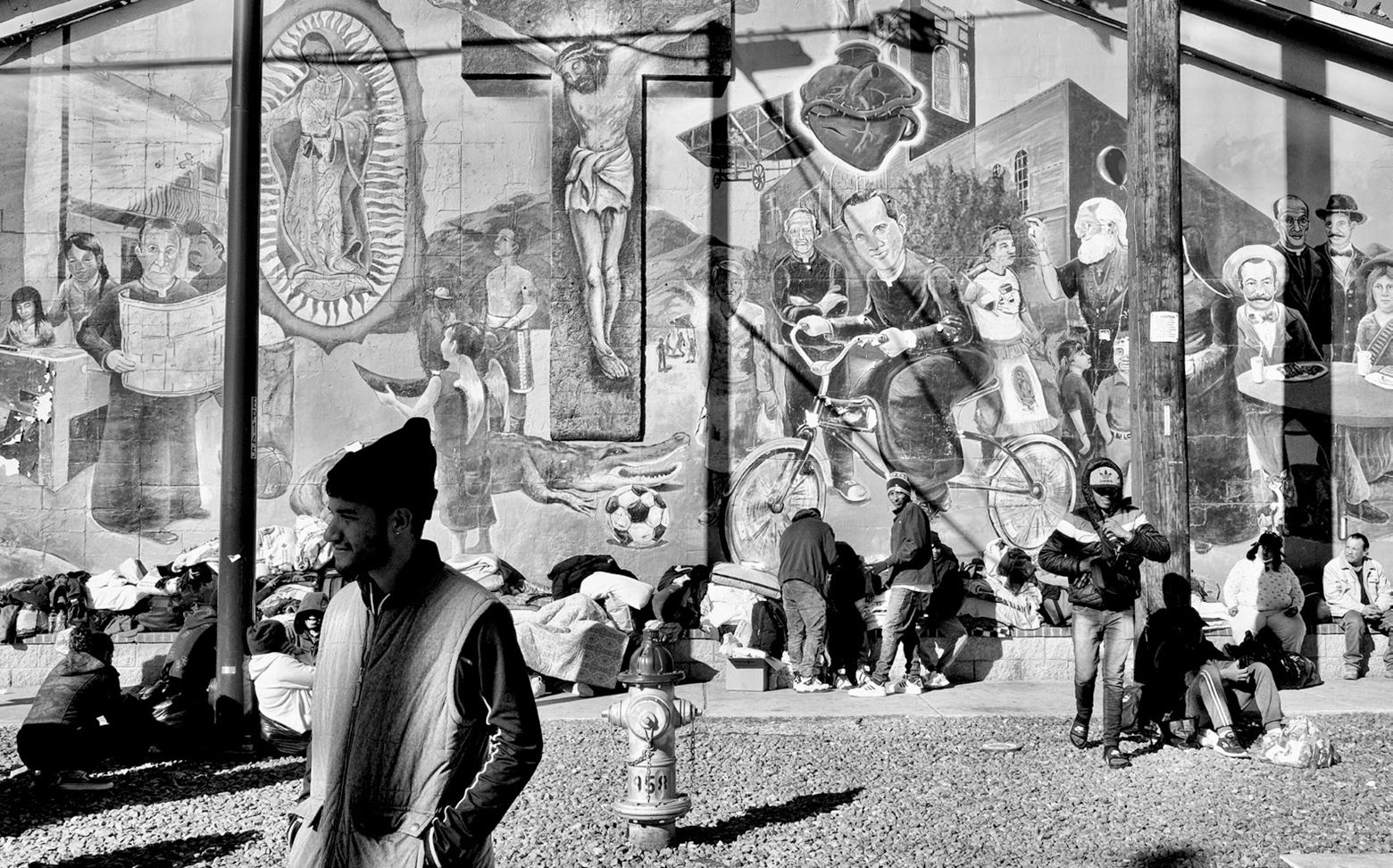
Undocumented Venezuelan migrants waiting for asylum, El Paso, Texas, 2022
In 2022, when migrants made their asylum claims and passed criminal-background checks, they were legally released from the Border Patrol detention facilities. Many were left on the streets, and some, mostly families, were transferred to locally run Catholic shelters, which provided safe places to rest, shower, eat, and arrange transportation to their sponsors in the US.
Girl at the wall, Anapra, New Mexico, 2025