In the past decade I’ve earned two degrees; gotten engaged, married, and divorced; given birth to three babies; moved four times; and fallen in love all over again.
As a single mother who just finished a divorce that chewed me up, I have three reasons to celebrate. One wakes me up this morning with a foot to the face after finding their way into my bed in the middle of the night; another whispers in my face with stinky breath, “Mama, I’m hungry”; the third tugs the covers off me and urges me to get moving.
School is canceled today. Downstairs in the kitchen, I open a playlist my six-year-old helped curate. Billy Joel’s “Vienna” plays, and my crazy child pulls me away from the eggs that need scrambling and swings our arms along to the beat. I spin her in circles until she’s a heap of limbs on the floor.
Hearing our happiness, her siblings run to us. My son piles on top of his big sister, and they roll around while the baby clings to my leg. We’re four beating hearts connected by blood and the desire to enjoy life, even if my kids are too young to realize that’s what they’re doing. The eggs can wait. This can’t.
Alex Tobalin
Chicago, Illinois
When my husband, Curt, was in his mid-fifties, he began joking that, after he died, we should just stuff him in the yard-waste bin. “Let me ferment awhile,” he said, pleased with his pragmatism, “and you can use me as plant food later.”
Human composting was close to being legalized in our state, and he brought up this idea whenever the conversation turned to death, which in our house was often; I’m a deathcare educator.
At the height of the pandemic, Curt suffered a mini stroke. The hospital neurologist encouraged him to change his lifestyle. He lost fifty pounds in three months and started walking three to six miles a day—a regimen he’s maintained ever since.
Given his health scare, his sixtieth-birthday celebration took on new meaning. We decided on a mock-funeral and living-wake theme. If he wanted to be wheeled out of this world in a compost bin, why not let him test-drive it? I ordered one from the city, hid it at our neighbor’s house, scrubbed it as clean as I could, and adorned it with homemade decals: “From Curt to Dirt,” “I’m Off to Greener Pastures,” “Smells Like Green Spirit,” “My Final CURTain Call,” “Bin There, Done That.”
The night of the party, our son rolled the bin into the building. Though it smelled faintly of bleach and rotting garbage, Curt didn’t hesitate to hop in and close the lid. Our son and his friend wheeled him into the party while Elton John’s “Funeral for a Friend” played.
Curt took his place in the lounge to receive words of tribute from friends and family. At the end of the night he stepped back into the bin and posed for photos with guests. He’d almost left us in the blink of an eye. The fact that he was alive to enjoy his party made it all the sweeter.
Danna Schmidt
Bellevue, Washington
The summer after we graduated from the University of California, Santa Barbara, eight of my fellow environmental studies majors and I convoyed twelve hundred miles to the Challis National Forest in Idaho. We had read in a recent Earth First! newsletter that the annual Round River Rendezvous was being held there. Five guys rode in a van, and the four of us girls were split between two cars filled with camping gear.
I’d switched majors in my junior year after completing a life-changing research project in Glacier National Park, Montana. Then, in my senior year, a bicycle accident put me in the hospital for three days with a fractured sternum, a broken nose, shattered front teeth, and a severe concussion. The doctor said I was lucky to be alive. I took an incomplete for fall term and made up my classes three months later while getting rides to school in the medical van. It was a miracle I graduated on time.
If you weren’t around in the 1980s, you might ask: How did we know where to stop for gas or restroom breaks or a cheap hotel without the internet? Before the trip, we went to a AAA office, told them our destination, and watched them trace our route in highlighter on fold-out state maps. They also compiled a “TripTik” spiral notebook to estimate how many miles and hours to expect. To communicate between cars, we held up notes in the windows. And still we lost track of the guys.
After twenty hours of driving, we made it to the US Forest Service station just as it was about to close for the day. I’m certain the ranger rolled his eyes as four crunchy California girls walked in with our giddy enthusiasm.
While my friends used the bathroom, the ranger filled out our camping permit, and I excitedly blabbered about our road trip and the amazing graduation celebration we had planned.
“Intense,” he said. (This was another word for awesome back in the eighties.)
I laughed and replied, “I know, it’s totally intense!”
“No,” he deadpanned. “For the permit: Are you camping in an RV or in tents?”
Terry Austin
Klamath Falls, Oregon
A month before escaping Afghanistan, I celebrated my birthday with my family. The Taliban had shut down all higher education for women and girls, so my oldest sister and I had to leave behind our parents and two younger sisters and continue our education in the US.
My parents invited our extended family—around fifty people—to our house for the party. We began with dancing to Afghan music in the basement. One of my uncles jumped to the center of the floor and made us laugh with his crazy dance moves. He tried to drag his wife in alongside him, but she laughed and pulled away.
Later I stood at the table with my cousins, and someone cut the cake while the birthday song “Mubarak Mubarak,” by Waheed Qasemi, played. The party lasted the whole day and ended with a grilled dinner of kebabs prepared by my dad.
Now in my dorm at Cornell University, I remember sadly the loved ones I left behind. My first birthday in the US is a week away. When it arrives, I’ll probably flip through photos from my last birthday in Afghanistan and then have a video call with my parents. I wonder: Will it feel like any other normal June day, or will I burst into tears as soon as I see their faces?
D.H.Y.
Ithaca, New York
On November 3, 2022, my sixteen-year-old son headed out on his bike to get a cheeseburger with barbecue sauce and extra fries, just the way he liked them. He was hit by a car crossing an intersection not five blocks from our home.
When I arrived at the hospital, he was on a gurney, unconscious and intubated but still looking like himself, with his spiky blond hair and jean jacket. The next time I saw him was after the emergency craniectomy to remove part of his skull and relieve pressure on his brain. His head was shaved, and his face was swollen. Thinking this couldn’t be my son, I told the ICU nurse I must be in the wrong room.
He’d suffered a severe traumatic brain injury, and for six months he lingered in a minimally conscious state. I imagined him deep underwater, dimly perceiving our voices above and swimming effortfully toward us.
Slowly, with the gradualness of a sunflower turning toward the light, he was coaxed back to consciousness by the extraordinary efforts of many: first opening his eyes, then wiggling a toe, making a sound, moving a finger. Before the accident he used to tell me the key to happiness was appreciating the little things: a rock, a cloud, a smile from a friend. I was often reminded of his words as I watched him recover.
Today he’s walking, talking, playing poker, writing poetry, and trying to decide if his hair looks better dyed seafoam green or deep magenta. This fall we will celebrate his three-year “survivaversary” and remind each other to appreciate all of it: the yellow rose blooming outside his window, his growing independence, his simply being alive.
Maryam Mohit
Kentfield, California
When I was growing up in my Roman Catholic household, we would erect the manger scene on our mantelpiece on the first Sunday of Advent, but Jesus stayed hidden away until Christmas morning. Later, at Christmas dinner, we would have a birthday cake for Jesus, who was transferred from the manger to a place of honor atop his cake. My mother would lead us all in singing, “Happy birthday, dear Jesus.” Friends and family members who joined us always seemed amused by the scene.
Several of my siblings now continue these traditions. One Christmas a few years ago we were joined by my youngest brother’s girlfriend and her four-year-old grandson, JJ. After the birthday cake had made its appearance and we had sung the last verse, JJ looked carefully around the room and asked, “Which one of you is Jesus?”
Maura McDonald
Cape Elizabeth, Maine
We residents of Dillon, Montana, have our differences, but when one of our high school teams wins, the entire town carouses deep into the night: the MAGA-hat wearers who wouldn’t criticize Trump in a million years, and the folks who live off the grid in yurts with solar power; the ranchers who’ve been on 60 Minutes talking about sustainability, and the Mormons who keep a stockpile for the “worst-case scenario.”
After we won the state football title a couple of years ago, the community gathered at the Golden Bar. The team rolled in after midnight and were greeted by a police escort and general mayhem. The next week they got an official victory parade, in which they rode a fire truck through town. The high lasted months.
One celebration, however, divided us: a party for the town’s two January 6 insurrectionists, who were returning after being pardoned. The idea made me sick. Yet there it was on Facebook: a picture of cake and ice cream on the invitation, as if it were a gathering of dainty old ladies.
I knew both fellows. One was an appliance repairman who did good work but always arrived after nine o’clock at night and gave off a strange vibe. The other was much younger and was the best lawn-mowing guy in town. When he went to prison, there was a general lament about who’d cut everyone’s grass in his absence. I want to give him the benefit of the doubt. Maybe he was caught up in something he didn’t understand. But if so, why did he fly to Africa immediately after January 6?
Our insurrectionists were viewed as martyrs by some, violent assholes by others. There were people in MAGA hats who celebrated their return and protesters who held signs across the street from the party. I wasn’t a part of either crowd. The year before, we’d come together as a town. Now we shyly met each other’s eyes with embarrassment.
S.C.
Dillon, Montana
My parents met in Germany after World War II. My dad was working for the Army Post Exchange when he accompanied his buddy Bill to pick up a friend who had come to Germany to work for the UN. The moment my dad saw Bill’s friend—my mom—he said, “I’m going to marry her.”
And he did, in a matter of weeks, no less. They had a brief civil ceremony in Germany and later, after they’d saved up, a proper celebration in Paris. The reception was held in a charming bistro called Café Madeleine.
Mom made Dad agree to stay married for fifty years, after which she would show him the door. This became such a part of our family legacy that, for one of their anniversaries, I got them a vanity license plate that said, “AUG 98”—the date the contract expired.
Mom had an insatiable wanderlust, and Dad gladly tagged along with her. My sister and I were born in Germany, moved to Japan, and spent most of our formative years in Hawaii. After that came a couple of spots in Northern California. Once we were grown, our folks continued to move around the globe: Vietnam, Hong Kong, Indonesia
For their fiftieth, Mom organized a three-day affair in Paris, with the main party at Café Madeleine, which still stood. Their friends from all around the world showed up. My dad, who’d never met a microphone he didn’t like, said a few words, explaining that even though the contract had expired, he was ready to re-up for another fifty years. Mom gave him one of her looks: a cross between a roll of the eyes and sheer delight.
Steve Pantell
Oakland, California
I’m a sixty-five-year-old woman, never married, no kids. I grew up with an abusive mother, and I didn’t want to pass that legacy along.
When I was younger, I spent money on the endless baby and bridal showers and weddings of my siblings, cousins, friends, and coworkers. I would’ve liked someone to buy me new linens, or an appliance, or decorations for my humble abode. Sure, there’d been gifts for my high school graduation, and my mom had me over for dinner and cake on my birthdays. But I wasn’t experiencing the major life events deemed worthy of generosity.
When my nieces and nephews started getting married, a whole new round of purchases began. I grew bitter, but what could I do?
Just before I turned fifty, my lease was about to expire, and I was between jobs and ready for a new start. So I accepted an exciting new job in Alaska. A niece suggested we all get together before I left. Perhaps I’d receive some going-away presents, I thought. At last, I’d finally be on the receiving end. I started making a list of things I could use: hiking boots, Alaska guidebooks, a compass. But no one asked what I needed. Maybe they’d just give me cash, or a gift certificate to REI.
When we gathered at my mom’s, I was in a great mood—until family started showing up with no envelopes, no gifts. Of the fifteen guests, only one niece asked what I’d be doing in Alaska. Aside from that, no one paid me a bit of attention. I was hurt, but, again, what could I do? Eventually one brother and sister-in-law got up to leave and told me to have a good trip.
Fighting back tears, I fled to the basement, where I wouldn’t be seen. No one came looking for me. After everyone had left, I went upstairs and helped my mom clean up. Though I knew it wasn’t a good idea to share painful emotions with her, I told her how I was feeling and why. Instead of giving me a hug or offering to go shopping with me, she laughed derisively.
My job was fantastic. I loved Alaska and the Northwest, and I ended up living in that part of the country for many years. When I talked on the phone with my mom, she’d often ask, “When will you be coming back?” I would laugh in response.
M.H.
Lansing, Michigan
Every year I mark the anniversary of the start of my sobriety. I stopped drinking and drugging when I was thirty-two. I’m now sixty-four. This year, since I’m twice as old as I was when I put the poisons down, I decided to do everything twice: Two cups of coffee after getting out of bed. Two good-morning kisses for my wife. The dog couldn’t believe his luck when I fed him two breakfasts. I read, and then reread, the poem-of-the-day in my inbox. Did forty minutes on the treadmill instead of twenty. Even when I made a mistake, I made the same mistake again. You’ll learn twice as much, I told myself.
At dinner I had two helpings, and two desserts. And at the end of the day, before going to sleep, I said thank you to the universe for another day of sobriety. Then I said it again.
Paul H.
Boston, Massachusetts
After my husband, Gray, died, my niece helped with the arrangements for his celebration of life. Overwhelmed, all I did was approve the menu and bar costs. Our nephew emceed, and friends and relatives took the microphone to share memories.
I asked Gray’s older sister, who spoke last, to tell us something we didn’t know about him. She described how their family didn’t usually have fancy desserts, but when Gray was about six and sick with a sore throat, their mom took him to a bakery and let him pick out a treat. He chose an éclair. He’d never had one before, but he loved them from then on. I had known about his love of éclairs, but I’d never heard the story of its origin.
After she finished, the dessert trays appeared, and I was shocked to see éclairs on them. I asked my niece if she’d planned this. Absolutely not, she said—it was outside of the budget. She’d just ordered some cookies. I asked the bartender to go check with the kitchen to see if there had been a mistake. When he returned, he told me the chef had come in that day and decided he just wasn’t in the mood to bake cookies. He’d wanted to practice making éclairs instead.
Claudia Jernigan
Atlanta, Georgia
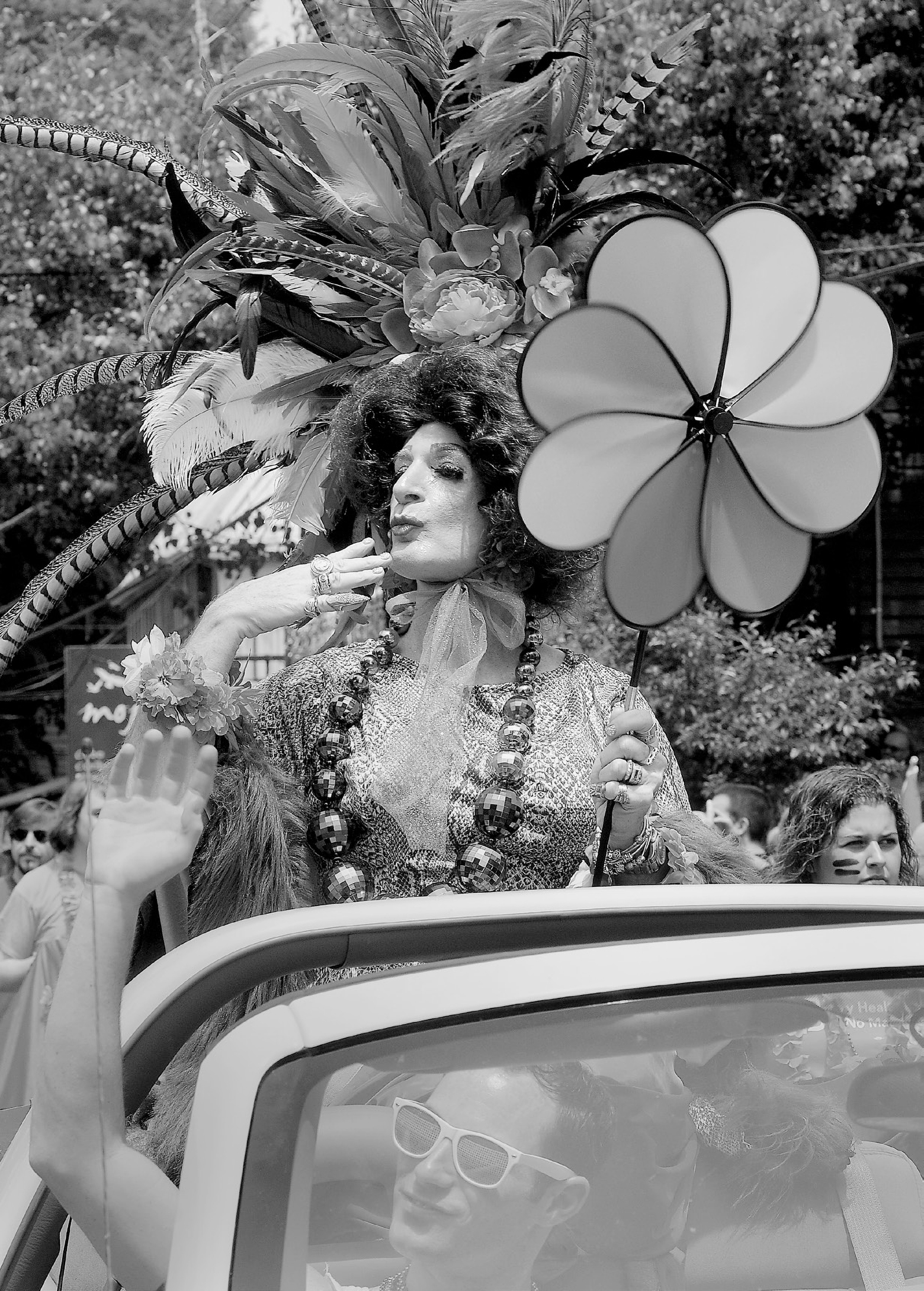
The samba band warmed up behind a building on the Hudson River as the masked, plumed, glittering crowd assembled. Puppeteer and parade organizer Ralph Lee corralled the Halloween revelers into a semblance of a line. Gorgeous “female impersonators,” as they were called back in the eighties, took a night off from the Harlem ballroom scene to flirt with the crowd in skimpy dresses and high heels.
My group hustled to grab a spot next to the band. I was dressed as an alligator with an enormous papier-mâché head and movable jaw—great for eliciting screams from kids along the route. Selena was a bird with a twelve-foot wingspan. Reinaldo was another bird, green and gold with long legs and golden claws. We circled our hips and rib cages in a joyful samba.
Eight-foot-high puppets came next, each manipulated by three or four puppeteers with poles to hold the bodies upright and manipulate the arms. Another year I was one of ten puppeteers on a large, segmented dragon that wove through the parade.
We laughed and shouted as we wound through the narrow West Village streets. People waved from the balconies of brownstones; on one, a vampire pretended to feed on a damsel in an evening gown. The drums grew louder. Spectators occasionally slid into the parade and danced for several blocks. One year a group of enormous, brilliantly colored shoes joined us. “We’re Imelda Marcos’s shoes!” they cried.
At the parade’s end we streamed beneath the arch in Washington Square Park, then danced until we were tired, disheveled, and hungry. Afterward we traded stories at an all-night West Village coffee shop.
Halloween for us wasn’t about trick-or-treating. It was a time when society’s rules of order no longer applied, an oasis in our otherwise troubled world where we battled a medical system that denied dignity to our dying friends—a world where we held the hands of the sick, soothed foreheads, cleaned up vomit, and wept. AIDS was scything a path through our community, but Halloween was a night to celebrate our wicked, crazy, fantastical selves.
Lesley Farlow
Florence, Massachusetts
My forty-first birthday was twenty days after the pandemic shutdown. My plans for a road trip thwarted, I decided to walk six miles to a stretch of sand one county north. My route involved crossing the Golden Gate Bridge, where I marveled at the nonexistent traffic. I gazed out on Alcatraz Island, where I used to be an assistant gardener, and admired a streak of blazing orange-gold on a hill across the bay. When I reached the other side, I wandered down the fire road to Kirby Cove.
The weather was a mild seventy-two degrees. Pipevine swallowtail butterflies accompanied me as I walked, their wings shining black in the sun, jewel-toned iridescence flashing against the greenery. At the cove I leaned against the cliffside, poured myself some cava, and toasted the southern tower of the bridge.
On the way back, I picked mugwort alongside the dirt road for a new friend. The herb is reputed to bring intense dreams if stashed under one’s pillow. I spotted a dead pipevine swallowtail and, taking care not to brush up against some poison oak, picked it up and placed it in an empty Altoids tin so I could study it in my isolation at home.
Throughout my thirties I’d often been irritated by a line from Mary Oliver’s poem “The Summer Day”: “Tell me, what is it you plan to do / with your one wild and precious life?” As an unpartnered hospitality worker without a trust fund, living in one of the most expensive regions in the world, I’d never solved that riddle.
That birthday spent reveling in the sunshine would never have happened were it not for the COVID restrictions. Likewise the scores of wild and precious days I was gifted with during the unscheduled weeks that followed. Not since before starting kindergarten had I had the opportunity to live unencumbered by institutions, performative niceties, and the capitalist hustle. I was free.
Katherine Renz
San Francisco, California
Grandma’s funeral was today, but it didn’t always feel like it. It felt like she was just in the bathroom. Everyone was there—she would’ve loved it. She didn’t quite look herself in the casket, though. Her smile wasn’t close enough to her ears. But she was in her hot-pink suit with matching nails and lips.
The service was very Catholic but very nice. Ann spoke, and it was beautiful. Grandma had always been encouraging, always ready to tell you the truth. I should have called her more.
Uncle Phil gave the eulogy, describing a time when Grandma had been depressed and had called out to God in desperation. God had answered aloud, “Dot, everything is going to be all right. This is where I want you to be.” So she’d stayed. Now there I was at her funeral, along with seventeen other grandkids and six great-grandkids. I thank God that woman’s blood is my blood.
After the funeral nearly forty of us squeezed into her condo. Going through her things felt morbid but beautiful. We stumbled upon postcards, love letters from Grandpa, and gaudy jewelry from their costume parties in the sixties.
Her death wasn’t the only milestone this weekend: Jack is turning twenty-nine, and Emma twenty-six. So I found a box of Grandma’s old party hats and plates and noisemakers from when we were kids, and we lit candles and laughed—her smile plastered on each of our faces.
As the final notes of “Happy Birthday to You” reverberated through the house, there was a timid knock on the door. It was a neighbor, dropping off a sympathy card. She’d been to Grandma’s condo plenty of times, but when she heard the singing, she wasn’t sure she had the right one.
Some people might have felt guilty for celebrating the same day we buried our matriarch. I say I’ve never loved my family more.
W.W.
Nashville, Tennessee
My mom baked me a cherry-chip birthday cake every year, sometimes shaping it into a rabbit or butterfly. She’d add a drop of Red Dye No. 3 to the frosting for a pink hue. I wasn’t overly fond of cherries, and pink—the agreed-upon hue of all things feminine—wasn’t my favorite color, but after three boys, my mom enjoyed making a girly cake, and I enjoyed the special attention.
The summer after I got married, my mom was hospitalized—again. I was juggling my first professional job and graduate school while also visiting her in the psychiatric ward. I had never explained to friends the cause of my mother’s weeping spells or why my dad took her out of town from time to time for a “rest.” Now she was in long-term care and receiving shock treatments. It wasn’t something I wanted my husband to witness either, but he held me without question when I cried each night.
As my birthday drew near, I figured there would be no pink cake, but then, getting ready for work on the morning of the big day, I heard a noise in our kitchen. There was my sleepy-eyed spouse of just over a year, mixing cherry-chip batter. I’ve never felt more love for anyone than I did for Mark at that moment.
I left work early to take a piece of the cake to Mom. When I presented it to her, her face—which had been devoid of emotion for months—crumpled, and she sobbed. “I should’ve been the one to bake your cake,” she said. No matter how many times I assured her she’d made many memorable cakes—including the time we got the eyebrows wrong, creating a frightening-looking rabbit—nothing could console her.
That was the last time she and I shared anything sweet. By summer’s end she had taken her own life. For years I imagined how she must have punished herself with should haves and if onlys until her final breath.
Today, as my birthday nears, I think of happier times and my mother’s smile as she turned cake batter and frosting into a girly, pink confection for her only daughter.
Melissa Thornton
Langston, Alabama
I was a high school senior in the spring of 2020. Quite a few celebrations fell by the wayside—or, at least, looked different from what I’d imagined. My eighteenth birthday was a drive-by party. For senior prom my best friend and I dressed up and made s’mores at home. My graduation was a prerecorded livestream.
Luckily I have a sister. In lieu of having anything to celebrate, we created April Christmas. The rules are:
- Wear Christmas-themed sweaters, socks, pajamas, earrings, and hats. (If you live in California, like me, you’ll need to stay in the air-conditioning to avoid heatstroke.)
- Purchase—or make, or find lying around your room—a gift. No prior planning is allowed, and no more than five dollars should be spent.
- Listen to Michael Bublé’s “It’s Beginning to Look a Lot like Christmas,” but also Sabrina Carpenter’s “A Nonsense Christmas,” because we have range.
- Make a Christmas tree out of Crocs and decorate it with lights. Place presents nearby.
- Watch the “Chrismukkah” episode of The O.C. If you can’t find that, the holiday special of Phineas and Ferb will do.
After the success of April Christmas, we created other celebrations: One was based around googly eyes. Another we dubbed the “Harry Party,” where we listened to Harry Styles and watched Harry Potter movies. With nothing to look forward to, we found our own moments of happiness.
Sonora Mae
Davis, California
When our daughter was living in Rabat, Morocco, we traveled there to celebrate Christmas with her. Her boyfriend, one of her roommates, and some of their friends joined us.
The locals spoke to us in French, which they assumed we could understand. We couldn’t. Neither could I read the street signs, and when I hung my clothes to dry, the extreme humidity only made them wetter. Whole rooms of houses (both my daughter’s and her friends’) were flooded by rain coming through the windows and holes in the roof. No one seemed concerned by this but me.
We planned a holiday dinner, bought small presents, and organized a talent show to entertain each other and display our limited abilities to sing, recite poetry, or play an instrument. Though busy with preparations, I found myself feeling wistful and missing the old familiar carols everywhere, the lighted trees in stores, the spirit of Christmases past.
My daughter found a Christmas Eve service at a Catholic church—delivered in English, no less—and we crammed into a cab to attend it. At the church we listened to the Christmas story and sang carols. The priest invited everyone to say, “Merry Christmas,” in their native language, and joyful voices filled the church. Then he invited everyone to partake in Communion. I’d thought only Catholics could accept the Eucharist, but this was a universal welcome: Protestants, Jews, Muslims, whoever.
As we walked home at dusk, sparkling lights hung above us in the shapes of little stars and crescent moons. I didn’t know what they represented, but it seemed a magical message of good tidings. Though we were far from home, it was the warmest Christmas I’ve ever had.
Lin Moorman
Seattle, Washington
In my back seat with my laptop on my knees, I opened the Zoom window and saw the faces of the judge, my soon-to-be-ex-husband, and our lawyers in their little rectangles. I covered my husband’s face with my thumb and prayed the shaky Wi-Fi from the local doughnut shop, where I was parked, wouldn’t drop the call.
Sixteen months earlier I had fled my marriage because my husband had become increasingly grandiose and controlling. I’d been living in a tent with no cell service or electricity ever since, waiting for the divorce to come through. The tent was on a scrubby, undeveloped piece of land we’d bought several years earlier. So long as my husband’s name was on the deed, I couldn’t build a proper shelter. Every day, the sound of tent walls flapping in the wind reminded me of the precarity of my position.
I had sometimes worried I’d be legally bound to my husband for the rest of my life. But then, after two rounds of mediation, he’d finally signed a divorce agreement: He would stay in the condo. I would get the land.
On Zoom the judge asked if I agreed to the terms, and I said yes. With a stroke of his pen, my marriage was dissolved. I shut my laptop, flung open the door of my truck, and went inside to buy a malassada.
On the drive back to my tent, I stopped and bought the most expensive bottle of champagne the grocery store had. Then I met up with some neighbors in a grassy field where they hung out on warm evenings, and I poured it into jam jars to pass around. We clinked glasses. While they drank, I tipped mine up and poured it onto the ground, promising the land I would care for it, just as it had cared for me.
Name Withheld
The summer of 1972 saw me in traction: screws in my head, straps around my hips, weights at my sides. Once all that was removed, I had a spinal fusion in my upper back.
After the pain abated and I became stable, I left the hospital in a heavy plaster cast from my jawline to my pubic bone. I couldn’t turn my head, and if I tried to sit up, the cast cut into my thighs. I could only lie flat or stand. I was twenty-one years old.
The itching was the worst. No, the worst was the spot where the cast rubbed against my hip bone. No, it was the pain of my chin resting on the plaster. No, it was the round spot rubbed raw on my tailbone.
While I suffered, I plotted what I’d do on “Cast Off Day”: A bubble bath, then a massage of all the places that had been unseen for nine months. New clothes to fit my new body. A party with everyone who’d helped along the way. Balloons. Champagne!
At the midway point I had to change casts. After the old one was sawed off, an orderly wheeled me into a room and lifted my limp body into a metal tub to scrub away the dead skin. Within ten minutes I was back on the gurney to get rewrapped.
Breaking in the new cast took a miserable week or so. Only four months away from freedom, I read books, did jigsaw puzzles, and watched my little black-and-white TV while lying sideways on the floor, thinking about how magnificent it would be to see a full-color movie in a theater again.
When the day finally came and I walked through the waiting room free of the cast, everyone broke into applause. My father helped me into the car, where it felt strange to actually sit, rather than lie flat across the back seat. Putting my seat belt on, I realized I could look down! The odd sensation of clothes against my skin would take some getting used to.
When my father asked what I wanted to do next, I said go to Winchell’s for doughnuts—a luxury in my family. My mother came out with a baker’s dozen and placed them on my lap. I ate three on the ride home.
What a feeling to walk into my house, to have my cat sit on my lap, and to feel his soft fur under my chin. To pamper me, my mother had bought lavender bath salts and other gifts. Taking that first soak. Getting to know my new body. Washing my hair in the sink instead of lying on a plastic tablecloth draped over my parents’ bed with my head over a basin. It was all a celebration.
Darlene Mueller Morse
Fort Collins, Colorado
Our honeymoon had consisted of a night at the Heart of Denver Motel and a meal at a sports bar. So, after fifty years together, my husband and I decided to splurge on a beach rental in Hilton Head, South Carolina. We invited our children, grandchildren, and my sister-in-law to join us.
In the weeks before the trip I reflected on how this anniversary would be different from my parents’ fortieth, where Dad had been going through the motions. Four months later he’d asked for a divorce.
Before leaving for Hilton Head, my husband and I watched the home movie of our wedding reception. I teared up when I saw my grandmother hug and kiss us, and my beautiful cousin, who was hit by a drunk driver just five years later. But mostly we remarked on our dazzling, smiling, twenty-year-old selves.
After we exited the reception on-screen in a 1965 Chevy Impala streaked with shaving cream, I thought that was the end. But I was wrong. The last scene of the movie was one my grandfather had taken in his backyard. I saw my parents, handsomely dressed for the wedding, hug one another, laugh, and smile. Then Dad took Mom in his arms, dipped her back, and kissed her.
Cindy Burr
Manhattan, Kansas
I watched a video once of people in party hats holding balloons and banners in a hospital waiting room. They were clapping and cheering for a crying woman in a wheelchair who had just finished her cancer treatment. I felt sad because I knew my mom didn’t have a celebration like the lady in the wheelchair did.
It’s hard to celebrate something you don’t talk about. At the time, I was happy not to talk about it. I hated talking about it, because talking made it real. I wanted life to be normal again, so I pretended it was, but that didn’t magically make it so. Dad still had to take time off work. I had to arrange carpools to and from practices. My sister had to ask teachers for help with her math homework.
We could have celebrated with a potluck at the house. People could’ve brought flowers. Mom felt insecure about it, though. Not about being sick, exactly, but about what the sickness had done to her. She never left home without her makeup and wig and even wore a head wrap around the house. I wonder if we were keeping things normal to satisfy her.
Years later she told me she was proud of how she’d handled her cancer. I’m glad she can look back and feel good about it, but I wish I had done something to make her feel more seen—not celebrating that she’d beaten cancer, but celebrating the woman who’d done it.
Korey Watson
Ottawa, Ontario
Canada
I’m not one to make a big deal about my birthday, but as I approached my fortieth, my wife convinced me we should take a weekend trip. She was five months pregnant with our son, and we knew getaways would soon be difficult to come by.
We stayed in a bed-and-breakfast outside Boone, North Carolina, an Appalachian university town with beautiful hiking trails nearby. After hours of exploring, we decided to have my birthday dinner at whatever place was closest when we got hungry. Fried food, cheap beer—nothing fancy, which was fine by me.
After our meal, the server set the bill on the table and said, “Happy birthday!” as she walked away. My wife and I shot glances at each other. We hadn’t discussed my birthday while eating, and we definitely hadn’t mentioned it to the server.
When she came to collect our credit card, I asked if I’d heard her right.
Slightly embarrassed, she laughed and said, “I’m sorry, I don’t even know why I said that.”
“But it is my birthday,” I told her. “A big, even-number one.”
She was amazed. I was amazed. My wife, who watched this exchange with a bubbly young woman, was amazed to a slightly lesser degree.
The server went on to explain that people often told her she was intuitive. It’s the kind of thing you’re liable to hear in a hippie-friendly town like Boone, but approaching middle age and the imminent birth of my son had made me more open to the possibility. I was learning that most of what I thought I “knew” was a guess at best. Even my wife agreed: It had to be more than a coincidence.
Derek Askey
Durham, North Carolina
Burnt out after teaching for twenty-five years and running a theater for seventeen, I needed a sabbatical and decided on a trip to East Asia. I would soak up some culture in Japan and then lie on a beach in Thailand.
In Japan I wandered the clean streets—no trash cans!—and rode bullet trains across the country, always arriving on schedule down to the minute. I meditated in ancient temples, inhaled the aroma of cherry blossoms, and kayaked to dinner beneath Mt. Fuji on a lake surrounded by snow.
After the formality of Japan, Thailand was hot, loud, and messy. When I flew into Chiang Mai, it was the start of Songkran—Thai New Year. On my first night I heard there might be water fights in public, so I bought a squirt gun from a 7-Eleven, but the streets were quiet.
The next day I hailed a tuk-tuk to the New Year parade and was soaked within fifty feet of my hotel by a smiling father with a hose. I was so disarmed by his smile, I forgot to return fire.
Across town I waited in a solemn crowd, my clothes slowly drying in the sun. A parade float of monks passed by with serene nobility, water raining down on them from many squirt guns. The monks smiled at the shower.
By noon the street in front of my hotel was filled with floats and loud music. A pickup truck with a Thai family in the bed stopped in front of us, and the father and kids attacked us with every hose, bucket, and gun they had. We responded with our own deluge.
I’ll never forget the young boy who stood among his family, chest out and hands raised like a Muay Thai boxer, taking everything we could throw at him, shouting for more of whatever life could give.
Scot Schneider
San Francisco, California