After my mother’s death, when I’m seven or eight years old, Dad starts taking me to bars. We develop a comedy routine:
“A very dry Beefeater martini,” I tell the bartender. “Straight up with an olive.”
“A Shirley Temple on the rocks,” says Dad.
The bartender laughs. They always do.
I sit tall on the barstool and sip my drink while Dad tells me about the last time he was here. Whatever the story, the ending’s always the same: “But that was long ago. Long before you were born.”
I finish my ginger ale, suck on the ice, and eat the maraschino cherry down to the stem. Dad finishes his martini and eats his olive. I watch him decide to order another. The bartender keeps glancing at us. I know I shouldn’t be here—but only in this dark, forbidden zone does Dad talk to me, telling me stories of when he was young, before the world had me in it.
Before the world had me in it, Dad went everywhere, it seems. Life was fun, he says, signaling the bartender.
Lauren Ruth Wiener
Port Townsend, Washington
The first bars I knew were the iron ones on my grandmother’s windows in Lagos, Nigeria. She said they were for our protection, but they looked like prison to me. At night I pressed my forehead against the cold metal, staring at the dusty street and wondering what real freedom felt like.
In my twenties I found other kinds of bars, where I spent long nights laughing a little too loudly and clinking bottles with strangers who became my best friends for an hour. The booming music drowned out the silence inside me. I told myself I was celebrating, but mostly I was hiding from loneliness.
Then came the worst of all: the bars that locked me in after a single mistake, a fight that escalated too far, a night I’d replay in my head for years. The clang of iron doors is a sound that settles into your bones. And yet, strangely, with nothing left to distract me, I was forced to face what I’d carried since childhood: a fear of failure, a shame about not being good enough, a guilt I couldn’t name.
One afternoon the chaplain handed me Maya Angelou’s I Know Why the Caged Bird Sings. I devoured that book, which cracked open something inside me. Angelou was writing of a cage, but she gave me wings.
When I was released, the newfound freedom gave me vertigo. The first place I went was a bar with cracked vinyl stools and a jukebox whose records skipped. No one there knew about the years I’d spent staring at a cement ceiling. I went there night after night for weeks, finding strange comfort in watching people. The longer I sat in that bar, though, the more I realized it was just another cage, one I’d walked into willingly. One night a woman sat down beside me. We talked about nothing for an hour, and when she left, she touched my arm and said, “Be gentle with yourself.”
Her words lodged in me. I began volunteering at a community center for teenagers, and later I joined a support group. In a circle of strangers speaking their shameful truths aloud, I realized how many of us live inside invisible prisons: Addiction. Loss. Grief. Some cages you carry with you wherever you go.
Dibang Mary
Nigeria
While hiking on the Pacific Crest Trail, my husband and I have no bars on our cell phones. No pings, rings, or other electronic sounds: only the wind sighing in the trees or the yawk of a blue jay. We carry water and other essentials and bask in the quiet.
Heading back toward the trailhead, we see a woman sitting in the trail. “I fell,” she says. Only then do I notice she’s pressing a blood-stained T-shirt against her leg. A bottled sports drink lies nearby. The woman’s hands are shaking. My husband offers her gauze from his first aid kit, but she says no. She reached 911 by using the SOS symbol on her phone, which can work, she says, even if you don’t have any reception. “They said fifteen minutes.”
Soon two EMTs clamber down the steep hillside toward her.
Relieved, we continue walking, commenting on how lucky she was to fall there, within the SOS range. Around the bend is a dead zone: no SOS, no bars. This time, the phone is a blessing.
M.W.
Carson City, Nevada
When I was a teen, a coworker offered me a THC-infused granola bar. I was fairly naive when it came to marijuana, but this was an island community outside of Seattle, Washington, where it seemed everyone had a penchant for “herbal remedies.” I accepted the bar and ate it that night before going to a bonfire. When I told my friends what I’d just eaten, their eyes widened. “It’s going to hit you like a train,” one of them warned. I laughed it off and enjoyed my final hour of ignorance.
Soon the bonfire flames began to streak across my vision, the towering hemlocks mutated into enormous green faces, and the sounds of the party echoed incomprehensibly in my ears. I had the same thought I imagine every person who has a negative experience with edibles has: What if this never ends?
So I called my parents. When I finally stumbled back into my home, my mom had on her reading glasses and was searching her iPad for tips about how best to get unstoned.
“Exercise,” she said.
My final memory of that night is giggling in the dark kitchen while doing jumping jacks with my mom and swearing never to eat edibles for the rest of my life.
Madelyn Royal
Englewood, Colorado
While in college I received a scholarship to study abroad, and my boyfriend took a job teaching English so he could accompany me.
While there, I liked going with my international friends to a bar that played ’80s music. My exotic features in this northern country brought me a lot of attention, and I often got treated to pints of beer. I’d never felt so attractive, so desired—so free.
One night, after a couple of drinks, I was dancing with a friend. Our embrace became tighter, our movements slower. The music was perfect, my dress flirty and flowy. In the dim light he looked irresistible. My hand was on his cheek, and his arm was around my waist. I’d always believed in monogamy, but this felt so good I didn’t care.
Just as our noses touched, a full glass of beer fell and shattered at our feet. We quickly pulled apart, the spell broken.
I never found out who dropped the beer or whether they did it on purpose, but I’m grateful for the intervention, divine or otherwise. I’ve been with my boyfriend—now my husband—for more than a decade. That night was the closest I’ve ever come to cheating on him.
Name Withheld
Years ago I quit a lucrative tech job and dusted off a sixteen-year-old law degree. One might question the wisdom of starting a practice in my mid-forties while single-parenting a five-year-old, but thirteen months later I took the Washington State bar exam. The other aspiring lawyers and I sat at folding tables in a cavernous room while proctors roamed the floor, looking for writing on hands or notes up sleeves. If you were unfortunate enough to need to pee in the middle of the timed test, someone would accompany you to the restroom.
At one point a piece of soundproofing foam fell from the thirty-foot ceiling onto my exam booklet. I looked up, and a second piece landed on my face.
Then the table began to shake, and the cement floor shimmied underfoot. Three large steel doors designed to admit semitrucks undulated with a deafening rumble. My tablemate tugged on my arm and whispered, “I’m from California. Get under the table.”
After less than a minute, the room fell quiet, and I slid back into my seat to continue the exam. The test was given only twice a year, and the results took months to come back; if I didn’t complete it now, another year would go by before I could hang my shingle. But the proctors instructed us to vacate so inspectors could check the building’s integrity.
While we milled around a parking lot, I agonized over whether to call my daughter’s school and make sure she was all right. I was worried a call might disqualify me, but I didn’t see any proctors, so I dialed the number. I couldn’t get through. The towers must have been jammed with calls. Panic set in, and I was imagining children being pulled from crumbled buildings when the proctors instructed us to return to our seats.
Once we’d reassembled, they announced that we would have fifteen extra minutes to finish. Tears streaming down my face, I brushed the ceiling gunk off my exam booklet and started writing. A proctor quietly set a roll of toilet paper on my table.
When we were released, my friend was waiting in the lobby. “I got through to the school,” she said. “Natasha is all right.” I collapsed sobbing into her arms.
Five months later I was sworn in.
Carol Betts
Seattle, Washington
My husband was struggling to manage PSP, an incurable neurological disease in the Parkinson’s family. His early falls had elicited dismissals from him—“Nothing to worry about, Roz”—but later ones led to paramedics lifting him from bloody floors.
When rising from the toilet became impossible for him, we mounted the first bar to the bathroom wall. Others were later installed—first at the sink, and then around the house as he fought to maintain independence. Next came a cane, then a walker, and then a caretaker to help him during the day. The wheelchair arrived a few months before the end.
The final bars were those that kept him from rolling out of the hospital bed ordered by hospice. For months I slept beside him on a twin. At night I’d reach through the bars, stroke his twiglike arm, and whisper, “I love you.”
Roz Levine
Los Angeles, California
The clientele where I bartend is largely business execs, shoppers, and retirees. Arturo, who came in the other week, was an exception. He drank a German beer in a tall, slim glass. Halfway through it he ordered dinner. He was handing me back the menu when he bumped the glass, spilling it. He apologized, and I told him I’d spilled plenty of drinks.
I laid out a fresh linen napkin and went to refill his glass to par. When I returned, a regular was sitting beside him, so I set him up as well. Before long they were talking, which for men past fifty often leads into exchanging life stories. Arturo said he’d grown up in Chile and, after Augusto Pinochet’s coup, moved to the US on scholarship. Once he’d established himself, his parents visited frequently. They loved lavish Newport Beach, California, but Arturo’s father often asked if he was sure they should be dining at such nice places. He worried someone might ask where they were from or what they did for work.
After most of the restaurant cleared, I asked Arturo whether he’d heard of Roberto Bolaño. He hadn’t. I explained that Bolaño was a Chilean author roughly his age who’d spent most of his life in Mexico City and Spain. He was visiting home when the coup kicked up, and he got arrested.
Arturo shared actor Pedro Pascal’s story: His parents were liberal college students in Chile who took in a wounded revolutionary. Pinochet kidnapped people for less, he said: “I saw students ripped out of class without explanation, and all we could do was sit there. Speak up, and you could be desaparecido también.”
I told him I was glad he and his parents had made it through all that. “It’s crazy,” I added, “to see similar things happening here these days.”
“It’s funny you say that,” he said, taking a swig of beer. “I see things online, but out here in Newport you just don’t, because we’re in a bubble. Last time I was here, though, I got caught off guard: A man was having a drink across from me. He was the only other Latino in the restaurant. Nice suit, nice watch. You could tell he was loaded. After closing out he walked over and asked me where I’m from, so I told him. We chatted, and he advised me with a serious look to stay safe. Then he asked if I was carrying my passport. I asked why. He said, ‘In a crowd like this, we’re easy pickings.’ Apparently he’d lost some workers at his warehouse, and not all of them were here illegally.”
I admitted that I keep my passport in my shoulder bag these days. “I might pass for white in the face, but ‘Alejandro Hernandez’ is way too Mexican of a name.”
Arturo grew quiet in contemplation. Finally he spoke: “I guess I didn’t expect to see something like this up close again.”
Alejandro Hernandez
Cerritos, California
Our teachers called them “monkey bars.” To us they were simply the bars. From third grade on, those blackish-brown rods of steel were integral to our physical and social development. I loved the way they smelled, especially in the summer: a metallic, asphalt-y scent mixed with little-kid sweat.
“Dead Man’s Drop,” “Two-Handed Forward and Backward,” “Fainter’s Back Bends,” “One- and Two-Legged Pretzels”—these were just a few of our aerial feats. Sometimes we drew a crowd, who watched with mouths open as we twisted and spun. A few covered their eyes. In those moments we were kings and queens of the schoolyard.
Years later, at a playground with my friends and our kids, I saw some bars that seemed to be waiting for me. Placing my hands on the familiar steel, I swung to the top bar and crouched there, hands between my shoes. Some other adults watched with curiosity. I paused. Could I still swing down and land on both feet like the old days?
I could. Some observers had their mouths open. Others covered their eyes.
Catherine Criss Flowers
Grass Valley, California
After my mood swings worsened and my drinking grew out of control, my boyfriend left me. So I did what any bipolar alcoholic would do: I rode the A train to Kennedy Airport at 2 am and bought a ticket on the next plane out.
I had no luggage, just a couple of beers in the pockets of my coat, which I wore over a filthy housedress. I spent the flight staring at the clouds below, wondering what it would be like to open the exit door and jump into the sky.
I arrived in Dallas, Texas, the next morning. As other passengers went to pick up their luggage or rent a car, I sat on a bench. Now what?
Then the bar opened.
I slapped down my credit card and ordered a vodka cranberry. Other travelers drifted in and out, keeping mostly to themselves. I stayed there until the bar closed at 11 pm. Then I stretched out on a bench in a waiting area and went to sleep.
A few days passed this way. Then a few more.
“Where are you traveling?” the bartender who’d been serving me asked. What he really meant was: Why are you still in the airport? There’d been no major cancellations or delays.
Worried the bartender might alert security and have me removed, I called Stan, an ex-boyfriend who lived in Dallas, and he came to pick me up.
“What the hell are you doing?” Stan said when I got into his car, drunk, not having showered or changed clothes in almost a week.
I didn’t like his attitude. In fact, when we got stuck in traffic, I jumped out and ran across the highway to a liquor store, where I bought three bottles of vodka. A frustrated Stan coaxed me back into his car.
In the morning I woke up alone. Stan had gone to work, but not before he’d poured all my vodka down the drain. Trapped in the suburbs with no transportation, I searched his apartment for anything I could drink: mouthwash, rubbing alcohol, vanilla. Nothing.
When he came home, I agreed to get on a plane back to New York, just so I could get a drink on the flight.
My first psychiatric hospitalization took place upon my return. After that, I entered a 12-step program. It would be several years before I finally stayed sober and found the right medication for my mental illness, but at least I’d started my journey.
A few months ago I shared the airport story at a recovery meeting. “That sounds great,” another member said. “Drinking all day, nowhere to go, no one bothering you!”
Only an alcoholic would think living at an airport bar sounds fun.
Alison Watson
Brooklyn, New York
My dad appeared in my bedroom doorway in his gray Coca-Cola uniform, mouth fixed in a straight line. “Do you want to press charges against your brother?” he asked.
I nodded.
When someone’s that prolific of a sex offender, though, the victim doesn’t need to press charges; the state does it for them: 145 counts of rape and molestation, committed against a single victim over a ten-year period.
He went to prison, but it wasn’t long before the letters began arriving in the mail, nestled between pizza coupons and Delia’s catalogs. Handwritten in smudged blue ink, they contained stories, confessions, apologies, and requests: for money for commissary, for our dad’s commentary on sports, for forgiveness. My parents stashed the letters in the cupboard, and I read them at night by the moonlight from the kitchen skylight, my hands trembling. I’d imagine a sliver of light from the same moon falling through my brother’s barred window.
Then the calls began. Whenever the caller ID flashed “North Carolina Department of Corrections,” Mom or Dad would shout, “It’s him!” their voices carrying through our double-wide. They’d laugh with my brother and ask about his day, as if he were on vacation.
Every call stung. The yellowed carbon receipt of every money order they sent felt like a slap. He had a better relationship with them than ever, whereas mine was strained, awkward, painful.
Unable to sleep, I’d sit at our secondhand computer, face illuminated by the monitor’s glow, and pore over news articles that referred to me only as the “ten-year victim.” I was grateful they never revealed me to be his sister. On the North Carolina Department of Corrections website, I stared at his mug shot, with those sleepy, lazy eyes, and thought about the phone calls my parents always took. What do you expect? I asked myself, vision blurred by tears. He’s their child too.
Anyonita Green
Manchester, England
During the running of the bulls in Pamplona, Spain, the crowd along the streets is dense and slow-moving: a smorgasbord for thieves and gropers. So I was incensed but not surprised when I felt a hand slip into my pocket and slide out with a wad of euros. I turned to see a scraggly, gray-haired man walking against the stream of people. I worked my way through the mass of bodies, following his gray head. As he darted across an intersection, I kept my distance, weighing the pros and cons of a confrontation.
Eventually he sat down at a bar and laid a pocketful of bills in front of him. I took a stool on his left and began assessing this character: not much over five feet, leathery skin, the buttons of his shirt opened to reveal decades of tattoos. An old sailor? A jockey?
He saw me looking and winked.
I turned to the bartender and said, “I’ll have what he’s having,” pointing to my neighbor. Then I added, “And he’s buying.”
The bartender hesitated. I looked at my new sidekick, winked, and then repeated that he’d be paying for the drinks—with my money.
There was a moment of consideration in his eyes, followed by acceptance. He gestured and said something to the effect of Make it two. By the time the bartender brought back two Glencairns of Scotch, the pickpocket was telling me a heroic tale of his life at sea, or wherever, holding open his shirt to show me a tattoo. We tapped our glasses and sipped. Then he set his on the counter, sauntered to the dance floor, and began to sway there alone. I swallowed my last drop and joined him.
C.A.L.
Burke, Virginia
I had just moved to Philadelphia, Pennsylvania, and was showing my mother the listing for a house—someplace I couldn’t afford but would’ve loved to live in: bizarre layout, custom shelving for vinyl records, a library with a ladder on wheels. It was like someone had looked inside my imagination and built a home based on what they saw there.
My mother took one look and said, “I could never live someplace with bars on the windows.”
I hadn’t even noticed them, but her pronouncement followed me from one apartment to the next. Was this evidence of my inability to judge a house? Was I angry with her? Did I subconsciously agree?
Now that I noticed the bars everywhere, I made little discoveries, like that some curved outward to accommodate an air-conditioning unit. (This space also doubled as a nice place where a cat might lounge in the sun.) If one house had bars and another didn’t, it often meant the one without had a security system. Some very old bars were low to the ground and had once been used to tie up horses.
I now live down the road from that house in the listing. My apartment has no bars, but most of my neighbors’ do, to protect from frequent break-ins and to act as barriers against debris from the road nearby. But there’s so much more to where I live. There’s Holly, who runs the secondhand shop and sold me my favorite bathrobe. There’s Mr. Pak, who owns the beer store and always asks how I’m doing. There’s Father Al, the priest who asked my name when I came to his church.
I no longer speak to my mother. A lot of people think the boundary I’ve set with her is just as ugly as she found those window bars to be, but it’s necessary to protect my heart.
Sam Quamme
Philadelphia, Pennsylvania
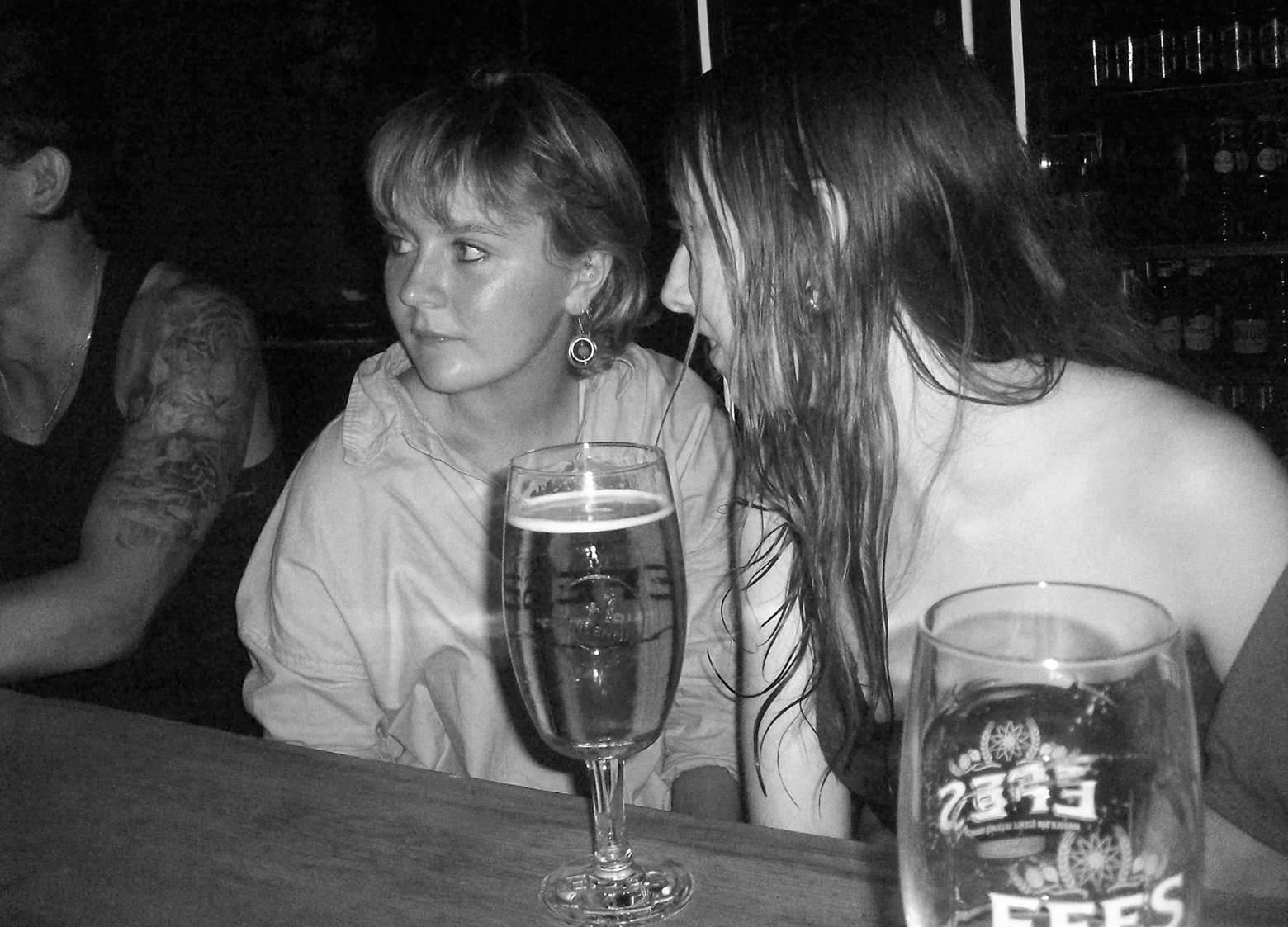
My fascination with rap started when I was young. I’d string words together to create bars—rhythmic measures of rhyming lyrics. I used to sit in my room for hours, pencil in hand, trying to figure out a new way to say something that had already been said a thousand times before. The best rappers can do just that, and tell a story while doing so. Or, even better, capture an emotion.
I saw every other rapper as competition. Most of them wrote superficial bars about their clothes, or shoes, or the amount of money they had, whereas I talked about the feelings I had kept caged inside me before I’d released them onto the page. The response was always positive: People would grab my hand and pull me in for an embrace, stating, “That boy got bars.” In those moments, I knew I was headed for stardom.
Only days after turning eighteen, I committed a series of crimes that landed me in prison. I’m now days away from turning thirty-nine and still locked up. I haven’t written a rap in I don’t know how long. Instead I write poems, spending hours trying to figure out a new way to say something that’s already been said a thousand times before.
Antowyn T. Bolling
Cañon City, Colorado
My share of the rent was due in two weeks. I was twenty-one, lived in a dump with two buddies, and had $23.47 to my name. Through a neighbor I heard about a restaurant that was hiring, and the next morning I was waiting outside the door when the manager arrived to open.
“Any experience?” he asked.
“No,” I admitted, “but I’m a quick learner. If you give me a chance, you won’t be sorry.”
He agreed to take me on as a trainee bartender, even though I didn’t drink and knew nothing about making cocktails. On my first night I asked the manager what went into a bourbon and water. But fear is a good teacher, and by the end of the shift I could manage most of the standard orders. The regulars helped me learn the rest. I was soon earning enough to cover my rent and then some.
About a year later, two men who’d been drinking for hours ignored my last call. When I tried to clear their glasses, one of them jumped over the bar, broke the neck off a vodka bottle, and came at me. I drove my shoulder into him, hoping to bring him down, but he effortlessly tossed me over the bar and onto a table. I immediately knew I was hurt. Then the kitchen staff rushed in, restrained him, and called the police. At the ER, X-rays revealed three cracked ribs.
That was the end of my bartending. I waited tables for the next few years while putting myself through grad school.
I still don’t drink.
Steve Pantell
Oakland, California
When I turned eighteen, I left an unhappy home and took a summer job with the telephone company. A girl I worked with had an apartment nearby and suggested we become roommates. She was my opposite, dressing in flowing fabrics and bold colors, setting few boundaries, and smoking pot day and night. She burned incense and entertained men behind the bead curtain that served as her bedroom door. I’d never even had a boyfriend.
One warm Friday night she wanted us to get high, and I wanted to go to a movie. We compromised and decided to do both.
After we smoked a joint—my first—we walked into town. A man stood by himself under the theater marquee. I was happy and singing, and I began chatting with him until I realized I was making him nervous. Somehow I intuited that he wasn’t interested in women. My inner voice said, Help him, so I looked at him and said, “Don’t worry, so am I.” A white lie, to put him at ease.
His eyes widened. “Oh, thank God! I thought you were trying to pick me up! I’m waiting for my boyfriend. You must let us take you girls for a drink.”
His boyfriend drove us to a dimly lit building in a secluded, wooded area. There were both men and women inside. The music was good, the atmosphere smoky and mysterious.
I had a few drinks and swayed to the disco beat. When a woman approached and asked me to dance, I told her no, but when she came back for a second try, the guys said I should, just once. So I did. We slow-danced, although there was nothing slow about the nervous trembling inside me.
When I got home that night, I hung my clothes outside to air out the cigarette smoke. In the morning I brought them in, and as my blouse passed my face, I smelled the woman’s cologne. I held the fabric against my face, inhaled, and thought, Oh my.
I’m in my seventies now. I’ve danced till dawn in many gay bars with many girlfriends, but none as memorable as that secret one in the woods.
M.M. Miranda
Port Ewen, New York
I was a gymnast in high school. Our team had some talent, but Grand Ledge High was the best. Their girls were all destined to move on to college-level gymnastics. I didn’t know any of them personally but regarded them as catty and stuck-up. I think I was just jealous.
I never felt confident on the uneven bars, and at one meet, when it was my turn to compete on them, I fumbled and fell, earning huge point deductions. As I dusted myself off and prepared to finish my routine, my teammates shouted, “Yeah, Chiara! You got this!” Then I heard something I didn’t expect: The Grand Ledge girls were cheering me on from the sideline, too, shouting, “Chiara! Chiara!” and giving me the confidence to finish.
I scored a 1.0—a pity score, possibly the lowest of the year. But I didn’t feel defeated.
Chiara Nease
Chicago, Illinois
After a house party got busted, we always ended up at Tommy’s Hamburgers. One night I was there when my friend Rudy’s Chevy Impala pulled up across the street, and I stepped outside to wave him over.
Several guys climbed out of Rudy’s car with him and hurried toward another group of guys coming around the corner. Rudy gripped a metal bar.
As soon as they collided, fists flew—along with knives and broken bottles. Rudy swung the bar like a baseball bat, and the metal hit the pavement with a loud clang. Then one of them started shooting. I was standing there, unable to take my eyes off the violence, when something hot sliced into my leg.
I turned to go back inside Tommy’s, but the owners had locked the doors. So I dropped under an outdoor table to avoid the bullets that struck the window ledges. I stayed there until the paramedics came and took me away.
I was lucky. Rudy wasn’t.
At his funeral I saw the metal bar he’d carried that night, cleaned and polished and laid out on a table beside his crying mother like it was some sacred relic.
Back then in Los Angeles, when someone died fighting for their gang, they became a legend. Rudy was no exception. His name was scrawled across alleyways in thick black paint, making him bigger in death than he’d ever been in life.
Elsie Arredondo
San Diego, California
I went to the animal shelter looking for a certain type of dog: small, white, didn’t shed. The first animal I saw when the workers opened the door fit the bill, but my eyes moved straight past her to the corner, where a big, skinny black dog with a tuxedo chest watched me. The other dogs threw themselves against their cages, desperate for attention. Her stillness caught my eye. Her name tag said, “Cher.”
“Cher’s a real people pleaser,” the worker said, which is a shelter euphemism for “doesn’t do well with other dogs.” I took her to the glassed-in box where humans and dogs could get to know each other. Cher was curious but not overly warm. With every dog that walked by, she tried to get at them, hurling her body against the glass with such force I worried it would break.
The shelter employee explained that they didn’t know much about her. She had come in as a stray months ago, starved and with a bladder infection. Black dogs had trouble getting adopted: “Some people believe they’re bad luck, and they’re harder to photograph.”
“I’ll take her,” I said.
A year later I went to my nonna’s house for Thanksgiving, and I brought Cher, who had to stay in a crate in the basement. Seeing her face when I put her in the cage, I could read her thoughts: I’m scared. I’ve spent a lot of time in one of these. I’m worried it will never end if you put me back in.
I told her I understood how scary that would be. I just had to eat penne and meatballs, and then I’d be back for her.
She hung her head low and bellowed for three hours. I fed her meatballs on the drive home as an apology. In the twelve years we spent together, I never again put her back in a cage.
Stephanie Tonietto
Toronto, Ontario
Canada
My senior year of college fell during the Great Recession. Hoping to avoid living in my parents’ basement after graduation, I cast a wide net, applying for sixty-six jobs and to fifteen graduate creative-writing programs. The call I’d been waiting for came on a bright February morning: I’d been accepted to the prestigious program at the University of Iowa.
I moved to Iowa City without knowing anyone there. Though I felt lucky to have been accepted, I missed my home and family. I was twenty-two years old and acted every bit of it, feigning coolness but bristling when the other students in my writing workshop—many of whom were in their thirties or forties—wondered if the narrator of my essays was meant to be naive, if that was a stylistic choice.
That spring my parents and younger brother visited, and I proudly shepherded them around campus. My parents rented a hotel room, but my brother stayed with me. One night he and I borrowed bicycles and rode to a prominent literary bar where I knew the bartender wouldn’t card my underage brother.
We showed up sweaty and glistening and sat for hours in a creaking booth, the PBR pitchers going warm before we finished them. It was his first time being intoxicated, and it ushered in a calmness between us that we hadn’t felt since childhood. We biked home woozy and disoriented, but also exhilarated.
After graduating from college in an even worse economy, my brother succumbed to alcoholism. He kept it a secret from me until the morning he called from the hospital where he was being monitored for delirium tremens. I drove through the night to be with him.
By the time he entered rehab, the idea of losing him had scared me into sobriety, too, and we embarked together upon a mission to stop drinking. I’ve managed to make it four and a half years, but my brother continually fumbled until he lost his social life, his job, and his wife. Eventually our “soberversary” became a reminder of all the times he’d relapsed, and I stopped acknowledging it.
I still never know, when I leave after a visit, if I’ll see him again. Some nights I allow myself to recall that first time we drank together: the bicycle pedals underfoot, the orange Midwestern sunset, our laughter like a taunt.
Name Withheld
The sun coming through the windows overwhelmed the three air conditioners churning out marginally cooler air. Sweaty women nimbly climbed up the sheets of fabric suspended from the gym ceiling or gracefully spun around large metal hoops as if training for a gig at Barnum & Bailey.
For an aspiring aerialist, I spent a lot of time on the ground. This was my third trapeze class, and I was struggling to get off the mat. Although I was ostensibly taking the course for fun, I’d ceased having a sense of humor about my glacial progress and now viewed the trapeze as a challenge to overcome, not a pastime to enjoy.
I’ve never been athletic. When I ran down the street as a child, I’d twist both ankles. When I was up at the plate in kickball, the opposing team would yell, “Easy out!” and move closer to the infield. I even fell off my bicycle on the same section of broken sidewalk two summers in a row.
But now I was determined to achieve a pullover: an elegant backward flip around the bar, ending with my body balanced across it at the hips. I’d been working on this trick since my first circus class.
I blinked back tears, trying to override the memories of past failures. Then I patted chalk onto my hands and grabbed the trapeze. “You can do this,” I said, closing my eyes and visualizing the maneuver. Finally I jumped, kicked my legs forward and up, and dropped my head back.
For a few seconds I spun in a confusing whirlwind. When I stopped, to my utter shock, I was balanced over the bar, head upside down. I’d done it.
Tolley Jones
Easthampton, Massachusetts
It had been almost three years since I’d become a widow at the age of fifty-four. “If your husband were sitting here now,” the psychiatrist asked, “what would you say to him?”
I said the first thing that came to mind: “Want to get a drink?”
My psychiatrist chuckled. He didn’t know that some of the most intense, honest, and intimate moments I’d experienced with my husband had taken place in bars. Lately I had ached for my husband to ask me to go to a bar. What a welcome invitation it would’ve been.
We met in a bar, the same one where we later agreed to take a chance on a long-distance relationship—and where we got engaged two years after that. Bars were touchstones in our thirty-year marriage: places where we could leave the lies and denials and, for an hour or three, take the edge off. There was the dreary bar in Cancun where we sought refuge from a hurricane on our honeymoon; the bar at Las Rocas with the frigid bottles of Bohemia caked with ice; the moody bars where he encouraged me to order a dirty vodka martini because “they’ll do it right”; the cozy neighborhood pubs with bartenders who didn’t mind if we nursed a drink for hours.
We laughed a lot in bars. Sometimes we cried. It was at a bar where we first admitted that our marriage was failing, each drink (too many that night) chipping away at the years of denial. It was in a bar where, after eight years apart, we rediscovered what we had in common, and that we still liked being together. And it was in a bar where we gingerly explored faith in light of the lung-eating disease that would eventually take his life.
We had four beautiful months together after that: painful, precious, privileged time.
M.E.
Mojave Desert, California