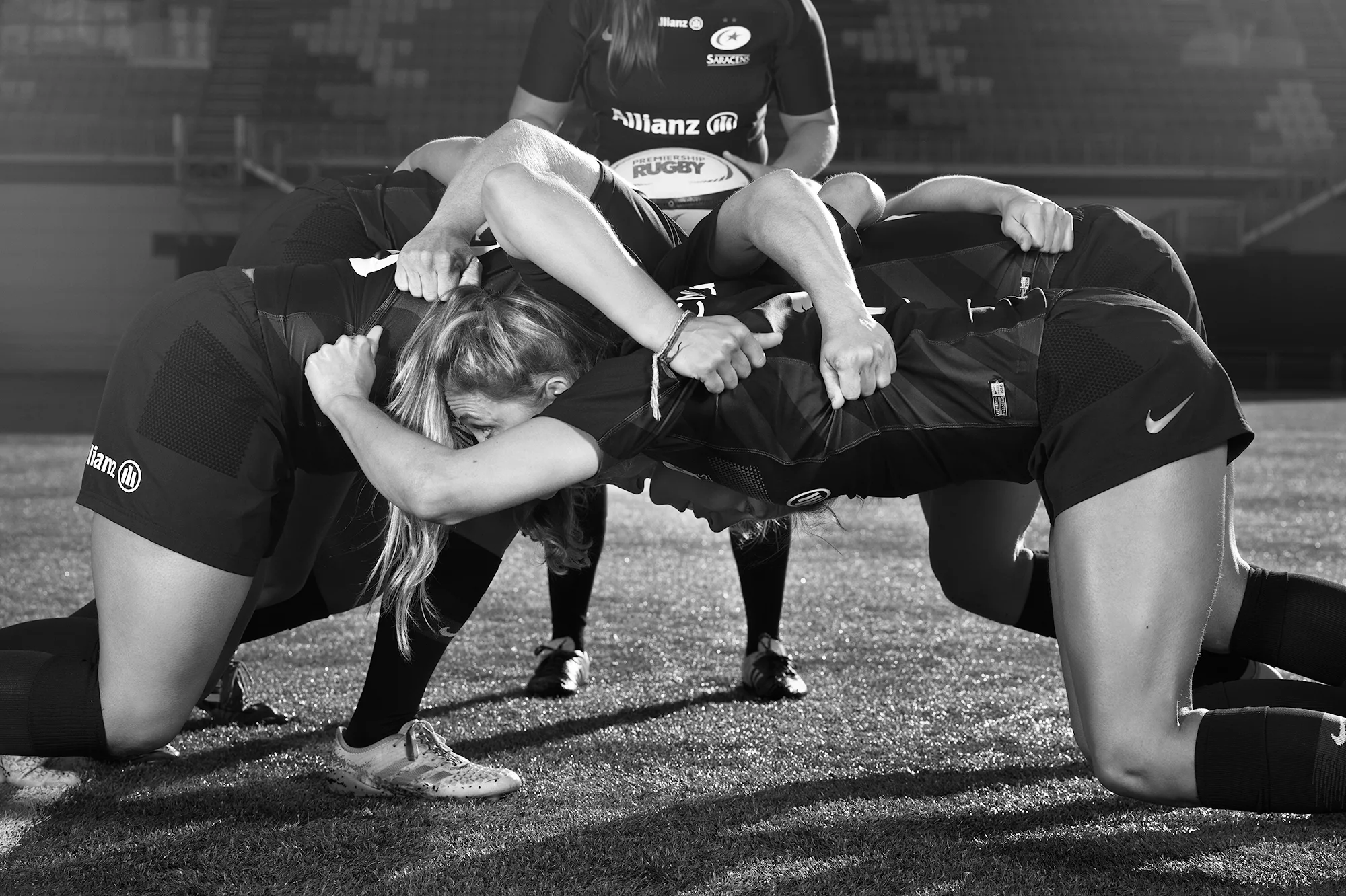
I’m playing rugby in rural Pennsylvania when I dislocate my elbow and get taken to an ER in Pittsburgh. The doctors put me under and shove the bone back into its socket. I come to with my arm in a splint, a pocket full of painkillers, and just enough time to make my flight home to San Francisco.
For days after, waiting to see a doctor, I can’t use my hand because the muscles are connected to damaged tendons. Even with pain medication, I suffer sleepless nights, harangued by itinerant nerve firings, pain coursing through my body.
The self-assured young doctor I finally see says the point of putting my elbow in a cast is to ensure the tendons heal tight enough so the joint won’t dislocate again. I certainly don’t want that. Exhausted and eager to start healing, I agree with his plan.
He readies the plaster and begins winding gauze around my arm. The pressure builds as he applies each layer, squeezing more and more. My hand aches, swollen with blood from the lack of circulation. Finally I ask him to stop.
The doctor looks at me blankly.
“It’s too tight,” I say.
He frowns. His hands are covered in plaster. “You’ll be fine. That’s swelling from the other injury.”
I forgot to mention: Someone stepped on my hand in the same game where I dislocated my elbow, causing it to swell. A line of cleat marks march across my skin. This complicates how tightly he needs to apply the cast, the doctor explains. He doesn’t want it to be too loose after the swelling goes down.
“It really hurts,” I tell him.
“That’s just the bruising,” he says impatiently.
I should demand that he start over, but I’m too tired: from the pain, which is magnificent, and from nine years of playing rugby—first in college, then at club and international levels. My world, for so long, has been determined by my body’s ability to sustain punishment, but even the toughest bodies break, and in the doctor’s office I have no fight left. I’m tired from the endless training, the lack of sleep, the frequent flights, the money I’ve spent, the miles I’ve run, the weights I’ve lifted. I’m tired of being hit, of the constant cycle of tournaments and tryouts, of delaying my other dreams of writing and travel.
The (too-tight) cast will only be on for two weeks, the doctor says. At twenty-six years old, I am used to pain. I can do anything for two weeks.
Alone in my office five days later, I reconsider. My hand is a dark shade of red and pulses angrily. I notice a fraying where the cast meets my wrist, a few tiny hairs of plastered gauze askew—an invitation: Tug at me. Open me up. Release me.
With no one to tell me not to, I pull at the loose gauze.
Meanwhile, my teammates chat online about their plans for the days ahead. We are without a practice or a game for the weekend, and it’s Pride in San Francisco, with parades and drinking and joyful mayhem throughout the city.
I’m not feeling festive. I haven’t showered in days because of the cast, and the painkillers mean I can’t drink. I’m also spiraling, grasping for an opportunity to reckon with the injury and all the things it has brought to light—the most pressing of which is my need to break up with my girlfriend. But it’s complicated. Jess and I share a one-bedroom apartment. We play on the same team.
Jess was on the pitch when I dislocated my elbow. Since the game was still going on, a friend from another team drove me to the emergency room. I spoke to Jess right after the game ended, just before the doctor put me under. I told her I would meet her back at the field, where our car was, then she could drive us to the airport.
After the hospital, I went back to the field like we’d planned, but she was nowhere to be found. Luckily another friend from different team saw me wandering around in my drugged state and kindly gave me a ride to the airport.
At the terminal I saw Jess in line for security. “You left me at the field,” I said.
She looked at me for a long time. “We were going to meet here?” she said. She was very high, and I knew immediately this was a fight better saved for when we were both more coherent. I stood there in my cleats and jersey and shoulder pads, shivering in the air-conditioning. My injured arm was in a sling. I asked Jess where my bag was.
“I checked it for you,” she said triumphantly.
My patience was thin, the painkillers potent. I felt like I was floating. “Where’s my laptop?”
Her mouth dropped open. “Your laptop?”
Right before I’d gone under I’d told her my laptop was stowed under the passenger seat of the rental car. I’d wanted her to remember it in case I was too out of it after the anesthesia. I’d tried to cover my bases but I now understood she’d already been high when we’d had that conversation.
My laptop was my lifeline to a writing career. This was before the cloud, back in the days of manual backups and clunky external hard drives, of which I had neither—not to mention any money to buy a new computer. My laptop held my résumés and writing samples.
I could see Jess trying to form thoughts. “You need to go back and get it,” I said, shaking with fury. “I don’t know where the car is, I can’t run, I need help.” I was making a scene. Two teammates appeared by my side. “She left my laptop in the rental car,” I told them as they ushered me away.
One of them gently pulled a sweatshirt over me. Another slipped my feet into an extra pair of shoes. They helped me check in for my flight.
When Jess returned with the laptop, I put it in her backpack, then ignored her until our layover in Las Vegas, where she offered to buy me a cheeseburger in apology. I begrudgingly wolfed it down.
Jess wasn’t always negligent. She could be fun and easygoing, up for trying new restaurants or camping along the Pacific Coast. She was well educated and occasionally charming. She had an ancient convertible that we took on trips when we weren’t playing rugby. We’d both been on the National Under-Twenty-Three Team and had bonded as rookies on our prestigious club team, which she’d moved across the country to play for. She was, in a word, game.
But I’ve known for a while that we aren’t a good fit. We have different work ethics: I practice my pass for hours on the weekends, do every assigned workout, never miss a practice. I worked my way up to starter and never want to feel a bench beneath me again. Jess, on the other hand, is a gifted athlete who can get away with slacking. Worse, she’s prone to outbursts on the pitch when things aren’t going her way, which embarrasses me. I try to hold her accountable, and we fight both on and off the field.
Wrestling with the cast in my office, I wonder: Do I ruin a weekend of fun by breaking up with Jess, or suffer through it? Our lives are so intertwined that the considerations are overwhelming: We’re teammates and girlfriends. I don’t have enough money to move out. Plus the grind of rugby creates an inertia that’s hard to escape. I’m always telling myself that after the next practice, or the next game, there will be a break, and then we can have the talk.
But there hasn’t been a break—until now. The tournament in Pittsburgh was the end of the season, leaving me with plenty of time to have conversations I don’t want to have. It’s the sign I need.
I’ve freed some gauze but can’t get a whole strand off. Several overlap at my elbow, still stuck in plaster. I’m not usually a rule breaker, but I need to remove one more piece. Just one more.
As I rip at the gauze, I’ll be honest, I am scaring myself. Unhinged people do things like this. But, then, I feel a little unhinged. It’s the pain. I tell myself it’s just to release the pressure. When I next see the doctor, he’ll understand. I’ll make him understand.
I pick at the cast and think about my father. He died unexpectedly on Christmas Day nine years ago. After his death, I was obliterated by grief. I didn’t know how to live—until rugby provided a way. It became my social circle, my obsession. I loved the thrill of tackling, the rush of being pummeled and pummeling people in return, the constant ache that made me feel alive. The long runs, weight lifting, gym sessions, and ice baths gave me little time to fall into the darkness that awaited me off the pitch. On the field I was all animal instinct and brute force—a bruiser, a bone breaker. Every tackle was a rebuke against a life where fathers die. When I played rugby, I wasn’t a broke, lost little girl. I wasn’t a struggling amateur writer. I had goals. I was a winner. I was MVP. I was someone.
For almost my entire career I played under the same coach: Kathy Flores. She was my college coach, my club coach, and my US National Team coach. Kathy and I saw the game the same way, and our trust was unbreakable. When I pleased her by running a play perfectly or sticking a tackle, my life felt right. But last season, Kathy stopped coaching our club team, and my love for the sport went with her. When she left, a surprising horizon appeared, alongside soft whispers: What if you stopped playing?
Now, in the quiet of my office, I hear a voice, not just a whisper. It says the story I’ve been telling myself no longer adds up. I don’t want to bounce back. It doesn’t matter to me if I don’t get another season, another championship.
But what would I do? Starting over feels impossible, and besides, I have no real plans, just fantasies: Pack up and leave for Spain, a place I’ve always wanted to go. Practice the Spanish I’ve worked so hard to learn. Write a novel. Pick up the old dreams of the person I used to be, before my dad died, and breathe life into them.
Instead I rip another strand from the cast.
As the workday wanes, I make an acupuncture appointment. The treatments help, but my acupuncturist is always horrified by the abuse I put my body through. In our first session, six months ago, it was hard to deny the absurdity as I rattled off my list of ailments to her: Head staples. Concussions. MCL tears. Separated shoulders. A torn quad, which still hasn’t healed because I went back to playing too quickly, resting for three weeks when I needed eight. The coach who replaced Kathy said she needed me on the field, so I showed up. Now a huge divot divided my thigh where the muscle couldn’t rejoin.
What my acupuncturist doesn’t know is that she’s not the only one perplexed by my dedication. I am perplexed myself—and tired of convincing her and others that I know what I’m doing. I could blame other people, but the truth is I can’t stay away. I’m a needle in the groove of a ceaseless record.
Still, every week, after I give her an update on my injuries and she thoughtfully inserts her needles into my armor, I promise her I’ll rest. She pretends to believe me.
After I book my appointment, I look for jobs. I’m an editorial assistant for a photography book, but this gig is temporary, giving me just three months to figure out my next move. I’ve been trying to build a portfolio by writing freelance articles on the benefits of mushrooms and composting, green alternatives, and holistic medicine, but it’s going nowhere.
My phone rings. It’s Coach. I let it go to voicemail.
At our last practice I didn’t run a play the way she wanted. Her way was too prescriptive, and you can’t be prescriptive on the pitch. She stopped us immediately and walked over to me. “Why didn’t you go right?” she asked. She was huge, towering over me.
I thought she was joking. “The defense was there,” I said.
“But I told you to go right.”
“In the game, if the defense is there, I’m not running into them.”
Her mood went from collected to boiling: “When I tell you to do something, you do it. I’m in charge here, and you’re going to play the way I want you to play.”
Everyone looked at the ground and scratched their arms. The sun was setting over the bay, the sky a scrape of pink overhead. My quad throbbed. My father was still dead.
I’d seen this look on Coach’s face before: an angry desire to control me. That was never going to happen. The regimented way she wanted me to play offended my instincts. I read the field; I was unpredictable. And after all the years and accolades, I believed I’d earned the right to play the way I wanted.
She waited for an explanation, but I was silent, defiant.
“Practice is over,” she said. “I’m not letting you run the play again. You’ll just have to get it right in Pittsburgh.” She turned away in disgust, and we walked quietly to our bags. I thought about canceling my flight to Pittsburgh. I should have listened to my gut.
Now I listen to her voicemail. “No one is Rose Whitmore,” she says, sounding contrite and concerned. She needs me in the fall to win another championship. I’m the key.
I believe her, but no amount of flattery can repair our relationship. I know how coaches like her operate. Besides, she isn’t really my coach, and she knows it. She isn’t Kathy. Deep down we both know I can never give her the thing she wants: loyalty.
The pain in my hand reasserts itself. I liberate another strand of gauze.
Before I catch the bus home, I trim the errant strands of gauze with a pair of scissors. I don’t want to look ragged as I walk the streets.
Outside, things seem brighter. No matter how bad I may feel, San Francisco always provides a lift: the fog that envelops buildings and people at night, the steep hills, the restaurants, the energy.
When I was a kid, my family would come up for the day to eat dim sum and buy things that fueled my father’s curiosities: frog legs and chicken feet for his classroom dissections, woks and novel ingredients for his kitchen experiments. We raised chickens, rabbits, and ducks in my backyard. When our ducks were grown, my father loaded them into our truck and we sold them on the street in Chinatown. Even in my lowest moments, living in the city still makes me feel like that little girl, off with her father on a great adventure.
I’m not surprised to find a party going strong when I get home. I haven’t seen my teammates since they helped me onto the plane. They’re the only people I know who understand the game’s physicality, even if they don’t understand the feral feelings roiling inside me, and I’m relieved to find them drinking in our apartment. I open a beer, ignoring the warnings on the label of my pain medication. I am beyond warnings.
I go to the kitchen for a fork to scratch my arm and quickly discover forks are wonderful tools for dislodging plaster and gauze.
“What are you doing?” Jess asks.
“Relieving some pressure.”
“Are you sure you should do that?”
I shoot her a look. “It’s too tight.”
“If the girl wants to take off her cast,” our friend Blair says, “then let her take off her cast!” We clink beers. In moments like this, even when everything feels raw and run-down, I never want my time with my teammates to end.
The alcohol kicks in, the pain eases, and my determination sharpens. There is talk of meeting some other teammates at a bar, chatter about who’ll be selected for the national team to travel to England in two months. There’s no way I could go with my injury. Relieved, I keep chipping away at the cast.
As the night goes on, the project consumes me. I feel better with each untangled piece.
The next morning a fogbank hangs low and heavy throughout the city. The apartment feels damp and dark. I quietly finish writing an insipid article on the benefits of mushrooms while my hand throbs. I’ve relieved a bit of the pressure, but the only way is all the way. I retrieve my fork, my thoughts impatient, derisive, and a little vicious. I don’t care what the doctor says, what other people think, or even if removing the cast will slow my healing. I feel ground down and wild, untethered. As the fog burns off, the gauze unravels, and blood flow returns.
By afternoon the cast is a flimsy shell. I’m about to take it all the way off when Jess asks if I’m sure I want to do that.
Yes. I gently shimmy my elbow out of it. My arm is so stiff I can’t straighten it. The tendons have healed tight. The cast has done its job. (In fact, rehab will prove more painful than the dislocation.) I take my first shower in days, cradling my elbow like a newborn and shielding it from the water. No need to see that doctor anymore.
My acupuncturist’s eyes narrow when she sees me. “Where’s your cast?”
I explain.
“There are nerves involved in this kind of injury,” she says as she runs her fingers over my arm. “You need to be careful.”
“My elbow will be fine,” I say, trying to sound confident.
“We’ll see. Lie down.”
I lie on the table, and she begins her routine. First she inspects my tongue. Then she feels for my pulse. When she catches it, she pauses, listening, and frowns. She takes it again on my wrist. “Your heartbeat is like a bowstring,” she says, her tone unusually gentle.
“A what?”
“There is a twang, a reverberation in the beat.”
“Is that normal?”
She hesitates. “It’s part of you,” she says softly.
I feel a surge of shame, a hollowing out. She positions needles around my elbow, then moves on to my quad. She puts them on my head and chin and hands, places them all over my broken body, twisting the needles in silence. Can she feel my heartbeat now? I can. It’s in my ears, pounding in my elbow, rushing toward my quad. When all the needles are in, she lowers the lights and tells me to focus on healing.
I can’t focus on anything. A bowstring heart. What does that even mean? Am I sick? Do I need surgery? Who is she to tell me these nonsense things? She isn’t a doctor. A wave of heat moves through me. I sink into the table, and the needles send me down, far below the fog, past the floor and the bedrock of the city, down to where the truth lurks. The needles and I both know what caused my bowstring heart. My father.
All those years of running. All the sadness pushed aside. All my fatigue. The grief I thought I’d tackled into submission every day since he died. But the heart is a muscle too, isn’t it?
I spent so many years showing up to practice, doing what I was told, but no matter how fearless I was on the pitch, I still felt like a little girl, wary of my father’s judgment, afraid to live without him. I haven’t dealt with his loss; I’ve only sunk deeper into sport, following a set of tracks to nowhere. Or maybe to this very table.
I grow indignant. Furious, actually. I took off the cast, OK? I took it off. I did what needed to be done. I broke the rules. I did something that served only me—which makes me think about Spain and the possibility that one day I could be more than just a rugby player. I think about a pilgrimage I read about, one that stretches across the northern part of the country: the Camino de Santiago. It helps people grieve. My thoughts race: This is what I need. A long walk to reset my life, deal with Dad. Unbowstring my heart. Start over. Start living.
My heart thuds as I imagine the sequence of seemingly insurmountable hurdles I’ll need to overcome to get there. But as I deconstruct each move, I feel freedom. The needles no longer send me down. They catapult me forward.
I spend a hazy hour in this scheming euphoria until I find my resolve: I’m breaking up with Jess. I’m quitting the team. I’m selling all my things. I’m going to Spain. I’m leaving this city, my city, the place where I am still a girl and my father is still alive.
When the acupuncturist returns, I drowsily tell her I’m done playing rugby. “Oh?” she says, removing the needles.
“And I’m going to Spain. I’m going to walk the Camino de Santiago.”
She stops and steps back, as if I am hot to the touch. “I walked the Camino many years ago,” she says with reverence, a hand to her chest. “It was magical. It changed my life.”
“I want to change my life,” I say.
This time, she believes me. So do I.