Mark Leviton
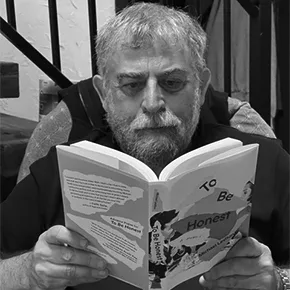
Mark Leviton lives in Roseville, California, where he listens to Bob Dylan, reads George Orwell, and consumes bagels, cream cheese, and smoked salmon like there’s no tomorrow.
Airborne
Seema Lakdawala on Viruses and How They Spread
Studies done with animals in labs don’t totally replicate the way humans get infected, which involves mucus, saliva, and other pathogens. We don’t know the full complexity of that interaction.
September 2025Bird’s-Eye View
Jennifer Ackerman on How Birds Adapt, Survive, and Think
Leviton: How do we evaluate their intelligence without viewing them as feathered versions of ourselves?
Ackerman: Anthropomorphism is a real sticking point in the field. I think that’s changing because a lot of behaviors in birds are in fact similar to human behaviors. But any scientist will tell you it’s not easy to probe the mind of another animal, especially when they have kinds of intelligence that differ from our own. We know how to measure things that we’re good at, like solving physical problems. Scientists may give a bird food in a container that it has to figure out how to open in order to eat. The scientists observe how long it takes the bird to solve the problem and whether it’s showing “behavioral flexibility.” In other words: Can it shift its strategies? Can it innovate when confronted with new challenges? That’s pretty easy for us to measure, but birds also have social intelligence, musical intelligence, and other kinds of intelligence that are harder to measure. For example, we’re still trying to figure out how birds know where they’re going. Humans don’t have the innate capacity to navigate using the earth’s magnetic fields and other information sources.
May 2025Hive Mind
Lars Chittka on the Surprising Brainpower of Bees
Chittka: For me, understanding the minds of bees and other animals inspires a new respect for nature. Many conservation efforts—and there are a lot of people trying to rescue what’s left of the natural world—are motivated by the utility of these animals. This is especially the case with bees and insects. Many people are aware that bees are in trouble and that we ought to do something to help them, because they pollinate our crops. Many fruits and vegetables depend on bees’ pollination services: for example, melons, tomatoes, raspberries, blueberries, strawberries, zucchini, pumpkins, cherries, cucumbers, squash, apples, and citrus fruits.
But that approach can’t work overall. If you’re really trying to protect nature, then it’s a complete package with many species, including annoying ones like wasps. So in addition to the utility argument, we must recognize that many of the animals around us are likely sentient—and thus quite possibly capable of experiencing the deterioration of their habitats. This creates a responsibility for us to do something about it.
March 2025Home Sick
Emily Kenway on the Health-Care Crisis No One’s Talking About
Once we start to recognize that most of us will, at some point, have to step out of our professional role to provide care, then we have to transform how we’re running our economies. At the moment, our economies are relying on these hidden tragedies that befall women behind closed doors. All to keep the wheels of industry turning.
June 2024Under Fire
Thor Hanson on How Animals and Plants are Adapting to a Warming World
We’ve got changes playing out now with astounding rapidity. Biologists can see natural selection occurring over the course of a field season. . . . Studying these adaptations can help us identify the issues that are most important and the species that need the most help. This may not make us worry less, but it can help us worry smarter.
January 2024No Small Wonder
Dacher Keltner On The Science Of Awe
Emotions aren’t discrete bubbles. They are blending into each other all the time. You might be feeling awe and wonder at the miracle of life, and also realizing that we all die, which perhaps moves you closer to terror. In our work we try to find what’s true in it all.
September 2023All In The Family
Faith Friedlander On Adoption And Parenthood
Not every adopted adult needs the same thing, but I do think most adoptees, at some point in their lives, will want to look into their past. And someone in their birth family might come searching for them. With the Internet and readily available DNA tests, it’s not so easy to hide anymore.
October 2022Made To Be Broken
Richard Albert On The Difficulty Of Amending The U.S. Constitution
The way Americans interact with each other now has made it clear that the Constitution was perhaps never deserving of all the praise it’s gotten.
August 2022Gray Matter
Daniel J. Levitin On Why Memory Isn’t So Black And White
Seeing and hearing are selective. We register what is needed at the moment and unconsciously ignore other input. It may seem that our eyes are like a camera and our ears are like microphones, objectively recording everything, but . . . our senses are not at all like those devices.
February 2022High Time
Alyson Martin And Nushin Rashidian On The Move Toward Legalizing Cannabis
Cannabis is legal in Canada for both adult and medicinal use. Mexico could legalize cannabis by the end of this year. The United States is going to be squeezed on both sides, with Americans vacationing in Cabo San Lucas and Montreal, using legal cannabis, and perhaps wondering why their own country isn’t moving forward with similar policies.
July 2021

Has something we published moved you? Fired you up? Did we miss the mark? We’d love to hear about it.
SEND US A LETTER