When I Was Born
As if, when I was born, the doctor gave the blanket
I was swaddled in to a police hound to sniff,
and while judicial clerks tabulated future statistics
for how many policemen would have to be hired,
                          I slept in a dream of lavender folds
                          in my crib,
                          my flesh over my bones
                          like those long floor-to-ceiling curtains
                          in palaces,
                          I dreamed another world beyond me,
                          of horses and women and food,
                          of fields and dancing and songs,
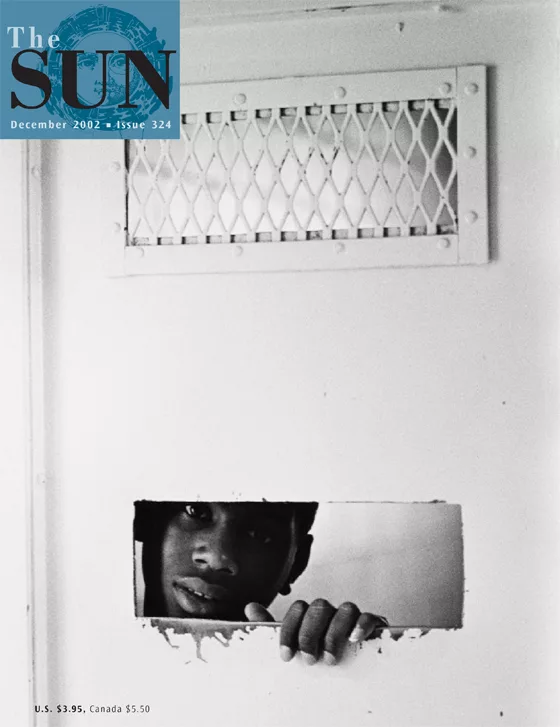
unknowing that when I was carried from the hospital
in my blanket,
a police dog snarled at my passing,
a new set of handcuffs was being made,
and in the distance a new prison was being built.

At an early age
a heavy Bible was placed in my hand,
You got to get down and work hard, they told me.
You can’t be talking back.
Whatever you do, watch out not to get in trouble,
            ’cause they’ll be looking for you,
            expecting you to get in trouble, they said.

Trouble was the furthest thing from my mind
when I knelt in a church
or climbed the rickety choir-loft stairs to sing,
o love was me, o happy was I, young child
                          hypnotized by the stained-glass-window
                          eye of God
                          circled above the altar back wall
                          dawn-effused and made glow with blue robes
                          angels and doves
                          as I sang Latin hymns,
                          opening my mouth as wide and wholesome as a frog
                          on a pond in the full-moon summer night,
while shadows of pigeons flurried on the edge of the stained-
            glass window —
Lord, I didn’t see no blood of mine spilling on the dirt,
Lord, that others thought I was bad
                                       had predestined my fate
                                       to fall early,
                                       struck later in life
                                       from the blind side
                                       by one clean sweeping stroke of law
I couldn’t foresee
because I was too blinded by the blaze of beauty around me,
too in love with an old man’s walk and cane
to even think he might curse a mean fate on me,
too in love with vigorous icy air of dark dawn
to think others might be plotting my future
at the hands of jailers.

But violence followed me.
On a cold November dusk, boys’ brown arms cold and numb,
noses sniffling, dust in our hair, smudged cheeks,
while bats flitted like black gloves
from leafless trees, and on the distant freeway semis
gutted the air with growls,
                          while all the boys on the playground were blending
                          into the shades
                          of evening,
I turned from the sandbox,
my nose running mucus, my fingers dark crickets
in the sand, I turned and saw
                             a big Indian boy by the fence,
                             from his hand a thick coil of chain
                             slurped
                             onto the ground, whiplike,
                             and across from him a blond boy
                             with blue eyes, in a torn T-shirt
                             in midwinter, both approached
                             warily as tigers on my brother,
                             backing him off into the fence,
and then by an elm tree I saw a huge brown stone
on the ground,
and I dashed for the rock, picked it up, ran at the white boy
who had hit my brother and lunged at him with the rock,
hitting him on the head,
                                                    falling back on the ground with him,
                                                    at five years old, war-blood on my hands,
my heart screaming
                                       as if it had been bitten and ripped
                                       to shreds by bats
and since then
violence has always followed me —
in trees, down sidewalks, crouched in bushes, behind houses,
it leaps on me as I stand to confront
other bullies beating a thousand other brothers and sisters.
Tire Shop
I went down yesterday
to fix a leak in my tire. Off Bridge Street
there’s a place, 95 cents
flats fixed,
smeary black paint on warped wood plank
between two bald tires.
I go in, an old black man
with a Jackie Gleason hat, greasy soft,
             with a mashed cigar stub in his mouth
and another old Chicano man
working the other
pneumatic hissing tire changer. The walls are black with rubber,
soot, blown black dust everywhere
and rows of worn tires on gnawed board racks for sale,
air hoses snaking and looped over the floor.
I greet the two old men,
             “Yeah, how’s it going!”
No response.
They look up at me as if I just gave them a week to live.
             “I got a tire needs a tube.”
Rudy, a young Chicano, emerges from the black part of the room
ponytailed and plump,
walks me out to my truck and looks at the tire.
“It’ll cost you five bucks to take off and change.”
             I nod.
He tells the old Chicano, who pulls the roller jack
             with a long steel handle outside,
and I wait in the middle of the grunting oval tire-
changing machines
while the old guy goes out and returns with my tire.
             He looks at me like a disgruntled carny
             handling the Ferris wheel
for the millionth time
and I’m just another ache in the arm,
             a spoiled kid.
I watch the two old men work the tire machines,
             step on the foot levers that send the bars around,
flipping the tire from the rim,
and I wonder what brought these two old men to work here
             on this gray evening in February —
             are they ex-cons?
Drunks or addicts?
He whips the tube out. “Rudy,” he yells,
             and I see a gaping hole in the tube.
“Can’t patch that,” Rudy says,
             then in Spanish slang says, “No podemos pachiarlo
— we got a pile of old tubes over there, we’ll do it for ten
dollars.”
At first I think he might be taking me
             but I edge away from that thought
             and I watch the machines work
the spleesh of air
the final begrudging phoof! of rubber popped loose
             then the holy clank of steel bar
against steel
and gently the old Chicano man, instead of throwing the bar
on the floor,
takes the iron bar and wipes it clean of rubber bits
             and oil
and slides it gently into his waist belt
             in such a way
I’ve seen a mother wipe her infant’s mouth.
And I wonder where they live, these two old guys.

I turn and watch M*A*S*H on a TV suspended from the ceiling,
             six o’clock news comes on,
Huntington Beach blackened with oil.
Rudy comes up behind me and says,
“Fucking shame they do that to our shores.”
I suddenly realize how I love these workingmen
working in half dark with bald tires
like medieval hunchbacks in a dungeon.
They eat soup and scrape along in their lives —
how can they live, I wonder, on 95 cents a tire change
in today’s world?
I am pleased to be with them
and feel how barrio Chicanos love this too —
how some give up nice jobs
in foreign places
to live by friends working in these places
and out of these men revolutions have started.
             The old Chicano is mumbling at me
             how cheap I am

when he learns my four tires are bald
             and spare flat,
             shaking his head as he works the tube into the tire well.
I notice his heels are chewed to the nails,
his fingernails black,
his face a weary room-and-board stairwell
             of a downtown motel
given over to drunks and derelicts, his face hand-worn
             by drunks leaning their full weight on it,
wooden steps grooved by hard-soled men just out
             of prison, a face condemned by life to live out more days
             in futility.
I bid goodbye to the black man chomping his ancient cigar,
             the Chicano man with his head down
and I feel ashamed, somehow, that I cannot live
             their lives awhile for them.
Grateful they are here, I respect such men who have stories
that will never be told, who bring back to me
             my simple boyish days, when men
in oily pants and grubby hands talked in rough tones
             and worked at simple work, getting three meals a day
             on the table the hard way.

They live in an imperfect world,
unlike men with money who have places
to put their shame,
these men have none —
others put their shame on planes or Las Vegas trips,
these have no place
to put their shame on but their mothers
their kids
             themselves,
unlike men who put their shame
on new cars
condos
bank accounts
so they never have to face their shame,
             these men in the tire shop
             have become more human with shame.
And I thought of the time my brother betrayed
             me, leaving me at fourteen
when we’d vowed we’d always be together,
             he left to live with some rich folks
and I was taken to the detention center for kids
with no place to live —
             I became a juvenile
             filled with anger at my brother who left me alone.
These tire-shop men made choices
never to leave their brothers,
in them I saw shame with no place to go
             but in a man’s face, hands, work and silence.
             And as I drove away, nearing my farm,
I saw a water sprinkler shooting an arc of water
             far over the fence and grass
it was intended to water —
             the fountain of water hitting a weedy stickered spot
that grew the only single flower anywhere around,
             in the midst of rubble, brush and stones
             the water hit
and touched a dormant seed that blossomed all by itself
             into what it was
despite the surroundings.
And something made sense to me then
and I’m not quite sure what —
             an unconditional love of being and living,
             taking what comes one’s way
             with dignity.
But that night in my dream
I cried for my brother as he was leaving,
             all the words I used against myself,
             rotten, no good, shitty, failure,
             dissolved in my tears,
my tears poured out of me in my dream and I wept
for my brother and wept when I turned after he left
             and I reached for my sister and she was having coffee
with a friend —
             I wept in my dream because she was not available for me
when I needed her,
and all my tears flowed, and how I wept, feeling my pain
             of abandonment,
             all my tears became that arc of water
             and I became the flower, by sheer accident in the middle
             of nowhere, blossoming. . . .
These poems are reprinted from Healing Earthquakes, by Jimmy Santiago Baca. © 2001 by Jimmy Santiago Baca. They appear here by permission of Grove Press.