The world does not become less “unknown” in proportion to the increase of our knowledge about it. . . . Our experience of the world involves us in a mystery which can be intelligible to us only as mystery. . . . Our true home is wilderness, even the world of every day.
— Henry Bugbee, 1915–1999
1. Language has vertical limits. Not just any speaker can pack up his speech and tote it at will to a higher elevation. Where there is a will, there is as often a major embarrassment as there is a way. Like a gymnast on parallel bars, the speaker or writer who successfully conveys exaltation must possess sufficient mental muscle to hoist himself above the level of everyday verbiage without appearing to strain. Again like the gymnast, he must be able to lift all of himself, all by himself. It is not the help of speech coaches and writers, height of pulpit, number of advanced degrees, thickness of thesaurus, histrionic techniques, or any such contrivance that truly lifts language: it is personal integrity. It’s the ability to imbue one’s words with the physical momentum, intellectual clarity, and psychic depth that only the actual deeds of a life can provide. If Martin Luther King Jr., in his famous Washington, D.C., speech of 1963, had said, “In my heart, I know I’m right,” and if Richard Nixon, in his resignation speech a decade later, had said, “I have a dream,” the world would have remembered King’s heart and forgotten Nixon’s dream. It is not just the words that make words memorable.
I believe this is one reason why so many people, often decades after the fact, still remember certain statements the philosopher Henry Bugbee made to them. I, too, remember in unusual detail the first time I heard Henry speak:
In July of 1993, I moved from Oregon to Missoula, Montana. A few weeks into my first summer here, I listened to a local radio call-in show devoted to Norman Maclean’s famed novel A River Runs through It. I normally take pains to avoid “literary educational opportunities,” my entire working life being one relentless such opportunity. I tuned in to this show not for literary reasons, but out of fly-fishermanly regard for my esteemed new neighbor, the Big Blackfoot River — the river of the book’s title. I was pleasantly surprised, though. Two of the Maclean experts turned out to be astute. And, to keep things tense and interesting, the third was a crackpot.
My apologies to this fellow for calling him a crackpot. Special apologies if he’s reading this and turns out to be handy with his fists. All a crackpot is, by definition, is a vessel that won’t hold water. I often don’t. What brought the word to mind in this case was the fellow’s claim that Maclean’s novel was just a slick literary “coverup attempt.” He loved this term, “coverup.” He said that Norman was “covering up” — with useless love, useless hindsight, and treacherously beautiful prose — the fact that the Macleans were a dysfunctional mess of a family. He said that Norman and his father oppressed every woman they knew, denied every complex thing that happened to them, and failed to own up to the brother Paul’s need for psychotherapy and an alcohol-treatment center. As several call-in contributors pointed out, in Paul Maclean’s day there were no therapies or treatments besides the whiskey bottles and gambling halls he so faithfully patronized. The coverup expert never budged from his position. He was finally simply buried by articulate disagreement from callers who loved Norman’s treacherous book.
The radio show changed gears: two local fishing guides and a retired fly-fishing philosophy professor came on the air, not to philosophize, but just to chat about the sudden national mystique around fly-fishing. No sooner had the host and guides launched their discussion, though, than the old professor veered off topic to make some of the most insightful comments I’ve ever heard on A River Runs through It. The show ended with the prof’s comments, as it should have: they were authoritative and climactic. Then, a couple of weeks later, as happens in small towns, friends invited me to dinner — and there the old professor sat.
It was Henry, of course. And after we were introduced, I told him how much I’d enjoyed the show — especially his contribution to it. Henry thanked me, said that he, too, had enjoyed the broadcast, but confessed to a very inexact recollection of what his contribution had been.
I should point out that this was before Henry’s stroke or his brain disease: the inability to remember his own animated words was a lifelong attribute. Henry was one of those people who zeroes in on the direction of a conversation, then so loses himself in its flow that, though he’s left with a profound sense of what we might call the “hydraulics” of the situation, he retains little memory of the specific and often wonderful things that he himself so often says.
This is a fine way of maintaining one’s humility. But since I happen to be the sort who remembers lots of the clever things that I say, I decided, there at the dinner party, to try to mess with Henry’s humility by showing him how bloody insightful he’d been about A River Runs Through It, and to see whether I couldn’t puff him up a bit.
I told Henry that he had evoked the novel’s famous oatmeal scene: little Paul Maclean, aged five or so, sitting at the table before a heaped bowl of oatmeal, silently refusing even to taste this food that, as Papa Maclean puts it, “we Scots have been happily consuming for thousands of years.” Paul is not swayed. Nor will his father excuse him. A classic battle of wills. The rest of the family finishes eating and leaves the table. The boy remains, looking small and vulnerable. He doesn’t complain, doesn’t squirm, doesn’t display any emotion: he just sits before the ever-more-monolithic-looking oatmeal, refusing to touch it, till we realize, as does his father, that young Paul Maclean will sit there forever before he submits.
It was a scene, in the Robert Redford movie of the book, that one could easily describe as “cute.” But on the radio as Henry conjured it, there was tacit violence in the father-son impasse, a frightening intractability on both sides. And Henry, on the air, summarized this intractability thus: “For all the love and admirable qualities of the father, it was, one felt, his dogmatic stance that prevented grace from flowing in the son.”
This sentence rang in me like a bell. It underscored everything I love about A River Runs through It: why the story feels so tragically inevitable; why the book speaks to so many of the pious parents and renegade daughters and sons who’ve read it; why Paul’s death is so shattering to his father especially, for in that death we see how the father’s greatest strength — his rock-solid faith — somehow became a mere rock, a dead weight, when he tried to will it to his son. Above all, Henry’s statement helped me to see why Paul’s fly-fishing is so central to this story, and so hauntingly beautiful: in this willful young man in whom the flow of grace is blocked, fly-fishing is the one pursuit, the only pursuit, in which we literally do see “grace flowing in the son.”
Well, back at the dinner party I said more or less what I’ve just written. And Henry’s reaction amazed me. His eyes filled; he seemed half overcome. With a radiant smile and in a voice close to a gasp, he said, “You did that very well!”
I quickly pointed out that all I’d done was parrot him back to himself, but Henry refused any credit. And the more I thought his refusal over, the more impressed I was with it. The trout we catch in these hard-fished Montana rivers have often been caught before; the day we catch one ourselves, we are no less alone on the river, and the trout is no less beautiful for its previous capture. In Henry I’d met a man with no sense of proprietorship in the presence of true words. In one sense I’d been, as I said, a mere parrot, but in another sense I’d plucked Henry’s insight off the radio and taken it to heart. Henry honored this second capture as the solo philosophical event it was. He was loving a neighbor’s insight as one loves one’s own. He was being a father whose nondogmatic stance let grace flow in an adoptive son.
2. I walked around Missoula with Henry a few times after his stroke, and then his brain disease, had struck. “Walk” is an exaggeration: a lifelong athlete and mountain climber, Henry now tottered along while I held his arm and struggled to find a gear that allowed my longish legs and restless nature to mesh with his knee brace and cane. Henry was a physically beautiful old man, his shock of white hair visible from a good distance, his piercing eyes and weathered face more appealing the closer he drew. He was a legend in Missoula. During our walks he attracted curious glances and warm greetings like a magnet. Henry’s part in the exchanges was always the same: he smiled beatifically at a known face, then extended a firm grip and a good word. He squeezed your hand hard and shook it around as if you’d won a race. He had a way of clenching his teeth as he greeted a friend, as if he were biting, with pleasure, into the encounter.
The reactions to his greetings were more varied. News of a great man’s disintegration travels fast in a university town. Some spoke to Henry as if he had transcended the physical and become some kind of holy man; others spoke with an exaggeratedly loud and simplified friendliness, as if he’d become a toddler, or a tragic but likable village idiot; a few others, whom Henry clearly recognized as we approached, pretended not to see him and ducked away before close proximity forced them to witness Henry’s “tragic condition.”
For my part, I never stopped cherishing Henry’s company, regardless of his condition. My feeling was: what better end than the one we were seeing for a man who believed as Henry did? He hadn’t lost anything we wouldn’t all be losing. According to our mutual hero, Meister Eckhart, Henry hadn’t lost anything that was ever truly his: he was just returning some things that, as he’d always insisted, were his only on loan in the first place. What struck me about Henry to the end was what wonderful tools he’d been loaned, and how lovingly he continued to martial the few tools he hadn’t yet been forced to return.
I don’t wish to seem wiser or more detached than I am. In the five years of our friendship, I grew exceedingly fond of Henry’s unexpected phone calls, his warm, high-pitched voice, his sometimes fumbling, sometimes gorgeously chosen words, his raunchily reverent fishing stories; I loved the way he looked at his wife, Sally, when she entered a room; I loved the solar smile he would turn on his friends at times, nonplussing us when he simply left it on us, full beam, for such a long, long moment that we’d finally have no choice but to realize that this was no social smile, no rote friendliness: this was what it felt like to be completely seen and loved for a moment.
As it turned out, Henry had to return every borrowed gift but his inert body and his heartbeat before he left us completely, and his harsh losses made me, and all who knew him, intensely sad at times. But Henry lived the kind of life that made it impossible to mourn his losses without betraying the life. Because of this, one saw a beautiful struggle in his family and friends the last few years. Our awareness that Henry was leaving us and our urge to grieve were cut by a simultaneous wish to honor the fact that Henry had stood, lifelong, by traditions holding that the loss of a loved one is not so much an occasion to mourn as an occasion to be true to love. “To give thanks lyingly,” said Jalaluddin Rumi, “is to seek the love of God.” In the eyes of those who greeted Henry as his mind and body failed, I was touched again and again by this “lying thanks,” this seeking of love.
I saw panic in some eyes, too. When those who live the life of the mind see a friend taking leave of the mind, there is bound to be terror. But, while I still have a mind with which to be afraid, I embrace Rumi’s “lying thanks,” Eckhart’s “emptiness,” Zen’s “no-mindedness,” Christ’s “poverty of spirit.” This mind of mine was never mine to start with; in sleep and in dreams I lose it every night. Henry, in his final state of mind, reminded me of that Chinese (or maybe Japanese) roshi, his name now lost to me, who when asked, “What is my real self, O Master?” answered, “Mountains and rivers and the great earth.” Henry reminded me of that Japanese (or maybe Chinese) poet, who when asked, “What is self?” answered, “Rambling in the mountains, enjoying the waters.” He reminded me of Jim Harrison (finally, a name I remember!), who in his “Cabin Poem” says,
I’ve decided to make up my mind
about nothing, to assume the water mask,
to finish my life disguised as a creek,
an eddy, joining at night the full
sweet flow, to absorb the sky,
to swallow the heat and cold, the moon
and the stars, to swallow myself
in ceaseless flow.
Henry’s condition reminded me, finally, that though I once knew the names of the makers of all the above statements, what difference do names make if the statements are true? A man once given to speak sentences such as “There is a stream of limitless meaning flowing into the life of a man if he can but patiently entrust himself to it” drew slowly toward the end of a life of patient trust. The few people who ducked away when we approached on the street made me want to shout: “Come back! Don’t be pathetic! There’s nothing scary or sad here! A wonderful old man is falling slowly to pieces. Come say hi to him and his pieces while you’ve got the chance!”
One of the last times I saw Henry, a circuit crossed in his head, and he greeted me as “Mike.” I say: Close enough. I say Henry finished his life disguised ever more perfectly as a creek. I say, Call me David, call me Mike, call me Ishmael, and give me, please God, the courage and grace to embrace the same disguise. The courage to become mountains and rivers and the great earth. The courage (to steal it straight from Henry) to make wilderness my true home.
3. Some teachers never retire, despite their retirement. Henry, for instance. Almost every philosophical poker hand the old sharp plays in his book of reflections, The Inward Morning, will still win the pot. The reason Henry couldn’t and can’t retire is this: when you align yourself with emptiness and no-mindedness, then spend your life teaching that alignment, what you’ve taught goes on teaching itself whether or not you’re even alive, let alone whether or not you’ve retired.
I experienced the nonretirement of Henry one recent December, when I was invited to spend three days, in my capacity as a novelist, with forty students at a small college in Oregon. This was a Christian institution, mind you, with a Christian plan for my visit. What the students wanted me to talk about, it turned out, was my “personal faith” and “personal experiences as a churchgoer.”
This plan presented two problems. One: the phrase “personal faith,” in this context, is impossibly paradoxical. As soon as you talk publicly about personal life, personal finances, personal anything, it’s no longer personal. Two: upon attaining religious autonomy more than thirty years ago, I began to worship at Henry’s church, the church of “wilderness, our true home.” As a result, I have since enjoyed a grand total of zero personal experiences as a churchgoer.
Bivouacked then among the forty young Christians, with a single night to prepare my remarks on personal faith and personal churchgoing in order to earn my personal honorarium, I felt disturbingly cognizant of a slight vocational resemblance between me and Pat Robertson. I wondered: Must I, too, feign piety to get paid? Or should I take things in a more Swaggartish direction and speak forthrightly about how sitting in church pews, shortly before I fled them, used to give me such uncontrollable sexual fantasies that I’d pretend to be reading the hymnal in order to cover my erections and that that’s as close as I ever came to being grateful for hymnals? The options looked dark. The hour grew late. There was no booze, on that accursedly clean-cut campus, to fuel even a madcap, nightcapped musing. What a relief, suddenly, to recall a deft card hand played by Henry in The Inward Morning, aimed at the word wonder.
I didn’t have Henry’s book with me, but I did recall him saying something like “The tenets of religious belief are not intended to be the termination of wonder: they’re intended to be occasions for it.” This felt like a desirable entry point into my thoughts on “personal faith,” in that it would at least put an end to any resemblance between me and Pat Robertson. I could answer the “personal faith” question by ignoring its Christian connotation, speaking instead of something in which I do have faith — namely, this state so beloved by the never-retiring Henry: the state called “wonder.”
I grabbed my pen and legal pad and set to work, finding it incredibly helpful not to have The Inward Morning with me, since this freed me to crib Henry’s thoughts with shameless abandon. The next day I gave my forty Christian charges a talk that began like this:
My earliest conception of the meaning of the word wonder was a feeling that came over me as a little kid whenever I pictured the shepherds on the night hills above Bethlehem. Even when these shepherds were made of illuminated plastic, standing around in Christmas dioramas on my neighbors’ lawns, their slack-jawed expressions of wonder appealed to me. Years later, having become literate enough to read, I learned that these shepherds were also “sore afraid.” But — a personal prejudice — I didn’t believe in their afraidness. I believed the star in the east and the angels smote them with wonder, and that once wonder smites you, you’re smitten by wonder alone. Fear can’t penetrate till wonder subsides.
Wonder is my second-favorite condition to be in, after love, and I sometimes wonder whether there’s a difference: maybe love is just wonder aimed at a beloved.
Wonder is anything taken for granted — the old neighborhood, old job, old life, old spouse — suddenly filling with mystery. Wonder is anything closed suddenly opening; anything at all opening — which, alas, includes Pandora’s box, and brings me to the dark side of the matter. Grateful as I am for this condition, wonder has — like everything on earth — a dark side. Heartbreak, grief, and suffering rend openings in us through which the dark kind of wonder pours. I have so far found it impossible to feel spontaneously grateful for these violent openings. But when, after struggle, I’ve been able to turn a corner and at least accept the opening, the dark form of wonder has invariably helped me endure the heartbreak, the suffering, the grief.
I believe some people live in a state of constant wonder. I believe they’re the best people on earth. I believe it’s wonder, even more than fidelity, that keeps marriages alive. I believe it’s wonder, even more than courage, that conquers fear of death. I believe it’s wonder, not D.A.R.E. bumper stickers, that keeps kids off drugs. I believe, speaking of bumper stickers, that it’s wonder, even more than me, whom I want to Hug [My] Kids Today, because wonder can keep on hugging them long after I’m gone.
4. One warm May evening a couple of years before he died, Henry and I sat in lawn chairs on a rocky point overlooking the runoff-swollen trout stream that runs through my backyard. This evening marked the first time I’d seen Henry since he’d suffered a severe stroke. The hundred-yard walk from my house to the point was a slow, serious undertaking. The stroke had clearly returned a few pieces of my friend to the “mountains, rivers, and great earth.”
As we sat above the fast green water, I told Henry of the spectacular seasonal changes I’d witnessed on the creek, of encounters with local wildlife, of fish I’d hooked in the flow right before our eyes. Henry listened calmly, but seemed more interested in the sound of the stream.
I stopped my babbling and let the creek take over. The evening was beautiful, the sun warm, and I was relieved at once by the cessation of my own voice. I was sinking into things, enjoying the curious tension that rises and falls when we sit long, without speaking, with a friend — when I noticed something odd going on with Henry.
He was seated to my right, and he’d begun to slump way over on the right side of his chair. The ground beneath our chairs was rough and rocky. He kept slumping further. Fearing he’d fall — perhaps some strange symptom of his stroke had set in — I surreptitiously placed my foot on the base of his chair and held it firmly down.
Henry’s right arm was lowered clear to the ground. I looked away, feeling embarrassed somehow. I could hear his fingers fumbling around in the rocks, feel his chair writhing as I steadied it with my foot. I was just beginning to think he was having another full-on stroke when he suddenly straightened, and the chair came back into balance.
Henry did not look at me. Instead, he leaned slightly forward, briefly studying the surface of the swollen creek.
Then his right arm flashed. A large flat stone I hadn’t even known he was holding sailed down over the green eddy, hit the water, bounced up in a sunlit crown of spray, hit the water, bounced again, hit the water, bounced again. A triple skip! From a bad angle, out of a lawn chair, over rough water, by an eighty-one-year-old who’d just had a major stroke. On the authority of a life spent skipping skippers, I tell you: this throw was an ecstasis.
I turned. Henry was still studying the creek, but his “innocence” was a sham now. The slow turn of his head, toward me, then away again, was eagle regal. He was painstakingly careful to wear no trace of a smile. But the look in his eyes as they met mine, then turned back to the creek! I tell you . . . I tell you . . .
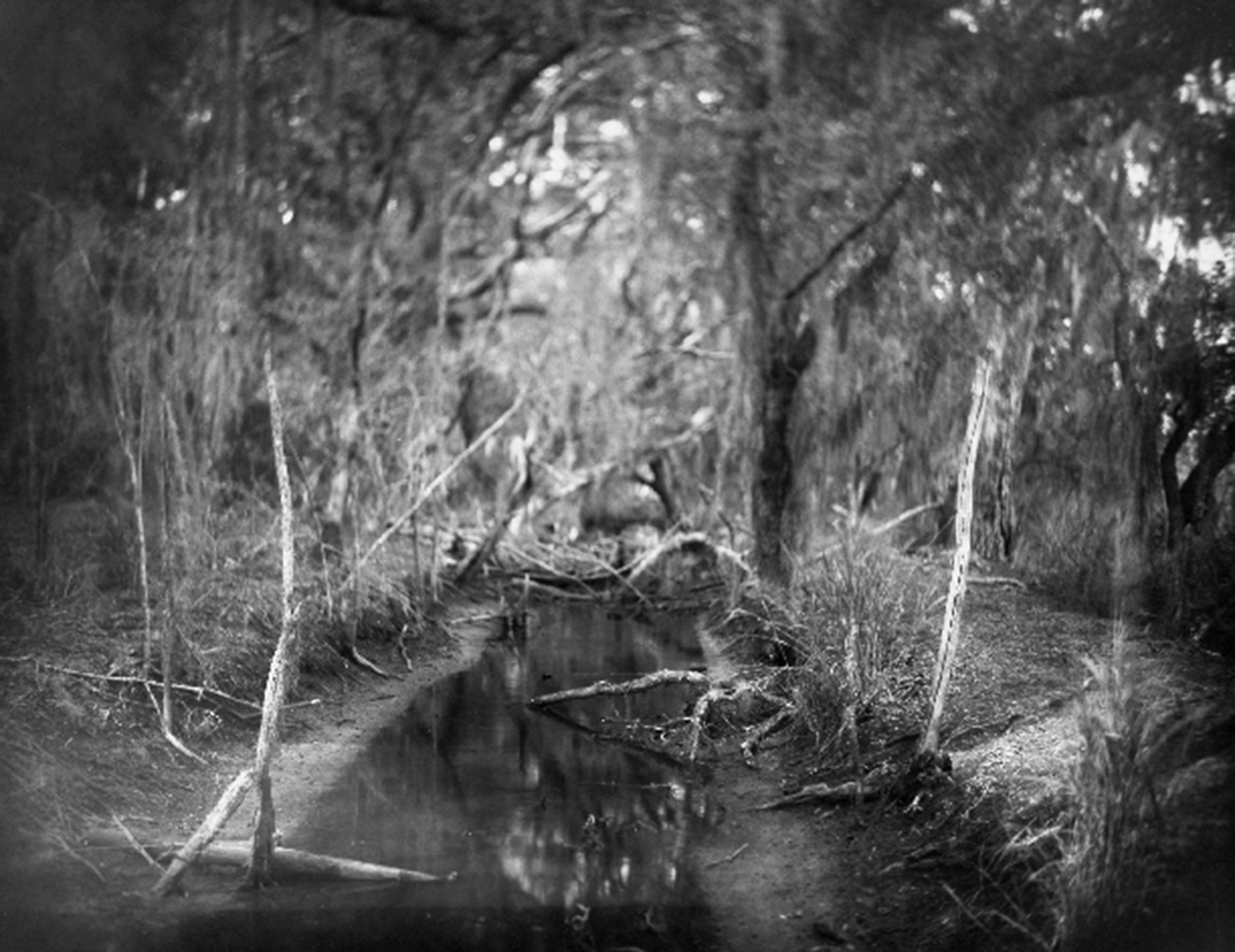
5. I don’t know how to describe Henry’s presence the last time I saw him except to say that he seemed no longer there in any sense but the anatomical. Though his body was being well cared for, his consciousness had returned to the mysterious place consciousness goes after, as Tom Waits puts it, “the wheels come off.” Henry’s wheels came off in this order: he lost the ability to take care of himself, then the ability to walk, then the ability to recognize his friends, children, and finally even his wife, Sally. Meanwhile, he lost the ability to convey a thought, then the ability to speak, and finally the ability to recognize food or water in his own mouth. With this last loss came the loss of the ability to eat and drink. So loss of life followed. But not nearly so soon as one would think or hope or pray. Henry’s long, slow loss of everything was a mystery intelligible only as mystery. It was a dark, dark wonder. It was wilderness.
Sally had to bring me to the Home for Those Whose Wheels Have Come Off, lead me inside, show me to Henry’s room. In the room next door was a frail old woman who, Sally had learned, had been the poet Dylan Thomas’s last extramarital lover. To give me time alone with Henry, Sally went in to read Thomas’s poems to this woman. I watched the reading begin. The woman’s eyes, when we first saw her, were staring straight ahead at a white curtain. When Sally greeted her, then introduced me, her face never changed expression, and her gaze never swerved. The Dylan Thomas poems commenced. The gaze didn’t change. So much for poetry in the face of mysteries intelligible only as mysteries.
I went to try my luck with Henry. How did it feel, being with such a man after his wheels had come off? I’m still pondering that. I’ll ponder it till my own wheels go. I took the chair by his bed and said hello, and when Henry turned slowly to me, I took his hand, held it, and vowed not to let him have it back unless he absolutely seemed to want it. He never did. He stared at me a long while, said nothing, but struggled, I felt, to figure out just who the hell I was. We still had that in common.
There was no creek to turn to, and Henry had been silent for days, so I had a monopoly now on the babbling. I took advantage of it. I told Henry, despite some embarrassment about how kiss-ass it sounded, some anecdotes about how much he’d meant to a variety of wonderful people. Henry stared at me the same way Dylan Thomas’s last lover was staring at the sound of Dylan Thomas’s poems.
I told Henry stories about the changing of the year — how the Indian summer of 1999 was the most adamant I’d ever seen, the slowest to pass into fall. He stared at space in response, he breathed, he lived on, while the resemblance between his state and the summer of ’99 reverberated in the air.
I played my sorry trump card. I told Henry I’d been having the best trout fishing of my life, thanks to this summer that refused to die. Then I launched a fish story. Henry just stared. But I was in my element now. Telling fish stories felt almost like an exchange between us, since, when you start telling fish stories, it makes sense that people just stare.
I told Henry of a spring-fed pond I’d discovered in a huge grassy field in the middle of nowhere; a pond that looked and felt like something in a dream. I told him, truthfully, of lying behind a log on a sandbank, four feet from this pond, while twenty-inch rainbows ate live grasshoppers I tossed to them with my hands. I told Henry, truthfully, of a twenty-seven-inch brown trout I’d caught in this dreamlike pond, how it had flashed at but refused an artificial grasshopper, flashed at but refused even real grasshoppers kicking along on the surface with no hook attached. It then rose to an artificial blue damselfly, though no such insects had been in the air for weeks: rose, perhaps, out of yearning for this blue harbinger of high summer. I told how the brown threw my fly on its first hysterical leap but was spinning so violently that the leader lassoed its snout and the thrown hook drove itself, a second time, into the trout’s nostril. I told how the pain of a hooked inner nose made the big fish leap more relentlessly than any brown I’d ever seen; leap itself to early exhaustion; leap itself, weakly, right into my waiting hands. I told how I sat for the longest time, cross-legged in twelve inches of clear-as-air spring water, with this twenty-seven-inch, yellow-and-gold-bodied, crimson-spotted animal resting in the shade of me, allowing me the pleasure of watching it fin and breathe.
It was, I felt, a pretty good story. But Henry just stared. So I let one of my own wheels come off: my truth wheel. I told Henry of the forty-two-inch brown trout I’d hooked on the very next cast, then watched for his reaction. He stared. So I rared back and told him of the ninety-inch brown. The largest ever seen, anywhere. Forget Loch Leven browns; this was a Loch Ness fish. Lived on geese, ducks, and spring calves that fell in the pond. He didn’t object. His stare was not eagle regal, but now it at least felt like a response — felt like the response my nonsense deserved. This made me a bit happier.
I called off the last two browns with a “not really.” Henry stared. I said, “Not only do your friends and family and Sally miss you; I’ll bet you miss you, too.” He said nothing. The man before me had once written:
As we take things, so we have them; if we take them in faith, we have them in earnest; if wishfully — then fantastically; if willfully, then stubbornly; if merely objectively, with the trimmings of subjectivity — then emptily; and if in faith, though it be in suffering, yet we have them in earnest, and it is really them that we have.
And now he and I had this.
I looked at my friend carefully, knowing suddenly that it was for the last time. It seemed helpful, as I looked — at least, in terms of controlling emotion — that our visit had felt so one-sided. Henry seemed beyond visiting. He was no longer Henry exactly: his body had become a temple closed seven days a week, with the Henry I loved locked inside. But when that old temple suddenly, competently cleared its throat and I heard, in the clearing, the tone of Henry’s beautiful, vanished voice — Henry the unexpected; Henry our anam ˙cara — all kinds of things rose in my chest and throat and eyes, and I had no more words for either of us that weren’t silent and weren’t prayer.
Not till December did Sally call to say that Henry’s heart had stopped.
At the sound of her breaking voice after so many months of “patient trust,” “the readiness to receive,” and “taking in faith,” I felt waters rise behind my face, felt a fresh crack in my heart, felt mind, mouth, and heart fall open and knew — via raw ignorance and dark wonder — that these are the waters of life; that grasses, trees, and flowers grow from such cracks.
Henry’s slow departure, hard as it was, is “the world of every day.”
“Our true home is wilderness.”
6. Indian Summer ’99
The sky a blue so outright it falls like snow to the ground. The air a beam-prone gold that pierces the blue, and me, each time I breathe it. The days, dawn to dusk, lit by a low, long-shadow-making sun that brings little warmth but finds the integrity in everything: pine bark, alluvial stones, tansy stalks, the spent garden, nine cords of fresh-split firewood, the browned backs of my wood-battered hands.
No wind. No breeze. Stasis. A lone fox barks somewhere, just once. After forty-seven years I realize it’s gravity, more than anything, that tilts me, come evening, to the nearest river. Today the flow slides by in silence, a quavering, less-convincing world splayed upside down across its surface. Cricket songs slow in the gathering chill. The grasshopper’s hop grows shorter. I watch sudden silver rises on the thick, refractive water. Watch turned aspens shoot false fire through each rise. The cliff-swallow colony’s been vacant for weeks. Three days ago the ospreys set out for Mexico. A dull red water-birch leaf taps its blind way down through branches, softly daps the river, finds sunlight, turns crimson, slides blazingly away. Fifty winter crows and a single trailing magpie pass, without comment, into the mountain’s growing shadow.
More silent rises. More false fire. More breath,
more blue, more gold. “The sky is vast
straight into the heavens. A bird flies
just like a bird.” Even in
Montana, how I long
for Montana.
“Six Henry Stories” is excerpted from My Story as Told by Water, by David James Duncan. © 2001 by David James Duncan. It appears here by permission of Sierra Club Books. A part of the essay previously appeared in Orion.