About a month after Donald Trump was sworn in as US president in 2017, a colleague approached my desk at The New York Times and jokingly asked how it felt to be an “enemy of the people.” I hadn’t paid attention to what the president was tweeting that day, and it was the first time since he’d been inaugurated that he’d made such a claim. Granted, in 2017 we weren’t accustomed to the near-daily assaults on a free press that Trump and his administration have made part of their brand, so it seemed more cartoonish than threatening at the time. It does not feel that way now.
The irony is that I had joined the Times in 2010 after several years working in Russia for the English-language newspaper The Moscow Times. In the 2000s a number of investigative journalists had been killed in Russia, irrefutably because their reporting had been critical of Vladimir Putin’s regime, but I and my colleagues (who did far more investigative work than me) never felt in danger. Relatively few Russians read our paper compared with those who paid attention to the Russian-language independent press. Many of those outlets are gone now, and The Moscow Times reports in exile, from Amsterdam.
Although we haven’t reached that degree of media suppression here in America, the field of journalism faces mounting existential threats. As readers moved into the digital realm in the 2010s, print advertising dried up, and many local and regional outlets went extinct or were purchased by a larger publishing entity like McClatchy, which owns nearly thirty papers across the country. Billionaires like Jeff Bezos and Patrick Soon-Shiong have added national papers like The Washington Post and the Los Angeles Times to their portfolio of assets, and much like the divided nature of our electorate, the remaining national news outlets tend to adhere to the ideologies of their owners—or audience. Investigative nonprofits like ProPublica and publicly funded organizations like National Public Radio all depend on support from readers and listeners, but inflation, stagnant wages, and economic uncertainty have tightened the budgets of many citizens.
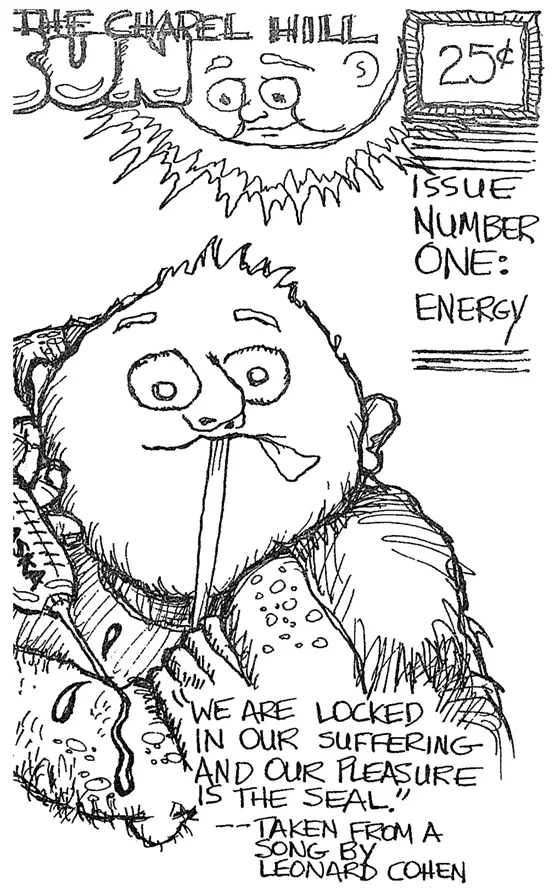
Sheila Coronel, the director of the Toni Stabile Center for Investigative Journalism at Columbia University’s Graduate School of Journalism, has seen firsthand what happens when the act of documenting history becomes a threat to those in power. She was born and raised in Manila, the Philippines, and as a college student during the dictatorship of Ferdinand Marcos, she joined an underground, antigovernment newsletter that was writing stories critical of the regime. With no access to copy machines or mimeographs, she and her cohorts were printing copies of their newsletter by hand. “Imagine how hard that would be,” she told me. “It means counting the letters, putting the stencil on a silk screen frame, and making each page, then making a copy of each page and letting it dry so we could then do it on the back side of that same sheet of paper. We’d be covered in ink.”
The Balita Ng Malayang Pilipinas (News of the Free Philippines) gathered news about corruption, human rights abuses, and opposition to the Marcos regime that would never have been covered by mainstream press there. The staff would print five hundred copies of each issue and distribute them to other news organizations. Coronel was also freelancing for publications in Manila and teaching high school at the time. She was nearly arrested in 1982, and when some of her colleagues were taken into custody and tortured, Coronel was faced with a choice: walk away from that work or go on the run. She had been interested in becoming a lawyer like her father, but he had worked for the Marcos regime. “He was lawyering for torturers: the general who was accused of the assassination of [Senator Benigno] Aquino, the military chief of staff who was accused of plotting the murder of the senator who was the main opposition leader,” she said. “So I thought the law was a very compromised profession.” She quit the underground press and began working for other publications. Then the Marcos regime lifted martial law and allowed the mainstream press some degree of freedom. In 1989, with a new democracy in place and the election of President Corazon Aquino, Coronel founded the nonprofit Philippine Center for Investigative Journalism. (She remains on the board.) The Center sometimes serialized stories of corruption that led to Supreme Court justices and cabinet ministers resigning—and the ouster of President Joseph Estrada in 2001.
In 2006 Coronel was hired by Columbia, which had just set up the Toni Stabile Center. She now resides primarily in New York City, teaching graduate students the principles of investigative journalism in a one-year master’s program. When I arrived at her office last May, she met me outside Pulitzer Hall, where I stood waiting under a statue of Thomas Jefferson gifted to the school by Joseph Pulitzer’s estate. In her office was a small collection of conservative student magazines she had been reading. They’d all been created in the wake of the university’s tumultuous year of protests over the Israeli assault on Gaza, and she felt it was important to learn what they had to say. “There is an emerging right-wing ecosystem that most of us who just read liberal media have lost track of or don’t take seriously,” she said. “If you’re used to a liberal, pluralistic media framework, it bothers you. But then we ignore a huge chunk of what ordinary Americans are listening to or reading.”
Not all conversations are as linear and succinct as they appear. This interview has been condensed and edited for clarity.—Ed.
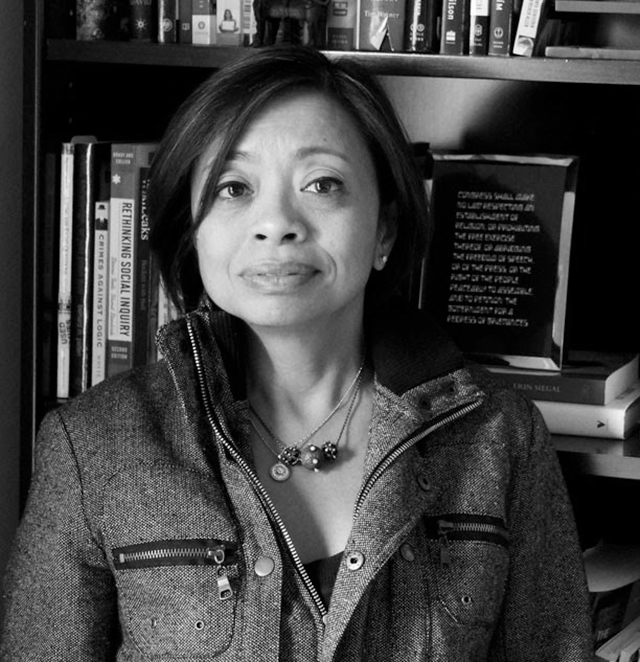
SHEILA CORONEL
© Columbia Daily Spectator
Cohen: As newspaper advertising revenues plummeted in the 2010s, papers that survived were either bought up by larger organizations or, in the case of The Washington Post and the Los Angeles Times, by billionaires. Is this a common occurrence in other countries?
Coronel: There’s a phenomenon called “media capture,” which refers to when the media are in effect captured by vested commercial or political interests. In the Philippines, for example, after the fall of dictator Ferdinand Marcos in 1986, many of the newspapers were owned by business tycoons or individuals associated with powerful business families. One of the editors used to say that a newspaper is like a gun in a holster for these families: You keep it for when you need it to attack your enemy. So although the editorial staff were given leeway to report according to the usual principles most of the time, the newspapers could be used as a weapon against opposing business or political interests as needed. It’s a common phenomenon in many countries in the Global South, as well as in the former Soviet sphere in Eastern Europe, where a lot of the media houses are owned by corporate interests, interests linked to organized crime or to powerful politicians, oligarchs—
Cohen: Or the state itself.
Coronel: State-owned media is not necessarily bad; there is robust public media in the UK, France, New Zealand, Australia, Japan, Scandinavia. That sector acts as a corrective to some of these excesses.
Cohen: It sort of depends on who’s running the state.
Coronel: And also on a tradition of independence for public media. The BBC is not without controversy, but there’s a long-standing tradition of it being nonpartisan—or, at least, not a shill for partisan political interests. Its independence is guaranteed by the fact that it receives money directly from broadcast licenses. It’s not beholden to Parliament the way the Corporation for Public Broadcasting is beholden to Congress here.
Cohen: So public media is like an extension of the public goods and services that taxes cover: People pay for information that it’s in their interest to know.
Coronel: There’s a need for media that’s protected from vested interests or the possibility of market failure. The authors of Project 2025 [a political vision outlined by the conservative Heritage Foundation that consolidates executive power to further right-wing agendas; it has largely been adopted by the second Trump administration—Ed.] argue that you don’t need public media because all information can be provided by the market: If there’s a need for something, the market will provide it. But we know very well that’s not been the case, and this is why there have always been state subsidies for the arts, culture, and education: because some of these sectors may not make a profit, and therefore may not be attractive to private investment.
Cohen: Michael Moritz, a billionaire who made his fortune primarily by investing in Google and PayPal, founded The San Francisco Standard, a digital publication, in 2021. He has said, “News and information in any city is as vital as water, electricity, and gas.” If we live in this world where we are dependent on billionaires—no matter their ideology—to provide necessary information, is that a type of media capture?
Coronel: I think the dominant American point of view is that the pluralism in the market provides a diversity of news and opinion. The US is very opposed to public investment in the media. It believes that private media, because it’s not dependent on public funds, can preserve journalistic independence. The American point of view rarely considers commercial interest or business interest as an obstacle to independence. That’s very different from the way Europeans think about the media, which is as a public good that should be supported by the government and remain independent of commercial interests.
The American ideal is really for the market to take care of all needs, but there’s recognition in some sectors of American society that certain information needs have traditionally been provided and funded by the state. This is why you had Voice of America promoting democracy—or, at least, American foreign policy—all around the world, and you have NPR and PBS to provide Sesame Street and Ken Burns documentaries. Up until the Trump administration began cutting funds for these organizations, there was a recognition of the need for both public media and public museums and cultural institutions. The Smithsonian is free because we want it to be available to all people.
One of the challenges now is that, with social media, everybody can publish their ideas. You don’t need to have your own TV station or newspaper. But you have to deal with algorithmic control of information, which is more insidious than media ownership. Owning the platforms where information is distributed and consumed gives you so much more power than just owning a newspaper or TV station. The algorithm is optimized to keep people on the platforms and promote more-intense engagement. Therefore it pushes content that is viral or entertaining, or that makes you angry or stirs certain emotions, whether or not the content is true. That’s more insidious than Jeff Bezos owning The Washington Post and determining what goes into the op-ed page. I don’t think Mark Zuckerberg would even want to own a TV station. What for?
Cohen: How do you think academia is preparing people for careers in journalism, given not just the threats from the government but the economic pressures that the field faces?
Coronel: We teach students the fundamentals of reporting. Whether you’re in a traditional news organization or you’ve got a Substack or you’re making TikTok videos, the basics of reporting are essential: getting the facts straight, gathering multiple sources, corroborating information, and now employing new techniques like open-source intelligence, using widely available videos, photos, social-media content, or satellite imagery as investigative tools. Techniques and platforms change, but the essence of journalism remains the same: Reporters need to use all the tools available and then put that information together in a compelling and engaging way.
News outlets tell us it’s easy to get somebody who can hold a camera or use natural-language processing or fancy data tools, but finding the story is the most essential skill. We teach students to develop a journalistic mindset of knowing where a story is and, in the case of investigative journalism, a nose for wrongdoing. That means knowing where to look for evidence, how to get reluctant sources to talk to you, how to use archival information, how to wrangle data, how to use the Freedom of Information Act, how to process all that information.
In my program, students have to produce an original investigative report about wrongdoing within six or seven months. For example, I recently advised a project on notary fraud: People pretend to be lawyers and then scam undocumented immigrants out of money by saying they’ll process their visas or their green cards.
Another student story was on how the courts allow abusive fathers to get back in touch with their children using a rather dodgy concept called “parental alienation therapy.” It’s the theory that mothers convince their children they’ve been abused by their father in order to alienate the father from the children. It’s often used as a defense by fathers in divorce cases and child-abuse cases. This story reported on how courts in Texas are using this concept to let fathers off the hook for child abuse, and therapists then provide “therapy” for these children that forces them to be back in touch with their fathers, often leaving them alone with the abusive parent.
Another project I advised was on stateless individuals. There might be more than a couple of hundred thousand stateless individuals here in the United States, and they’re sort of in legal limbo. And they are particularly vulnerable under the Trump administration. Last year there was a student who looked at wildfires on Native American reservations and how the reservations received just a fraction of what states receive from the federal government to put the fires out. Funds from our endowment also allow students to travel overseas or around the country to be able to report. Some students traveled to Guinea, in Africa, and to Hong Kong to report about a Chinese company that had managed to get Guinea to sign a very onerous contract, giving the company ownership of a vast copper mine under dodgy circumstances. And we did another story on how Tinder was not filtering its clients through the sex offender registry, and some women were being assaulted by men they met through the app. Most of the time, when the women complained, nothing happened.
Cohen: Two things strike me about the stories you’re talking about. One is that to do this type of work requires a lot of courage, which seems difficult to teach.
Coronel: The students here are self-selected, because you have to apply to get into the investigative program. And we make it very clear in the application that investigative reporting is about the exposure of wrongdoing.
It didn’t used to be that dangerous to do this type of reporting in the United States. But I had a student who reported on the tens of thousands of migrants who descended on New York in the winter of 2023–24. Emergency housing had to be established. She went from one immigration shelter to another to survey the kind of food they were being served and see how many of them were getting sick. This was in the dead of winter. And she’s Venezuelan—not a native New Yorker. Sometimes she was afraid, but she needed to do it. People doing this kind of work are not thinking consciously that they have to be brave. They’re thinking, I need to show how and why people are suffering.
Cohen: The other thing that struck me is that a journalist is also a human being with feelings and morals. It’s almost impossible, when reporting on issues like the ones you are describing, not to feel the weight of them. I read a story of yours about meeting with one of the executioners from the Davao Death Squad [a group estimated to have killed more than a thousand street children and petty criminals in Davao City, the Philippines, allegedly with the supervision of police and the approval of the mayor, Rodrigo Duterte, who became the country’s president in 2016—Ed.]. I don’t imagine it was easy to be face-to-face with someone who’s committed those types of crimes.
Coronel: It can’t be easy being a surgeon and cutting up people’s bodies either, but that’s what doctors do. It’s your professional duty as a journalist to come face-to-face with the horrors of the world. It doesn’t mean you’re not affected by it, but you have to keep a bit of professional distance so that you’re able to convey what you’ve learned to others. Why do you think so many journalists drink? Increasingly we recognize that reporters experience secondary trauma. Here at Columbia we had the Dart Center for Journalism and Trauma, where journalists could learn how to deal with this. I personally find it helpful to talk about these experiences with other journalists who understand what I’m going through. Sometimes all it takes is being together. What some of us have seen is unspeakable, and it can take years before we can talk about it. I have friends in the Philippines who were tortured, but only recently did they tell me the details of what had been done to them.
There are certain things you never forget. That’s part of the burden of being a journalist, but it’s also part of the privilege: to be able to witness history as it happens and ask questions and find answers. It’s a privilege people have died for.
Cohen: These principles of reporting that you’re talking about—how do you see them becoming so universal across the world?
Coronel: They’re from the Age of Enlightenment, but in the Philippines and in many postcolonial societies, part of the anti-colonial struggle was about gaining the freedom to talk about the abuses of colonialism. So the journalistic tradition I come from is very anti-colonial. Our heroes were journalists who were exposing the evils of the Spanish colonial regime. When I was talking about this in Vietnam, I learned that the Vietnamese also saw themselves as the heirs of this anti-colonial journalism tradition. I see it here too in the United States. After all, where did the First Amendment come from? It came from an anti-colonial struggle.
This is also a somewhat patriotic tradition. I see American journalists as very patriotic. Even when they report about what’s going on elsewhere, they tend to come to it with an American point of view. My father was born a colonial subject of the United States, so I have always had conflicted feelings about the US and its role in the world. I tend to be more skeptical of it than most American journalists. I’ve always thought of the US and the founding fathers’ principles as an ideal more than what’s actually practiced. I’ve seen the US support a brutal dictatorship in my own country. So I see investigative journalism as revealing the gap between the ideals and the reality.
Cohen: Can you give an example of the biased perspective of American journalists when they’re writing about a different place?
Coronel: I think of my students’ critique of American reporting about Israel. Americans tend to support Israel because it’s supporting American foreign policy in the Middle East. They tend to be skeptical about the Middle Eastern point of view. Americans see Al Jazeera as being biased, and Al Jazeera sees American media as being biased. In truth, there’s really no objective point of view. All our points of view are biased in some way: by our history, our traditions, our ideological proclivities, and so on. Americans tend to believe that, overall, American power has been a force for good in the world. I am skeptical of that, having seen what America has done in my country, in Central America, and elsewhere. Most Latin Americans are skeptical about American power. There’s less skepticism about it in the US because everybody, by default, tends to defend their own country.
To some extent, all countries are obsessed with their own drama. But because the US is the most powerful country in the world, its obsessions become global obsessions. So whatever the US media is obsessed with gets beamed around the world.
Cohen: I want to read you a quote from a recent story in The New Yorker about Jeff Bezos’s ownership of The Washington Post. The author reports that Will Lewis, the Post’s publisher, thinks American journalists are “obsessed with their own drama.” His assessment doesn’t seem inaccurate to me. All of the news values that I was made aware of as a journalist—timeliness, proximity, magnitude, impact—have conflict at their heart. And it seems to me like Americans have become addicted to conflict. We thrive on it. We elected a person who built his career on conflict.
Coronel: To a certain extent, all countries are obsessed with their own drama. But because the US is the most powerful country in the world, its obsessions become global obsessions. So whatever the US media is obsessed with gets beamed around the world. Some of my Filipino friends get CNN and Fox News, and they see a lot of parallels between what’s happening here and what’s happened there: the rise of populism, authoritarian leaders, the suppression of the media and of civil rights. It echoes around the world. The US has ceased to be a beacon of freedom. And I fear what’s happening in the US gives permission to others around the world, who say, “Trump has sued CBS and is cracking down on public media. We can do the same with no objections from the international community.” Because, in their minds, the US represents the international community. It’s become permissible to do certain things that would have been not permissible not too long ago. So, yes, American journalists are obsessed with their own drama. They have become protagonists in that drama over the last decade, in part because they think the drama is what people are interested in.
Cohen: I started at The New York Times at the beginning of the Arab Spring, and the internet paywall going up at that time was a huge deal: People had to start paying to read articles on the web because the business model was changing. Watching various shifts inside the newsroom—the rise of smartphone readers and the impact of social media—was educational for me, because I was watching the organization learn how to stay afloat as a business. When I moved back to North Carolina, I taught an undergraduate reporting class for a couple of years at the journalism school at UNC-Chapel Hill. I always told students that the principles of reporting and journalism are fundamental, but it’s a business as well, and you end up with a sort of devil’s bargain. I don’t think a lot of those students understood that. Some of them didn’t know the difference between a magazine and a newspaper, or they didn’t know the name of a local TV news station in their community. But the textbook, which was more than twenty years old, and the curriculum didn’t seem to be taking into account some of these rapid changes in the field. This is why I asked you earlier about how the academy is preparing people to go into journalism. It didn’t seem to me that the students were being fully prepared to enter an industry that had changed so much in such a short period of time and was facing so many existential threats.
Coronel: If we think of journalism just in terms of magazines and newspapers and television broadcasts, then that’s a very narrow view of where people get their information. They now get what you can call journalism from many different places. Some of my students have set up their own news organizations. One, a former Marine, set up The Warhorse, a nonprofit news outlet that allows war veterans to tell their own stories, and they’ve done some investigative reporting on topics like sexual assault in the Marines. They did a big documentary with Mother Jones on the tenth anniversary of [the Battle of] Fallujah, looking at it from the point of view of the Marines who were there. I had another student who set up DocumentedNYC, a news website about immigrants and immigration in New York. Another, a Somali refugee, started the Sahan Journal, which provides news for migrants in Minnesota.
There will always be a need for information gathering and processing, analysis, explaining, opinionating, and investigating. It may not resemble journalism the way we’ve known it, but it’s a social need, and somehow it’s going to happen, whether there’s a business model for it or not. When I was young, I worked for an underground newspaper for free, at tremendous risk, and there were many other people like me who believed that what was happening had to be recorded. One thing we did was mail copies of our newspaper to university librarians, hoping they would keep them. They did, and it’s on microfilm now. It’s an alternative to the mainstream newspaper accounts of that period. And it’s in those university archives forever. So was it worth the risk? Yes. Some of my friends died to get those newspapers out, and it would be disrespectful to them to say it was not worth it.
I don’t believe we’re confined to the media business models that we know. As the information landscape evolves, there will still be journalism about what is happening now, and that will help people in the future who are trying to make sense of it. This work has value.
Cohen: I wasn’t saying it doesn’t.
Coronel: What you’re saying is “Does it still make sense to be doing journalism?” I think it does.
Cohen: That’s not the point I was trying to make. I was saying that the landscape of media now is: either local news dries up, or someone with means decides, “I’m going to take up the mantle and make this work.” It’s more difficult now to make a living as a journalist who actually wants to inform people. Sinclair buys up all of the local TV stations, and McClatchy buys up all of the local newspapers, and then people get laid off, and it all becomes consolidated. I’m not saying the work doesn’t have value. I’m saying that when major American newspapers rely on billionaires to stay afloat, it’s increasingly challenging not just to do the work, but to get paid to do the work.
Coronel: Yes, but I would argue that the US has had it good in terms of the media business. In other countries the news media has had to struggle much more. Historically newspapers were never that lucrative, nor were journalists that well paid. I’m not saying it’s OK to be poorly paid or not paid at all for your work. I’m saying it’s always an up-and-down cycle as far as the news media is concerned. We are in a very long down cycle. But I think there is still public interest in news media. Public radio and public television still have a role to play. Local journalism has more support now. There was a period of time when we had real news deserts, but lately we see a lot of community and philanthropic support for local journalism. So I see some positive signs.
New business models are arising. Look at Substack: Some of those journalists are making more money now than they were before they joined that platform. And maybe that’s what will happen: fragmentation at the bottom and consolidation at the top. What is lost is the middle: the local or regional newspaper.
Cohen: Earlier this year, Project Veritas [a conservative activist group founded by James O’Keefe, who has used hidden cameras, clandestine recordings, and undercover reporting to expose what he sees as liberal bias in the media—Ed.] produced a video of a State Farm insurance executive in California on a date, discussing a type of strong-arm tactic State Farm was using to convince the state to let the company raise insurance rates. When the video was released, there was an uproar, and the executive was terminated. Most legacy media organizations would not use this type of reporting because it’s deceptive. What do you think about using a tactic like that if it gets out information that is in the public interest?
Coronel: I want readers to be able to trust journalists, and those kinds of methods erode trust. Journalists should be as transparent as they can with their sources, even if those sources are wrongdoers. We should be able to explain our methods to both our sources and our readers. Only in very extreme cases should we resort to doing things like impersonating someone else or getting people to say things they would otherwise not say because we haven’t identified ourselves as journalists. I think most people see that tactic as underhanded, and it could detract attention from the actual exposé. Many people already think journalists are untrustworthy and will do anything to sell papers or get clicks. Resorting to methods like that, even to expose wrongdoers, only reinforces that distrust. A good journalist should be able to get pretty much the same information using ethical methods.
Cohen: Harvey Levin, the editor in chief of TMZ, pays for proof of scandal or wrongdoing. Most of what his site publishes is celebrity gossip, but in 2014 they broke the story about NFL player Ray Rice, who was caught on camera beating his girlfriend unconscious on an elevator. This essentially ended Rice’s career and put more public scrutiny on domestic violence by professional athletes. Do you think paying for that video undermines trust?
Coronel: I don’t believe in paying for documents or other things that will undermine people’s reputations because, again, it undermines trust in journalists. If your friend did that to you, would you trust them? We should be able to explain our methods to our readers, and unsavory methods, even for good ends, result in suspicion. It can make readers think journalists will do anything just to get a story, to drive clicks, to go viral.
Cohen: If a friend did that to me, I would be upset. But I’m not a public figure. If we find things out in this way about celebrities or politicians, is it a disservice to the public not to reveal that information?
Coronel: I don’t believe a journalist should ever pay for information. If we do, then information becomes a marketplace. Outlets will start bidding for information, and some people will even create false information or take things out of context just to make money. Real journalism is Bob Woodward and Carl Bernstein painstakingly knocking on every door to piece together the story about the Watergate scandal. It’s not an auctioneer’s market where people say, “I have this video; what will you give me for it?” That’s what tabloids do, bidding for people’s confessions.
Some of the biggest stories are about famous individuals, but we should focus on broken systems, on unfair policies, on things that affect people’s lives, rather than on scandals that are of passing interest but in the long term have no real impact on the way society is run. You can easily make a living selling scandal, and there are journalists who do that, but there’s also a version of journalism that tries to explain the world to people so they can make sense of it. Do you know what the tariffs mean? What is their impact on our lives? I think that’s a more consequential story than whether Sean “Diddy” Combs should be convicted of sex trafficking. Those kinds of celebrity stories distract from what really matters.
Cohen: I do think the reason Sean Combs gets so much attention is because there is a public interest in the behavior of someone who has contributed so much to popular culture.
Coronel: I’m not contesting that. But there’s enough reporting on people like him. There has to be more to journalism than that.
Cohen: This comes back to the marketplace idea. I think one reason there’s been wall-to-wall coverage of that scandal and others is because it gets so much attention, which in this day and age means clicks, eyeballs, and ad traffic. Other stories might impact more people’s lives, but that’s not where the eyeballs go.
Coronel: Correct. So it’s really a challenge to make these other stories more engaging. Bill Kovach and Tom Rosenstiel’s classic book The Elements of Journalism says that the goal of journalists is to make the relevant and the important interesting. We shouldn’t forget that.
Cohen: What do you think of shows like Last Week Tonight with John Oliver, or The Daily Show, which spin the news into shorter comedic commentaries?
Coronel: I think they’re great, because they do exactly what I’m describing: They make the important story more interesting. They make it funny. It’s a way to get people to pay attention to the news, because to get the jokes, you must read the news. Some of our former students work for these shows, and they do a lot of research, fact-checking, and verifying. I see it as a legitimate form of journalism.
Cohen: Last February the Los Angeles Times launched an AI tool that was supposed to provide opposing perspectives on opinion pieces, but it was almost immediately removed because it managed to downplay the dark history of the Ku Klux Klan. Do you think there’s a role for an AI tool to supplement reporting?
Coronel: I’m not opposed to using AI. I’ve experimented with it myself, and my students have put it to good use. But there are responsible and irresponsible ways of doing so.
I think historical perspective is important. Every issue, from racism to climate change, has a history. Around 2021 we realized that our students were reporting about the issues without thinking about how things like this have happened before. So a bunch of our professors did a series of history podcasts called “How We Got Here” [accessible under the Columbia Journalism Review podcast The Kicker—Ed.], and we asked our students to listen to it. I did an episode on US empire and expansionism abroad. Someone else did one on migration, someone did one on race, and someone did one on gender, all to show students that these topics have a history that can help us understand the present. This was the era of Black Lives Matter, and the students were reporting on the protests as if it were the first time something like this had happened, rather than seeing it as part of a cycle of resistance and repression. Can AI provide that perspective? If it is properly programmed. The problem is not the technology itself but the kind of thinking that goes into the programming.
Cohen: There’s been a lot of concern that AI may replace editors or writers. How do you use it, and how does it help as a reporting tool?
Coronel: It offers free transcription into multiple languages. It’s also good for summarization: You cannot read hundreds of thousands of documents in a short span, but you can ask an AI to summarize them or answer queries about them. You can tell the AI, “Limit your answers to what is in these documents and show me the specific document the answer came from.” This makes it easier to search through large amounts of data. It also makes it easier to use open-source investigative techniques. You don’t need to spend hours looking through thousands of images if you train the AI to find what you need. I see AI as an efficiency tool, much as we use a calculator instead of doing math by hand. It makes you ten times more efficient, and in this period when newsrooms are strapped for resources, that can make it easier to do the kind of in-depth reporting that in the past has required many more journalists. Let’s face it: We need to leverage the power of computers. I always talk of the “three C’s”: computers, collaboration, and the crowd—meaning how can we use citizens to help us in our reporting? All three can make journalism much more efficient and much more viable financially.
Cohen: What does that crowd component look like?
Coronel: Many news organizations have asked people to assist in their reporting. ProPublica did this with campaign literature: They wanted to determine how political campaigns were reaching out to different demographics, so they asked people to send them the messages they received. We asked people to send us their electricity bills so we could compare what electric companies were charging per kilowatt-hour. In Germany journalists asked residents about their rental payments so they could compare rents in different neighborhoods. Before AI, we would have pizza parties for students and ask them to transfer data from paper records into a Google spreadsheet. You can also use citizens for tasks like that. You can ask citizens for their expertise. There’s also crowdfunding. Nonprofits have used GoFundMe to pay for investigative projects. We have to be innovative in the way we finance and report because we can’t keep doing it the old way in this economy.
Cohen: You were talking earlier about the danger that sources can face. There’s a fragile trust that binds journalists and sources together. With so many other negative or deceitful things about human nature, this seems kind of magical. How do you build that trust?
Coronel: Journalists build trust by being transparent about who they are and what they want. We tell our students: “Be honest about what stage you are in with your investigation and what you are doing, and ask for help, because many people want to help you.” One of my students was investigating municipal corruption in New Jersey and was very nervous about approaching a politician he felt confident was either involved in it or knew something about it. Later he said he was surprised by how much this person wanted to talk and how honest they were willing to be. Students are constantly surprised when people who have done things that may be unethical or wrong still feel compelled to talk about it. As long as people think they can trust you, as long as you don’t pretend to be something you are not, as long as you don’t promise things that you cannot provide, as long as you’re sympathetic and empathetic, they often just want to talk, even the “bad guys.”
The key is to come to the table with genuine curiosity rather than judgment or an attitude of “I want to expose you.” Being shrewd or manipulative is completely the wrong approach. Being open and understanding is better. I don’t think wrongdoers wake up in the morning and think, I’m going to do something bad today. They generally believe they can justify their actions, and they want to convince you that their actions were justified. Those are the best kinds of interviews—where someone admits to doing something because they felt it was justified, or because they had no choice, or because everybody else was doing it. That’s the kind of confession that you want.
It’s better to let them say why they did something than it is to just expose the evil act. In my interview with that death-squad assassin, I wanted to understand how he could do the things he had done, and he did try to justify them. He said something along the lines of “These are bad people. Society needs to get rid of them, and I have to do this for the good of society.” It’s not necessary to empathize with that kind of reasoning, but we can try to understand why someone would think that way. We always tell students to ask open-ended questions, because people will inevitably tell you their origin story. In that interview, the man told me that he grew up very poor and his father was beheaded by communist guerrillas. So one way he justified his behavior was to believe that he was avenging his father’s beheading. He was killing the criminals who’d killed his father. You may not think that’s morally justified, but how people understand themselves is, to me, fascinating. I often start my interviews with “Tell me your story.”
Cohen: You said earlier that there is no real objectivity because we all have some level of bias. Bias seems very complicated right now, because simply asking a question of an elected official is seen by some as akin to a criminal act. But it is very difficult to be free of bias.
Coronel: It is. We tell students to make sure in their reporting that they’ve read the court documents, they’ve seen the video, and they’ve read the emails, and to be as transparent as possible about how they’ve arrived at certain conclusions. How do you know whether your story stands up? The standard for the natural sciences and social sciences is replicability—if you think that someone who has the same information as you, uses the same methods, and talks to the same people will arrive at the same conclusion, that’s the standard for being as unbiased as possible.
Also report against your hypothesis and see if there are other explanations. Do your conclusions stand up to the challenge? It’s like you’re a doctor diagnosing a patient. This may be someone you hate, but you can still arrive at the same diagnosis as any other doctor. I think there are independent parameters for conclusions or evidence, and if those parameters are met, then you should both acknowledge and check your biases, especially at this time, when there’s been a loss of trust in the media. But even if you’re completely unbiased, that doesn’t mean you’re going to break through to your audience, because some people have made up their minds regardless of the evidence. In the law, there’s a reasonable-person standard: Would a reasonable person think this? That’s the kind of standard you have to use—a reasonable person, not a person who’s on one extreme or the other of the ideological spectrum.
Cohen: Part of the problem now seems to be that the people in power are not reasonable.
Coronel: It doesn’t matter what the people in power think. The people in power, regardless of whether they are democrats or autocrats, are always skeptical of the media and always think the media is out to get them. They’re not good judges.
Cohen: Do you encourage students to read conservative or right-leaning publications?
Coronel: I think they should. Our students, and journalists in general, tend to be more liberal than the average person. So I encourage them to look for contrarian views and to make sure that whatever they write can withstand being exposed to those views.
It doesn’t matter what the people in power think. The people in power, regardless of whether they are democrats or autocrats, are always skeptical of the media and always think the media is out to get them. They’re not good judges.
Cohen: Do you find any voices in conservative media that are more legitimate than others?
Coronel: A lot of conservative media has moved toward the extremes of the MAGA world, so it is getting harder to find independent conservative voices. In The New York Times there’s Ross Douthat, and David Frum in The Atlantic. I tend to read within a traditional conservative vein rather than read those who are just totally unbothered by facts and evidence.
There is an emerging right-wing media ecosystem that most of us who just read mainstream or liberal media have lost track of or don’t take seriously. But they have a lot of reach and influence. Maybe we should be reading or reaching out to more right-leaning media and seeing what conversations are taking place. I just don’t have the time and mental space to look at that landscape.
Cohen: It’s somewhat demoralizing to do so.
Coronel: It is, because you see how fact-based media is losing out to proselytizing. But then we ignore a huge chunk of what ordinary Americans are listening to or reading. We should spend more time listening to those media outlets and reaching out to their viewers. It’s just very hard to do that in such a fragmented media environment.
Cohen: I want to go back to something you said earlier about how the media in the US is under a renewed assault by the Trump administration. The playbook in places like Russia and Hungary is to claim to be a democracy while slowly putting media under state control and suppressing information and independent voices. Do you think the US Constitution protects us from that actually happening here?
Coronel: One hopes so, but a constitution is just a piece of paper. It’s only as good as the institutions that protect it. That means the courts, the legislature, and civil society. It’s increasingly hard these days to hold the executive branch accountable for its actions, because both Congress and the courts appear to be compromised. I’ve seen this happen before. In the Philippines we have something similar to the First Amendment, but during Duterte’s time as president [2016 to 2022—Ed.], the government shut down the biggest TV network through quasi-legal means by denying it a franchise. During the first Marcos era [1965 to 1986—Ed.] they closed newspapers and broadcast stations by sending troops to shutter the presses and the transmitters, banning them from airing. Today democratically elected regimes there use existing laws, or even new ones created for this purpose, to suppress independent journalism: bringing lawsuits, refusing to allow licenses, and, in some cases, encouraging advertisers not to advertise or withdrawing government ads from critical news outlets. Another way they are cracking down on journalists in the Philippines is through investigations. Duterte brought money-laundering charges against the news website Rappler, accusing it of acting as a dummy for foreign money. The goal is to tie an organization down in litigation and make it consume all its energies protecting itself so it can’t do reporting.
The US government can do that here, attacking ProPublica or the Center for Investigative Reporting, or any of the more than a hundred investigative nonprofits all around the country by withdrawing their tax-exempt status, so they can’t get donations anymore. They can do tax audits, which have also been used in the Philippines. They can use the full machinery of the state to make it difficult to do independent reporting. In El Salvador the government used audits, money-laundering accusations, lawsuits, and threats of detention, eventually driving most independent journalism into exile. Journalists from El Salvador are still reporting from somewhere in Central America, but it’s not the same. The Russian government did the same thing there. The playbook falls short of declaring martial law and having tanks rolling down the streets and troops detaining journalists and shuttering media organizations, but the end result is much the same. If there’s no pushback, it can happen here. Do you think it will not? Do you think a 250-year-old tradition will save you?