In August 2024, Robert F. Kennedy Jr. suspended his presidential campaign and threw his support behind Donald Trump’s candidacy. Several months later, at a campaign rally in Madison Square Garden, Trump declared that he would give Kennedy, a longtime vaccine skeptic and endorser of alternative medicine, a cabinet position and the ability to “go wild” on public health. Ever since Trump made Kennedy the US Health and Human Services secretary, it would seem that Kennedy has been doing just that. So far he has fired veteran officials at the Centers for Disease Control and Prevention, declared contrary to evidence that Tylenol is linked to autism, and removed vaccine recommendations for children amid a measles outbreak.
Even before Kennedy’s tenure as the country’s top health official, anti-science and anti-vaccine sentiment was rising. The lockdowns and vaccine rollouts that followed the outbreak of COVID-19 spawned a backlash among a diverse coterie of wellness influencers, conspiracy theorists, right-wing media figures, libertarian-leaning citizens, and those seeking religious exemptions. But some members of marginalized communities of color also had an ingrained skepticism of vaccines and the medical industry as a whole, based on historical examples of malpractice, most famously the twentieth-century Tuskegee experiments, in which hundreds of Black men were deceptively denied treatment for syphilis as a way to study the disease’s progress.
The experiments in Tuskegee came nearly a century after James Marion Sims performed surgeries without anesthesia on enslaved Black women in nearby Montgomery, Alabama. Sims falsely believed, as did many other physicians at the time, that Black people did not experience pain in the same way white people did. Since Black Americans were considered property of white landowners at the time, he did not need their consent to perform his experimental procedures. The modern field of gynecology, which was built on his legacy, is haunted by the horrors of America’s treatment of Black women.
Rolonda Donelson is an attorney and policy analyst who focuses on issues related to the intersection of legislation, litigation, and access to care, with an emphasis on sexual and reproductive health. She sees the strained dynamic between the medical community and Black women as a prime example of misogynoir: “a perfect storm,” she explains, of misogyny and racism. She’s experienced it firsthand with doctors she felt were dismissive of her concerns, but she also sees it as indicative of the way American society treats women in general.
Born and raised in Washington, DC, Donelson earned her law degree from American University Washington College of Law, intending to work with families and victims of domestic violence. Then, in her first year of law school, she read the Roe v. Wade decision in a constitutional-law class. She was already interested in reproductive health and familiar with the precedent the case had set, but she says studying the details opened her eyes to “how the law could be used not just to help one person, but to create systemic change.” She interned at the Center for Reproductive Rights and the Immigration Legal Services Section of Catholic Charities Archdiocese of Washington, and after law school she had several fellowships that examined HIPAA and data-privacy concerns for sexual and reproductive services. When I interviewed her, she was working at the National Partnership for Women & Families, a nonprofit advocacy organization that seeks to improve lives by fighting for economic justice, reproductive rights, and access to affordable medical care. She is currently a policy analyst for the Women’s Health Policy Team at KFF, a nonprofit, nonpartisan polling, research, and reporting organization based in San Francisco and Washington, DC.
I met Donelson last year in a conference room of her downtown DC office on a particularly busy day in which she was attending back-to-back meetings in preparation for transitioning to her role at KFF. For two hours we discussed the complex relationship between medicine and politics, and the contentious American history that influences both.
Not all conversations are as linear and succinct as they appear. This interview has been condensed and edited for clarity.—Ed.
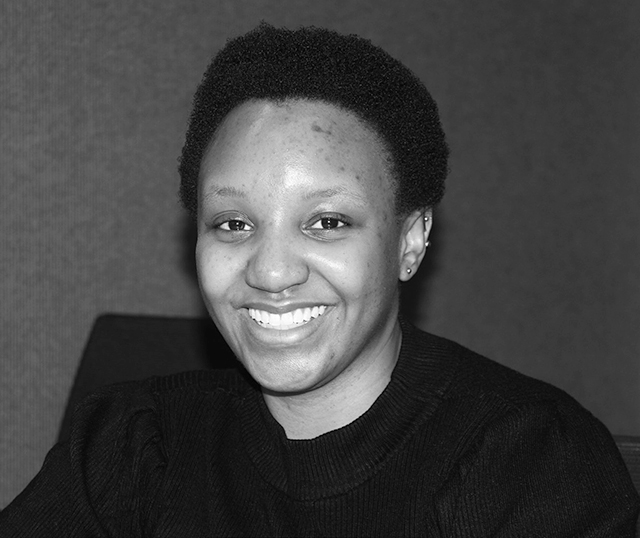
ROLONDA DONELSON
Pitts: Why do you think people maintain beliefs that contradict medical science, even though many of their beliefs have been debunked?
Donelson: Throughout history there have always been people who reject science. This isn’t limited to medicine; even though the field of astronomy has proven the Earth isn’t flat, a small number of people still believe that it is. In terms of people not wanting to receive vaccines, that’s previously been a fringe movement, but we’re now seeing both social media influencers and the people who are in charge of our public health systems proliferating false beliefs about vaccines.
We all have implicit biases from the way we grew up and the people we interact with, and we bring those to any conversation, but platforms like TikTok and Instagram give our implicit biases a larger platform. On TikTok the algorithm is set up such that anything can appear on your “for you” page. So it can seem like some random user of the app is an expert on science or religion or anything else. When social media anecdotes become facts in people’s minds, it’s really hard to dispel those myths.
Pitts: You’ve done research on HIPAA and data-privacy concerns related to sexual and reproductive health. I know you are familiar with the story of Henrietta Lacks and how her DNA and biological information were used without her knowledge. When we see situations like that, how do you think the medical community can honor that person?
Donelson: Henrietta Lacks was a Black woman undergoing cancer treatment, and she had the cells from her cervical biopsy taken without her consent and used in research. This led to a lot of medical advancements, including the HPV vaccine that helps prevent cervical cancer and other cancer treatments. She also passed away from cervical cancer and wasn’t able to get justice during her lifetime, but recently her family was able to reach a settlement with one of the organizations that took her cells.
Reparations are one way to honor her legacy, but it’s also important for the medical community to do better. This means having stronger medical-ethics standards, ensuring that we never forget her story, and using that story to inform decisions in the future. Everyone’s medical information should be theirs to decide what to do with. Even if it’s something that, as with Lacks’s case, ends up helping millions of people, everybody deserves bodily autonomy and the ability to control who has access to their medical information and how it’s used.
Pitts: Are there other historical instances of malpractice or medical abuses that have had ripple effects?
Donelson: There’s a long history in the United States of medical abuses involving people of color, starting with the founding of gynecology. Enslaved Black women were experimented on without anesthesia, without care for their lives or bodily autonomy, and those experiments led to advancements in gynecology. Similarly there were trials for contraceptive pills in Puerto Rico in which women were given the pills but not really told about the side effects or what they did. The doses weren’t accurately calibrated, and a lot of these women had adverse consequences because of it. In both instances, women were used as test subjects for studies that, again, have benefited us today, but we have refused to honor the legacies of these women and acknowledge their involuntary contributions.
Then there’s the Tuskegee syphilis experiment from 1932 to 1972, in which more than three hundred Black men were denied treatment for syphilis because researchers wanted to see how the body reacted to the disease over a long period of time. A hundred of these men died, which is tragic, because starting in the 1940s penicillin was readily available as a cure for syphilis. Yet these men were denied antibiotic treatment so that researchers could use them as test subjects.
There’s also a legacy of forced sterilization in the United States, especially involving people with intellectual disabilities, immigrants, and poor women. In 1961 civil-rights leader Fannie Lou Hamer underwent surgery to have a tumor removed, but during the procedure she also received a hysterectomy without her consent. She named this the “Mississippi appendectomy,” because so many others in her rural community had experienced it. There was a push in the South, from the 1930s to the 1970s, to give Black women access to public benefits only on the condition that they use long-acting, reversible contraceptives, like an IUD. Some of the IUDs were not safe. In the 1970s there was an IUD called the Dalkon Shield, the shape of which caused a lot of damage to women’s reproductive systems and left many of them infertile. A lot of the founders of the reproductive-justice movement have talked about how they received these IUDs because they were low-income women in the South, and how the devices left them essentially sterile.
Our male-dominated society places less value on women in general, so they are more likely to have delays in medical care and not to be believed by their doctors.
Pitts: What effect have these experiences had on Black people’s trust in the field of medicine?
Donelson: Research has shown that people in these communities are less trusting of doctors. During the pandemic, a lot of my friends and family members didn’t want to be the first people to get the vaccine because they didn’t want to be test subjects. What if something went wrong? People of color have a real fear that something like the Tuskegee syphilis experiment could happen again.
It really comes down to the way that we view race in America. We are a nation that values one specific racial group over all others. The reason Black women were used to develop the field of gynecology was because they were no more than property. They weren’t seen as people; they were just seen as things. The controlling of Black women’s bodies started with chattel slavery, but it continues today. There was a lot of resistance to the Black Lives Matter movement from white groups who accused the movement of saying that Black lives matter more than other lives, but the message was just that Black lives matter, period. There has been a systematic devaluing of Black people in the United States and of their contributions to the nation’s history. Even today there are some efforts to erase Black history from school curriculums and other official narratives.
There is also a real problem of doctors not listening to the concerns of Black patients. Sometimes a Black person will go to the doctor and say, “This is what’s going on with me,” and the doctor will say, “No, that’s not possible,” without listening to what the patient is saying. For example, I was taking birth control pills for about four years, and at one point I told my doctor that I wanted to switch from the pill to an IUD. The doctor said, “Well, no, I wouldn’t recommend that because you have PCOS” [polycystic ovary syndrome, a hormone imbalance that can cause irregular periods and issues with how ovaries function—Ed.]. But I also have a family history of hypertension, and being on the birth control pill can raise the risk of developing hypertension. Nevertheless, my doctor dismissed my concerns about the pill, and I remained on it for four more years and suffered. Finally I decided I didn’t like the way he was treating me, and I found a doctor who listened to me more and offered other alternatives.
Pitts: Why do you think that women, in particular Black women, are facing these issues with doctors?
Donelson: I think it really comes down to misogynoir, which is the specific discrimination experienced by Black women. People don’t believe them, don’t respect them, and don’t want to listen to them simply because they’re Black and female. Our male-dominated society places less value on women in general, so they are more likely to have delays in medical care and not to be believed by their doctors. Women also shoulder more of the burden with the household chores and taking care of the children. They are always putting everybody before themselves. If Mom gets sick, she will often tough it out instead of going to the doctor. I don’t know how much you’ve been around sick men, but when my partner gets sick, he says, “I can’t do anything. I am down for the count.” To his credit, when I get sick, he helps out so I can rest, but that’s not the case in all relationships. Women are expected to hold it together, especially Black women; we talk about how Black women are “magic,” but we’re not superhuman. We still get hurt. We still receive injuries. We still get sick. And when we do, we are expected to continue to function and to carry the weight of the household, of our partner, of everyone.
As a culture we also systematically devalue the work that women do, even though women are really the backbone of the family. If all women decided to walk out on their jobs or their families, it would be chaos. Women are disproportionately represented in the caregiving sector of the economy. Women are more often nurses. They are caregivers in nursing homes. They’re doing all of this care work for their job, and then they’re also doing this care work at home. And we don’t pay care workers fairly—a lot of them don’t make a living wage. Care workers are more likely to depend on Medicaid for their health insurance—and they also depend on Medicaid for their salary, because a large percentage of nursing home residents are Medicaid beneficiaries. So when we cut Medicaid, as Congress recently did, they are hit from both sides.
Pitts: What barriers have you witnessed that prevent women from getting the medical care they need?
Donelson: The United States is a big country, and there are some barriers that come with that. Some of our states are so sprawling that they have a lot of maternal-health-care deserts, pharmacy deserts, and hospital deserts. Even here in a city like Washington, DC, we have eight wards [municipal divisions, each with its own representative on the DC Council—Ed.], and two of those wards east of the Anacostia River do not have access to maternity care. Especially with the recent Medicaid cuts, a lot of hospitals may have to close down, and it’ll leave people with nowhere to go. We’ve also seen a defunding of Planned Parenthood, which is a safety-net care provider in many communities, especially rural ones, offering access to contraceptive care, cancer screenings, and more. Their patients will have nowhere to go to if those facilities close.
There are also access issues related to cost. To gain access to health insurance, it helps to have a job that provides it. If you’re unemployed, it’s harder to get health insurance. If you’re a low-income household, you can get Medicaid or ACA Marketplace coverage, but Medicaid doesn’t have providers in all areas. If you can’t afford health insurance and don’t have access to Medicaid, then there’s really no way to receive medical care without going into massive debt. If you face an injury or a chronic illness, your care can cost thousands of dollars. Fear of medical debt from the cost of an ambulance ride or an emergency room visit can deter people from seeking the health care that they need.
I’m proud of the work that I’ve done in my fellowships, trying to defend access to Medicaid, although the cuts did end up going into effect with the passage of Trump’s “big beautiful bill.” The policies that the law calls for will lead to massive coverage losses for people out of compliance with the new Medicaid work requirements. One major provision of the law is a work requirement of eighty hours a month to remain eligible for Medicaid. If working people fail to properly document this with their state Medicaid program, or if they don’t get that number of hours from their employer for even one month, they could be removed from the program.
For the Affordable Care Act, the expiration of the advanced premium tax credits that allow people to lower their monthly premium will lead to many people not being able to afford their insurance-premium payment. [The tax credits were allowed to expire at the end of 2025.—Ed.] Much of the “savings” the bill promised comes from people no longer having access to health care. Between the expiration of the ACA premium subsidies and the Medicaid work requirements and other changes in the law, the nonpartisan Congressional Budget Office estimates that over 14 million people will lose coverage by 2034.
A lot of people with no medical training are putting themselves out there as experts on the internet, which is making people doubt facts that are widely accepted.
Pitts: Is there any particular area of reproductive health care where you see a lot of room for improvement?
Donelson: There is a lot of work to be done with young people. We really don’t teach sex education in a lot of schools, and that leads to young people not being informed about birth control or how to protect themselves from STDs. Much of the emphasis now is on abstinence rather than access to contraceptives, which curtails young people’s experience of learning about their bodies. And then there are the restrictions on access to abortion. If a teen’s parents don’t agree with her having an abortion, then she has to get a judge to agree, which can be a confusing, time-consuming process and can lead to delays in care. If she’s not mature enough to get an abortion, how is she mature enough to have a child? For example, because of a recent court ruling in Deanda v. Becerra, if a young person in Texas who comes from a very religious household wants to get contraceptives, they have to go through their parents, who might block access. This is effectively denying health care, because in addition to preventing pregnancy, some contraceptives can be used for PCOS, for acne, and for a host of other conditions.
We all want young people to be healthy. We might prefer different approaches, but let’s see how much we can agree on, even if we can’t meet in the middle.
Pitts: Why do you think something as straightforward as medical science can become so polarizing?
Donelson: I love some TikTok and other social media, but it’s helped create a rise of misinformation and disinformation. Anyone’s opinion can be quickly disseminated and taken as fact. A lot of people with no medical training are putting themselves out there as experts on the internet, which is making people doubt facts that are widely accepted. When you find information online, it’s important to try to validate it with multiple sources.
Because social media is such an echo chamber, it’s easy for people to see only others who agree with their opinion. This will also lead to people becoming fearful of going to the doctor or not getting the care they need because their favorite influencer—or, in some cases, even a public health official—said, “Don’t get this vaccine,” or, “You don’t need a treatment for XYZ.”
Pitts: Is there a way that policy could promote trust in doctors while also taking into consideration the legitimate fears that some might have?
Donelson: One thing that could help build some of that trust is culturally responsive care, which acknowledges and respects diverse opinions, backgrounds, beliefs, and values and tries to tailor care to a patient’s unique needs. This could include educating patients using plain language. For example, a doctor could say—and this has happened to me—“Oh, you have an ovarian cyst.” My doctor then explained what an ovarian cyst is, how they form and why, how they’re treated, and so on. But if a doctor were to give that diagnosis without any more context or information, it could be really confusing to the patient, who might not know what comes next.
Having diversity within the medical field is also key to building trust in the medical community. I have a lot of friends who are women of color and are studying to become doctors. When they graduate, they’ll take their experiences of being ignored or mistreated by doctors into their medical practice, and they’ll want to make sure they don’t do that to their own patients. One friend at first wanted to be a pediatrician, but now she wants to be a psychologist after witnessing a cultural and language barrier for patients when she did her medical-school rotation on a psych floor. She is Chinese and speaks Mandarin, and there was a patient there who spoke only Mandarin. The doctors were unable to help him without using interpreters, which creates an additional barrier there. So women of color have unique experiences that can inform their roles as physicians.
Pitts: If you could design a health care policy that would be your legacy, what would it be?
Donelson: I would really love to see everyone have access to affordable health care. This means more than just “Everybody has health insurance.” Insurance doesn’t matter if you can’t access health care in your rural community. If there are no doctors nearby, health insurance really means nothing.
I wish people knew that they have more power than they think. The people who work on Capitol Hill represent you. So if access to health care is important to you, you need to write to your congressperson, or call them, and explain why. In my experience, they will write you back. I’ve written to both of my senators, and I did get a response from both. We can at least make sure that they are listening to the people in their districts, that our voices are heard, and that our members of Congress understand that they represent us.