While my two siblings and I set the table, our parents drained the pasta and mixed it with sauce. Milk was poured for us kids; wine for my parents.
Soon after we sat down to eat, my brother knocked over his glass, and Dad left to get the mop. As he cleaned the floor, he lectured us on the ills of wastefulness and the importance of being careful. We promised we would, and he went to return the mop to the garage.
Just as he got back to the kitchen, my milk cup somehow slipped out of my fingers and landed on the floor. We all stared in shock, and my father cried out, “Maria, how did that happen? What did I just say about being careful?”
Again he marched to the garage. All of our feet were lifted in the air as he swiped at the puddle under the table, muttering under his breath in Italian.
In the time it took him to rinse the mop, wring it out, and lay it carefully over the garage sink to dry, my younger sister somehow, unbelievably, overturned her cup of milk. The shock was so great we couldn’t hold back the bubbles of nervous laughter. Even our mother covered her mouth with her napkin to stifle hers.
My father was usually easygoing, his displays of frustration more theatrical than real, but now I was curious. Had we pushed him too far?
He returned, took in the white puddle spreading to the edge of the plastic tablecloth, and treated us to some phrases that Sister Ruth Marie wouldn’t have approved of. My mother grabbed the dish towel, and my fuming father stomped back to the garage, fetched the mop, and indignantly slapped it onto the floor. Our laughter drained away as he scrubbed. We heard the water running in the garage sink for a long while after that.
“Kids,” he began when he walked back in, “let’s just start over and have a nice dinner together.” He poured more milk into our cups, not quite as full as before, and proposed a toast: “To a happy Sunday dinner!” Then he reached for his glass of wine and knocked it over.
Maria Christine Conrad
Oakland, California
Taking twelve American teenagers on a trip to Africa is proving more challenging than my husband and I anticipated. A washed-out bridge turns an eight-hour drive into seventeen. Then come the unexpected bus repairs, and later a pair of boys missing in a crowded, open-air market for half an hour. We’ve only been here three days.
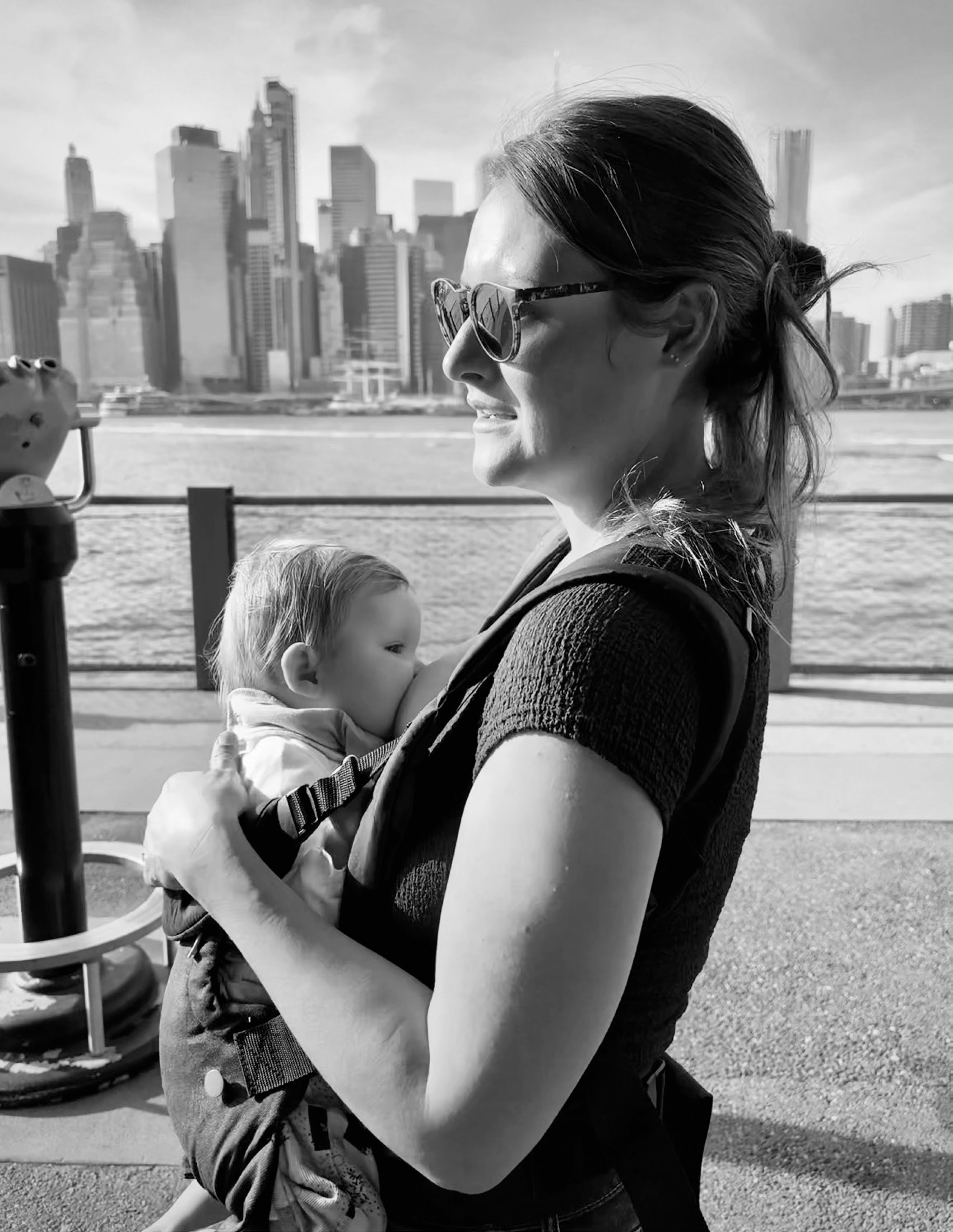
Even more stressful than securing safe food and water for them is feeding my not-quite-two-year-old. Though he had nearly weaned himself prior to this trip, the unfamiliar environment has triggered an instinctual return to the original comfort food. At his nudging, I lift my sports bra and inhale the sweet scent of his curls. Although my heart is full to be back in Africa, my breasts feel empty. I visualize oxytocin and prolactin oozing into my bloodstream, heading straight for my milk ducts. Finally I feel my milk let down, a satisfying sensation just this side of pain.
The high schoolers sing along to Dave Matthews Band in the back of the bus. In my English class last fall, they requested story after story about my time as a Peace Corps volunteer near the Zambia–Malawi border. One zealous boy asked if we could take a field trip, and eighteen months later here we are.
Satiated, my toddler sleeps soundly. White sand and turquoise water whiz by the bus window. Dusk approaches. The teenagers fall asleep.
In the Peace Corps I learned a lot from Zambian women. Once, I was buying tomatoes from a nursing mother when the baby paused his meal to smile, fully exposing her breast. My male friends and I awkwardly looked away, but the woman wasn’t embarrassed. We continued to see this everywhere until we were unfazed by it. Knees and thighs are supposed to be covered in Zambian culture, but the breasts of a nursing mother can be exposed anywhere.
As our bus rolls to a stop, several saleswomen thrust their wares toward the windows. A baby tied to her mother’s side looks up, leaving her mother’s breast. We’ve prepared our sixteen-year-olds for this scenario—“boobs are for babies,” they’ve decided—and to their credit, they remain focused on mentally converting their kwachas into dollars. Meanwhile my toddler wakes and pushes his way underneath my T-shirt.
Holly Rendle
Martha’s Vineyard, Massachusetts
My mother’s family’s beloved milk cow, Amy, played an unlikely role in the famous case of Edith Maxwell, a young teacher tried, convicted, and later pardoned for killing her father. Although mostly forgotten today, the news story made national headlines in the 1930s. Even Eleanor Roosevelt became an advocate for Maxwell’s release.
Throngs of reporters flocked to Wise, Virginia, ready to portray the county as a hotbed of corruption, moonshine, and semiliterate hillbillies. At the center of this portrayal was a photo of a cow sauntering in front of the courthouse where the trial was being held, labeled by reporter Ernie Pyle as a “bovine pedestrian,” implying that a cow strolling by the courthouse was perfectly routine.
My uncle Kenneth remembers it differently. As a boy of twelve, he was walking down Main Street when a reporter asked if his family owned a cow. Kenneth nodded, and the reporter offered him twenty-five cents to fetch the cow and have it walk in front of the courthouse while the reporter photographed it. Kenneth retrieved Amy, marched her as asked, and collected his reward.
While Amy achieved national fame, or infamy, Kenneth received a rare spanking, and his newly acquired quarter was disposed of that Sunday in the offering plate at church.
Gene Maddox
Johnson City, Tennessee
I spent several years waitressing at a vegetarian restaurant in Toronto with minor-celebrity owners, several best-selling cookbooks, and hours-long waits. I loved talking with diners about the food, and it wasn’t unusual for someone to ask about an ingredient on the menu, struggling to pronounce quinoa, tempeh, or jicama.
One evening a woman waved me over and showed me a page from our newest cookbook. She tapped the ingredient list and asked, with complete sincerity, where she could buy whale milk.
It took me a moment to find what she was pointing to. Then I gently explained that she was misreading “whole milk.” She burst out laughing, and for the rest of the evening we periodically caught each other’s eye from across the restaurant and giggled. Whenever I passed her table, we discussed the logistical challenges of the whale-dairy industry.
Stephanie Tonietto
Toronto, Ontario
Canada
My next pregnancy turned out to be ectopic too, and I required surgery to remove my right fallopian tube. The doctors assured me I’d still be able to conceive.
They were both right and wrong. Not long after that, an ultrasound showed an embryo in my left fallopian. Another surgery. Another loss. But we didn’t give up. We had two unsuccessful rounds of in vitro fertilization before we finally got the call telling us we were expecting. This baby was safely ensconced in my womb.
My milk came in fast after our son was born, as though my body had been waiting for the opportunity. My breasts produced so much, my mom suggested I donate to a milk bank. I remembered well the feeling that had followed every unsuccessful pregnancy—as if I had failed as a woman and a mother—and I was eager to help other women overcome their own self-doubt and guilt.
Potential donors were required to collect seventy-five ounces before applying, so I hand-pumped every day and measured and labeled each bag of milk produced. Because demand creates supply, I was able to build up a significant reserve. My son reaped the benefits too: He barely needed to latch on before my body responded.
Across seventeen months I supplied the bank with 1,160 ounces of hand-expressed milk, stopping only when I reached the postpartum time limit for donors. I’d love to think of this act as wholly altruistic, but the truth is, part of me wanted to make a contribution in the name of those babies I wasn’t able to bear.
Jennifer Pownall
Port Coquitlam, British Columbia
Canada
After his college roommate and only friend dropped out in the middle of his sophomore year, our son didn’t want to stay in his dorm alone, so he convinced the housing office to give him a spot in one of the on-campus apartments, which were usually open only to juniors and seniors.
The day he moved in, we met one of his new roommates: a friendly, openly gay man. Later our son got in the car to go to a movie with us and immediately muttered, “There’s no way I’m staying in that apartment.”
He’d never voiced anything negative about gay people to us before. As a family we embraced diversity of all kinds. So I chalked up his discomfort to extreme shyness. Still, his attitude was disturbing.
By coincidence the movie we’d picked was Milk, about the life and assassination of San Francisco gay-rights activist Harvey Milk. Afterward, over dinner, our son remarked that he didn’t want to act like a bigot, and of course he would stay in the apartment. The universe had delivered the message for us.
V.C.
Pittsboro, North Carolina
I’d never heard a sound quite like it: a wrenching bellow that made my heart hurt before I even knew what it was.
I was touring a lavender farm when the noise reached my ears, and I asked the guide about it. He said it was the cows at the neighboring dairy farm: “They’ve just taken the calves from their moms.” I didn’t become a vegan at that moment, but when I finally decided not to consume any food attained through such callous practices, the memory of those cries played a role.
Years later my fourteen-month-old son was scheduled to have surgery that required his stomach to be empty. I woke him at dawn and used every trick to distract him from wanting to nurse as usual. Hours later, when I carried him to the operating room and placed him on the table, my breasts were engorged. I found a breastfeeding room and sobbed as I pumped out the milk he hadn’t drunk that morning. When I could finally see him, he immediately wanted to nurse, and I cried again, this time with relief.
That milk I pumped twelve years ago still sits in my freezer. I can’t bring myself to throw away the nourishment that took two of us to create—each of us fulfilling a role as old as time, performed across species. My mind often returns to the cries of those cows whose babies were taken from them, and to the babies denied access to their mothers’ milk—a bond brutally severed to enable human consumption.
Leila Palomino
Toronto, Ontario
Canada
“Mama,” my daughter says while I’m getting dressed, “when I’m older, will my breasts be as long as yours?”
Long is not a descriptor I enjoy hearing. As the middle-aged mother of two little girls, I claim to love my body for the benefit of their listening ears, but it’s not that simple. I’m letting my hair go gray but spending plenty of money on wrinkle creams. I’m grateful my body has carried me through surgeries and two childbirths, but I panic each time I feel things loosen, sag, and ache. Alone before my closet mirror, my body receives more insults than compliments.
But I’m not alone this morning. My daughters beg me to pause before putting on my bra. Drawing closer, they ooh and ah as if I’m a goddess of milk, an oracle of sustenance. Seeing myself through their eyes, I answer, “Yes, someday your breasts will be this long—if you’re lucky.”
S.E.H.
Middletown, New York
A Creole friend of mine, born and raised in the Mississippi Delta, was once told by an old woman there, “If a man drinks from a glass of milk you’ve poured for him, he’ll be your man forever.” My friend and I joked about how we’d get the right guy to do it.
If he said he didn’t drink milk, we’d try to shame him, asking, “What kind of man doesn’t drink milk?” But then we decided that if he had to be shamed into drinking, he wasn’t worth it.
Maybe we could cajole him: “You don’t? Really? But this is so pure and smooth and delicious. You sure you don’t want any? It’s organic!” But that felt like practically begging the guy. Also no good.
Perhaps we could say, “I want you to have the very last of the milk so you’ll stay big and strong.” But then we’d be looking at a lifetime of appealing to his big, strong self-image. Who wouldn’t grow tired of that?
The old woman also told my friend that men come and go, and occasionally there will be no men at all, and that’s normal. Sometimes a man will be charming, but then he’ll cheat or lie or not call you back. You can’t give your glass of milk to just anybody.
Sometimes everything with a man will line up nicely, and you’ll almost give him a glass, but something will keep you from pouring it. You won’t be able to say what, exactly. Then one day he will fade from your life.
You’ll get older. The men you meet will be married, or recently separated and acting like they’ve just been released from prison. Giving a glass of milk to a guy like that is a mistake, no matter how much you like him.
Then the blue jeans that looked good on you last year won’t fit right, and you’ll notice coarse gray hairs, and you’ll worry you don’t have what it takes to get a man to your table anymore. More time will pass, and you’ll barely remember how you joked about the milk with your friend, who’ll have married by now because she didn’t forget the old wives’ tale.
Then a man will be in your kitchen, and you’ll look at him and think, My god. You’ll pour him some milk. Without a word, he’ll take the glass and gulp the whole thing down. At least that’s what I’m hoping.
Sarah Dohrmann
Brooklyn, New York
Even after all my years in the US, I still write my grocery lists in my native Uigurjin Mongolian, and the word for milk—süü—always appears at the top.
I began my education at a boarding school in Inner Mongolia, part of northern China. Students stayed there for ten days at a time before returning home for four. Each homecoming began with the sweet aroma of milk tea rising from a pot set above the glow of the argalyn gal—a fire fueled by dried cattle dung. Beside it waited a plate of boortsog—fried dough, crisp at the edges and soft in the center. The taste of my childhood.
The elders in my hometown said, “When a mother offers the milk- spraying blessing, even sharp blades grow dull, and heavy stones crumble.” Since ancient times, Mongolian elders—mothers in particular—have placed milk-based foods in the most honored space in the home, offering them up with prayers that their children’s paths will be protected by good fortune. These sayings and rituals emphasize the belief that a mother’s blessing is not just an expression of love but a force that can soften whatever hardships her child may face.
Milk’s significance is woven so fully into daily Mongolian life that we absorb its meaning before we can even name it. It represents purity, vitality, and spiritual protection. When stepping out to tend their sheep or horses, Mongolian herdsmen leave out a kettle of milk tea and cooked meat or dairy food—especially khuruud, a tangy dried cheese made from curdled milk—so that any travelers who arrive while the family is away find warmth, refuge, and nourishment. The gesture ensures that no one faces the vastness of the steppe alone.
In Mongolian literature milk is often a metaphor for goodness. To say someone has a “heart like milk” is to say they possess a gentle purity of character. For me it’s the most intimate way to journey back to my childhood.
Zora Gerel
Bloomington, Indiana
Mama tells me she gave birth to me after seven cruel months of sickness in which she lived with her in-laws in one of the Soviet-style blocks that formed the skeleton of our coal-mining town. The doctor who delivered me was drunk and didn’t clean out Mama’s womb properly, so she developed a severe infection. For the first weeks of my life, she thought she was at the end of hers.
The impoverished conditions in postsocialist Romania were not to be questioned. The news said this was better than food rationing, better than self-induced miscarriages (Grandma had had seven), better than not being able to leave the country.
Because Mama couldn’t lactate, I was given to a wet nurse, a woman with heavy breasts that Mama says could’ve fed the entire maternity ward. It was the only time she remembers me eating as a child—in the arms of a woman Mama despised because she kept me alive when Mama could not. It was easier for Mama to hate her than to confront the truth: that the person saving her child was Roma—one of the very people she’d been taught not to touch, trust, or even see. She was the outcast, and I needed her more than I needed Mama. She has no name in this story; Mama didn’t allow it.
Sometimes I imagine how my wet nurse’s skin smelled, how soft it might’ve been. I wonder if her children knew how their mother kept strangers’ babies alive. Maybe she’s revered by her people as a protector. Maybe she’s judged because she gave life to the oppressors who’ve been abusing her people for centuries. Maybe she’s still just trying to survive the racist, classist system that made her body both necessary and invisible.
Thirty-one years later I learned that I have some Roma ancestry, which my mother kept secret like my wet nurse’s name. With that stranger’s milk in me, I cannot accept the erasure of her life.
Stefania Cotei
Santa Cruz, California
I arrived early and murmured greetings to those I knew from other protests. The previous morning a father and his two children had been detained on their way to school in our small Southwestern town. In response we were sitting in peaceful demonstration around the ICE facility, weaving protest signs into the razor wire fence. Jugs of water and milk were arranged nearby in case ICE used tear gas on us.
The morning hours blurred together until a whistle pierced the air. Agents in camo appeared behind the fence, armed with guns and pepper spray and batons, their faces covered. Unmarked SUVs carrying the family lined up behind them to exit. I felt queasy, like I was floating above what was happening. An older woman linked arms with me, and I became part of a chain of protesters blocking the gate.
Chants turned to screams as we were dragged, thrown, sprayed, hit, and shot with rubber bullets. The air grew hazy with tear gas that burned the back of my throat raw. Many of us stumbled away, seeking safety.
I grabbed two milk jugs and ran toward a woman crouched on the pavement, her eyes red. She blinked repeatedly as I poured milk over her face. An old man to my left choked out, “Milk! Water!” I poured some over his wrinkled face too.
Gloved hands resting on their weapons, ICE agents continued to part the crowd to make way for the vehicles. I wondered which set of tinted windows the children were behind. Did the sight of our battered bodies standing up to the agents bring them hope or only add to their fear?
I kept pouring milk over faces I didn’t know and occasionally over my own eyes, tears and milk flowing together onto the pavement. An ICE agent pushed me back as the cars navigated through the sea of bodies.
My hand gripping the jug began to shake. In desperation, I launched it at the SUV, milk splattering across the tinted window as the vehicle sped away.
Zoe Freedman Coleman
Durango, Colorado
I had my first baby, Jack, at the end of my third year of surgical residency. My maternity leave was complicated by my recovery from preeclampsia, my struggle with postpartum blues, and Jack’s near-constant crying, which I heard as a referendum on my poor mothering skills.
My husband was also a surgery resident and had to go back after just one week off. No day care kept the hours our jobs demanded, and we had no family nearby, so we had to hire a nanny. I still remember handing my baby to a woman I barely knew so I could drive away in the predawn hours to help liver- and kidney-transplant patients.
Because I wasn’t home during daylight hours, I no longer chose Jack’s outfits or took him for walks in his stroller. At least I’ll be able to breastfeed, I thought. But he got used to bottle-feeding quickly. Within days he’d scream and wriggle away from my breast. There was nothing I could offer Jack that his dad or his nanny couldn’t also provide, often more reliably and more competently. Milk was the only market I had cornered, and without it, God help me, I felt like I had nothing to give him.
So I hauled a breast pump back and forth to work and locked myself in the call room every few hours. The pump had a plastic sleeve where you could insert a photo of your baby. I’d gaze at Jack’s picture and remember the smell of his hair, willing the tingle that signified the start of letdown.
One afternoon a nurse at the reception desk told me the supervisor had cleaned out the staff fridge—including my breast milk. I was furious.
“I asked her to stop,” said another nurse, “but she wouldn’t.” After the supervisor had left, they’d grabbed the bags out of the trash and put them back in the fridge. “We think they’re OK, but we thought you should know.”
Not long after that, I was splashed in the face with a patient’s blood, and I had to stop pumping milk while I waited for HIV and hepatitis test results to come back. Overextended and exhausted, I had no friends who were mothers, let alone other surgery residents. I was white-knuckling my new identity and convinced I was failing.
That was twenty years ago. It’s taken almost that long for me to find some tenderness for the person I was back then, to realize I did the best I knew how with Jack, to acknowledge that the milk, when I could give it, was good, but it was only a sliver of the life we have shared as mother and son.
Elizabeth Warner
Bennington, Vermont
Every weekend, on behalf of our community-supported agriculture program, I traveled to a neighboring state where raw milk is legal. Our supplier helped me load the van with fifty or more gallons of contraband, bound for customers who swore it gave them glowing skin, better digestion, and the kind of vitality you see in early-nineteenth-century portrait paintings. We believed pasteurization was a heat-induced betrayal of Mother Gaia. To its consumers, raw milk remains a protest against the corruption of our food supply.
One day a scruffy-looking man we didn’t know showed up at the distribution point and begged to buy a gallon. Turned out the man was an undercover FDA agent. Transporting raw milk across state lines was a federal offense, and the kindhearted worker who’d sold him the gallon was promptly arrested.
Undeterred, I continued driving across the border, always on the lookout for state troopers and acutely aware of my precarious position. I never got caught.
Charles Medard Duquette
Adelphi, Maryland
My mother breastfed me until I was five years old. Whenever I tell this to someone who knows me, they say, “Oh, sure. That makes sense.”
My mother had read in one of her attachment-parenting books that your child would tell you when they were ready to stop. I later argued that this wasn’t meant to be taken literally. If a kid can communicate in full sentences, I said, they’re ready to switch to Nesquik.
She abandoned attachment parenting after reading How to Talk So Kids Will Listen. Then came The Gentle Parenting Book, followed by Free Range Kids. Her dalliance with The Case Against Homework produced the happiest months of my childhood. I still shudder to remember the weeks after Battle Hymn of the Tiger Mother. I often felt like a case study and struggled to keep up with her ever-shifting rules.
The results of this hodgepodge approach were mixed. I got straight A’s but took five years to graduate high school. I have a wheatgrass shot every morning but can’t stop chain-smoking. My harem pants clash with my combat boots, which in turn clash with my pearl earrings. This is why people say, “Oh, sure. That makes sense.”
My mother approached her cancer treatment in a similarly haphazard manner. First came surgery and chemo, then sound baths, prayer circles, and Reiki, then more chemo. Near the end she stopped eating dairy. When I emptied the fridge after she died, I poured many spoiled quarts of oat milk, flax milk, and vegan kefir down the drain.
Hannah Phillips-Meltzer
Missoula, Montana
In the wee hours when I cannot sleep, I wander out to my kitchen to heat 2 percent milk with a tablespoon of Ovaltine.
The memories of him slide by swiftly: The baby in smocked sunsuits. His little brother with him in pictures. Seeing Hook with his older sister. (We practiced standing like Robin Williams’s Peter when we got home, planting our feet wide with hands on hips, puffed chests, and bright faces.) The Christmas holiday at the lake when we ducked between the trees, the ground dusted with snow, our footprints giving away our hiding places so we could aim our toy guns and hit the targets on our white plastic play-armor. Then he went off to college and solo adventures, and later we made merry at his wedding.
One day in February, he and his wife divided up the errands, and he went to the grocery store. Someone with numerous rifles in the back seat of their car did the unthinkable and took his life in the grocery store parking lot while he walked out holding a gallon of milk.
Name Withheld
I grew up in New York City’s Greenwich Village, but every year my school took the seventh graders to a farm in Vermont for two weeks, leaving the streetlights and the sirens for a place of darkness and dirt.
When I finally got to go to the farm, I was jittery the morning I was assigned the coveted chore of mucking and milking the cows. The milking demonstration had taken place in the kitchen, far from the beasts and their unsightly udders. Now the heavy breath of the animals, the unnameable smells, and the mote-filled light made the barn feel like another world. The teacher showed me to a low stool. The teat, when grasped, felt so downy and squishy that the blood rushed to my cheeks with embarrassment. Was this what it felt like to hold a penis?
I attempted to follow instructions, but nothing happened. “You’re not close enough,” the teacher said. She patted the cow’s enormous flank. “Rest your head there.” I leaned forward and felt the warmth and sinew through my forehead. “That’s it, but relax. When she feels your head, she knows what’s about to happen.”
“It’s a heads-up!” said a boy two stalls down, and laughter ricocheted through the barn. I leaned back to look around.
“No, no. Lean into the cow,” said the teacher. So I did. When I took a deep breath, the cow did too, nearly pushing me off the stool. Then we let out our breath together. I thought of the gallon jugs of milk I bought at the market on the corner of 6th Avenue and 12th Street, how my brothers and I could drink one a day, silky and cold, right out of the fridge. Here in the barn, the milk would be warm.
When I finally got a few squirts to ping in the bucket, I felt like a thief.
Brett Summers
Providence, Rhode Island
For four years my parents tried to conceive. Finally, after two miscarriages, they had me in the early nineties. My mother couldn’t produce milk, though, so my father went to find some for his daughter. In China this was a time of poisoned milk, tainted baby formula, and chemical-laced infant powder. A neighbor gave him the number of a nearby farmer, and every day from then on a whistle would sound from the street below my parents’ apartment, and my mother would rush out and quickly make her purchase. The farmer didn’t have a license.
I didn’t starve, but by the time I was ten months old a new worry had emerged: No one had ever heard my voice. This silence convinced my grandmother I was either mute or a moron. Under China’s One Child policy, her solution was to send me to an orphanage so that my parents could try again and hopefully produce a healthy, loud boy.
My parents said no, but the question haunted them: Why didn’t I cry when my diaper was wet? They’d never heard of autism, and my mother blamed the farmer’s milk. So my parents tentatively purchased the state brand in the grocery store. I was fine, though. I eventually began to talk, and thankfully my head didn’t grow three times in size like the heads of the poisoned babies on the news.
My mother made me drink milk every day to lighten my skin. This was China, after all, where beauty meant being pale. We couldn’t criticize the government, but we could ruin a girl’s day by saying, “You’ve gotten so tan.”
Unable to bear the thought of disappointing my mother, I tried hard to become a child worth keeping, getting better grades and earning violin trophies. A glass of warm milk waited on my desk every night. I never liked it, but I drank it without complaint. It was the least I could do.
I left home at nineteen, desperate to also leave behind my parents’ expectations. My broken English eventually carried me to the other side of the earth, where people can criticize the government and “You’ve gotten so tan” is a compliment. My mind couldn’t process all the differences. People had hair on their toes. I kept saying the wrong things. I was full of questions and didn’t know when to speak and when to stay silent.
When I felt my energy draining away, I flew seventeen hours to see my mother, hoping home would ground me. The tree outside my bedroom window hadn’t grown. The little dolphins still surfed across my sheets. The next morning, while I was deep in jet lag, my mother woke me for breakfast.
Warm milk. I hadn’t had it in years.
When I told her I didn’t like it, a look of confusion and hurt flashed across her face. I’d hardly ever said no to her in my life. Mom, I can finally disappoint you, I thought.
Bofang Zhou
Brooklyn, New York
The first funeral I remember attending was for our milkman, Keith. I was five years old, and my heart ached from the loss. His death marked the end of milk delivery in our neighborhood.
Keith was something of a demigod in Drayton Plains, Michigan, the sound of his clinking glass bottles akin to Santa’s sleigh bells. Whenever I heard it, I’d run to the door for a glimpse of his truck, if not the man himself. He was small, his frame shaped like a question mark, his freckled arms muscled from swinging gallons on his daily rounds.
On the delivery day before a child’s birthday, Keith never failed to leave a pint of chocolate milk for the celebrant: a luxury that belonged in the land of swimming pools and groomed French poodles, not in the homes of pragmatic Drayton Plains mothers. But Keith performed this miracle for every child on his route.
When I was grown, my mother assured me the parents had had no hand in the gift beyond providing the requested birth dates. It was all Keith, our milkman. Our champion.
Patrice Nolan
St. Louis, Missouri
I started kidney dialysis on a rainy night when I was twenty-seven. As I was led into the room, I envisioned being caught in quicksand and flailing for a vine to pull myself out. The vines became the dark-red tubes of blood pulled from my arm into the machine: a mechanical kidney to replace the ones I’d once had.
I’m anxious by nature. A friend once joked that if I were in a room with ninety-nine people and the lights went off, ninety-nine people would ask, “What happened to the lights?” and I’d yell, “My eyes!” But the medical staff were professional and patient with my endless questions about how the machines worked and what might go wrong. I pestered the poor nurse who had to strap me in: “Wait a minute, what’s that? What are you doing there?”—anything to give me a sense of control.
After my kidneys died, I learned that dairy could, ironically, weaken my bones. I heard of patients who’d had too much and had broken ribs when they coughed, so I swore off it entirely. I was determined to get a transplant and wanted my bones to be strong when I eventually walked out of the unit.
In 1985, after 225 dialysis sessions over seventy-five weeks, my oldest brother, Randy, gave me one of his kidneys. The day after, I was told I could order anything the hospital had to offer. That evening I watched the sun set over downtown Seattle while drinking the best milkshake I’ve ever had.
Mark Collins
Olympia, Washington
After last bell I went to the gym restroom to change for track practice. Usually I would change in the locker room with my teammates, but I had private business to tend to: the sort that teenage boys are known to engage in when alone.
Later, at the track, a teammate and I sat near the finish line. She was a middle-distance runner who could hold her own with any of the boys, on and off the track.
“Hold still,” she told me. “You have some dried milk on your thigh.”
To my horror I saw a four-inch streak of white stuff, like splattered paint, trailing halfway down my thigh. She scraped at it with a fingernail, and the flecks floated away like snowflakes. I couldn’t stop her, or she might have realized what it really was. I know if I’d seen a white streak that high up on a boy’s thigh, milk wouldn’t have been my first guess.
Carlton Clayton
Charlotte, North Carolina
Three weeks after my first child was born via cesarean section, friends invited me to climb a nearby mountain. I should have declined so soon after major surgery, but I was young and healthy and eager to get back to my active life. It was only a thousand feet in elevation, and I’d climbed it many times before. I strapped my infant in a backpack and joined my friends.
About a quarter of the way up, the dizziness and weakness set in. I waved the others on, saying I wanted to enjoy the beautiful ocean views; I’d see them at the top.
About halfway up, my legs felt like they could no longer support me. I hadn’t brought water or a snack. Then I had a thought: Maybe I could ingest some of my own breast milk for the energy I needed.
I left the trail, sat under a tree, unbuttoned my blouse, and somehow got my nipple into my mouth. I had never tasted human breast milk. It was sweet and rich, and I could feel my strength return almost immediately. I drained them both, feeling a little guilty for taking my baby’s lunch, but I knew she wouldn’t go without. The thing about breast milk is, the more you use, the more you make.
I made it to the top and joined my friends, who were none the wiser.
Name Withheld
With four hours of sleep, I tell myself I deserve this triple-shot venti whole-milk latte. I never drink whole milk—or “real milk,” as my mom called it—but after staying up to grade papers, this is my reward.
I can still see my mom coming home in her white nurse’s uniform after a sixteen-hour shift at the VA hospital, dog-tired from working two jobs to keep us five children fed. My dad wasn’t in our lives, so Mom was the only provider. Whole milk held the power to change her mood, regardless of how tired she was. A carton in our fridge signaled payday, a small symbol that things were better than they’d been the day before. She loved to crush up a fistful of saltines into a tall glass of it. My siblings and I would squirm as she shoved spoonfuls of this white mush into her mouth, but it felt good to see the smile that washed over her face.
Some months we couldn’t afford milk and poured water in our cereal. Once, in the cupboard, I discovered a box of Carnation Magic Crystals, which promised to transform into “fresh-flavored milk.”
“We can have cereal for years!” my brother Tom said, spying the box.
I clutched it as if it were a winning lottery ticket while Tom snatched the box of Post Honey-Comb. Since he’d been on earth three years longer than me, Tom insisted on dispensing the crystals into our bowls. I poured tap water on each mound, and we waited for the magic to occur. But instead of rich, creamy milk, the powder turned to thin, white-tinted water.
After that disappointment, Mom started premixing the Carnation product and pouring it into an empty milk carton when no one was around. Tom and I could tell when it wasn’t the real thing, but we didn’t complain. We understood.
This seven-dollar latte tugs hard at my frugal childhood heart. I shouldn’t waste money on it. But then I hear Mom’s soft voice: You deserve it.
Cindy Olsen
Fishers, Indiana