Browse Topics
Industrialization
Glass Overfull
William Rees on Humanity’s Ecological Overshoot
There has been a boom, and soon there will be a bust, in global human population. And no advanced civilization will be able to reemerge because we will have used everything up. There will be no oil and gas and other supplies of that nature to maintain any civilization that might emerge from the ashes of this one.
December 2025
Returning
Suzanne Kelly on Green Burial and the Embrace of Mortality
The fact is, “green” is the way we buried our dead over 150 years ago in the US. It’s the way many Indigenous peoples in North America have cared for their dead. This other, more recent, method is the anomaly.
August 2024
A Seat at the Table
Aviaja Lyberth Hauptmann on Indigenous Arctic Foodways in an Industrialized World
The terrible emotions I was filled with are the truth of what it means to be alive. When you live, something else dies. Even if you only eat plants, animals die for you to be able to eat. We do not talk about that often enough.
July 2024
The Carnivore’s Dilemma
Wyatt Williams On The Moral Conundrum Of Killing And Eating Animals
We shouldn’t fool ourselves into thinking that because we went to Whole Foods and bought the organic product, we’re not participating in suffering and death.
May 2022
Sunbeams
November 2018One of the first things we must get rid of is the idea that democracy is tantamount to capitalism.

Farmed Out
Wes Jackson On The Need To Reinvent Agriculture
We must turn our attention to the water and the soil and ask, “How do we insure that the bread we eat does not come from grains that are grown in eroding soil and that load our water with nitrogen and pesticides?” Soon people will realize that annuals are poor managers of soil nutrients and water, and that agriculture will need to turn to perennials to better manage those resources.
October 2010
Table For Six Billion, Please
Judy Wicks On Her Plan To Change The World, One Restaurant At A Time
You hear more lately about the concept of “food miles” — how far food travels to get to your plate. To most people fewer food miles just means that it’s fresher, but others are starting to make the connection to carbon emissions, though I don’t think that’s the primary reason people buy local. I think the local-food movement is more concerned with nutrition and community connection: people want to meet the farmers who grow their food, and they know that local food tastes better and is healthier and more nutritious.
August 2008
Digging In
Wendell Berry On Small Farms, Local Wisdom, And The Folly Of Greed
The human definition of the natural world is always going to be too small, because the world’s more diverse and complex than we can ever know. We’re not going to comprehend it; it comprehends us. The question is whether we can use it with respect. Some people in the past who knew very little biology were able to use the land without destroying it. We, who know a great deal of biology, are destroying our land in order to use it.
July 2008
Bridging The Green Divide
Van Jones On Jobs, Jails, And Environmental Justice
“Eco-apartheid” is a situation in which you have ecological haves and have-nots. In other words, if you are in the San Francisco Bay Area, and you visit Marin County, you’ll find hybrid vehicles, solar panels, organic food, organic everything. If you then get in your car and drive twenty minutes, you’ll be in west Oakland, where people are literally choking on the fumes of the last century’s pollution-based technologies. That’s eco-apartheid, and it’s morally wrong, because we should deliver clean jobs and health benefits not just to the wealthy, but also to the people who need them most. Eco-apartheid doesn’t work on a practical level either, because you can’t have a sustainable economy when only 20 percent of the people can afford to pay for hybrids, solar panels, and organic cuisine, while the other 80 percent are still driving pollution-based vehicles to the same pollution-based jobs and struggling to make purchases at Wal-Mart.
March 2008
Sincerely, Edward Abbey
The important and difficult question is “How? How save the wilderness?” I am not much concerned with the state of the world a thousand years from now, for in that long-range view I am an optimist: I think that the greed and stupidity of industrial culture will save us from ourselves by self-destruction. What I am concerned about is the world my children will have to live in, and maybe, if my children ever get around to it, the world of my grandchildren.
October 2006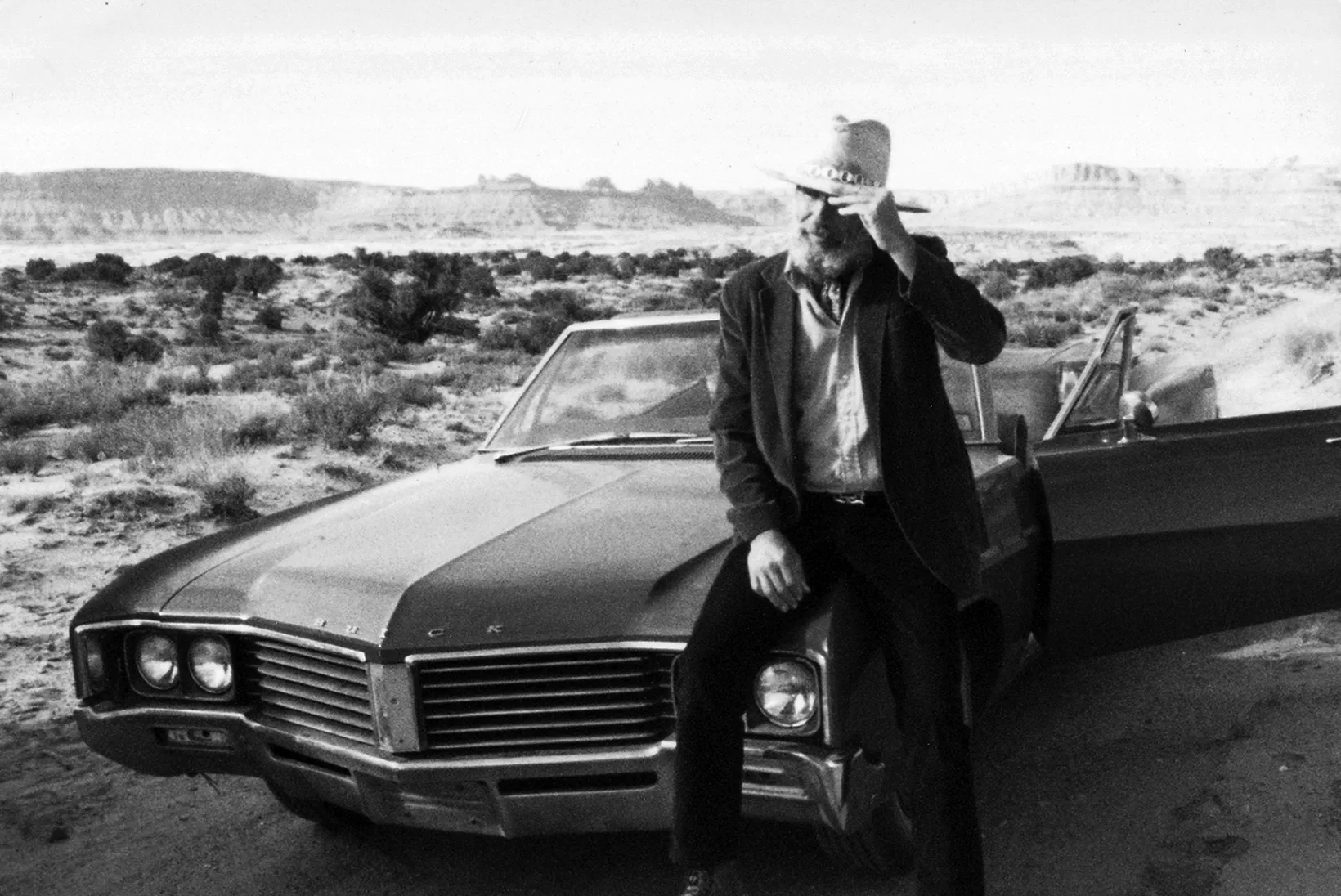


Personal, political, provocative writing delivered to your doorstep every month—without a single ad.
Subscribe Today