My daughter started sleeping through the night at six weeks. I would lay her in her bedside bassinet and crawl under my covers, and eight hours later we’d both wake up refreshed. I told my husband I hadn’t slept this much in years.
I’d once been a part of the Berlin club scene. Eventually the nights of partying and drinking led to days of hangovers, anxiety, and unfinished work. When I got pregnant, I finally stopped clubbing. Caring for my baby was the first step toward caring for myself.
At four months old my daughter stopped sleeping through the night. Since then we’ve been waking up at 10 PM, 11:30 PM, 1 AM, 3 AM. Some mornings I don’t think I can find the strength to get out of bed. That’s when I remind myself: You once went to a club at midnight and came home at 7 AM so your artist pal could tattoo your ass over coffee and mimosas. You sang karaoke at the witching hour in an abandoned warehouse, warmed only by whiskey. You’ve closed down bars in every city you’ve visited, watching the sun rise on your way home. You’ve got this.
Then I peel back the sheets and go to my baby.
Ella S-W
Berkeley, California
As a college student in the 1960s I shared a house with friends. One night I came home, let myself in using the key from under the doormat, then put the key back for Richard, who worked late. I was heading upstairs when my other roommate, Ray, called to me from the front door for help.
I hurried down and found Ray with his foot braced against the door, holding it shut as someone tried to force their way in. I leaned hard against the door and slid the bolt into place. Then I switched on the porch light in time to see a man fleeing down our front steps.
Ray opened the door and flipped over the mat. No key.
The locksmith we called was a big, middle-aged man, comforting and fatherly. While he worked, he set a metal box on the stairs, filled with trays of tiny, jewel-toned pins.
“No one is going to come running down those stairs, are they?” he asked.
Nope, no chance of that, we said. We watched with fascination as he rearranged the inner workings of the lock.
Suddenly my cat came bounding down the steps and landed on the box, overturning it. The pins scattered across the floor. The locksmith stared solemnly at the disaster. “I thought you said no one was up there.”
“We thought you meant a person,” said Ray.
“That’s going to cost you about sixty-five dollars,” said the locksmith.
This was a full month’s rent. We pleaded with him to let us sort the pins, and he finally agreed. “Good luck,” he said as he left. “It’s going to take you all night.”
It did. There were so many kinds of pins: some less than a quarter of an inch long, some with two flat ends, some with one rounded end. They were hard to pick up and even harder to see when squeezed between our fingers. Tweezers helped, sort of.
At 1:30 AM Richard came home and joined the party. We finished at six, and the locksmith arrived at seven, examined the fruits of our labor, and pronounced it good. We locked the door securely behind him.
Lee Pope
Grass Valley, California
Prior to the Civil Rights Act of 1964 it was difficult to find hotels in the South where a Black family could stay. So when my family took road trips from Los Angeles to Arkansas to visit my grandparents, we drove straight through: my aunt Annabelle behind the wheel by day, my father all night. While Aunt Annabelle drove, I sat in the rear-facing seat of our station wagon. Between naps I’d alert her of police cars pulling out of hiding places along the highway. (The Texas Rangers were notorious, and my aunt had a heavy foot.)
When she finished her shift, I’d move to the front beside my father, and my aunt would stretch across the back seat. My two brothers occupied the rear. The rhythm of the wheels would usually lull Aunt Annabelle and the boys to sleep, and I’d have Daddy all to myself: away from my mother, who stayed at home; away from my brothers and their Little League games; away from the two jobs he worked to provide for us. I still remember the feeling of basking in a space that only the two of us occupied.
I was in charge of making sure he didn’t nod off and swerve into a ditch or oncoming traffic. I can’t remember what prattle I came up with to keep him awake. I probably asked questions that I desperately wanted answers to, such as: What was it like to be married and have children? I may have gone on about my friends and teachers and my complaints about my brothers. My father didn’t respond much to my chatter, but I always knew he was listening.
Gwendolyn W. Williams
Los Angeles, California
While preparing to speed-hike the 485-mile Colorado Trail, I listened to an audiobook whose author called sleep an “emotional need” and explained that your body requires far less rest than your brain. To maximize the hours you can hike, you sleep only enough to let your body recover and grit your teeth through your brain’s complaining while awake. I decided to sleep four hours a day—two after dusk and two before dawn—and hike through most of the night.
On the second night the full moon was so bright that I cast a shadow. I saw a herd of elk silhouetted against it on a ridge. The yellow grass in the valleys looked like pewter. In the morning I heard the first birdsong long before the darkness eased.
Over the next few days I noticed how, at dusk, colors drained away and the wind picked up, then calmed once the night set in. In the valleys, near the streams, dew gathered on my skin, and I took sticky, cold breaths. Up on the ridges the air was warm, and I could feel the dry grass and boulders underfoot. Once, I watched a raven soaring on a thermal in the moonlight. The night was so quiet I heard its wings whoosh. I played a game I called Bush, Tent, Rock: I picked a blob at the edge of my headlamp beam and tried to guess which it was. I was wrong a lot.
Eventually sleep deprivation turned me loopy. I spent precious minutes standing still, transfixed by the Milky Way, shifting my weight from one aching hip to the other. On the tenth day and night, when I tried to complete the last seventy miles in one shot, I began to hallucinate: Tree stumps appeared to be badgers, and sleeping pads hung from branches.
I completed the trail in ten and a half days—a record for a woman at the time. Sometimes people tell me I did it too fast. They ask how I could appreciate anything when I was hiking so quickly. I wonder how many of them know that the trail is decorated with spiders. Lit by a headlamp, their eyes glitter blue.
Mikaela Osler
Albuquerque, New Mexico
I lie on the living room floor and surround myself with pillows and blankets. A battery-operated lantern casts a pool of light on my book and glass of wine. I tell myself it’s a privilege to be here, in the house where I grew up, taking care of my dying father, who’s down the hall in the bedroom he shared with Mom for more than fifty years.
I set my phone alarm to 4 AM, when I need to give Dad his three beads of morphine from an eyedropper. Shadows cast by the streetlight stretch across the room where I once defended pillow forts, played cards, and practiced spelling. Dad sat with me while I reviewed lists of words, encouraging me, marking the ones I knew and going back to the ones I didn’t: lieutenant, baccalaureate, pneumonia.
I’ve never given him morphine. What if I frighten him? What will he say if he wakes?
Just before four I cancel my alarm so as not to startle Dad. Then I get the morphine and walk to his room. Standing over him, I think how small he looks, gripping the blanket with both hands, holding it up to his chin. I brush my fingers over his blue-black knuckles and whisper, “Hey, Dad.” His breath is slow, his eyelids motionless. “It’s me,” I say, a little louder. He doesn’t stir, except to turn his palm to mine and hold my hand.
Kristin Thalheimer Bingham
Portland, Maine
As a college-bound high school sophomore, I had to take biology. It was a challenging class, and the teacher, Mr. Wogelm, was proud of his track record of flunking a certain percentage of students. When I received an F on my six-week progress report, my only hope was an extra-credit assignment. Mr. Wogelm said I had twenty-four hours to turn it in.
After school my mom took me to the San Diego Zoo, where I photographed as many animals as I could. I stayed up all night gluing the photos to poster boards, organized by phylum and labeled with the animals’ scientific names. I took snack breaks and did jumping jacks to stay awake.
Impressed by my project, Mr. Wogelm gave me full credit. The next week he offered a prize of fifty points to the first student to bring in a gametophyte. Thanks to a friend who was into ferns, I won those points.
At the end of the semester I had the second-highest number of points in the class—even more than my best friend, Lora, who received an A on her report card. When I asked Mr. Wogelm why I’d gotten a B, he said, “I could never give an A to anyone who received an F on the progress report. Besides, it doesn’t matter. You’ll probably just be a maid.”
Virginia Howard Mullan
Carlotta, California
In grad school I worked overnight shifts as an ER mental-health screener. My job was to help people who arrived at the hospital in a psychiatric crisis. I would either place them in inpatient care or give them resources so they could safely return home. The work was exhausting. Many patients were really hurting, and their needs were often at odds with rules of the health care system. The graveyard shift disrupted my sleep schedule. Over time I became depressed. I told myself I was a bad person and didn’t deserve good things. It became difficult to eat well, exercise, or even spend time with my two young children.
At the hospital I would sometimes walk the halls to keep myself awake. One night my route led me by the NICU. There, in a bassinet, was a tiny baby lying on its tummy. I watched, transfixed, as the baby began stroking the nape of its neck, giving itself a massage. Tears began streaming down my face, and I realized that if this baby could soothe itself, I could soothe myself too. I made a commitment to be as kind and caring to myself as I would be to a baby. I was no longer going to listen to the false messages my sleep-deprived brain sent me about my worth.
I eventually completed grad school and became a therapist. Throughout my thirty-year career helping adults with mental illness, I told this story often. Many people said the baby changed their lives too.
C.S.
Ashland, Oregon
On Friday nights my Southern Baptist youth group held overnight lock-ins to keep us away from the devil’s works: alcohol, drugs, sex, Ouija boards. The pinnacle of the evening was a game of Persecute the Christians, a sort of religious-themed hide-and-seek. The “Christians” hid in darkened rooms from the “Roman soldiers,” who searched for them with flashlights. My preferred hiding spot was among the robes in the choir room, where on Sunday mornings I’d help my mom put on her stole and robe before service. This was my favorite part of church. When my mom was singing in the choir, I’d sometimes see her raise the hymnal in front of her mouth—an indication she and her choir friends were causing mischief and laughing.
Sometimes I hid in the basement with the Christmas wreaths and costumes for vacation Bible study. It was a popular place to hide because it also held an empty black coffin. We always got caught there, but I kept going back to prove I wasn’t afraid.
The Romans would march us to “jail,” where our youth pastor made us perform “I’m a Little Teapot” as punishment. Afterward we had the option of remaining Christians or joining the Roman gang. I’d always return to my hiding spot, trying to evade the soldiers until morning.
At the last lock-in I attended, one of the Romans caught me from behind, and I fell against a pew. When I got to jail, my leg was bleeding through my jeans. The youth pastor said I should get stitches, but I told him I would be OK.
I still have a scar twenty-five years later. It reminds me of that church, which I’ll never go back to, because it brought its own kind of pain. But it also gave me some good memories: of my mom laughing, of a game we played in the dark.
Bailey Gaylin Moore
Columbia, Missouri
During summer breaks from college in the 1970s my friend Connie and I waitressed at a twenty-four-hour diner. Working the overnight shifts, we saw a different slice of humanity than we did on campus: cops, cabdrivers, musicians, bartenders, and the drunk people who came in after the bars closed. Mr. Angelo, the dry cleaner, came in before opening his shop in the early morning. Richard the pie man also came early, to deliver pies and flirt with the short-order cook. One of our favorite customers was Tubs, a hefty, twenty-something guy who always wore a football helmet and never had enough money. Once, he offered me fifteen cents for a cookie that cost a quarter. When I told him he was short, he said, “Could I have half a cookie?”
One night a couple of drunk guys kept saying they’d drive me home after my shift. Over and over I replied, “That won’t be necessary.” They harassed me for hours. When my shift ended, one of the cabdrivers gave me a ride with the meter off, just to make sure I got home safely.
I was shy and didn’t make great tips. I hated it when someone asked me to change a fifty-cent piece to two quarters, because it meant I would get only twenty-five cents. My biggest tip was a five-dollar bill coated in ketchup and mustard. You bet I cleaned that sucker off.
After work Connie and I went home, drank Johnnie Walker Red, and played Scrabble until we went to bed at 8 or 9 AM. Those summers were a welcome reprieve from academia, despite the dishwasher who repeatedly tried to corner me in the walk-in refrigerator. I can assure you he never got one kiss.
Kathleen Peppard
Olympia, Washington
As a student nurse I did an internship at Denmark’s largest psychiatric hospital. One stormy evening I worked my first night shift alone, on a ward for alcoholism and drug addiction. Ward D12 was situated in a villa a ten-minute bike ride from my dorm. On my way there I passed Ward H, the residence of mentally ill criminals, and I counted my blessings. At least I wasn’t headed there.
Just then I was blinded by a flashlight. I braked, and the man with the flashlight told me a search party was looking for an escaped patient from Ward H, who had stabbed a nurse and stolen her keys. I biked the rest of the way to D12 as fast as I could. Every sound made my heart jump.
The nurse I was relieving told me that the woman who’d been stabbed was dead, and the killer had gotten hold of a universal key that could open any building on the grounds. She predicted he would try to get as far away from the hospital as possible—unless he was looking for drugs and knew that extra medicines were stored in D12.
“What do I do if he comes here?” I asked.
“Unlock the medicine cabinet and let him take what he wants,” she said, and she left.
I locked the door behind her. The thought of sitting around waiting for a murderer to show up was unsettling. I told myself that if the killer did come, at least I would hear the door being unlocked.
At one o’clock a patient named Alex stuck his head in the door of my office, and I told him about the escaped killer. Alex said he’d have my back if necessary. He was a skinny guy, still reeling from being weaned off drugs, but he looked determined. I figured I could count on him.
He sat with me and started telling me about the robberies he had committed to get money for drugs. In the middle of the night he would break into a house and search the top kitchen drawer, where everyone kept their wallets. I asked what he did if the homeowners woke up. He told me they were so shocked to see a stranger in their house, they didn’t have time to react before he ran away.
At 5 AM we concluded that, since the killer hadn’t arrived yet, he probably wasn’t coming, and Alex went to bed. I thought how bizarre it was that I had spent my first night shift hoping a thief could protect me from a murderer.
Hanne Bernstein
Faaborg, Denmark
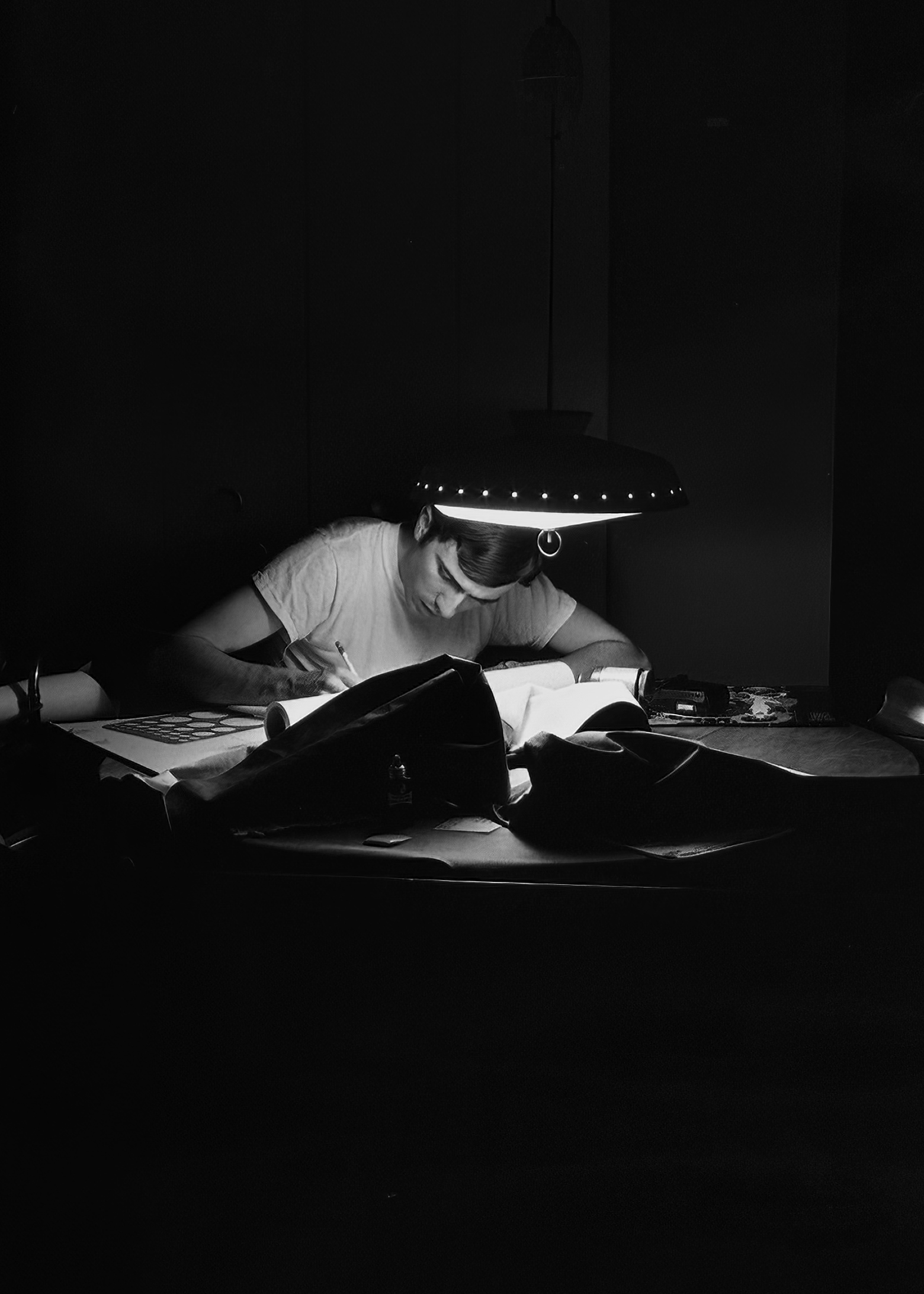
When I was fourteen, my father went on a work trip, and my mom invited a group of her relatives to stay overnight at our apartment in Istanbul. The guests included my grandmother and some of her sisters, plus their daughters and granddaughters. Except for my brother, our home was filled with girls and women.
After dinner the adults made two large pots of tea and gossiped about husbands, fiancés, and mothers-in-law, laughing hysterically. The aunts smoked one cigarette after the other, and we served more tea, along with Turkish coffee, Nescafé, and sparkling water. I drank some of everything and grazed on leftover dolma and börek to settle my stomach, which was upset from the caffeine and the excitement of being included in such a grown-up discussion.
The conversation about men became increasingly dirty as the hours passed. Although a few of the older women pointed out that children shouldn’t hear such things, my aunts, practically high on caffeine, didn’t care. So my cousins and I got an overnight course on sex and relationships. The pious women in the group justified their participation by saying they were staying up for morning prayer.
We went to bed at sunrise. When I woke at noon, I felt slightly embarrassed to know so much private information about my elders, but also proud that I was finally part of the world of women.
Büşra Satı
Cleveland, Ohio
I was in my freshman college dorm with Dave, my best friend and roommate. We’d just finished studying for an exam and had turned out the lights when I said in the darkness, “There’s something I want to tell you.”
“What is it?” Dave asked.
I could hear my heartbeat through my pillow. Unable to summon the words I’m gay, I said, “I want you to guess.”
Dave replied, “I’m not going to guess.”
We went back and forth like that for hours, the numbers on our digital alarm clock marching past one, two, three o’clock as I kept telling Dave I couldn’t say what I wanted him to know. Dave replied that he’d wait until I was ready.
Back then, in the early 1990s, many colleges were not bastions of acceptance. I wasn’t sure I was ready to be one of the few out gay students on campus.
Dave stayed awake with me all night. Years later he told me he knew what I wanted to say. Waiting patiently was his way of letting me know that nothing I could tell him would change our friendship.
Brad Snyder
Menlo Park, California
I had a terrible time sleeping when I was pregnant with my first son. I had recently taken a new job, and my boss was unstable and verbally abusive. Then, three months into my pregnancy, I found out my husband was having an affair. I’d lie in bed for hours, imagining horrible encounters with my boss and picturing my husband in bed with his girlfriend.
I went to see my OB/GYN, who prescribed me ten Valium so I could get some rest. He assured me the pills were a low dose but also warned me there would be no refills.
Taking that first Valium was like a miracle. My problems still existed, but I wasn’t bothered by them. My visions of an abusive boss and a cheating husband were replaced by pleasant images of my child and our future together as I drifted into a peaceful sleep.
It’s easy for me to see how people can become dependent on drugs and alcohol. The escape they provide feels wonderful. I’m thankful for the relief Valium gave me—and even more thankful that I didn’t become addicted to it.
B.S.
Macomb, Illinois
In seventh grade I had glasses and braces and wore clothes from Sears. I was a bully’s dream. Three girls in my math class spent half the year torturing me: stealing my homework, taking things from my purse, and reading my private notes.
The leader of the bullies was a scary second-year seventh grader who looked twenty. After threatening to beat me up about a hundred times, she decided I was no fun as a target, and we became friends. Later in the school year she invited me to a sleepover for her birthday. I was nervous, but I decided to go.
Everyone in her house was a chain-smoker, her included. I thought it was great that her parents let us smoke cigarettes like adults. They also gave us beer. Later in the evening we went out. I felt cool, walking the mean streets in the middle of the night with the toughest girls in school.
When we got back to my friend’s house, it was almost 4 AM. No one was waiting up to make sure we’d gotten home safely. In the morning there was no breakfast and no mention of her birthday. At that moment I understood her anger at the world.
L.Z.
Los Angeles, California
I got his text as I was falling asleep: Maybe if you are up, you might want to join me in my room. Could be fun. No pressure.
I was in the guest room at my friend Sarah’s house. For years she and I had been meeting up for long weekends to act like single college girls again. We went to baseball games, hit the bars, and talked endlessly. But this time our mutual friend Jack had come as well.
Jack and I had a long history. I’d had a deep crush on him in high school. He was tall and witty, with dreamy eyes that seemed to look inside me. I’d followed him to the same college, hoping he would realize how perfect we’d be together, even though he always had a girlfriend.
Once, when Jack was between relationships, we drunkenly made out in my car after a concert. Over the next few weeks we teased each other with back rubs and games of strip poker, which led to my losing my virginity.
There were moments when he’d look at me without saying a word, and I felt scared. I was an emotional mess, raised by an alcoholic mom who didn’t show affection, and I couldn’t handle anything serious. I did the only thing I knew to do: I left.
Jack got engaged a few months later. I was crushed and stumbled through relationships for years before going to therapy, learning to understand my emotions, and eventually getting married. Whenever I got together with my old college friends, Jack and I would look at each other longer than we should. I chalked it up to wishful thinking and tried to suppress my desire. Still, if I knew I’d see him somewhere, I’d wear a low-cut sweater or a dress that showed off my curves.
When Sarah had told me that Jack wanted to join us for the weekend, I’d imagined we might flirt, but nothing else. I’d never expected a proposition from him.
I lay in the guest room, staring at the text and shivering—from excitement or fear, I couldn’t tell. I imagined Jack sliding into my bed and kissing me the way I remembered. Would I kick him out or let him stay?
I never answered his text, but I thought about it all night long, watching the door to see if it would open.
Name Withheld
In my first year at Oxford University I struggled with social anxiety. To avoid talking to people, I’d sleep during the day, waking up only for classes, and live by night. I would run to supermarkets just before closing time, when they would be empty. I would take nocturnal walks through deserted medieval streets, listening to Yung Lean albums. It was a weird year.
During this time I was trying to make it as a hip-hop music producer, so I spent my nights working on beats and praying to succeed so I could drop out of school. By the end of the year I was so miserable that my studies were suffering, especially Old English, which my tutors expected me to fail. If I did, I’d have to do the whole year over again.
Then a friend got a gig opening for Sainté, one of my favorite rappers, and told me I could meet him backstage. This could be my big break. The problem was the concert was the night before my Old English exam: The show started at 1 AM, and my exam was at 9 AM. I decided if I was going to fail the class anyway, I might as well go to the concert. I took the train there, met Sainté, pitched my beats, and left the concert satisfied that I had taken the kind of risk superstars cite as the reason for their success.
I snuck into a hotel lobby and studied for the rest of the night. When dawn arrived, I took the first train back to Oxford and stumbled through my exam like a boxer slugging his way through the twelfth round of a championship match.
I passed the exam with room to spare, but Sainté never used any of my beats. I’m still not a successful music producer. I guess some risks don’t pay off.
Hugo Harvey
London, England
My wife was finally dozing in the hospital after being up all night giving birth to our son. My four-year-old daughter and I were curled up on the second bed in the room. I felt my body unclench at the possibility of my first peaceful rest since the positive pregnancy test nine months earlier.
Near the end of her pregnancy with our daughter, my wife had been diagnosed with an aggressive form of breast cancer. After a blur of medical appointments and impossible decisions, she had a grand mal seizure during labor. The fear she would die had lodged firmly in my body and mind, but it soon went underground as we cared for a new baby. Learning we had a second child on the way brought my terror to the surface like poisonous fungi after a rain. My lifelong mood swings ratcheted up into severe insomnia and anxiety, and I was diagnosed with bipolar II disorder and heavily medicated. In retrospect it seems obvious that my distress was a response to the traumatic experience of our daughter’s birth.
A month after my son was born, I was off all medications and sleeping well—or, at least, as well as possible in a family bed that held four of us. My wife is now nineteen years in remission and mentoring young women with cancer diagnoses.
K.R.
Corvallis, Oregon
My friend Suzi and I told our moms we were sleeping over at each other’s houses. Then, at dusk that August evening, we set up camp on the patio behind the public library.
We were twelve, in that liminal space between childhood and adulthood. I was having a hard time with the transition, especially since my divorced parents had recently told me they were going to remarry each other, and I would have to move away from Suzi. In a misguided attempt to assert my independence, I’d written out a list of “goals” for myself: Get drunk. Kiss a boy. Learn to steal. Stay out all night.
Suzi and I unpacked provisions from our duffel bags: wine, Cheez Whiz, cigarettes, a deck of cards, and Teen Beat magazine. We told each other we were there to “party like it’s 1999.” (It was 1985.) Someday we’d have an apartment together, run a photography business, and do whatever we wanted.
We went to the pay phone to tell friends what a rad time we were having. Then we got ice-cream cones and brought them back to our rebel fortress. We gossiped and giggled, paged through Teen Beat, and played a few rounds of gin rummy.
The ice cream made our hands sticky and our bodies chilly. We soon wanted water and jackets, which neither of us had thought to bring. We drank the wine to warm up and peed behind the garbage cans, drip-drying. We hadn’t brought toilet paper either.
We lay on the concrete patio with our heads on our duffel bags, shivering. Around midnight Suzi said, “This sucks.”
We both decided to go home. At my house I got the key from under the mat and tiptoed inside. My bed had never felt softer.
The experience didn’t stop me from working on the rest of my goals, but I never tried to stay out all night again.
Mary Christine Kane
Saint Paul, Minnesota
My father was a member of the Church of Jesus Christ of Latter-day Saints. Though he had a deep faith in Mormonism, he struggled to obey its strict guidelines.
When the internet entered my family’s household in 1998, my father began staying up every night until 3 or 4 AM. Using the computer after school, I saw the chat rooms and web pages he’d neglected to close. That’s how I found out he was using his late hours to visit pornographic websites. The same father who preached to me about chastity and told me that premarital sex was second only to murder in the eyes of the Lord was also writing to TiffanyXXX in the “singles looking for singles” chat room.
In the evenings I would go to bed and immediately hear the dial-up-modem noise. A few minutes later my dad would close my door. If I came out to use the bathroom, he’d shut off the computer, angry at the intrusion. Sleep deprivation made him angry during the days too.
Seeing my father in this new light made me realize I didn’t have to be a good Mormon daughter. I stopped trying to live up to his standards and started skipping church.
For decades, every time I returned home for a visit, he practiced the same nighttime routine. To this day if I’m in bed, I become anxious if someone closes the door to the room.
Kirsten Zimmermann
Livingston, Montana
I was a college student in the 1960s. While smoking a joint or two, my friends and I would sometimes come up with grand ideas about how to save the world. Once, we decided we could come up with a perfect plan if only we could escape the space-time continuum. To aid with this, we decided to spend a weekend with no concept of time. We covered my apartment windows with dark paper, unplugged the clocks and the TV, and told a friend to call us at ten on Sunday night.
Friday evening we all got stoned, and the adventure began. There was music, talking, and some activities behind closed doors. Not knowing if it was day or night made everything a little chaotic. Cooking and eating meals together provided some structure, though we weren’t sure if we were having breakfast at 4 AM or 2 PM.
I don’t know why we thought saving the world would be as easy as pulling an all-nighter to study for an exam. We couldn’t even save a failed relationship. We did have a lot of laughs, though, and we were surprised by how fast the Sunday-night phone call came.
Harvey Schwartz
Bellingham, Washington
I taught an evening class class at a community college from 8 to 10 PM. One student would sit in the back row by the radiator and promptly fall asleep. I pleaded with him to stay awake. I threatened repercussions. I even walked to his seat and woke him up once or twice, to no avail. He was taking two night courses and working two jobs. It was no wonder he was tired.
One evening, after I finished my lecture, I motioned for the other students to leave as quietly as they could. I turned off the lights, closed the door, and went home, leaving the man sound asleep. He later told me that the cleaning crew woke him up at 3 AM. When he got home, his wife accused him of cheating on her. He never fell asleep in my class again.
P.M.
Saranac Lake, New York
When I was in high school in the 1960s, I fell in with a beatnik crowd where the clothes were all black, shoes were optional, and drugs were everywhere. I continued that lifestyle through college, and after graduation I lived in communes where everyone shared whatever they had, which wasn’t much. I ate mostly potato-chip sandwiches on white bread, along with the weekly all-you-can-eat spaghetti meal at Howard Johnson’s.
In 1971 my parents begged me to come to New York City for my sister’s wedding. I had no desire to attend what was in my view a bourgeois affair, but they said they’d give me money for travel and clothes. So I went. Once in the city, I took my parents’ money and moved into an apartment in the Village, which was full of young people who looked like me.
My sister lived nearby and kept in touch. At one point she fixed me up with a young attorney, Larry. He was rich, had gone to the best schools, and worked at a fancy law firm. I only agreed to the date because I figured I’d at least get a good dinner out of it.
The first few times Larry and I went out, we never touched. This was unusual for me. In those days I might be having sex within ten minutes of meeting someone—because, hey, why not?
On our fifth date I decided to seduce him. I invited him over for dinner, and we ate on the couch, talking and drinking wine. Hours passed. The room fell into darkness. We continued to talk—all night, as it turned out, stopping only when we noticed the room wasn’t dark anymore. I can’t remember what we talked about, but it was a lovely night.
At sunrise I made us coffee and asked, “Don’t you want to make love at least once?”
“Not yet,” he said. He told me he was scared of me and didn’t think we could possibly have a long-term relationship.
He called me a few times after that, the last time to tell me he was engaged to a woman who I later found out was like him: rich and classy.
I soon realized I wanted a relationship instead of casual sex. That date with Larry was the beginning of my shift toward a more stable life. I’ve had other all-nighters since, but none as sweet and ultimately transformative as that one.
Judy Capel
Boston, Massachusetts
The sound of high-pitched beeping still makes me reach for the pager I used to carry during night shifts at the hospital. Most of the alerts were simple requests from nurses, but some were life-or-death calls.
I was in charge of about two hundred patients, and being responsible for their well-being weighed on me. There were other medical staff treating them, of course, but as their doctor, I would be the one signing the death certificate. On a few occasions two patients coded at once. Imagine multiple fire alarms going off inside your head.
By 3 AM on night shifts I’d sometimes exhibit my own symptoms: Nausea threatened to spill over every time I opened my mouth. My pulse pounded in my temples and fingertips. Once, I asked a nurse to check my vitals, and my blood pressure was so high that I could have had a stroke. I wanted to ask a doctor to prescribe something, but I was the doctor.
Research shows that working night shifts lowers the life expectancy of medical personnel. It’s the price I paid to save the lives of others.
Christine Gibson
Calgary, Alberta
Canada
I spent New Year’s Eve 1999 with my grandmother. I was twenty-one and not convinced that the world was about to end in a computer-malfunction-induced cataclysm, but I couldn’t rule it out either. Grammy had a house in the country with a gigantic freezer full of food and a pantry lined with canned goods. It seemed like a decent place to be stranded for the apocalypse.
We cooked a meal together, then watched TV in her basement. As the old century wrapped up around the globe, we drank brandy and belly danced wearing blanket “skirts.” At midnight we went outside and rang every bell in Grammy’s bell collection, shouting at the stars that it had been a nice life. Then we waited for something to happen—for the sky to disappear; for something to explode and take us with it. But we saw only our naked bellies rippling in the moonlight, our faces reflected in the pond, and each other, still standing at dawn.
M.B.
Würzburg, Germany