In one of my jobs as a naturalist, I served as a marine guide for eighth graders participating in sea turtle conservation on the Baja Peninsula. One student had muscular dystrophy, which left her with little control over her muscles, but the staff devised ways to include her on hikes and snorkel dives. I had the pleasure of taking her snorkeling daily, towing her on a boogie board and bringing up sea slugs, octopi, and sea stars to show her.
The one activity we struggled to include her in was swimming with whale sharks. Each afternoon, a fisherman took us out into the bay, where the other kids would slip off the side of the boat and swim among the gentle, filter-feeding behemoths. We encouraged the student with MD to float in the water, hoping that a whale shark would come near her, but no such luck. By the sixth day she didn’t want to get out of the boat. In our nightly gratitude circle the rest of the students had shared how swimming with whale sharks was the most incredible experience of the trip. I could see how much it hurt her to be missing out.
On the final day of the trip we asked her to try floating one more time. Reluctantly she agreed, and we lowered her into the sea. She floated for a while, listening to the other kids in the distance yelping through their snorkels: “It’s over here!” “Look at the size of it!” “Oh my God!” All of a sudden a whale shark surfaced beneath her, lifting her out of the water. She slid down its back and grabbed its dorsal fin. The guides on the boat started to cry with happiness—until they saw the shark swimming toward the open sea with our student on its back. “Let go of the fin!” we all shouted. She did, and when the boat caught up to her, she was floating peacefully with a massive grin on her face, the only student in the school’s twenty-year history of Baja trips to ride a whale shark.
Ethan Hughes
Belfast, Maine
Years ago raccoons made a home in our detached garage, so I called Animal Control. They lent us a humane trap and cautioned me not to place it on the garage roof, where the raccoons were gaining entry. “You do not want to climb down a ladder holding a mad, thirty-five-pound raccoon in a cage,” they said. They also advised me not to place the trap on the sidewalk, because if we accidently caught a skunk, they would have to shoot it, and the bullet could ricochet off the cement.
The first night we caught a possum and let it go. It didn’t learn its lesson, however, because we caught it again the next night. The third night we caught a neighbor’s cat. On the fourth night we did, in fact, catch a skunk. I told my wife to take our young daughter out of the house, since I was about to call Animal Control and didn’t want her to see them shoot the animal.
My kindhearted wife refused to let the skunk be killed. She wrapped herself in garbage bags—one for each arm and leg and a fifth over her torso—and then approached the cage armed with apple slices and salami. Cooing gently, she unhooked the latch and removed the back of the cage. The skunk flipped its tail a few times but didn’t spray her, and she fled back to safety in the house.
That evening the skunk was still sitting in the open cage, apparently waiting for the nice lady with the food to come back.
David Soglin
Evanston, Illinois
On a humid summer afternoon in the Philippines when I was six years old, I sat in a tree to catch the breeze. A family of monkeys raced through the branches, squawking at each other. The mother monkey began raking her furry gray hands through my hair, grooming lice from my scalp and placing them in her mouth. This was not the first time I’d had lice, but it was the first time I’d been cared for by a nonhuman primate. If I squirmed, the monkey would gently slap my shoulder, and I quickly learned to sit still. But I wasn’t afraid.
The Philippines was under the dictatorship of Ferdinand Marcos. Soldiers patrolled with AK-15s on their shoulders and manned checkpoints at the bus stops. People who spoke out against the president were abducted from their homes. Farmers had their lands taken from them by corporations allied with the government. My parents were teaching farmers how to organize to resist the dictatorship. Being among wild monkeys didn’t seem so scary in comparison.
I sat in the tree until I felt a tap on my shoulder, indicating the mother monkey was done, and she climbed away.
A.F.
Olympia, Washington
In the 1950s my father’s company transferred him to a little town in the mountains of western North Carolina, where I was born in the middle of a blizzard. Because of the storm and my father’s drunken state, my mother couldn’t get to the nearest hospital and had to drive herself to the medical clinic in town.
One night as a child, I was home with my mother and sister while my father was either working late or out drinking. Suddenly we heard a loud, chilling screech. We ran to the windows and couldn’t see anything in the dark. Frantic but afraid to go outside, my mother called our neighbor for help, but he didn’t find anything.
Over the next few days there was much talk in town about a mountain lion that had been heard. My mother remained distressed, saying she’d thought the screams were from a woman or child who needed help.
When I was six years old, my father lost his job, and we moved to Virginia. His alcoholism and depression worsened until he shot himself in his car two years later. My mother found his body.
A couple of months after that, my third-grade teacher gave us an assignment to tell a story in front of the class. When it was my turn, I froze in fear, unable to say anything. The teacher suggested I talk about my experience with a mountain lion, having heard the story from my mother at church. Instead I began to cry, and she shook her head and told me to go to my seat.
Now that I can finally tell the story, I want to say that hearing the mountain lion was frightening, but not as frightening as what went on between my parents. In the mountain lion’s screams I believe my mother heard her own fear and anguish. I wish I could have told her that the mountain lion’s fierce ability to survive also mirrored her own.
N.W.
Mount Sidney, Virginia
I work as an environmental lawyer. When I was assigned a case involving endangered vaquita porpoises, I immediately searched for a photo of them. They’re four to five feet long and resemble dolphins, with dark markings around their eyes that make them look like they’re wearing smudged eyeliner.
Vaquitas aren’t hunted directly, but they get entangled in illegal gill nets used to trap fish in Mexico’s Gulf of California. Our legal team argued that federal law requires the United States to embargo seafood caught in vaquita habitat until Mexico enforces its rules barring gill net fishing. We prevailed, and the US government gave Mexico one year to address the problem—time the porpoises didn’t and don’t have. By recent estimates only ten vaquita remain. Efforts to raise them in captivity have failed.
One night, in the thick of the litigation, I asked the guy I was seeing, “When the last vaquita calls out and there’s no answer, do you think she’ll realize she’s the only one left?”
“I don’t think animals have thoughts like that,” he said.
I cried silently, and after he dozed off, I called a ride and went home. I couldn’t bear lying next to someone who didn’t understand why I was grieving the loss of these porpoises.
More and more I feel like the cases my nonprofit files to protect endangered species simply function as eulogies for creatures we can’t save. Still, we bear witness. I’d like to think that makes the vaquita a little less alone.
V.W.
New York, New York
Growing up, my sister, my brother, and I played in the streets, barefoot and dirty. When it rained, we made mud pies in the gutter and dared each other to eat them. We’d spend hours sitting in the oaks in our backyard, peeling acorns and spying on the neighbors. The most coveted seat was a limb that branched three ways, and I raced up the tree like a cat to claim it every chance I got.
Left alone all day while our mom worked, we had no supervision. When we fought, our claws came out, and mine were the sharpest. One day my brother and I argued over the TV remote. I put him in a headlock and pulled his hair until he screamed, but he wouldn’t give in. So I pulled harder, meaning to rip the hair right out of his scalp. Finally he dropped the remote. I snatched it and retreated to my corner of the couch, but my remorse was almost instant. How could I have been so savage? That was a turning point for us, and we never physically fought again.
Lenore Sharp
Seattle, Washington
My father was born in 1936 in the Republic of the Congo, then known as Congo-Brazzaville and under French colonial rule. An athlete and mathematician, he received a scholarship to a school in France, where I was born. I was called Nsusu ya Mputu, “Chicken from Europe,” a nickname used to affectionately tease kids like me, who were not real Africans but not Europeans either.
During my first trip to the Congo, when I was four or five years old, I visited our family plantation with my grandmother, my mother, and some siblings and cousins. At the height of the day, my grandmother and my mother found me playing with a black mamba, one of the world’s deadliest snakes. My mum wanted to rush over to remove me from danger, but my grandmother stopped her. After ten minutes the snake vanished into the forest. I don’t remember being scared, only how beautiful the snake’s eyes were. My grandmother explained that from then on, the snake was my totem animal, and I should never kill or eat one.
Forty years later, during a business trip to China, I was having lunch with some suppliers at a restaurant with an enclosure full of live snakes. Diners could choose one for their meal. When I entered the room, all of the snakes moved to the corner of the enclosure nearest to where I was standing. My Chinese and Western business partners looked at me, the only Black man, who had somehow attracted the entire tankful of snakes.
I ordered fish and soup.
That night in my hotel room I saw my grandmother in a dream, and she told me I had done well and hadn’t forgotten where I came from.
Landa wo
Strasbourg, France
On trips to the Great Smoky Mountains when I was young, my family would sometimes see people crowded around a cute bear cub on the roadside. Some parents would even encourage their kids to feed it. Mine would never let me get out of the car. To me the bears seemed like big, furry dogs, and I was sad that I couldn’t participate.
In my early twenties I went camping with four friends in the backwoods of Yosemite National Park. Late one evening I drifted off in my sleeping bag under a huge moon that beamed through the spruce trees. Sometime in the night, the sound of heavy footsteps and snapping branches jolted me awake, and I saw an enormous bear, illuminated by the moon, ambling directly toward me. Paralyzed with fear, I couldn’t even call out to my friends. The bear passed within inches of my face, and I smelled his rank stench.
I stared at his little stump of a tail as he lumbered over to the picnic table, where one of my friends had bedded down. The bear effortlessly flipped the table over and sent my buddy flying. Unhurt, he silenced his yells as soon as he caught sight of the perpetrator.
Next the bear found our fifty-pound cooler and, with two flicks of his giant paw, sent it into the nearby creek, where he ripped it open and began chowing down on our groceries. By now everyone was awake, and we scrambled into our van. We turned on the headlights and began honking and shouting, trying to scare the bear off. In response he reared up—all eight feet of him, his immense forelegs spread wide—and let out a roar.
That’s when we noticed a baby bear by his—or, rather, her—side. We extinguished our headlights, backed meekly away, and stayed in the van for the rest of the night, trying in vain to sleep while listening to the sounds of our guests enjoying their buffet.
My illusions about cuddly bear cubs were gone once and for all.
Marty Ohlhaut
Charlotte, North Carolina
When I was twenty-two, I worked in an after-school program in the suburbs of Boston. One beautiful day in November I took the students to a small patch of woods, sat them down beside me on a fallen tree, and told them to listen to their surroundings.
We heard the river of traffic on the road and the voices of pedestrians on the sidewalk. A nearby creek gurgled. Acorns fell from the trees, and two crows called to each other. Lorenzo, the toughest kid in the program, didn’t want to sit with us. Instead he busied himself tearing pieces of bark off a rotten log. He’d made it clear he didn’t like me—or anyone else.
“Snake!” one of the girls cried, lifting her feet from the ground. “Over there!” The snake slithered harmlessly across the path in front of us. We laughed at our nervousness.
Just then hundreds of bees flew out of the rotten log and swarmed Lorenzo. The other kids ran to the sidewalk while I tore off my shirt and tried to swipe the bees away. The more I swatted, the madder they got, stinging Lorenzo and me. Somehow we managed to disperse the swarm and make it back to the program center, where I called an ambulance.
At the hospital, after the stingers had been tweezed out and we’d been given steroids and antihistamines, Lorenzo turned to me and said quietly, “You saved my life. Thank you.”
Though we never spoke about it again, that experience with the bees softened Lorenzo. He smiled. He told jokes. He made friends. By winter he and I were regulars on the basketball court in the gym. Sometimes he even let me win.
Martha Kingsbury
Cambridge, Massachusetts
As a child I was always bringing home injured animals I intended to nurse back to health. Early on I learned to hide them from my mother, who worried about them spreading disease and biting me—reasonable concerns, I know now, but of no consequence to me as a girl.
After I left home, I continued caring for animals. I provided warm, dry dwellings for the feral cats who lived in the woods surrounding my house, and I neutered and spayed those I could catch. A room in my home served as a dedicated nursery for orphaned babies and a hospital for wounded creatures.
When I was in my late twenties, single, and pregnant, a man from up the road brought me a baby raccoon whose mother had been hit by a car. Though tiny, she was fierce, and hissed and growled as the man handed her to me.
I spent hours cooing and talking to the raccoon, trying to form a bond. For three days I offered her a bottle, but she wouldn’t take it. Aware she would die without nourishment, on the fourth day I tried making the chittering sounds a mother raccoon makes. The baby reached for me, and I picked her up and held her. (My mother would have had a heart attack.) She took the bottle hungrily while gazing at me like I was her long-lost mama.
The raccoon began following me everywhere, exploring the house and entertaining me with her endless curiosity. At that time I had sixteen cats, a baby bunny, and a fledgling robin that had fallen from its nest. Amazingly everyone got along.
The raccoon came and went as she pleased through the cat door and would often lie on my stomach, feeling the baby kick. After my son was born, he and the raccoon became inseparable. One of my favorite memories is of him in his high chair with the robin on his head and the raccoon snuggled against him.
After two years the raccoon found a mate and gradually stopped coming home. On her last visit she brought her own babies to show me.
Karen Reider
Cheshire, Oregon
My sister Tracy and I arrived at the campground late in the day. We’d brought our father’s ancient camping equipment, including a sputtering Coleman lantern. Soon after dark we turned the lantern off and set it outside the tent for safety.
After waking multiple times in the night, I finally accepted that my bladder couldn’t wait for dawn. There was no moon, and I slithered out of the tent into a blackness so complete I saw nothing: no car, no campsite grill, no sign to the outhouse. Groping blindly, I bashed my shin into the picnic bench and decided not to go any farther. I stepped onto the bench, lowered my overalls around my ankles, and squatted.
Tracy’s whisper came from inside the tent: “There’s a bear!”
“Where?” I gasped.
“It’s right outside! Oh God, I think it’s peeing!”
“Oh no!” I squeaked. Terrified, I yanked up my overalls and dove toward the tent opening. But Tracy pulled her knees to her chest and kicked with all her might at the invading “bear.” Luckily the strap of my overalls snagged on the front tent pole, and I fell to my stomach, allowing Tracy’s feet to shoot over my head.
Once we’d both stopped screaming, Tracy laughed so hard that she wet her pants.
A.T. Lynne
Sausalito, California
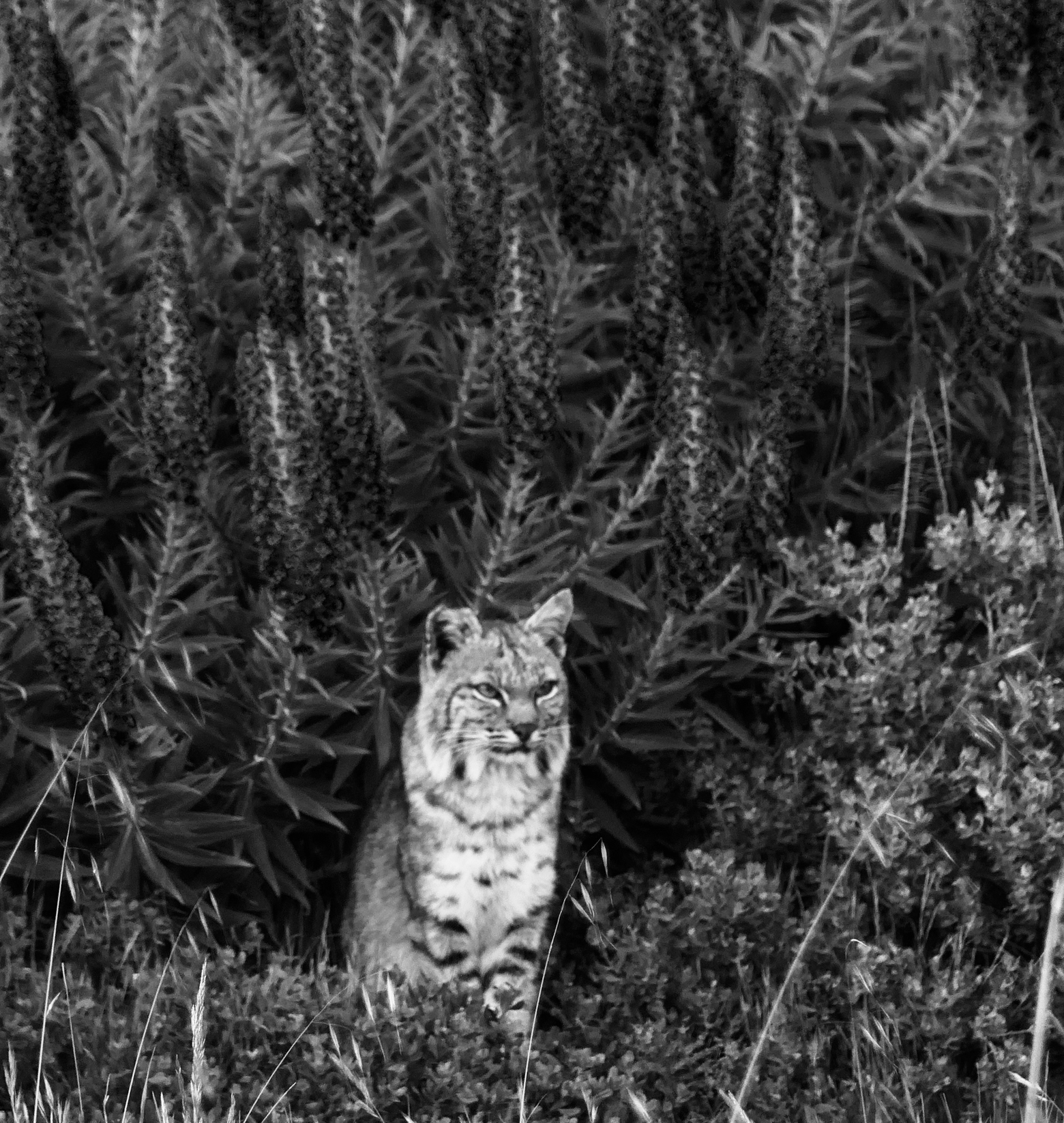
When I paddle on my stand-up board to the man-made oil islands one to two miles off the coast of Southern California, I always bring two friends with me. I won’t paddle that far alone. You never know when you’ll need help.
One day I asked one of my friends to snap a photo of me with the oil platform in the background. This turned out to be harder than I’d imagined. My friend had to be just the right distance away, and I had to be the right distance from the platform, all while I paddled to maintain balance in the waves. Every time we missed the shot, I’d have to turn left to paddle toward the open ocean and circle back into position.
Finally we got the picture and headed back toward the shore. My friends had a head start of about twenty yards when, to my surprise, a mother dolphin and her baby surfaced on my left. It’s extremely unusual for a dolphin to swim alongside a paddleboard, especially a mother with her young. I expected them to quickly disappear, but they stayed by my side as I made my way toward the shore, feeling lucky to have these magnificent creatures so near.
Later I wondered if the mother dolphin had seen me paddling back and forth during the photo shoot and concluded I was lost. Had she positioned herself at my left side to ensure I wouldn’t turn toward the ocean again but would instead head to land, where I belonged? My heart tells me she was trying to guide me to safety.
She’s inspired me to remain open to connections that might appear when I least expect them. You never know when you’ll need help—or how that help may arrive.
Karol Bailey
Long Beach, California
In my forties I tried to remedy my middle-age ennui by going on safari in Kenya. The guides drove us around in specially outfitted Land Rovers and showed us elephants, zebras, wildebeests, lions, cheetahs, water buffalo, and more birds than I could count.
After dinner on the second evening I excused myself to return to my tent. A Maasai warrior accompanied me. With dramatic gestures, he warned me that I was not, under any circumstances, to leave my tent before morning. I wondered what to do if I had to pee, but I fell asleep before I could give it much thought.
I woke in the middle of the night to feel something heavy leaning against me, emitting short, heavy breaths. I was immediately full of adrenaline. The hairs on my neck stood on end, and my heart tried to leap from my chest. I lay still, petrified, for what seemed like hours (it was probably fifteen minutes) until whatever it was had vanished and all I could hear were braying donkeys and the distant shouts of the Maasai.
At breakfast that morning I mentioned my experience, and our chief guide said, “There were lions in camp last night.” I thought he must be having fun at the expense of this gullible city slicker, but he wasn’t joking. The lions had wanted to take down one of the donkeys or camels, and the Maasai had chased them away.
He examined the ground outside my tent and showed me the outline of where a lion had lain against it and her tracks as she’d gotten up to leave. He gave me a reassuring pat on the back. “Lions are sight hunters,” he said. “You were fine, as long as you stayed in your tent.”
As far as the “sight hunter” claim goes, I remain unconvinced. Nevertheless, the next time I sleep in a tent on safari, I think I’ll ask for a bedpan, just in case.
Michael Briselli
Shorewood, Wisconsin
I was raised on a farm in Pennsylvania and joke to friends that there were four major holidays during my childhood: Christmas, Easter, the county fair, and the first day of buck season. Hunting white-tailed deer was a practical skill. It filled the freezer with venison, thinned the herd, and lessened the damage to crops.
My father passed the practice of hunting on to me. When my son became old enough to join in, I supplied him with a .30-30 rifle and advised him that deer are cagey critters with keen senses of sight and smell. When he was leaving the house to go hunting for the first time, I told him to sit perfectly still in a grove of hemlock trees and wait for a large, antlered buck to come by.
When he returned to the house after dark, I asked if he’d been successful. His face lit up.
“I went to the hemlock grove and sat still like you told me,” he said, “and these deer came filing past. A little doe came over and sniffed the toe of my boot.”
He placed his rifle in the gun rack and never went hunting again.
Blaine Detwiler
Chambersburg, Pennsylvania
My sister Kate served in Iraq near the burn pits, those open-air infernos where everything from plastics to electronics was incinerated. Years later she was diagnosed with terminal cancer, and I flew in to help care for her and to say goodbye. Watching Kate retch in the car after a particularly painful liver drain, I wondered how something so horrible could happen to such a bright, beautiful human being.
When I returned home, a skeletal feral cat started appearing in the yard. I put food out, but she wouldn’t eat it. I spoke softly and even sang her the annoying Barney song, “I Love You.” Still she darted away, but she kept coming back, circling the house as if drawn by more than hunger.
At the time I was sleeping very little. Some nights I’d slip outside to cry in private and see the cat sitting at the edge of the yard, watching me.
After my sister passed, something shifted between the cat and me, as though she sensed the worst was over. She let me touch her for the first time and even rub her belly. One day she purred, a low hum that felt like a spell. I named her Tag, because of the small cut in her ear that vets make to show a feral cat has been spayed.
Eventually she climbed into my lap and stayed there. No one could believe it. “That cat was born wild,” my husband said. “You don’t tame a cat like that.” But she wasn’t tamed; she had simply chosen me. Maybe she’d heard something in my voice those nights I’d whispered in the dark. Maybe my sister, on her way out, had said to the cat, Go keep her company. Whatever it was, Tag gave my heart a reason to stay open when it wanted to close forever.
Liz Carlile
Atlanta, Georgia
Every day at 6 AM and 6 PM the same announcement is made over the prison PA system: “Please do not attempt to feed or approach the wildlife.”
The day I stepped off the bus at this minimum-security prison in the Blue Ridge Mountains, the atmosphere took my breath away. After fifteen years in maximum-security facilities with solitary confinement and concrete recreation pads, this place seemed like summer camp. Don’t get me wrong: It’s still prison, with repressive policies and arbitrary punishments, but I can’t help appreciating the crisp mountain air.
We frequently spot families of deer and foxes darting across the field. Raccoons and squirrels entertain us by begging for treats at our windowsills, and, despite the twice-daily announcements, we scatter apples and bread for them. There used to be a redbird we named Fred who would eat from our hands, but he hasn’t been spotted since Hurricane Helene. Many of us feel his absence.
Seeing the animals come and go as they please reminds me there is still a world out there that refuses to be confined. Some mornings I sit outside and stare into the forest, listening to the nature sounds I once took for granted. When the birds are singing and the trees are whispering, the fences seem to fall away, and I experience a taste of freedom.
K.C. Johnson
Black Mountain, North Carolina
In 2019 my husband and I took a seven-month trip to India without smartphones, laptops, or cameras. Our intention was to detox from devices and reconnect with the present moment. We did bring a nylon-string guitar, a violin, our flutes, and a couple of hand drums.
While in India, Tom and I worked as volunteers at a remote forest retreat. One day we went in search of a peaceful, private spot to practice our instruments. Near the summit of a hill we found a boulder to sit on and started to play. Halfway through the first song we heard rustling nearby, and I spotted a tufted gray face peeking from the foliage. “Look!” Tom whispered, pointing at another. Soon a dozen langur monkeys had surrounded us.
The monkeys we’d seen in cities would ask for food (or just take what they pleased out of our pockets and grocery bags), but we didn’t have any experience with forest langurs. Were they dangerous? I mouthed to Tom, What do we do? He shrugged and started to play the guitar.
We began singing, doing our best not to laugh at our curious spectators. I looked one of the langurs directly in the eye (a good performer must strive to connect with the audience), and it bared its teeth and hissed. I looked at the ground from then on.
Apart from that incident, the langurs were a silent, respectful audience. We played one tune after the next until, apparently having heard enough, they departed as swiftly as they’d come, ascending into the branches above.
It was the only time on our trip that I wished I’d had a camera.
Sol Anzorena
Wakefield, Michigan
When the Animal-Services office where I work receives a call to remove a dead deer from someone’s yard, I go out back to get Truck One, otherwise known as the Dead Truck: a dark-blue pickup with a camper shell. Twenty minutes later I pull up to the address and grab from the back a four-foot aluminum pole with an adjustable loop on one end—the rabies pole, we call it.
The deer is lying on top of a ten-foot-high retaining wall. The smell is bad, but I’m used to it. Luckily it died with its head hanging over the edge, so I can easily put the loop around its neck. I tug, but it doesn’t move. I try a little harder. Nothing. I plant my feet wide and yank on the pole, and the body finally breaks free of whatever it was caught on and flies over my head, showering me with maggots.
In this job I’ve had a few maggots touch my hands over the years, but I’ve never had them crawling all over me. Fighting to stay in control, I think, I’m a man. I can handle this.
I brush myself off and shake my head back and forth, trying to fling away any maggots left up there and not crush them into my hair. Then I go back to the truck for a king-size plastic bag, maneuver it around the carcass, and swing it up into the bed.
Driving down the road, I breathe a sigh of relief. That’s when I feel something crawling inside my ear. Unable to take it anymore, I let out a scream.
Mike Holland
Novato, California
All animals were wild once. Then we got clever and fenced some of them in. We built a system that rewards stillness and submission and called it agriculture. We bred out their wildness, and with it, all the parts of them we found inconvenient. Now we have cows that can’t run, pigs that can’t turn, and chickens so top-heavy they collapse under their own weight.
Yet we revere wild animals for the very things we have bred out of the creatures we eat: autonomy, unpredictability, resilience. Whales and wolves and hawks follow their own rules. So we fund them, film them, put them on T-shirts. Meanwhile ten billion animals are imprisoned each year in warehouses in the US. But those animals don’t count, culturally or spiritually. We don’t write essays about them; we write recipes. I became an ethical vegan three years ago because I started paying attention to which animals we turn into symbols of freedom, and which we turn into dinner.
The only truly wild animals left in the US are the ones we haven’t found a market for: The raccoon in the alley. The pigeon on a skyscraper. The fox in the backyard that makes the evening news simply by existing.
All animals were wild once. The lucky ones still are.
Wes Payne
Tallahassee, Florida
When my husband and I were deciding whether we wanted to have kids, I couldn’t stop thinking of Acadian Nelson’s sparrows. I’d studied these creatures—beautiful pastel-yellow and dusty-brown songbirds that inhabit tidal salt marshes—for my dissertation. They weave their nests into the grasses on the marsh floor, hiding from predators in a sea of swaying green. But the nests’ location also makes them vulnerable to flooding. If a tide is especially high, ocean water sweeps across the marsh, washing away eggs and drowning chicks. During my research I spent many dawns traversing the sodden marsh to collect the bodies of the chicks who didn’t survive. Tidal flooding, though a natural event, is becoming more severe with rising sea levels and intensifying coastal storms.
Nelson’s sparrows can re-nest up to three times in a summer if their nest fails. Sometimes I’d collect the bodies of the same mother’s chicks three times. I didn’t know whether to admire or pity the birds’ tenacity. I also worried: If I had my own children, how would they fare in this world? My foresight might have made me feel superior, but I knew that my yearning for a baby was driven by instinct, the same as the sparrow mothers’. It would have been foolish to assume that I made my decisions with logic; to look into a sparrow’s eyes and think I was any different.
Alice Hotopp
Bangor, Maine
In the early seventies I was a field organizer with Cesar Chavez’s United Farm Workers in Florida. We worked on a shoestring budget and devised creative ways to fill our stew pot. Stray chickens were caught and made palatable by adding bell peppers and wild papaya, a natural meat tenderizer. (When “liberating” bell peppers from a field, you had to watch out for foremen—and snakes.) When the sugarcane fields were burned prior to harvesting, rabbits would come running out, and the workers’ kids would fell them with lead pipes. Possums could be tricky: They would play dead at our feet, but they had huge teeth.
Citrus harvesters were paid per box of fruit picked. If a grove was new, the trees were shorter and the fruit more plentiful, and workers could make more money. These were called “beefsteak groves,” because the people who worked them would make enough to eat well that night. If a grove was old, with taller trees and less fruit, it was an “armadillo grove,” because the workers would have to catch an armadillo for their dinner.
When we established our union contract with Minute Maid, we won the right to negotiate higher rates in the older groves. One of the shop stewards remarked, “Now that we got our union, the armadillos are going to be safe.”
Hugh "Hawkeye" Tague
Lansdale, Pennsylvania
On a trip to Nepal I visited Chitwan National Park, home to Bengal tigers, elephants, cobras, and rhinos, among many other animals. Many park visitors, hoping to glimpse a tiger, rode elephants to see above the grass, which grows taller than a man. Being against riding elephants, I went on a guided walking tour instead. We came upon a clearing where several rhinos ambled placidly along the riverbank. Though they looked peaceful, the guides said they were unpredictable and could easily outrun us, so we should keep our distance. There had been incidents of people cutting grass in the park for roof thatch being attacked by rhinos.
That night, after dining at a restaurant in town, I walked in the dark to my guest house along the river. As I neared my room, I spotted a beautiful, life-size rhino statue that I didn’t remember seeing, though I had taken the same path before. Then the “statue” slowly turned its head and leveled its gaze at me. I backpedaled like I had never done before and ran into town, followed by the rhino, who didn’t seem that interested in catching me. People scattered into doorways and alleys too narrow for a rhino to fit, as though they had practiced this maneuver in the past. After running up and down the main street, the rhino made a beeline for a cabbage patch and helped himself before crossing the river back into the park.
Locals later told me that rhinos often came into town looking for a tasty garden snack. People would hide until the giant herbivores left, then go back about their business, not begrudging them a few kilos of cabbages. I felt great admiration for both the curious rhinos and the hospitable people of Chitwan, who allowed the animals their town visits.
Jeffrey Hersch
Denver, Colorado
I’m a veterinarian and spend my workdays healing people’s cherished pets. At lunchtime I walk to New York City’s Central Park with fresh carrots and strawberries for the carriage horses and walnuts for the squirrels. Above me fly pigeons, wheeling and dipping on ragged wings, their bodies battered by a city that barely tolerates their presence. Some limp on a single leg; others drag mangled feet caught too many times in grates. I’ve seen them crushed under taxi wheels, flattened like paper.
I’ve loved birds since I was a child—their pleasant chirping, their delicate wings. When I was in middle school, I would stand in the bitter cold, binoculars pressed to my face, so entranced by waterfowl that I forgot my frozen fingers. Later, during winter breaks, I traveled to Puerto Rico to search for species of birds found nowhere else in the world, and I held my breath as I watched them, then sketched their elegant forms in notebooks. But I have never sketched a pigeon. No one celebrates them. They are called dirty, diseased, a nuisance.
And yet they persist. Maybe they are no different from any of us who came to this city hoping to make it. I believe I will paint them: their iridescent feathers, their bent necks, their sometimes lifeless bodies. Even the ones we overlook deserve a place in our memory.
Yujin Kim
New York, New York
Hanging in my bedroom is a mobile of elephants, lions, and zebras that I bought in Kenya last year. Every time I look at it, I smile. It’s going in my suitcase the next time I visit my pregnant daughter.
Decades ago, during the first year of my marriage, I lived in Kenya and worked in a hospital with my husband. I loved everything about the place: the kind and welcoming people, the jacaranda trees that rained lavender blossoms, our ability to live on a thousand dollars a year. And, of course, I fell in love with the wildlife. There is nothing as graceful as a gazelle or as majestic as a giraffe. The baby lions were so irresistible that I was willing to get up at six in the morning just to see them.
I returned to the US with my own little baby tucked inside of me and hopes of keeping the magic of our simple life in Kenya alive. I planned to bind the baby to my body with a cloth, the way the women of the village did, and breastfeed until my child was old enough to suck the fruit of mangoes and avocados. But when the baby came, I didn’t trust myself to tie the cloth securely, so I bought a carrier. I needed a car seat, too, and a swing. Before long I was a typical American mom, trying to juggle a career and kids and house payments.
The pull of Kenya remained strong, though. I keep returning there, and each time, I’m reminded of how the most important things don’t cost money.
That stowaway baby girl ended up married to a primatology anthropologist. Their house is full of monkey decor, but my mobile will hang there too. When their baby is born, I will carry her in a cloth and tell her stories about the lavender rains of the jacaranda and the grace of the gazelle.
Lucy Garbus
Florence, Massachusetts