Browse Sections
The Sun Interview
The Run-On Sentence
Eddie Ellis On Life After Prison
Because of its flawed policies and dysfunctional institutions, this society incarcerates more people per capita than does any other nation. We can’t continue along this path. We cannot afford to keep viewing these issues in a vacuum. We’ve got to do a better job of connecting the dots.
July 2013
The Undiscovered Country
John Elder On The Wild Places Close To Home
But to find the sacred only in the wilderness would be like finding it only in a beautiful church on Easter. Unless the sacred is imbued in your day-to-day life, in your work, in the food on your table, in the attitude you take toward the health of your own community, its value is limited.
June 2013
Swept Under The Rug
Ai-jen Poo On The Plight Of Domestic Workers
Domestic workers are in a fascinating position. They are poor or working-class women who live in both their own world and the upper-class world of their employers. They witness the difference between these realities daily. They might accompany their employers on vacation, but they never get a vacation themselves. They see employers taking taxis, but they return home on the bus. They know when one of their employers would rather spend four hundred dollars on a pair of shoes than pay them a living wage, because they watch it happen. It’s a brutal reminder of inequality.
May 2013
Out Of Our Heads
Philip Shepherd On The Brain In Our Belly
Our story insists that our thinking happens exclusively in the head. And so we are stuck in the cranium, unable to open the door to the body and join its thinking. The best we can do is put our ear to the imaginary wall separating us from it and “listen to the body,” a phrase that means well but actually keeps us in the head, gathering information from the outside.
April 2013
We Are Not Worth More, They Are Not Worth Less
The Odyssey Of S. Brian Willson
I think of myself as a recovering white male, recovering from my early conditioning about how to be successful. The value system I was raised with dehumanized me to the point that I followed an order to travel nine thousand miles to participate in destroying another people. It’s incredible that I could do that, and without really thinking much about it. That’s why I wrote the book — to understand how it was so easy for me to do that.
March 2013
Wrong Turn
Biologist Rupert Sheldrake On How Science Lost Its Way
I suggest that morphogenetic fields work by imposing patterns on otherwise random or indeterminate activity. Morphogenetic fields are not fixed forever, but evolve. The fields of Afghan hounds and poodles have become different from those of their common ancestors, wolves. How are these fields inherited? I propose that they are transmitted from past members of the species through a kind of nonlocal resonance, which I call “morphic resonance.”
February 2013
Indefensible
David Krieger On The Continuing Threat Of Nuclear Weapons
The path to security can only be through total nuclear disarmament. We cannot indefinitely maintain a world of nuclear haves and have-nots, and we cannot go attacking every country that we think might be on the path to making a bomb.
January 2013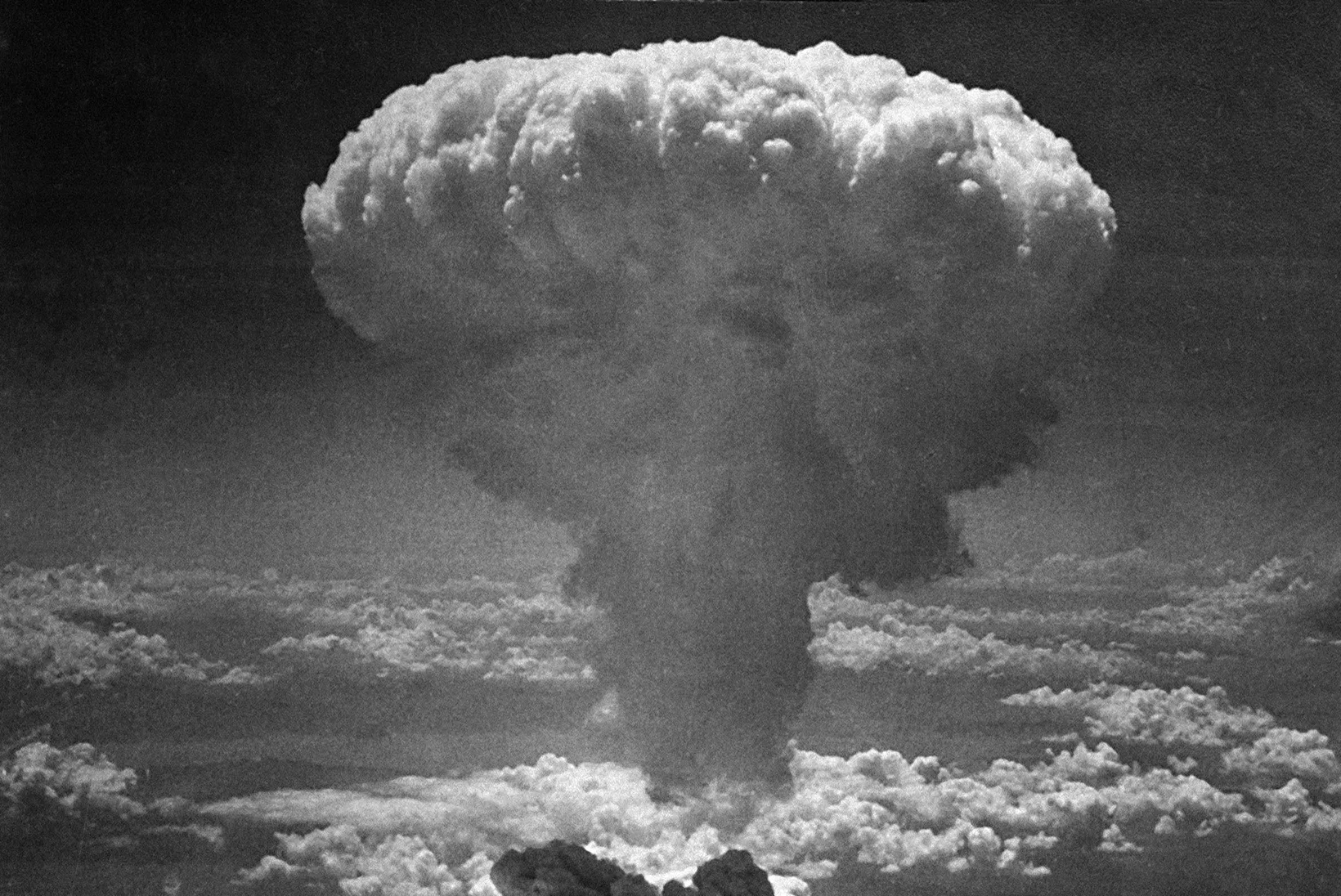
If Your House Is On Fire
Kathleen Dean Moore On The Moral Urgency Of Climate Change
Every decision that we make — about where we find information, where we get food, what we wear, how we make our living, how we invest our time and our wealth, how we travel or keep ourselves warm and sheltered — is an opportunity for us to express our values both by saying yes to what we believe in and by saying no to what we don’t believe in.
December 2012
If Only We Would Listen
Parker J. Palmer On What We Could Learn About Politics, Faith, And Each Other
There are people on the far Right and far Left who can’t join in a creative dialogue about our differences — say, the most radical 15 or 20 percent on either end. But that leaves 60 or 70 percent in the middle who could have that conversation, given the right conditions. And in a democracy, that’s more than enough to do business.
November 2012
Sowing Dissent
Lunatic Farmer Joel Salatin Digs In
A farm should be aesthetically, aromatically, and sensuously appealing. It should be a place that is attractive, not repugnant, to the senses. This is food production. A farm shouldn’t be producing ugly things. It should be producing beautiful things. We’re going to eat them.
October 2012


Personal, political, provocative writing delivered to your doorstep every month—without a single ad.
Subscribe Today