Browse Topics
Employment
Field Notes
When they set out to document the lives of Mexican migrant workers in Hartville, author David Hassler and photographer Gary Harwood expected to find examples of injustice, deprivation, and misery. Instead they found a functioning seasonal community, rich in culture, to which entire families return each year. The work is hard and dirty, and the workers struggle to support themselves and their dependents.
November 2006
Nine To Five
A Brussels-sprouts cannery, the Kinsey Institute, singing telegrams
November 2006
The Death Of Environmentalism
Over the last fifteen years, environmental foundations and organizations have invested hundreds of millions of dollars in combating global warming. We have strikingly little to show for it.
February 2005
Realism
For about ten months I worked at a radio-antenna factory in the tiny town of Hays, Kansas. The factory workforce was comprised mainly of the inexperienced, the handicapped, the socially discarded, the desperate, the just-out-of-jail, and the fallen-to-the-bottom-of-the-ladder, with a handful of cheerful, non-English-speaking Mexicans thrown in.
September 2004
Twenty-Eight Words That Could Change The World
Robert Hinkley’s Plan To Tame Corporate Power
We can’t solve the problem of corporate irresponsibility by imposing volumes of laws and regulations that try to restrain the system, because the system is designed not to be restrained. I believe the solution lies in redesigning the corporation itself to build in some self-restraint.
September 2004
A Brief History Of The Sun
The first issue of The Sun came out in January 1974. The war in Vietnam was winding down, and Richard M. Nixon would soon resign the presidency. It was also the height of the energy crisis. The OPEC oil cartel had raised prices, resulting in lines at gas stations and debates about reducing dependence on Middle Eastern oil. So when Sy Safransky and coeditor Mike Mathers were deciding on a topic for the first issue of their new magazine, they chose “Energy.”
January 2004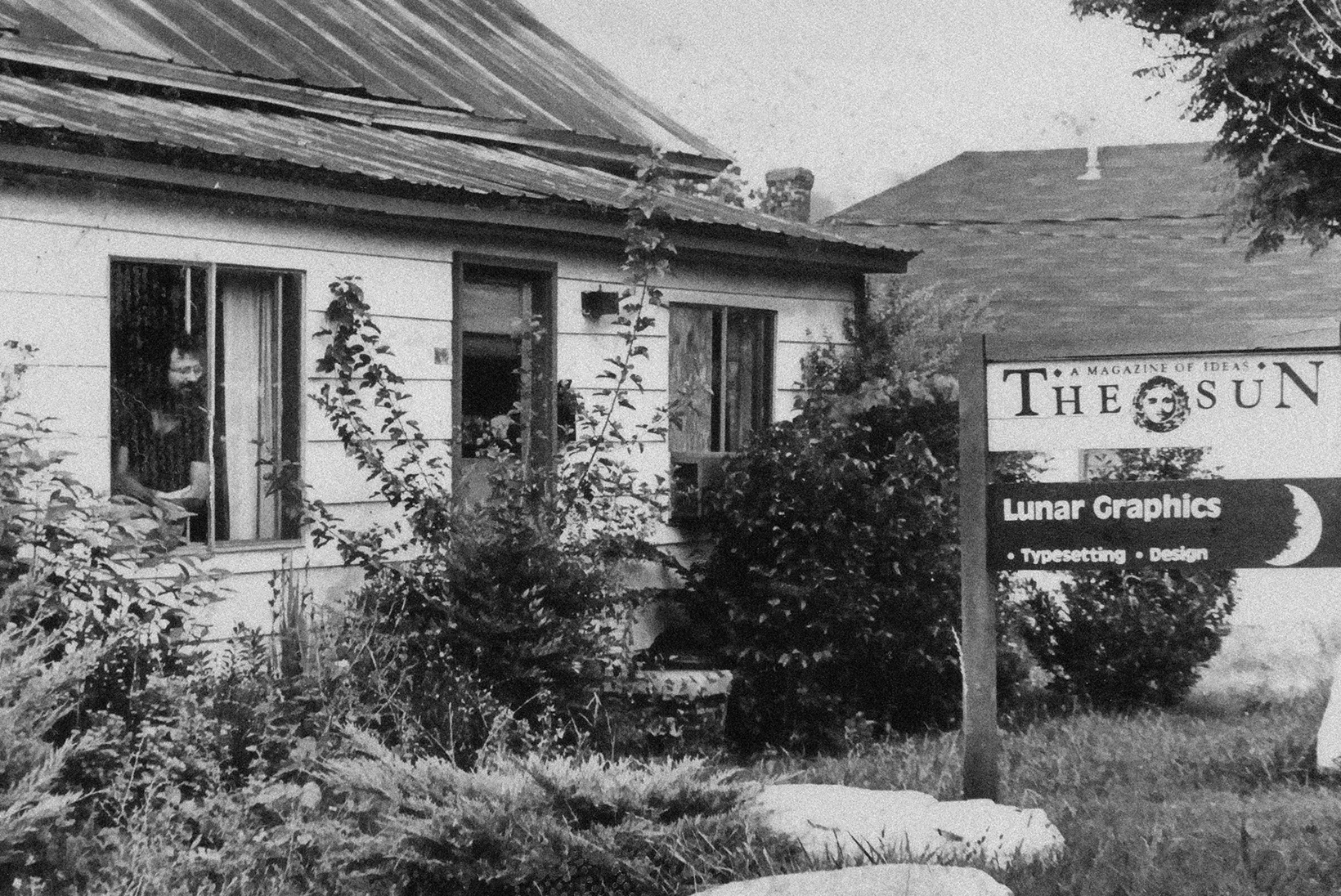
Sunbeams
January 2003When a man tells you that he got rich through hard work, ask him: “Whose?”
Fingers To The Bone
Barbara Ehrenreich On The Plight Of The Working Poor
The way they calculate poverty was devised in the early sixties and based on the notion that most people spend a third of their earnings on food — which was not true even then. Nevertheless, the reasoning went that if you calculated how much money people spent on food and multiplied that number by three, you would have the poverty-level wage. And that’s what they’ve been doing ever since. The problem is that food prices have been pretty resistant to inflation, whereas housing and healthcare have shot through the roof. So the poverty level is completely misleading. Yet this nation keeps patting itself on the back, saying, “Look, our poverty level is only 12 percent.”
January 2003Down And Out
Going outside to blow bubbles; finding a note stuck to a barn wall with a knife; realizing grandfather wasn’t senile
March 2001Starting Over
The Ganges river, Beethoven’s Fifth Piano Concerto, Key West
September 1997

Personal, political, provocative writing delivered to your doorstep every month—without a single ad.
Subscribe Today